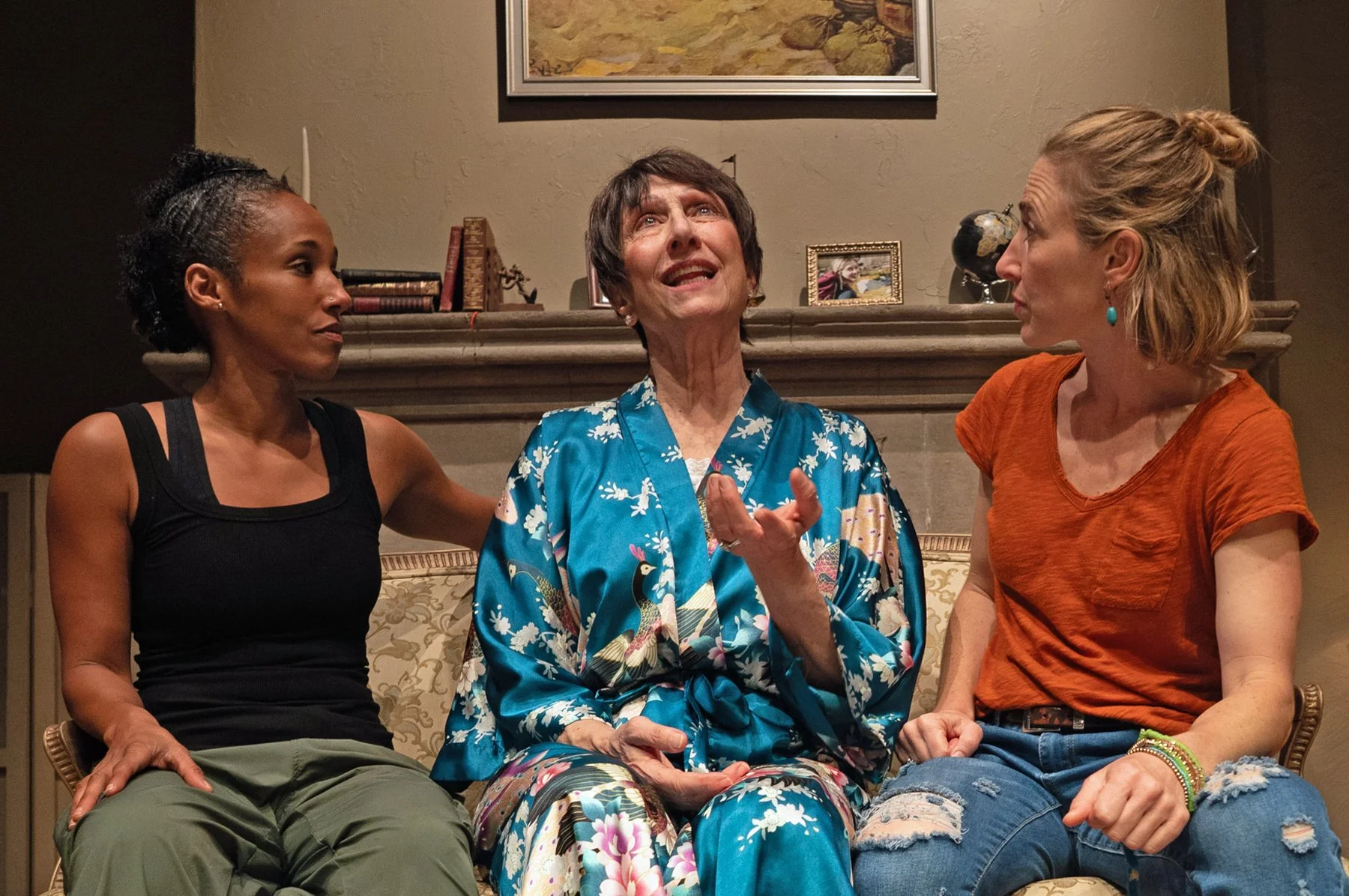
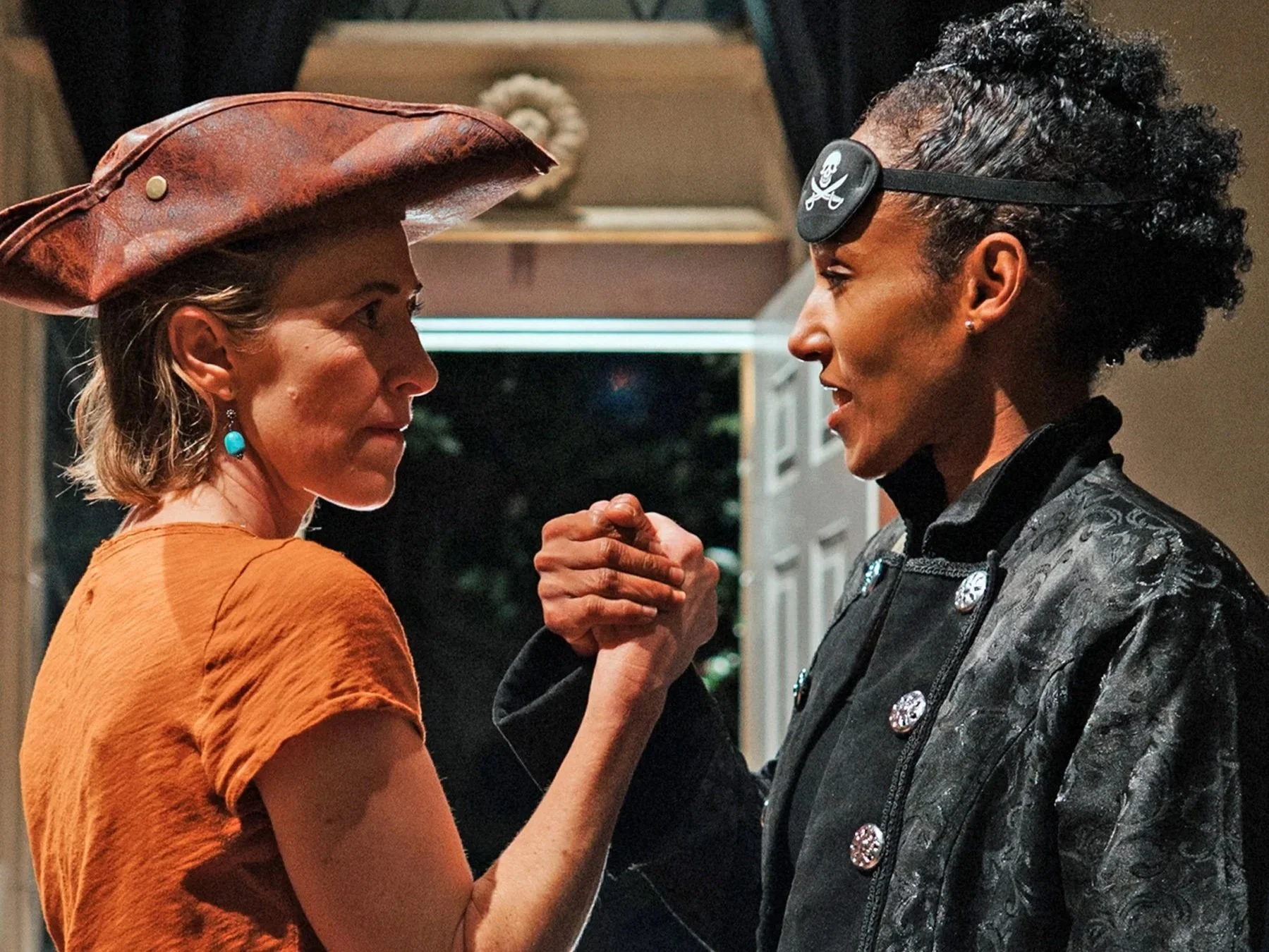
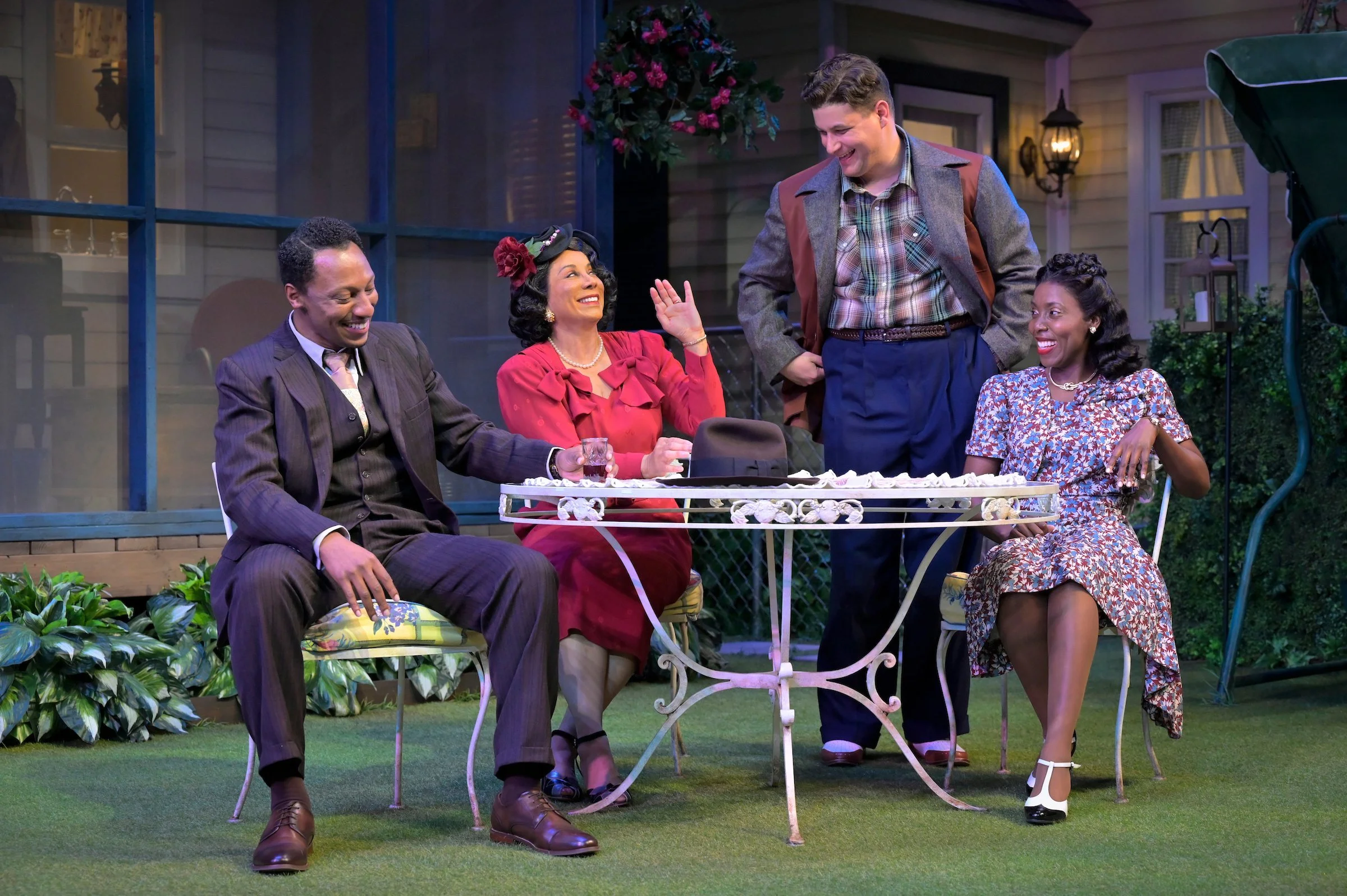
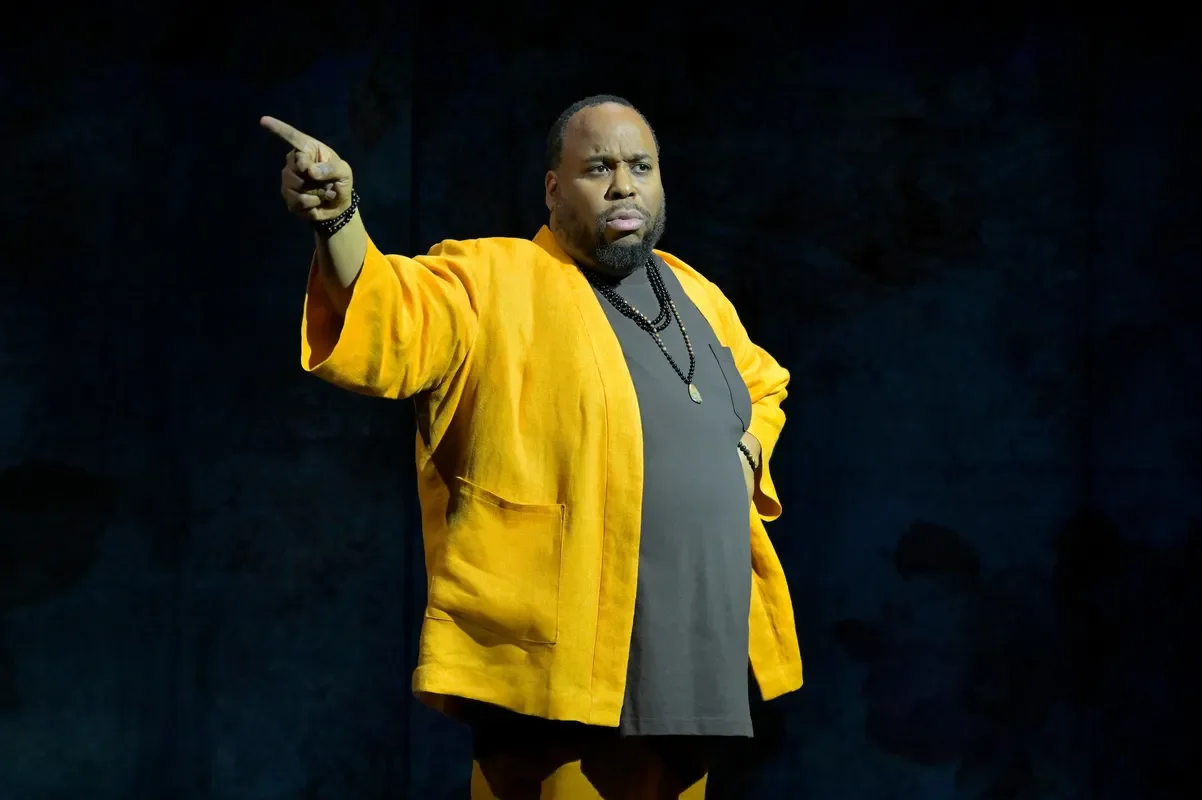
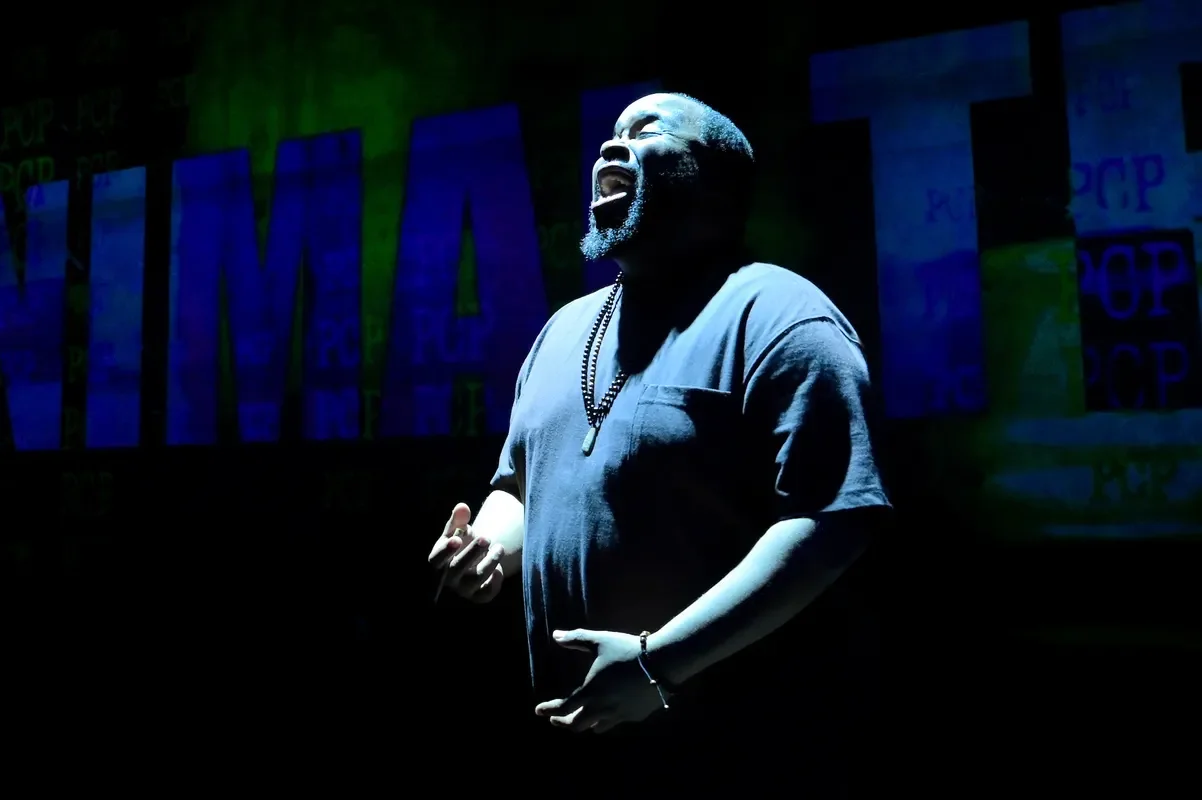
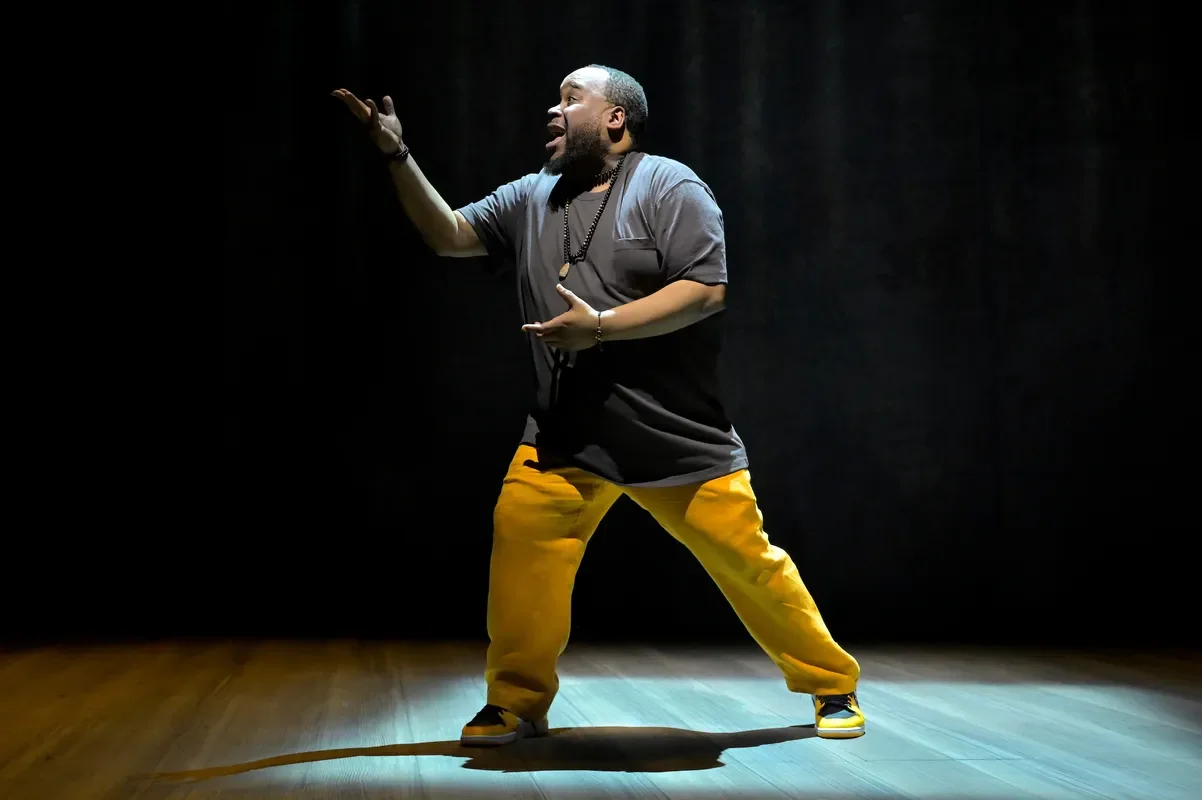
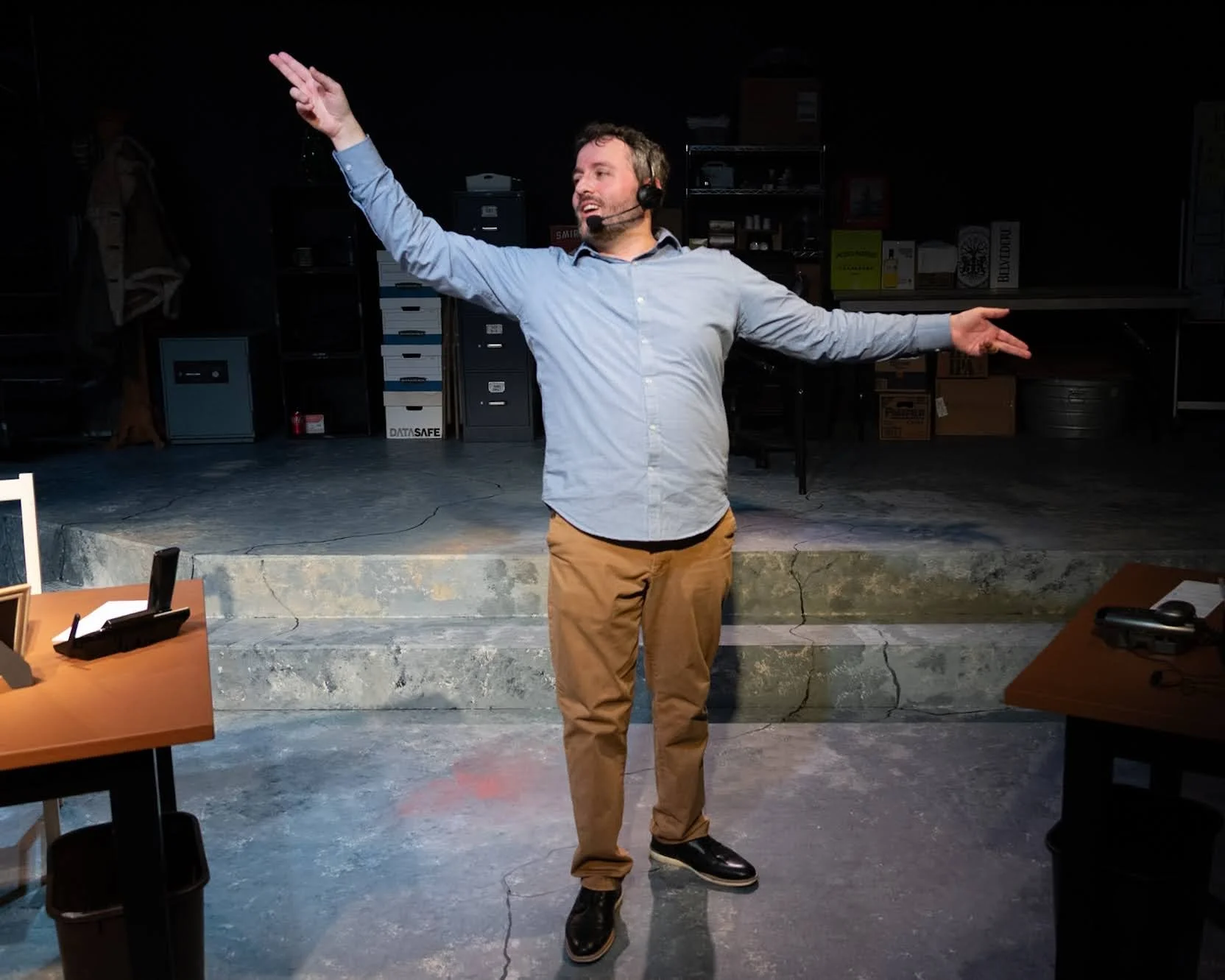
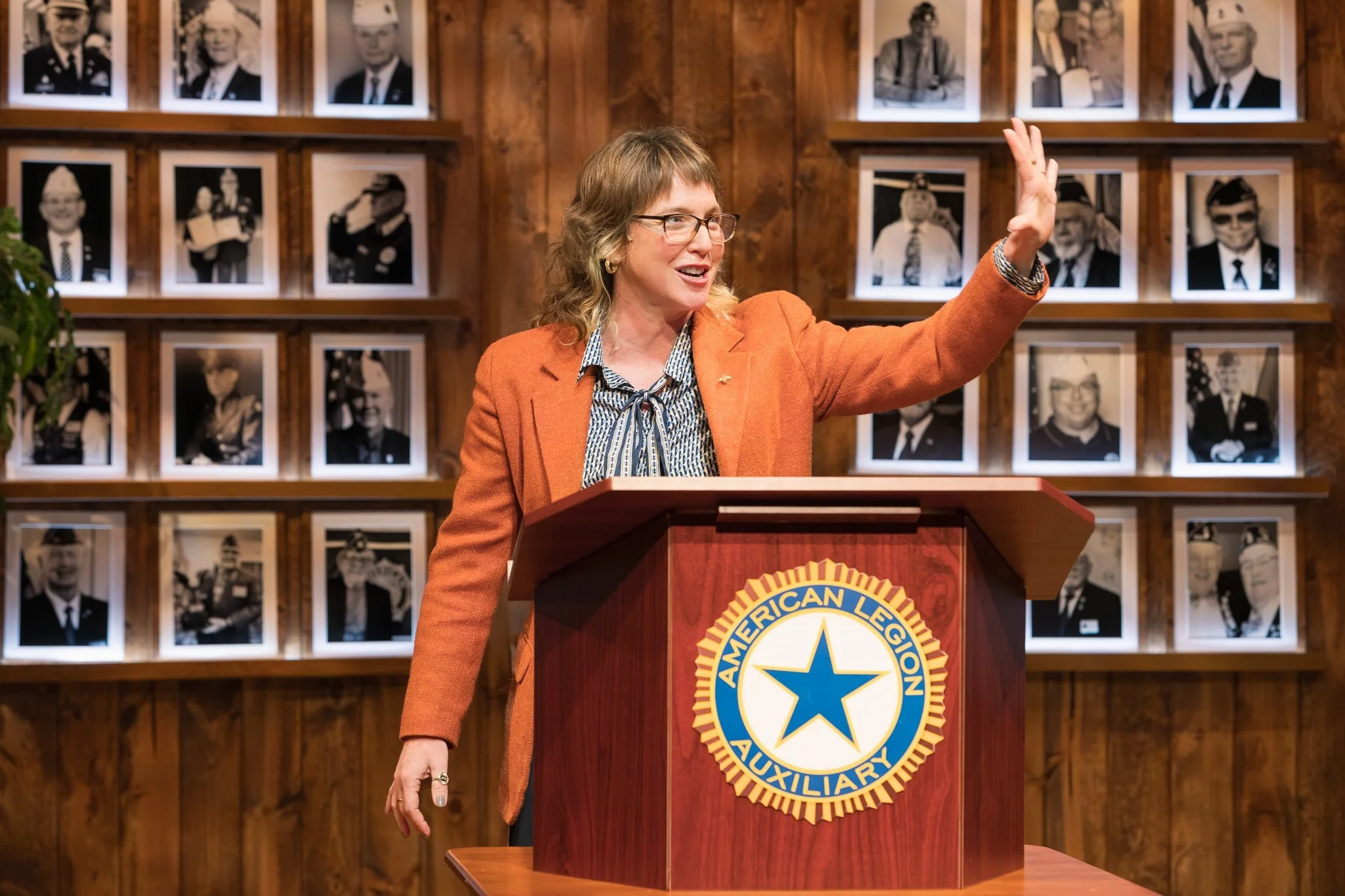
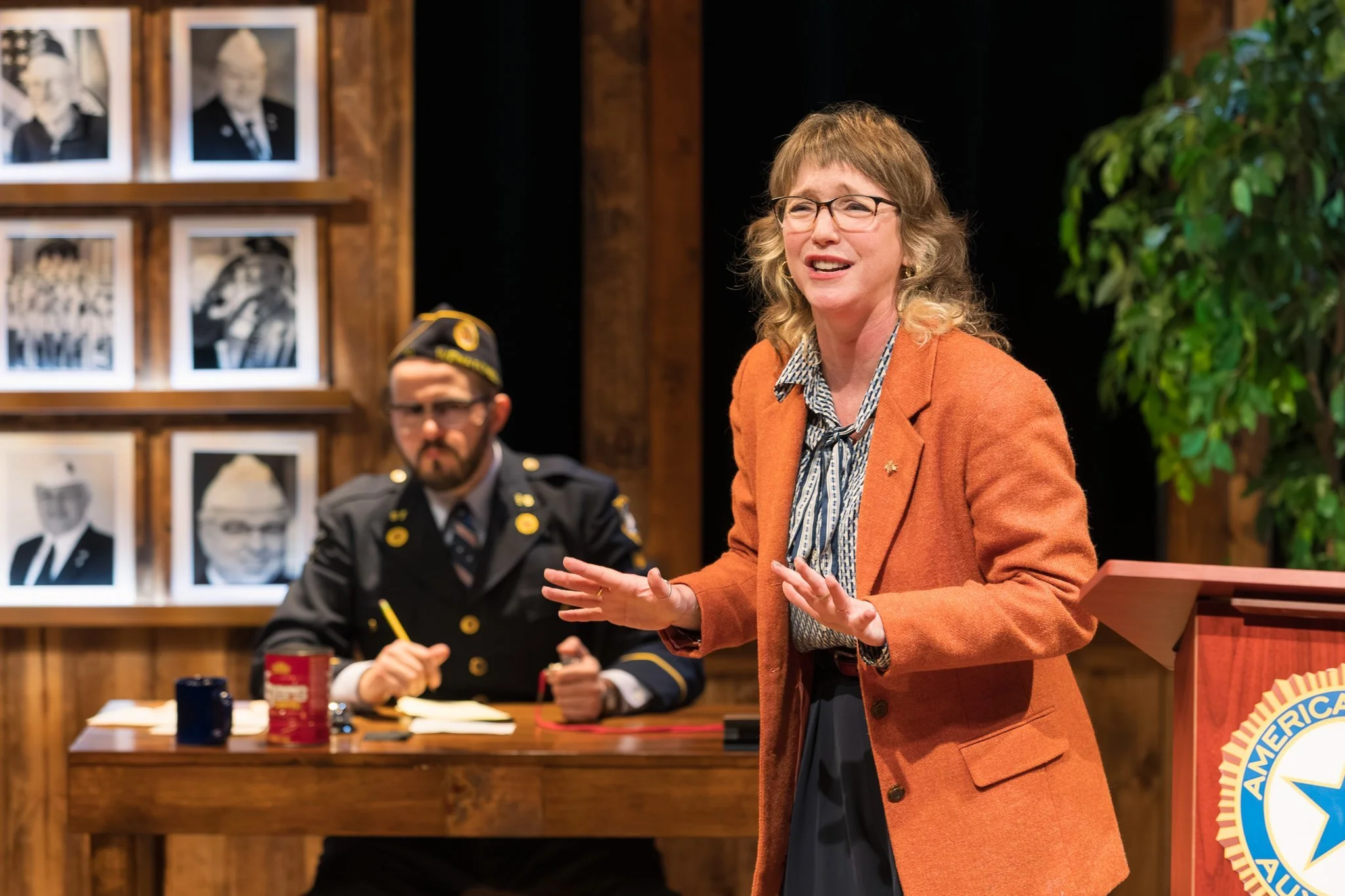
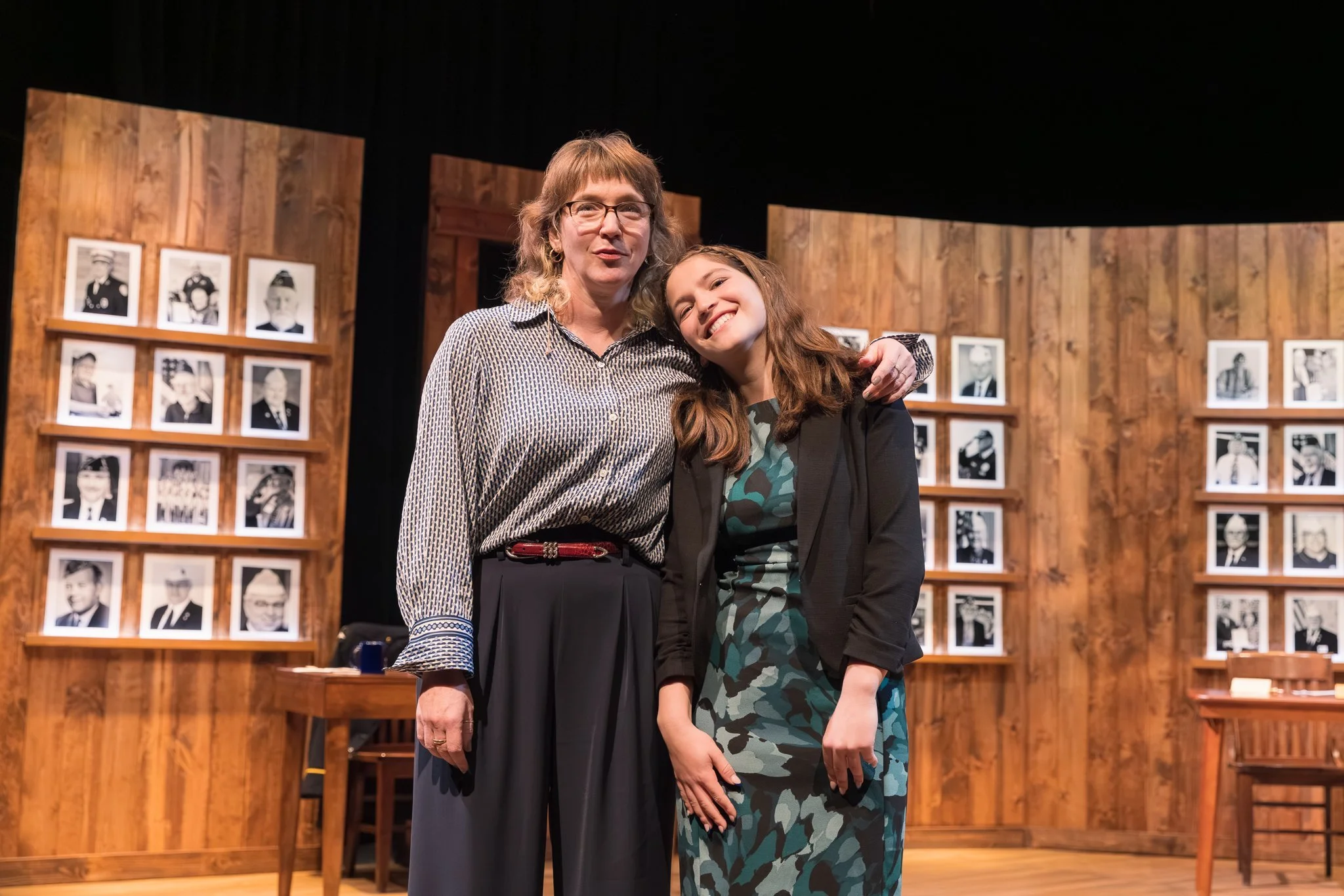
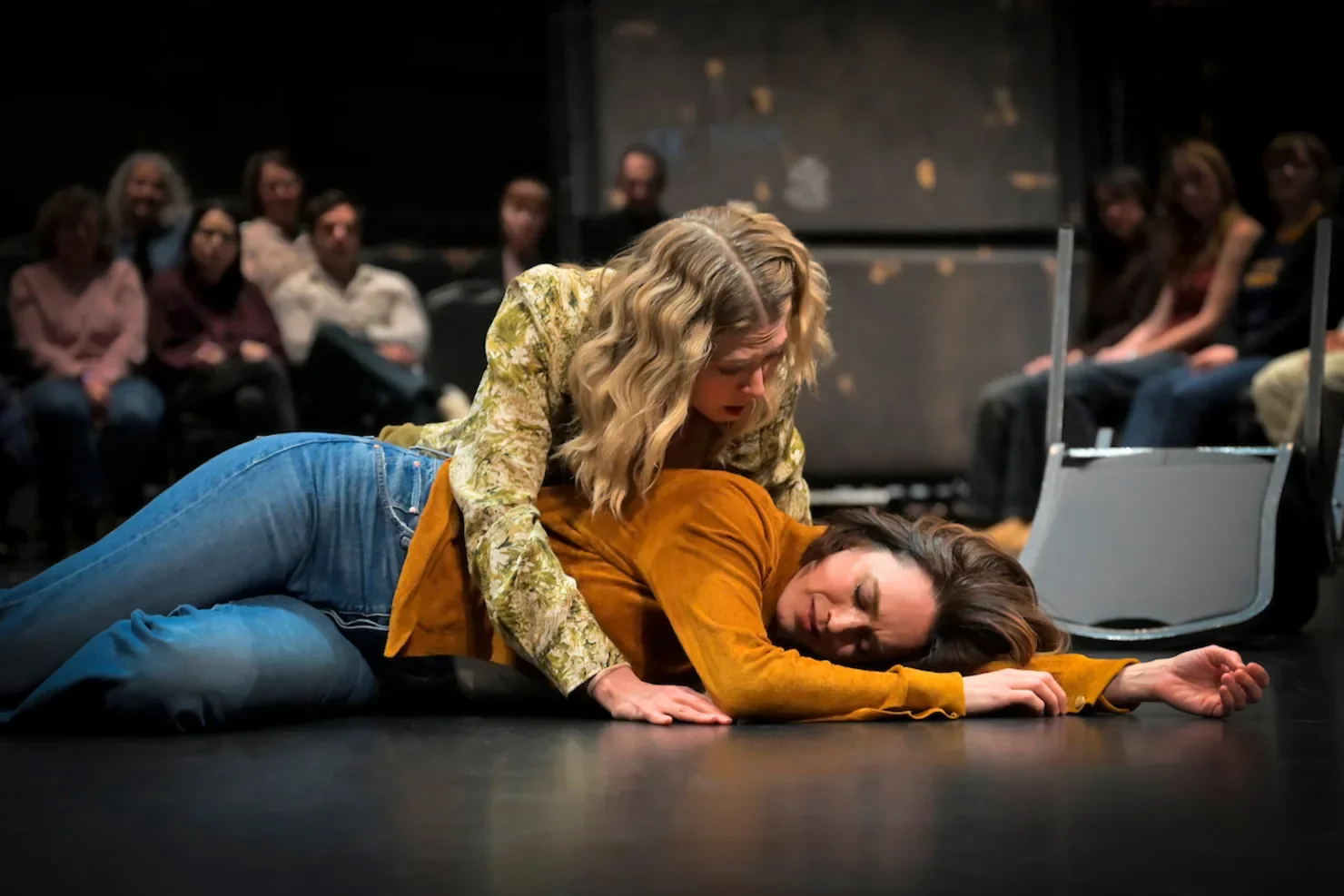
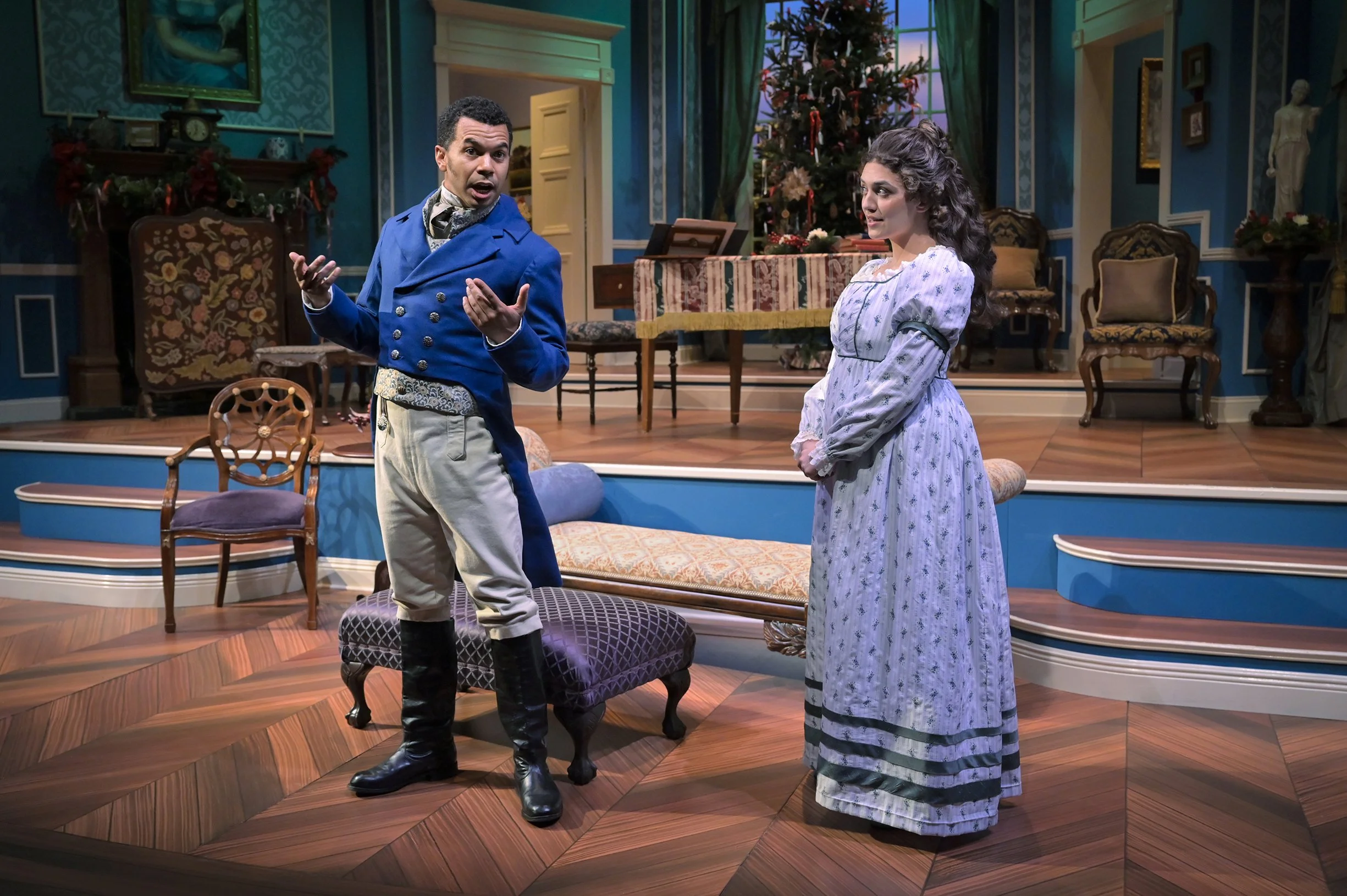
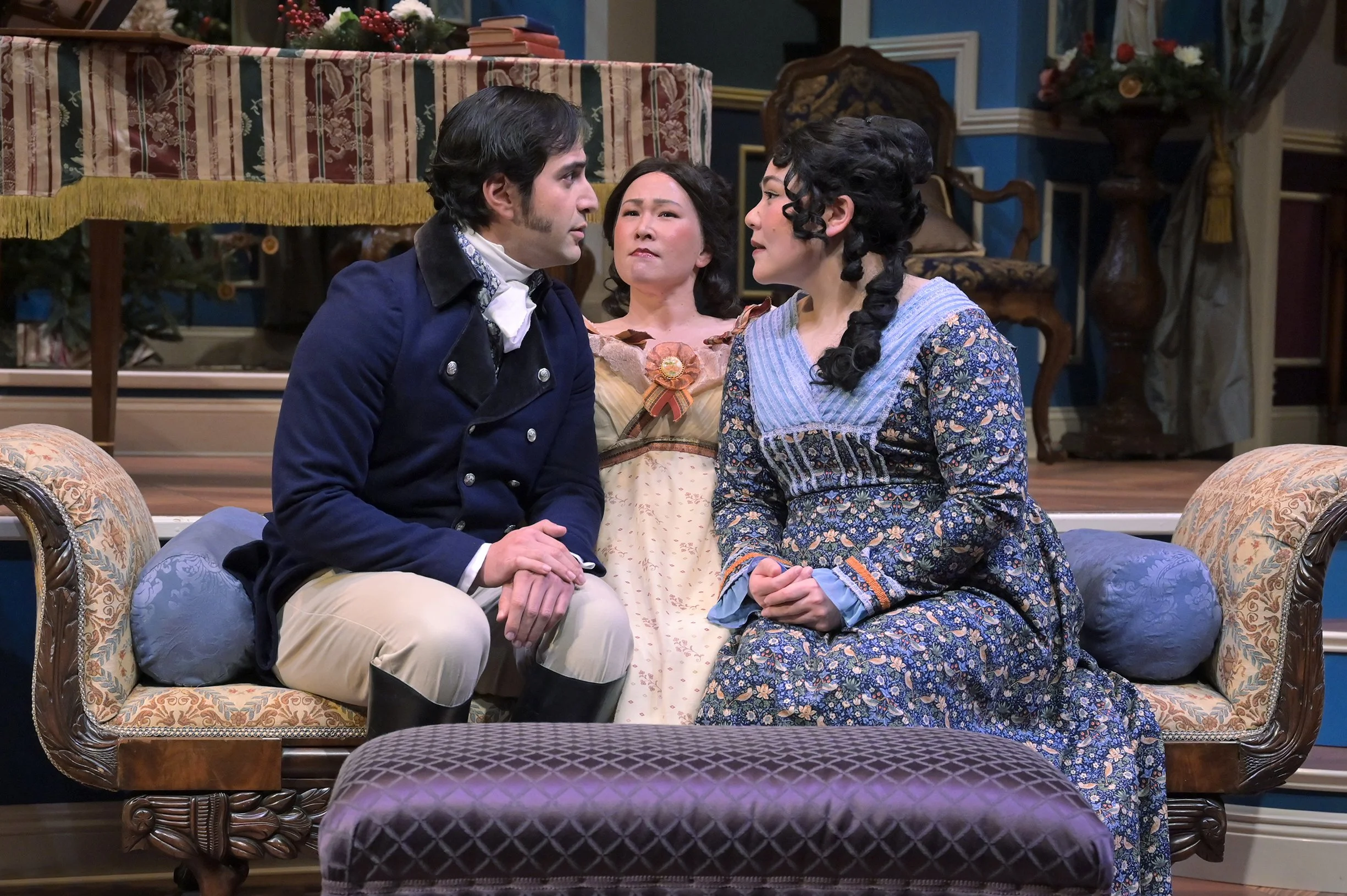
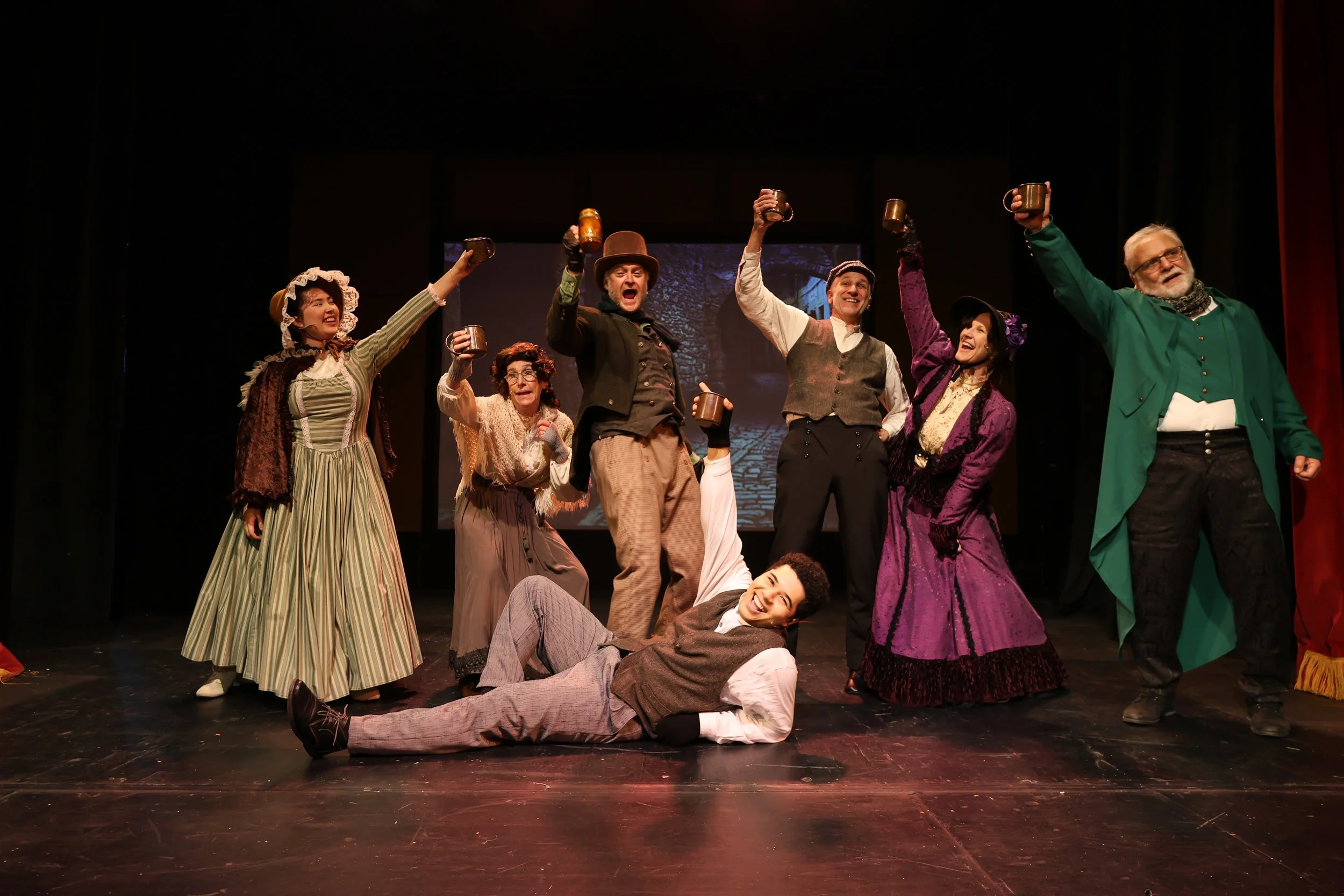
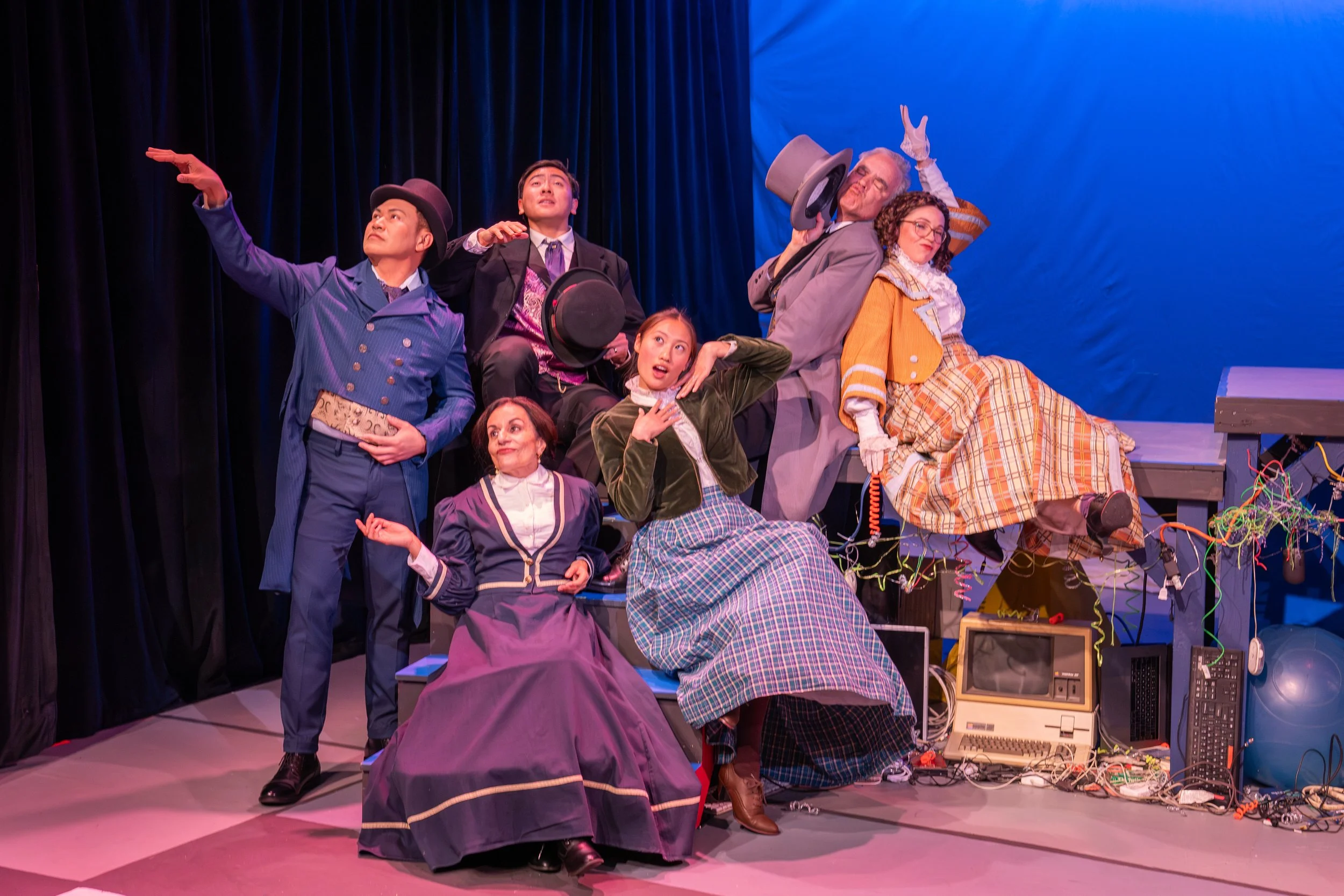
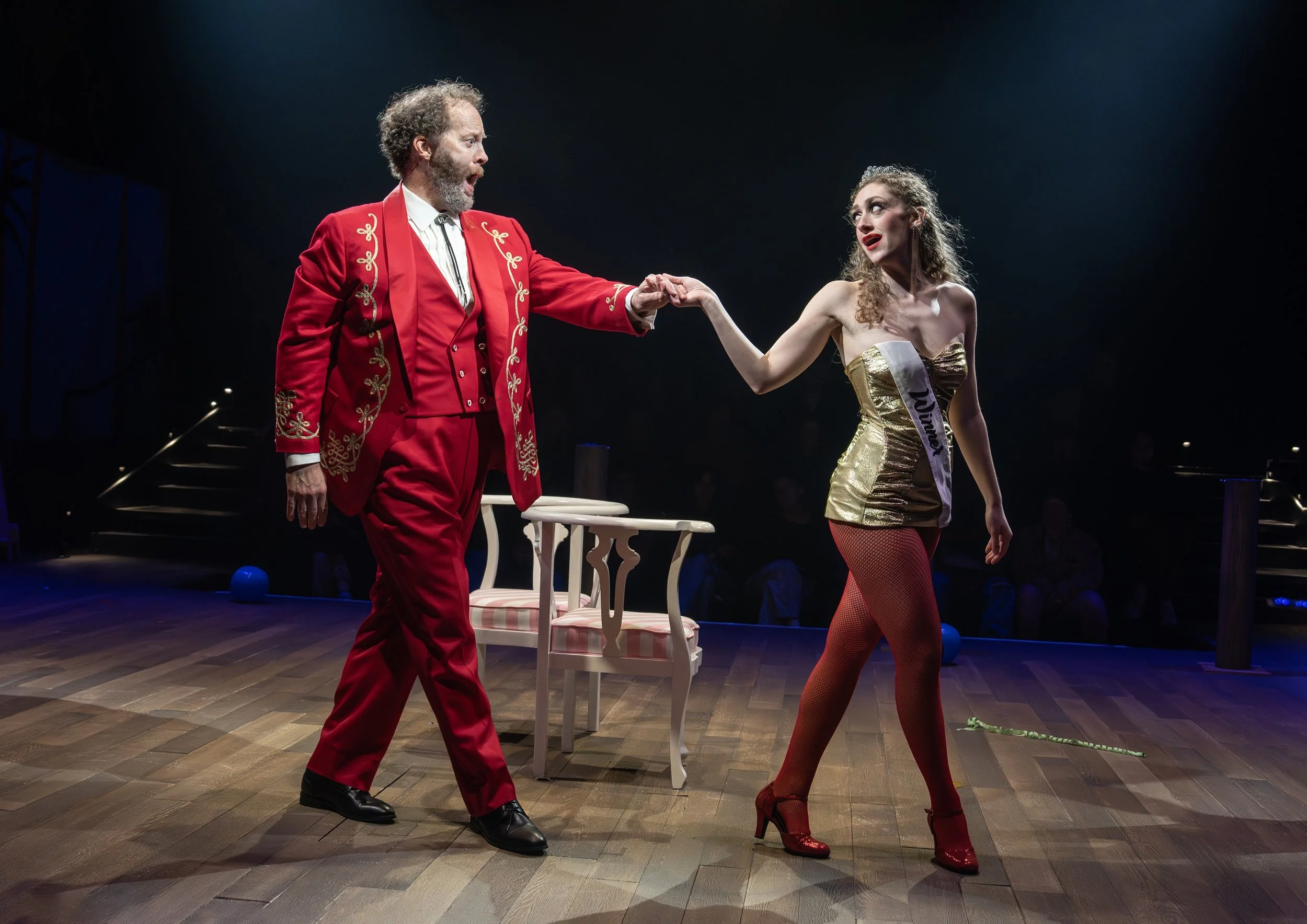
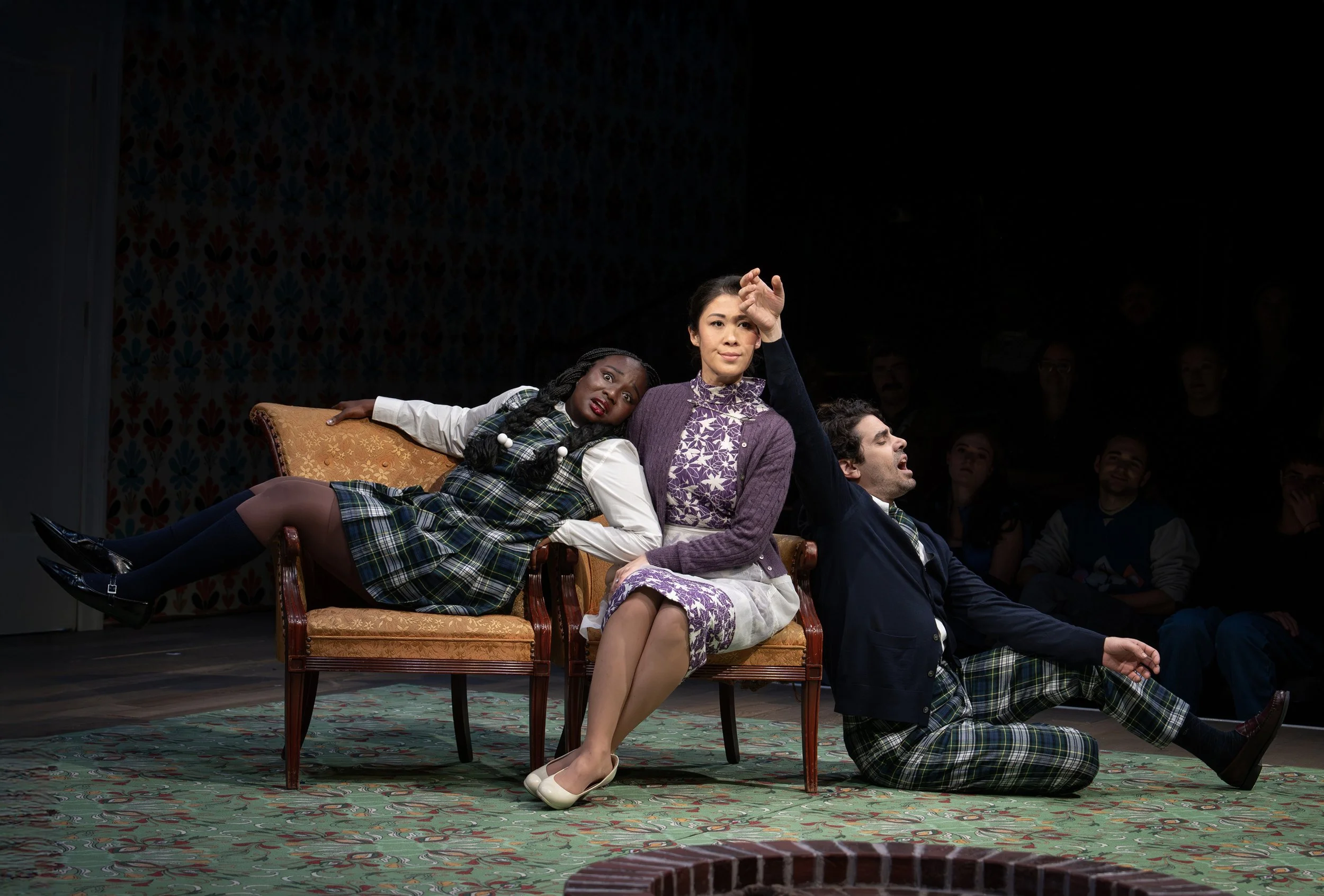
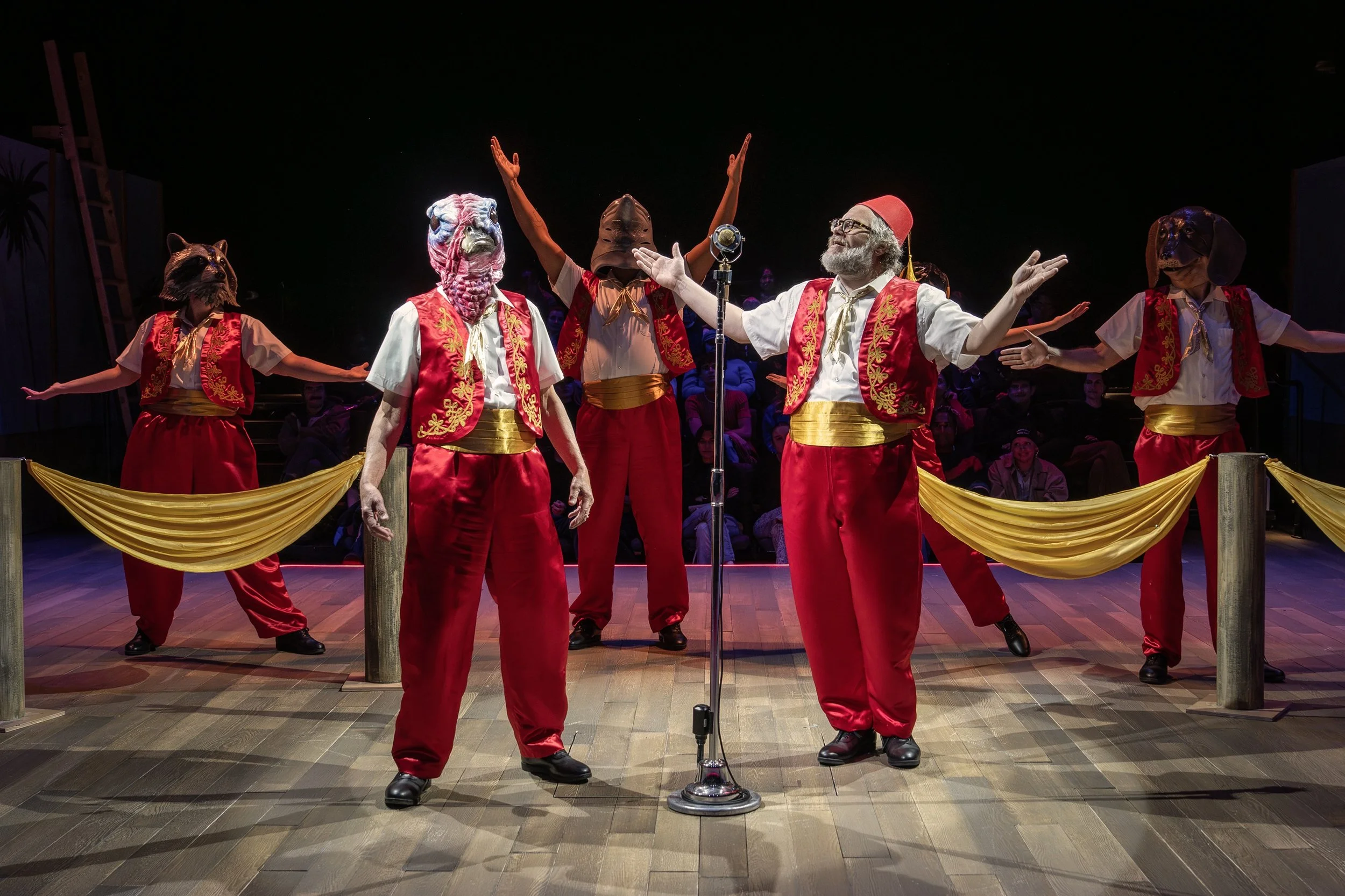
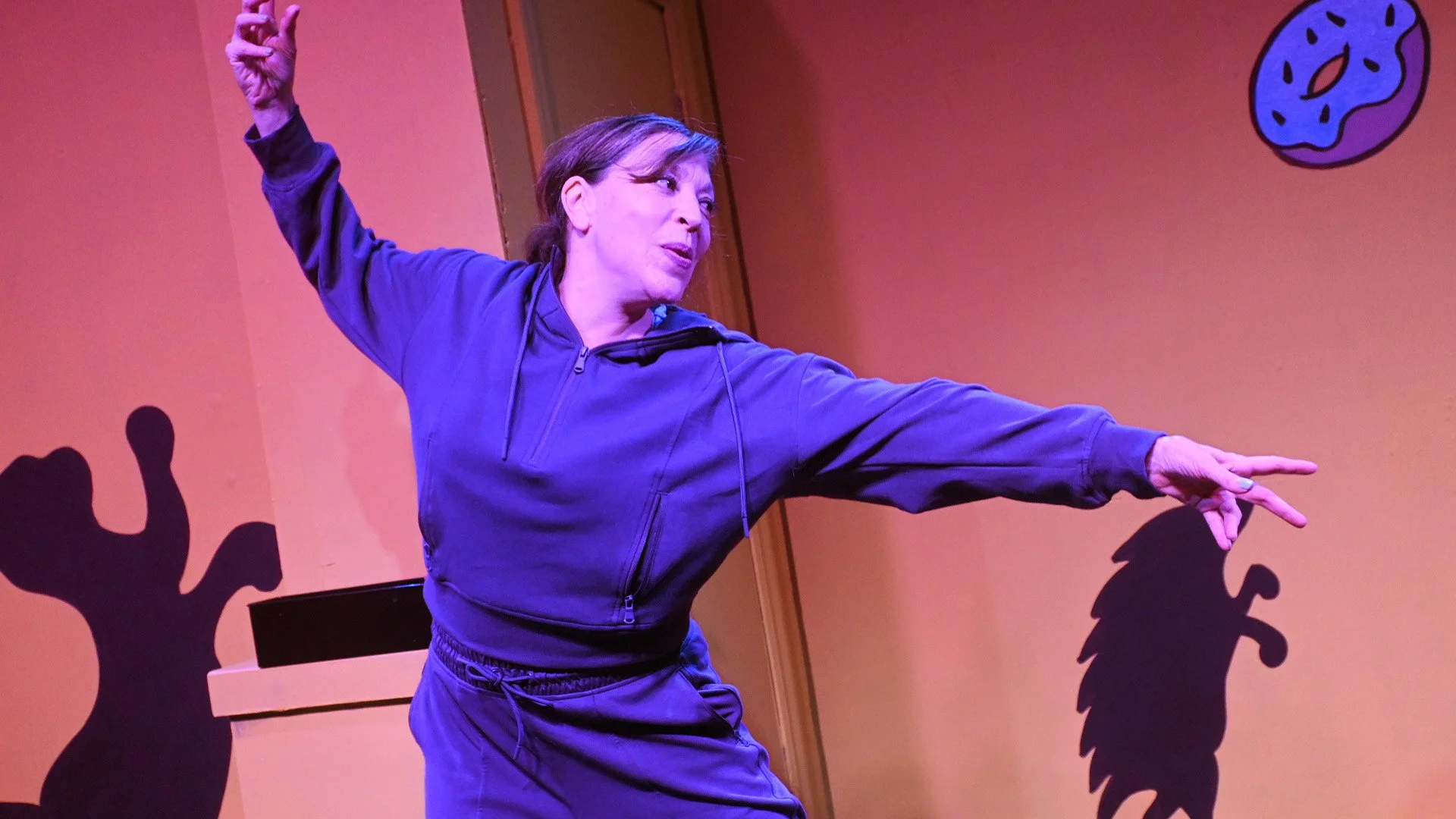
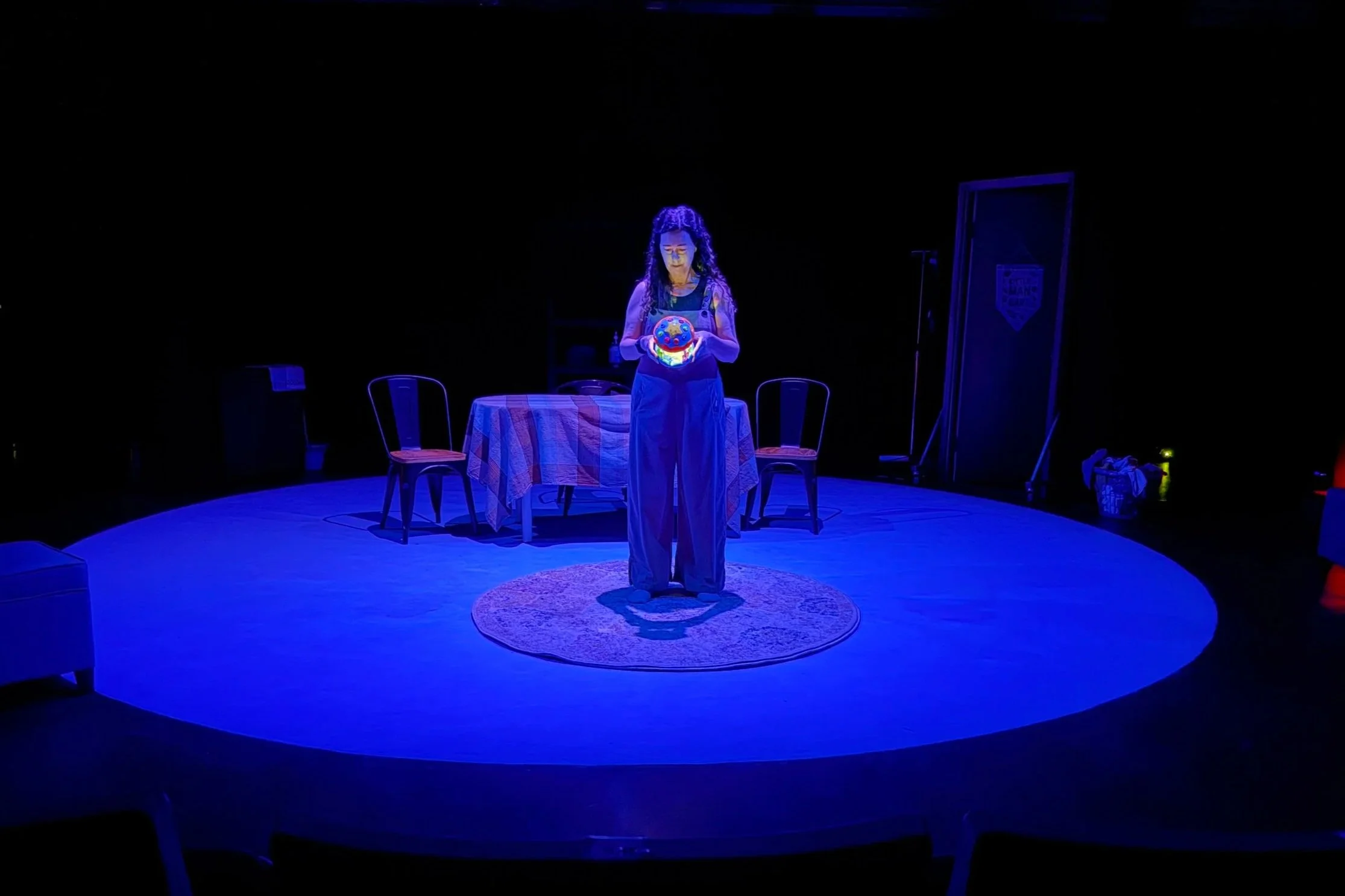
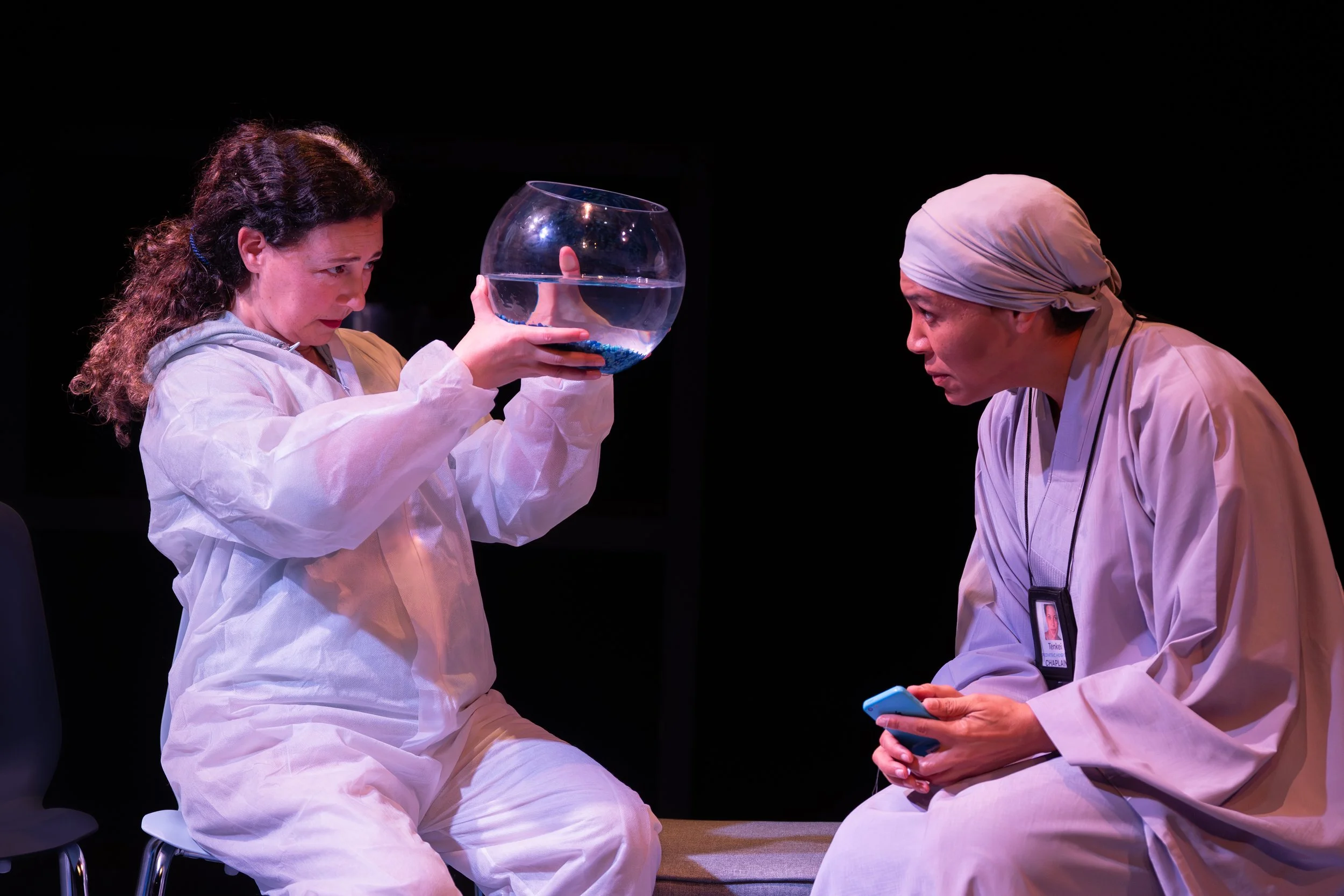
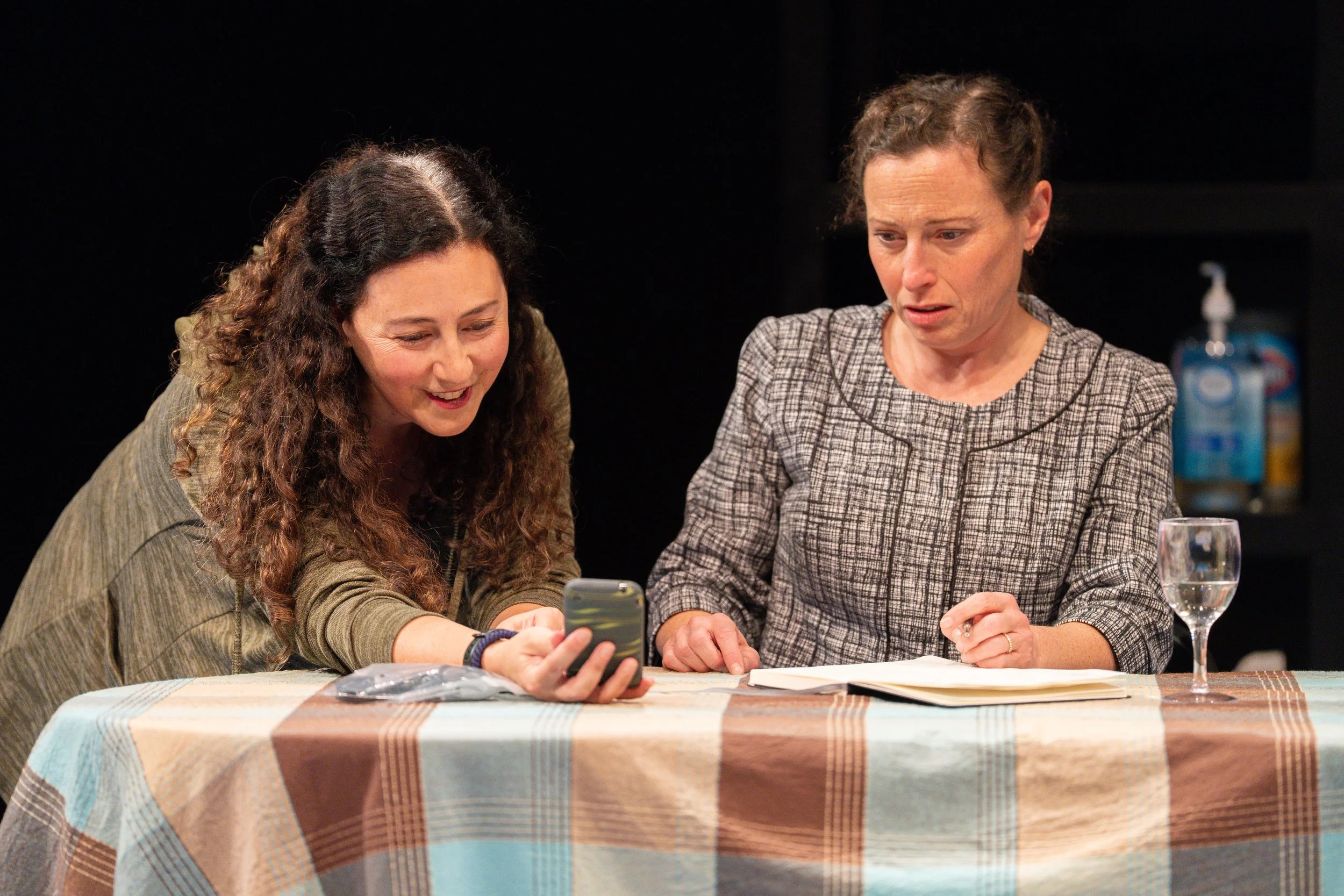
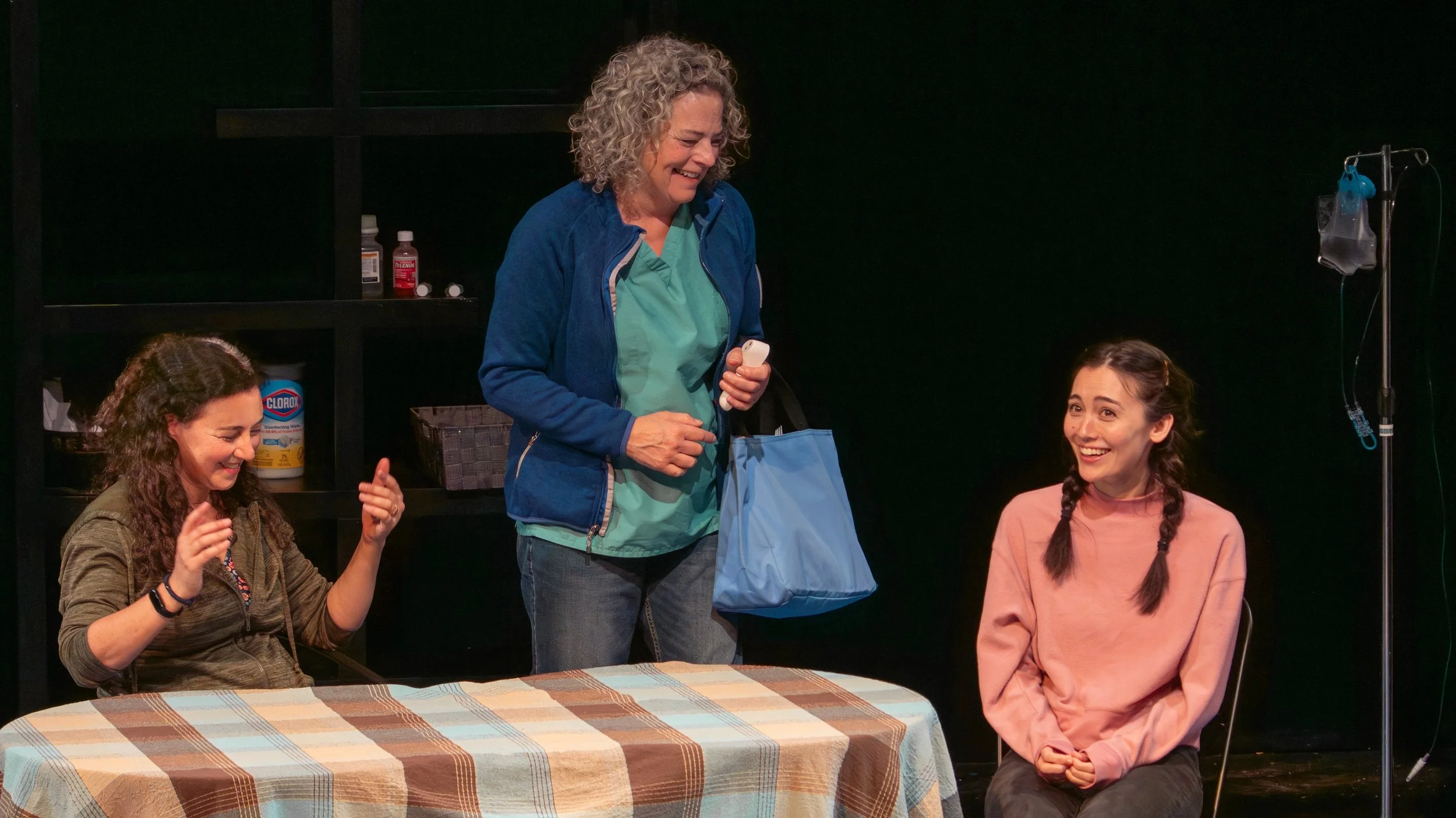
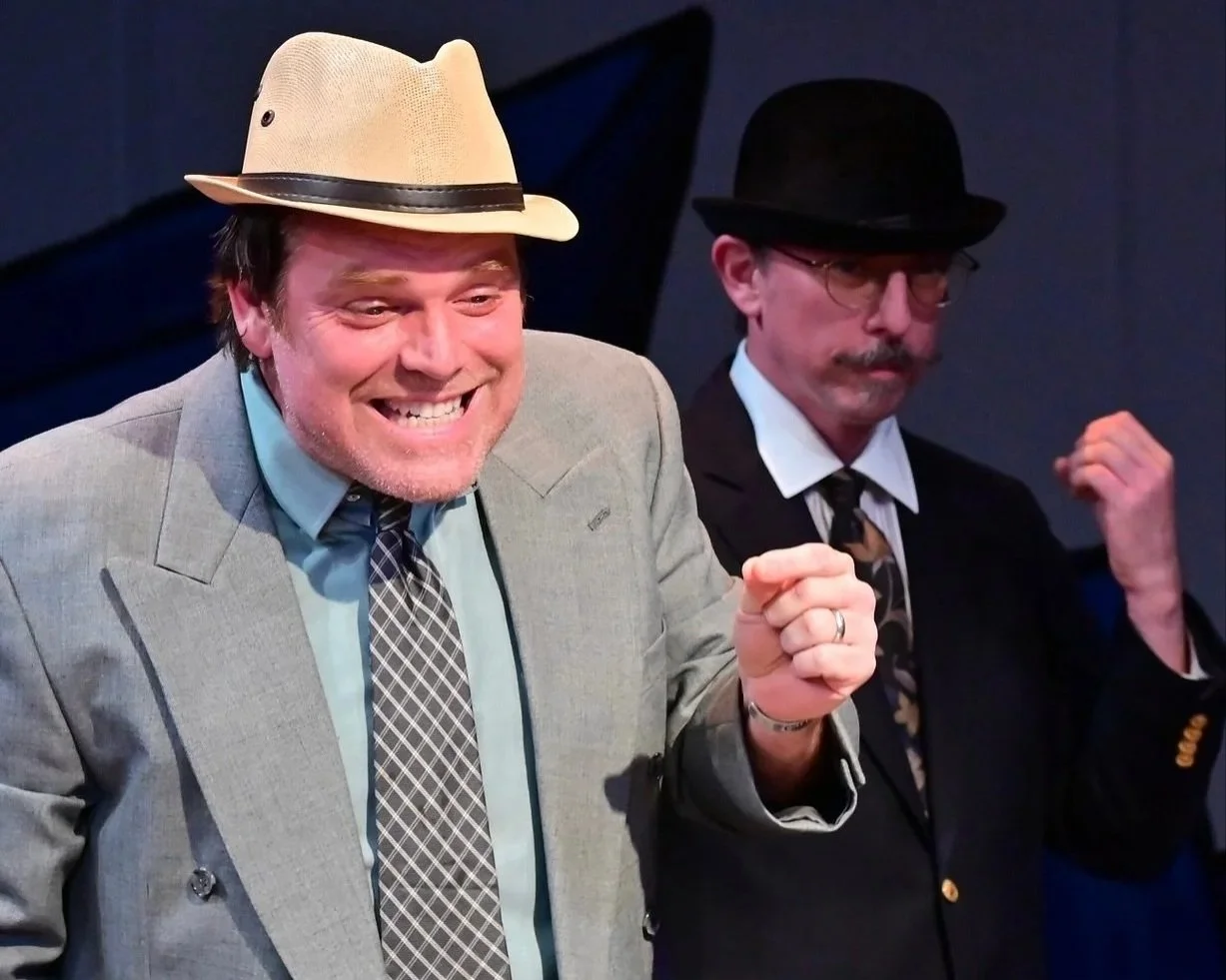
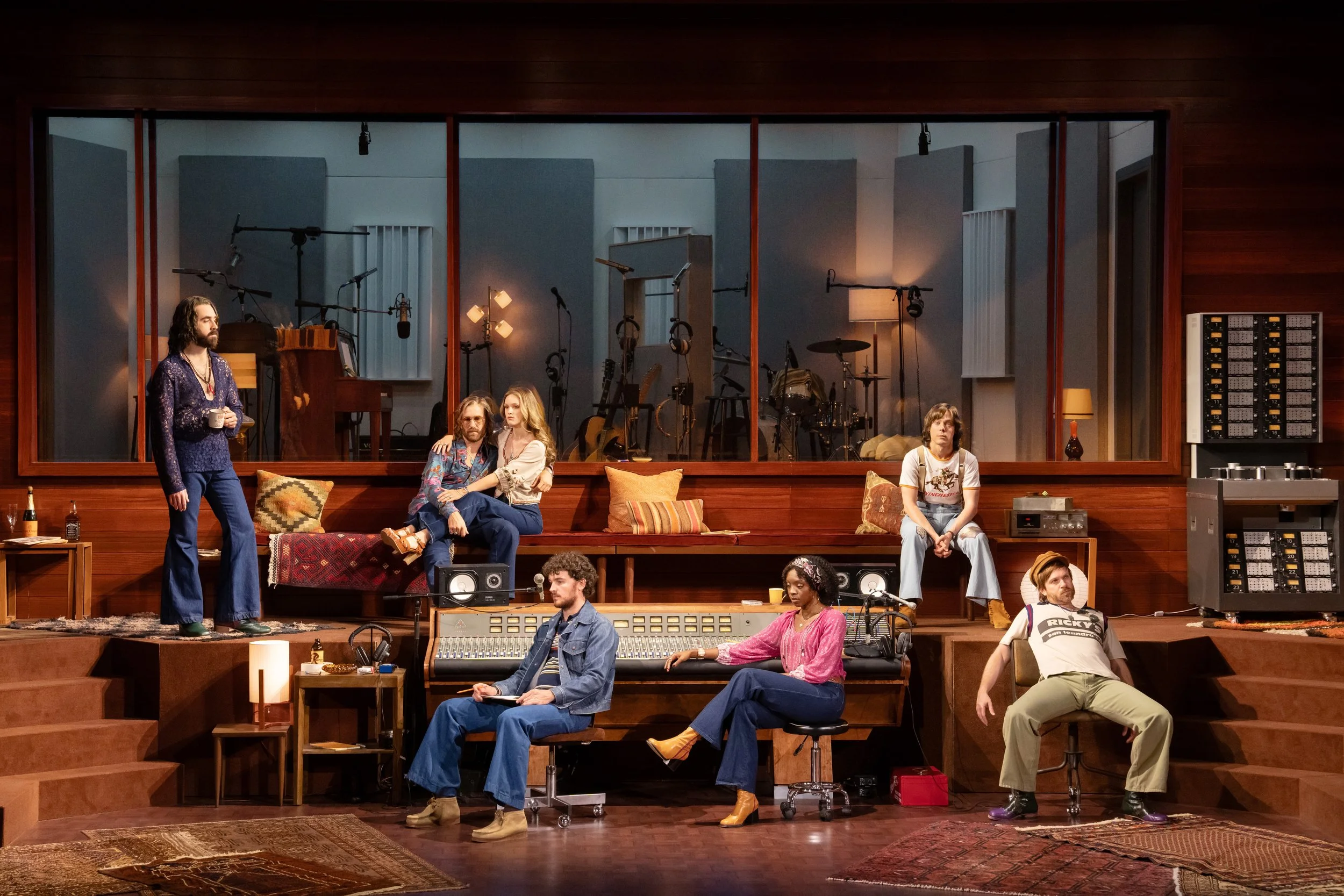
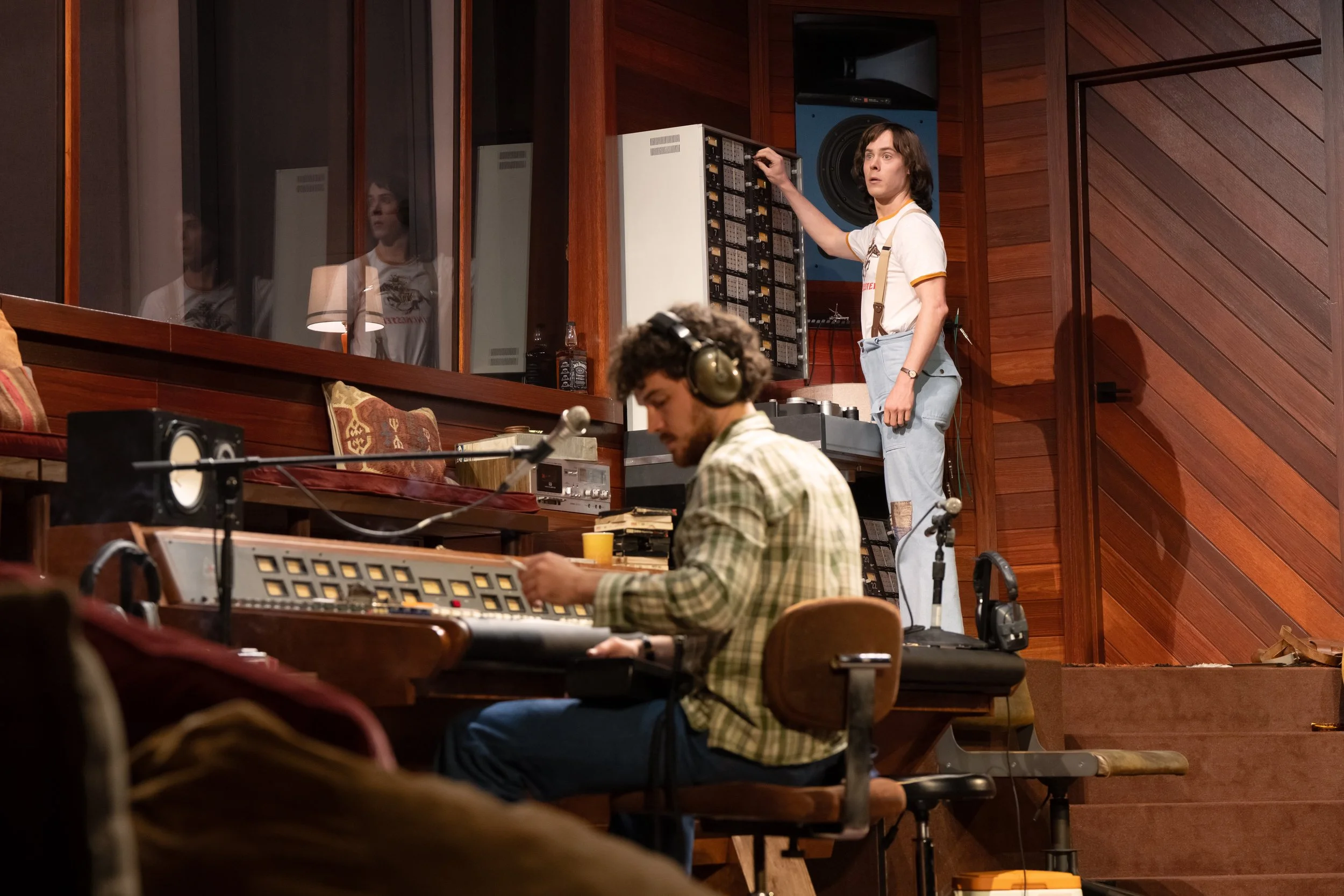
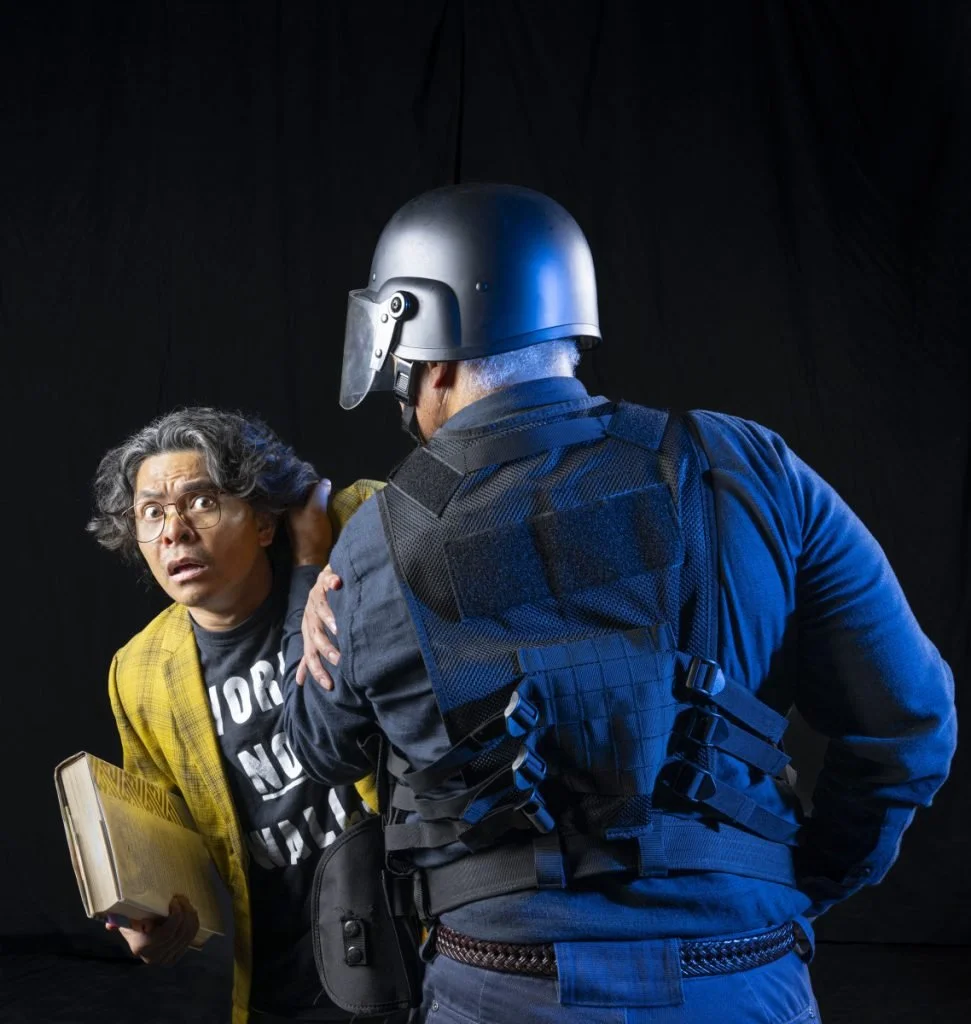
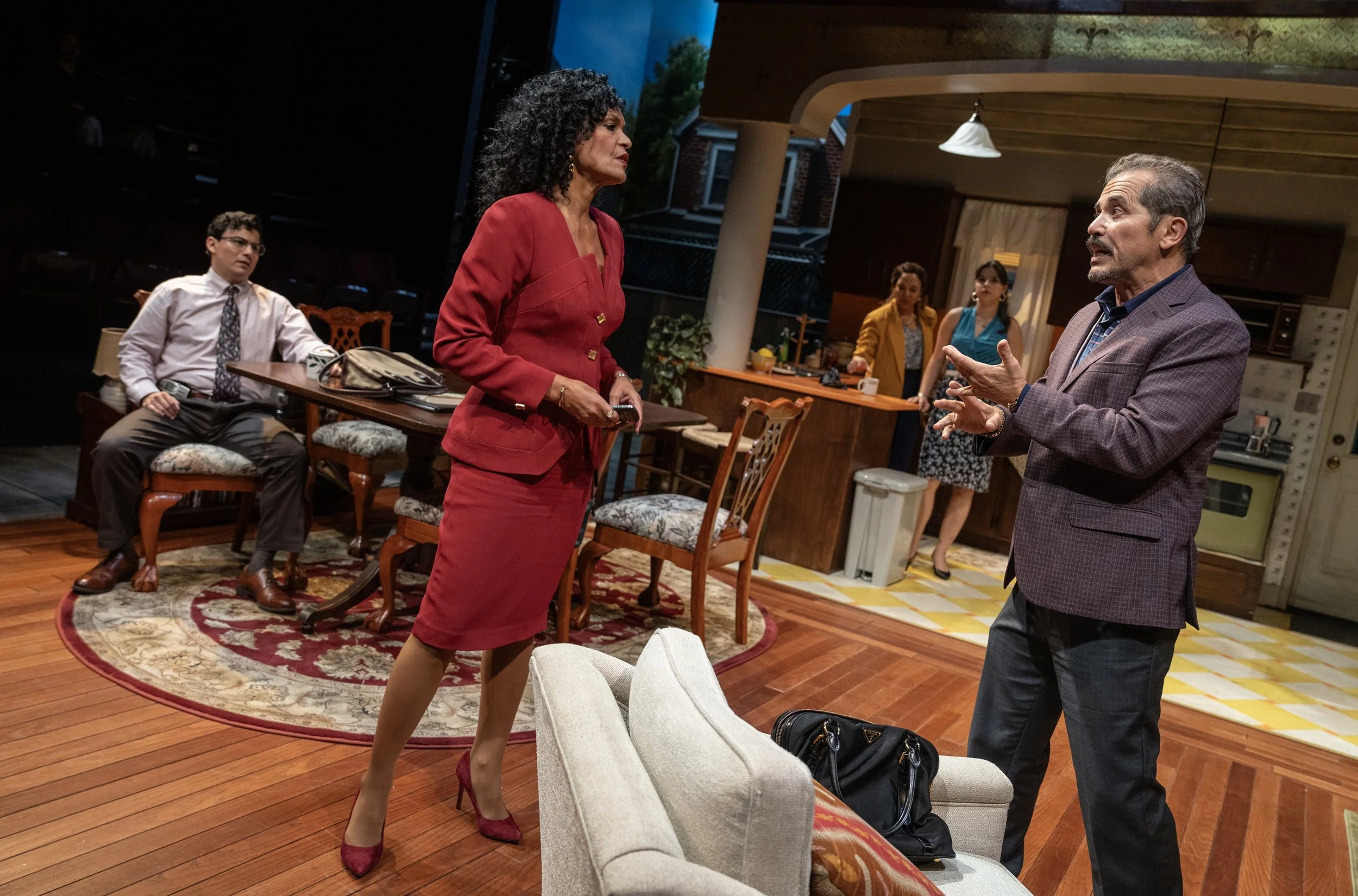
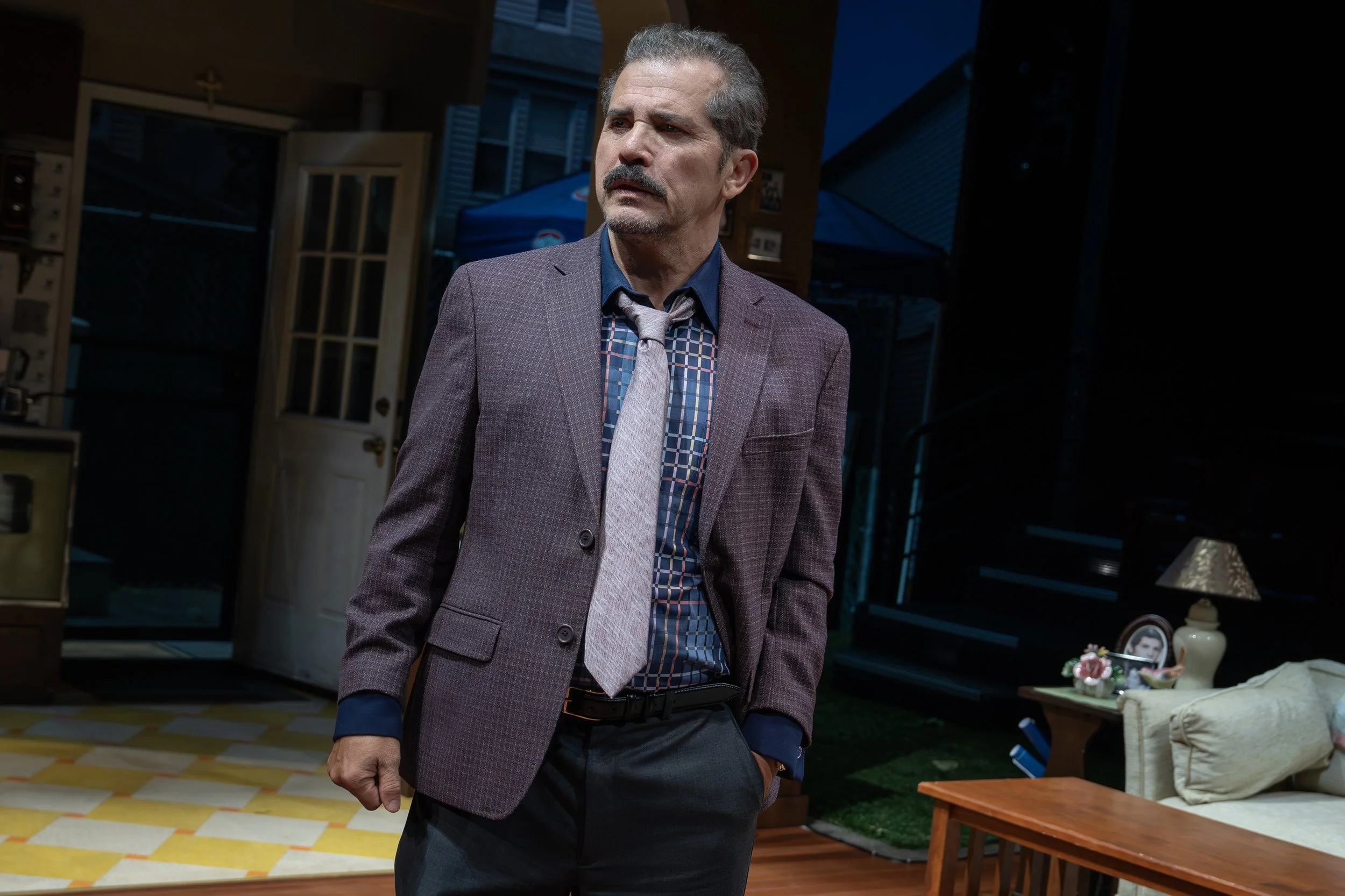
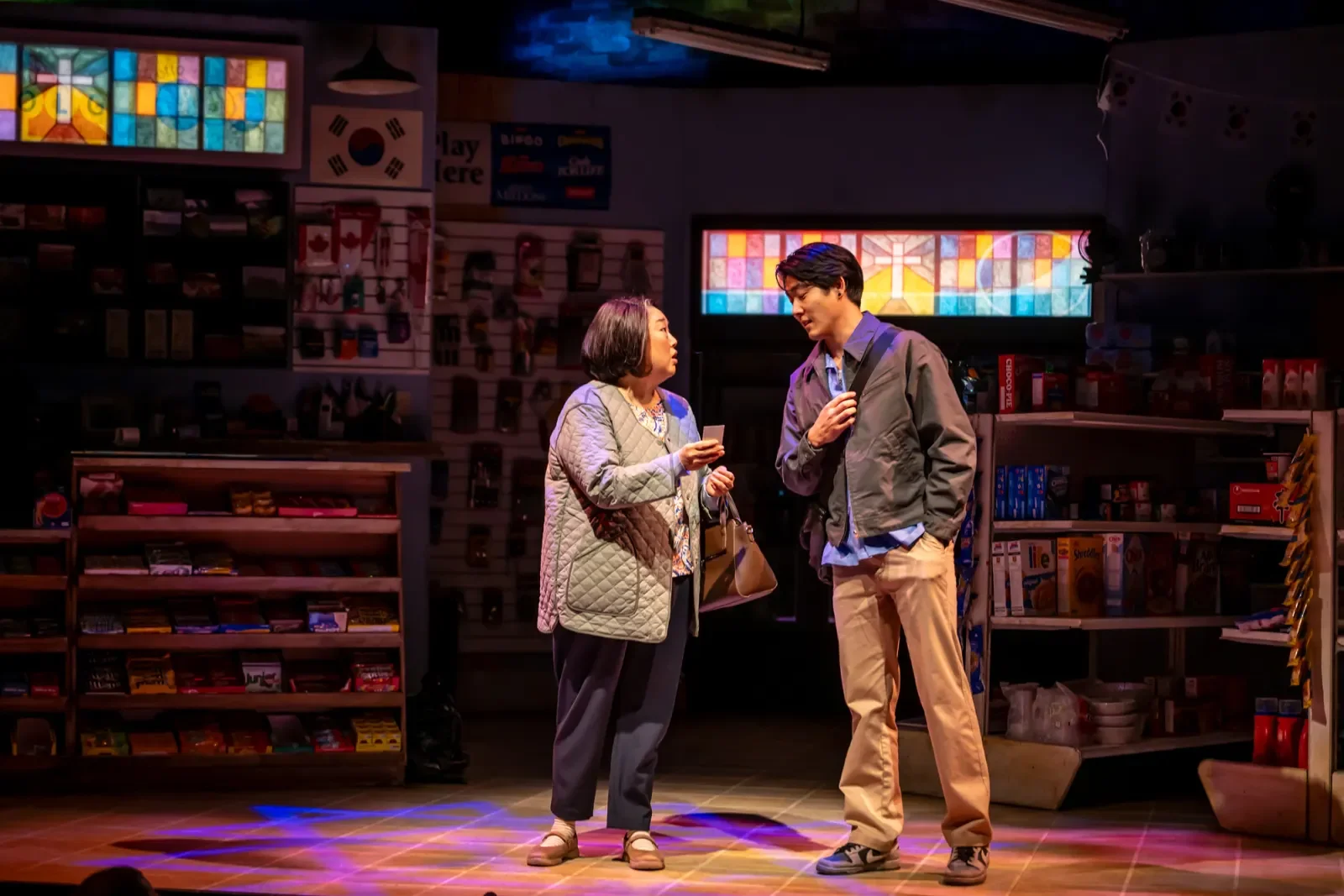
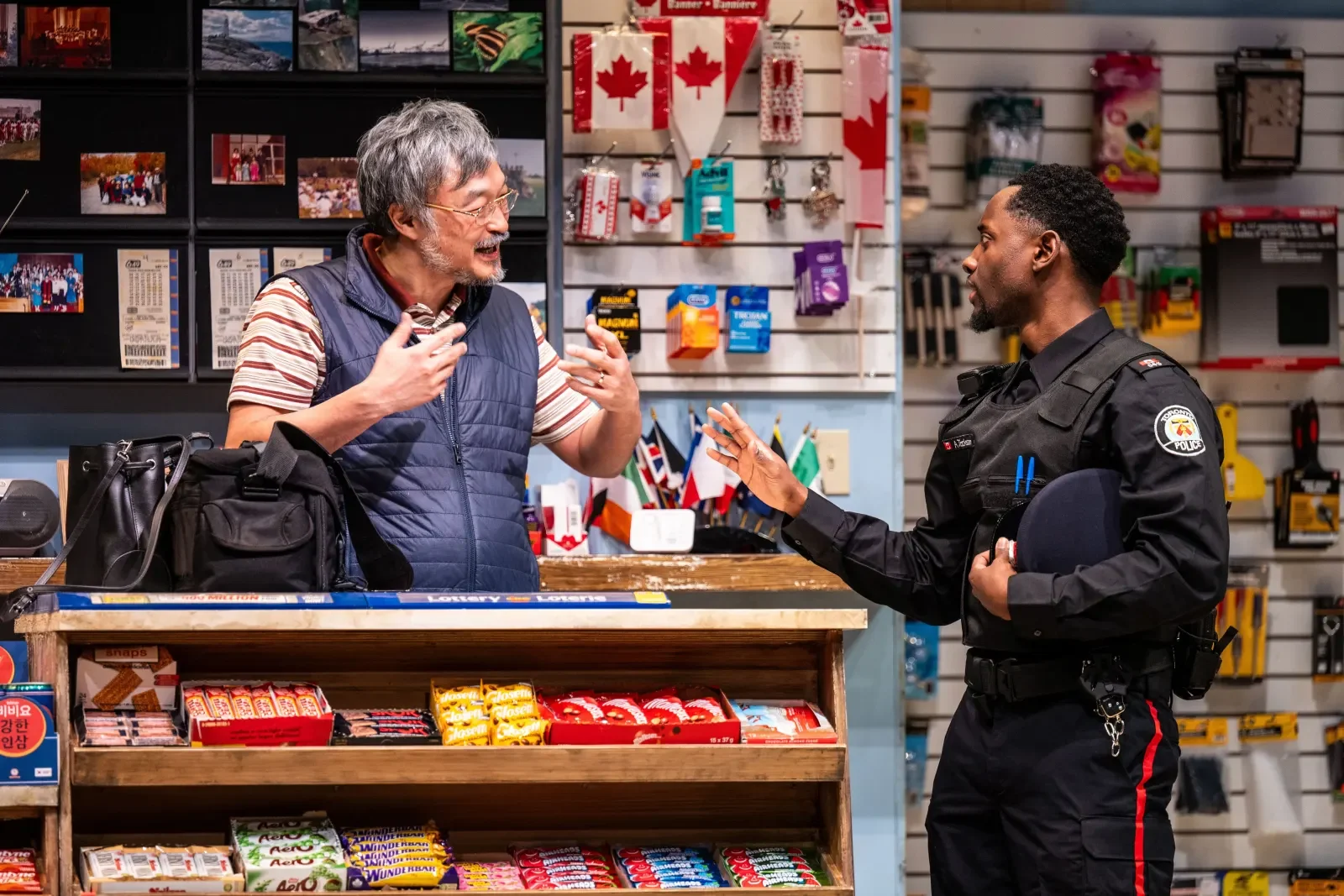
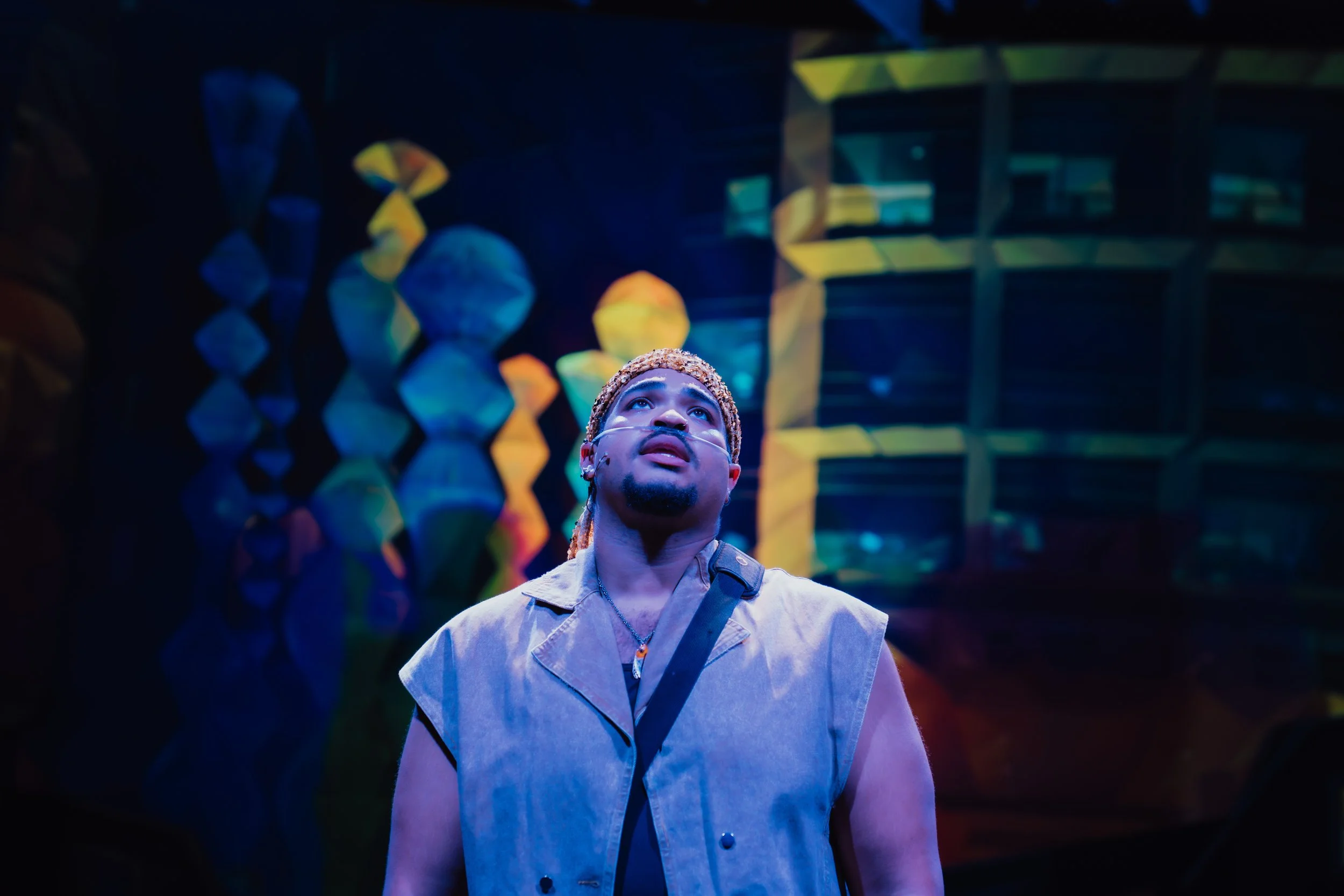
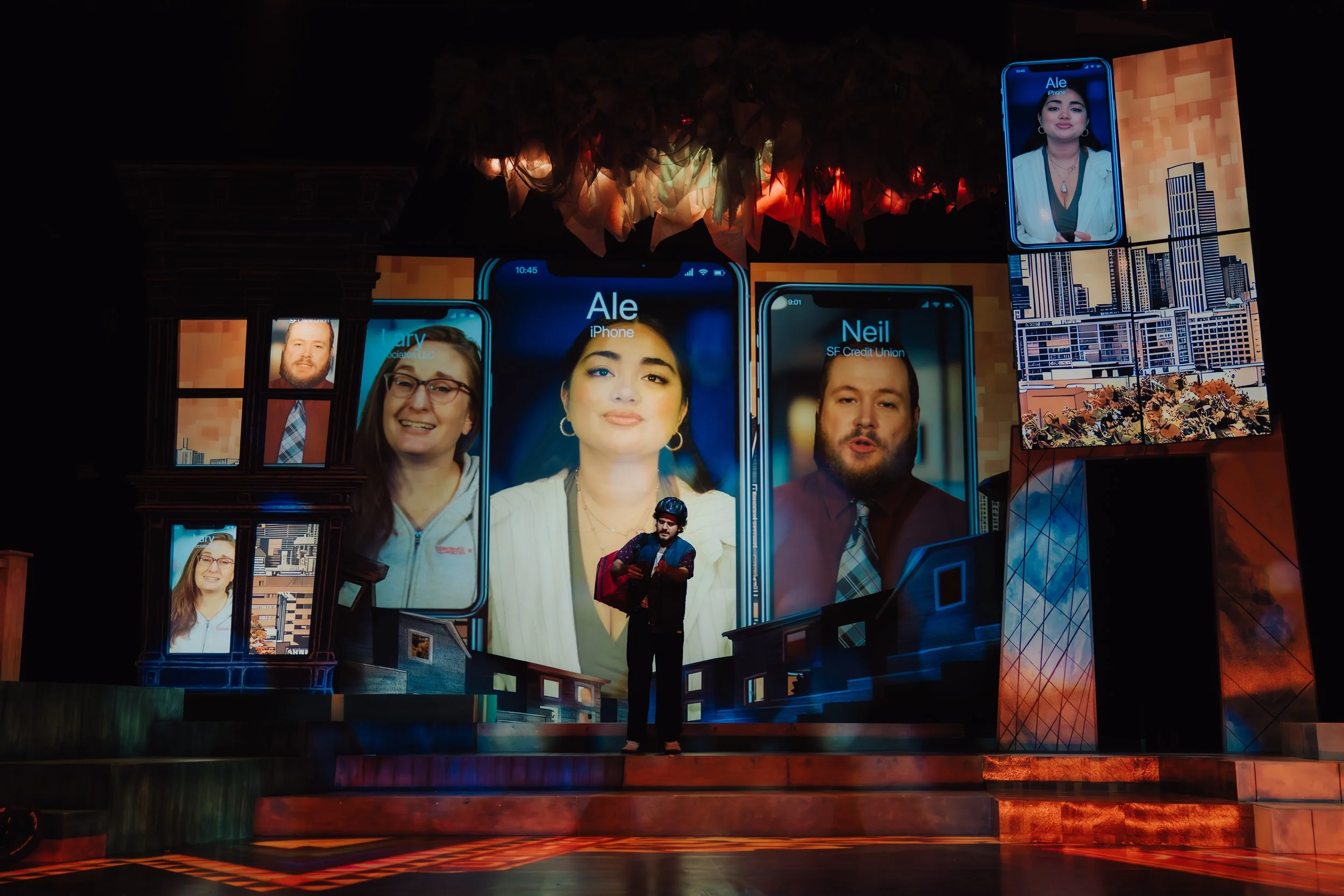
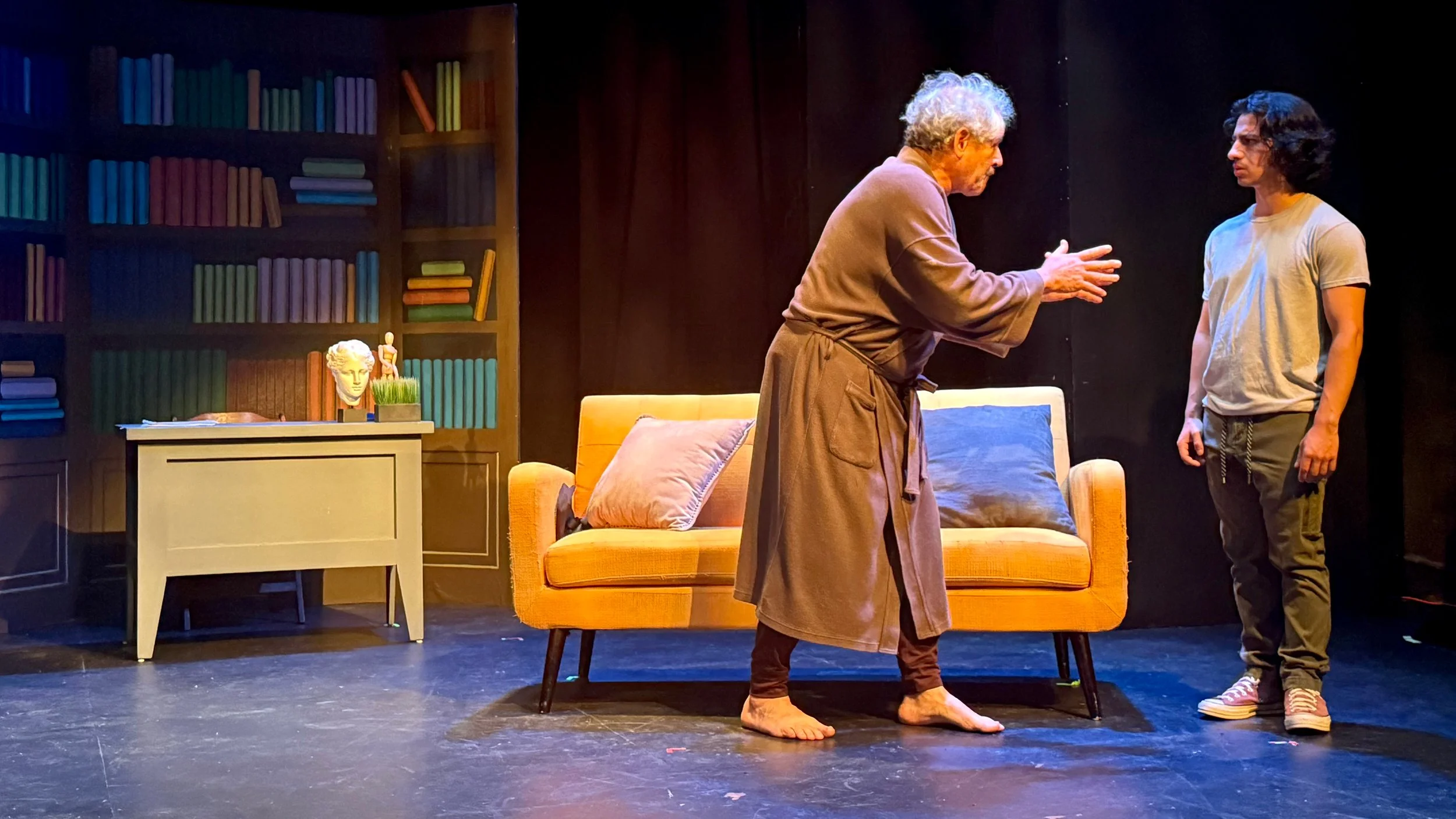
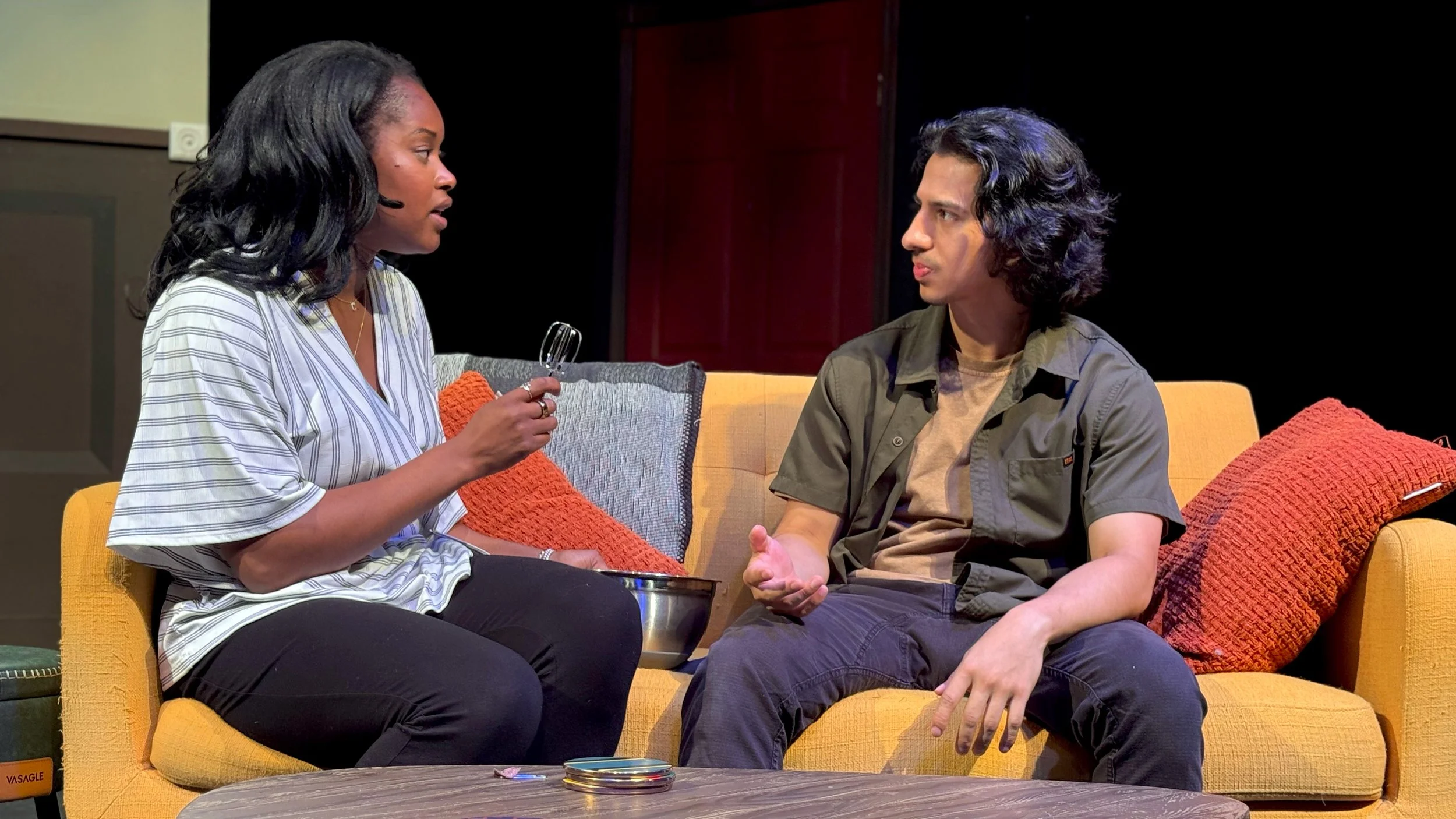
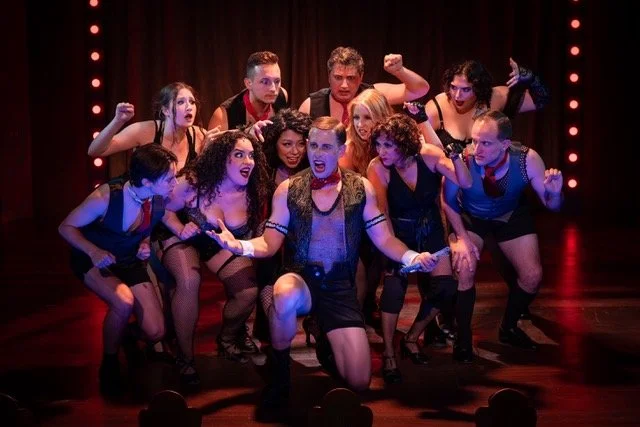
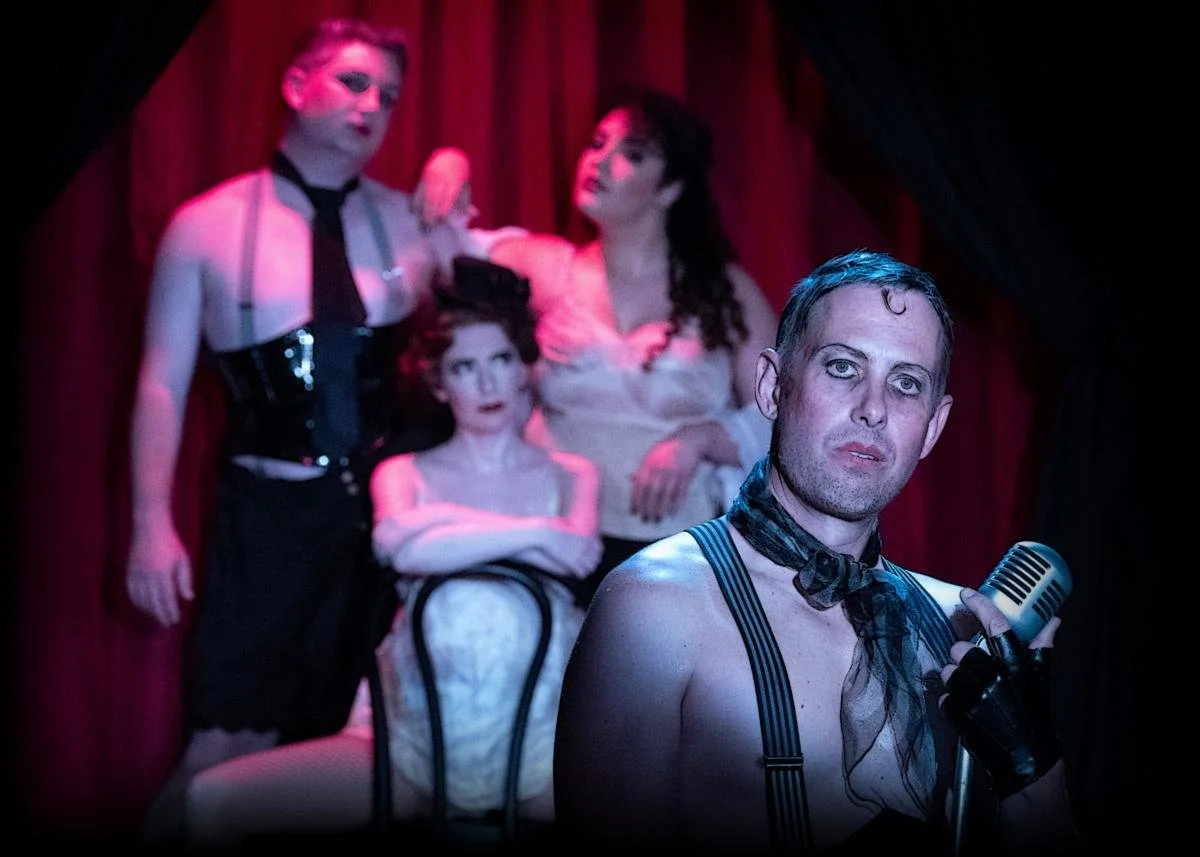
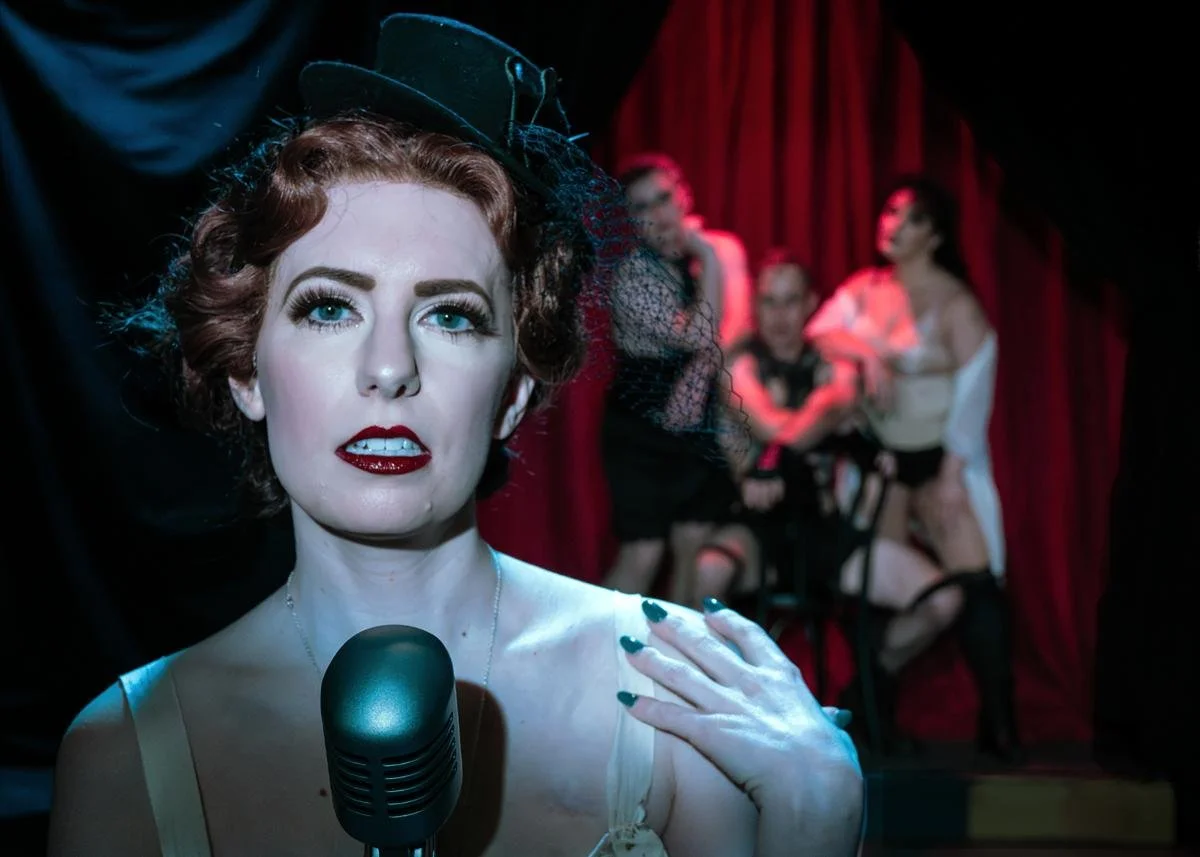
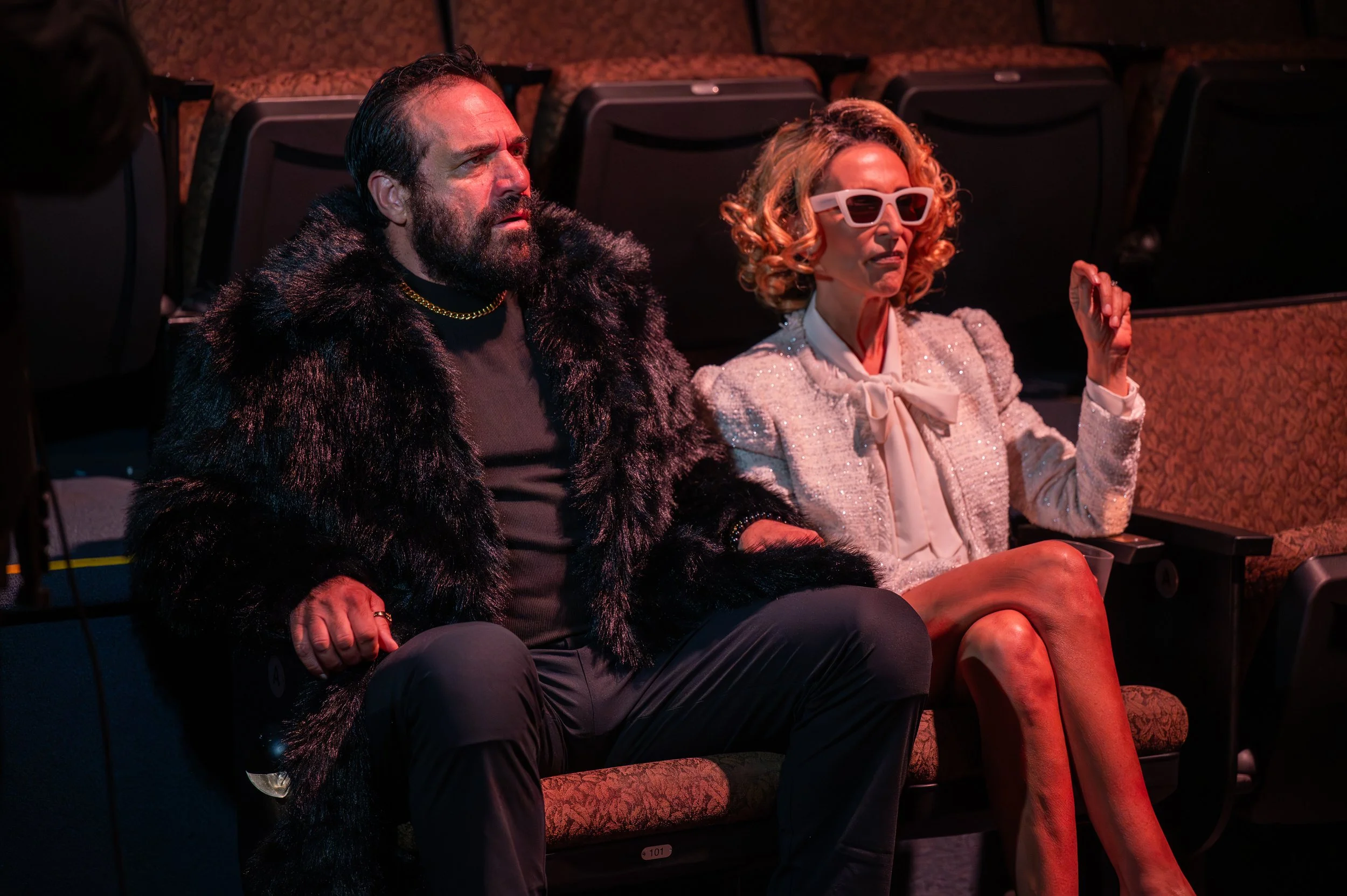
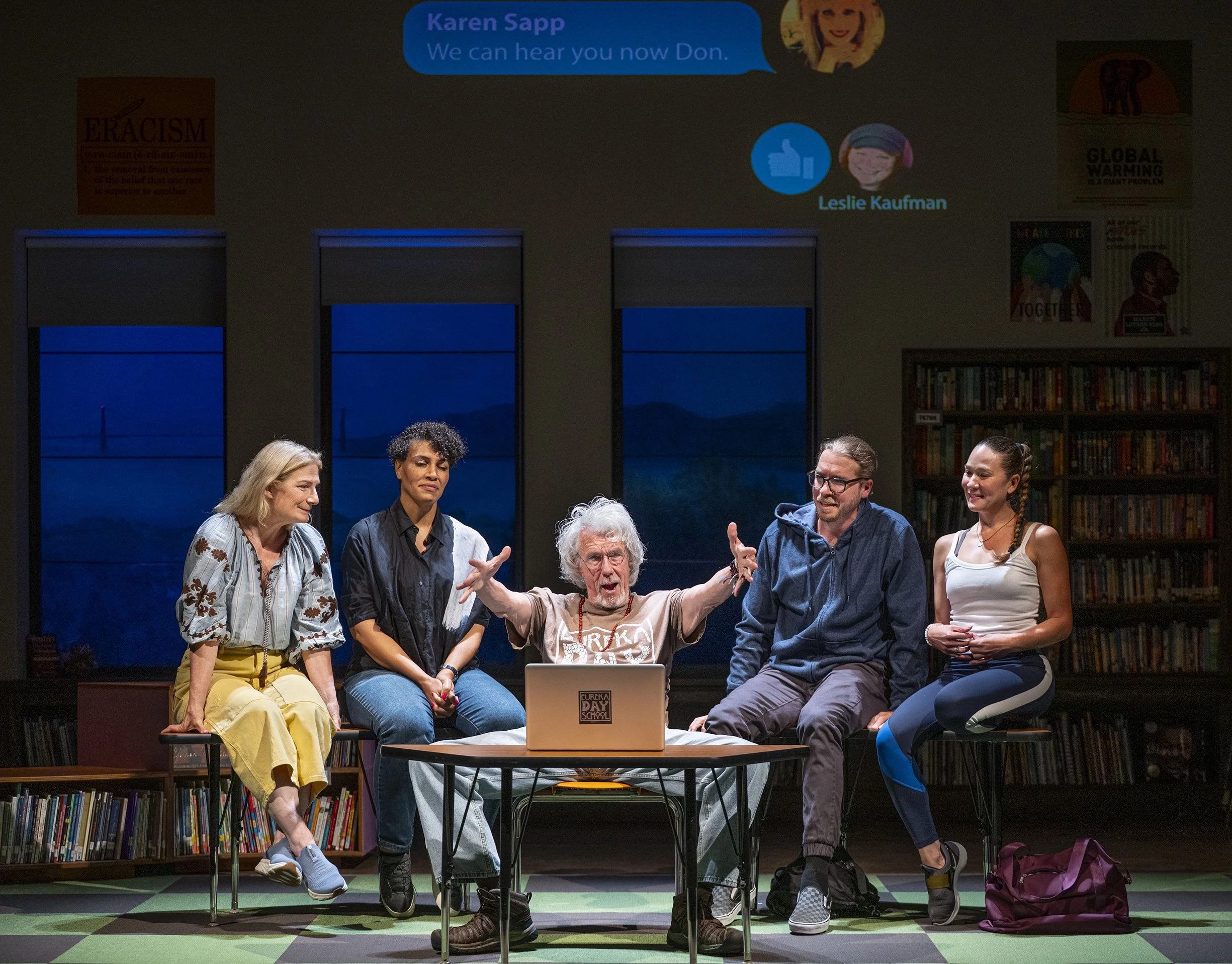
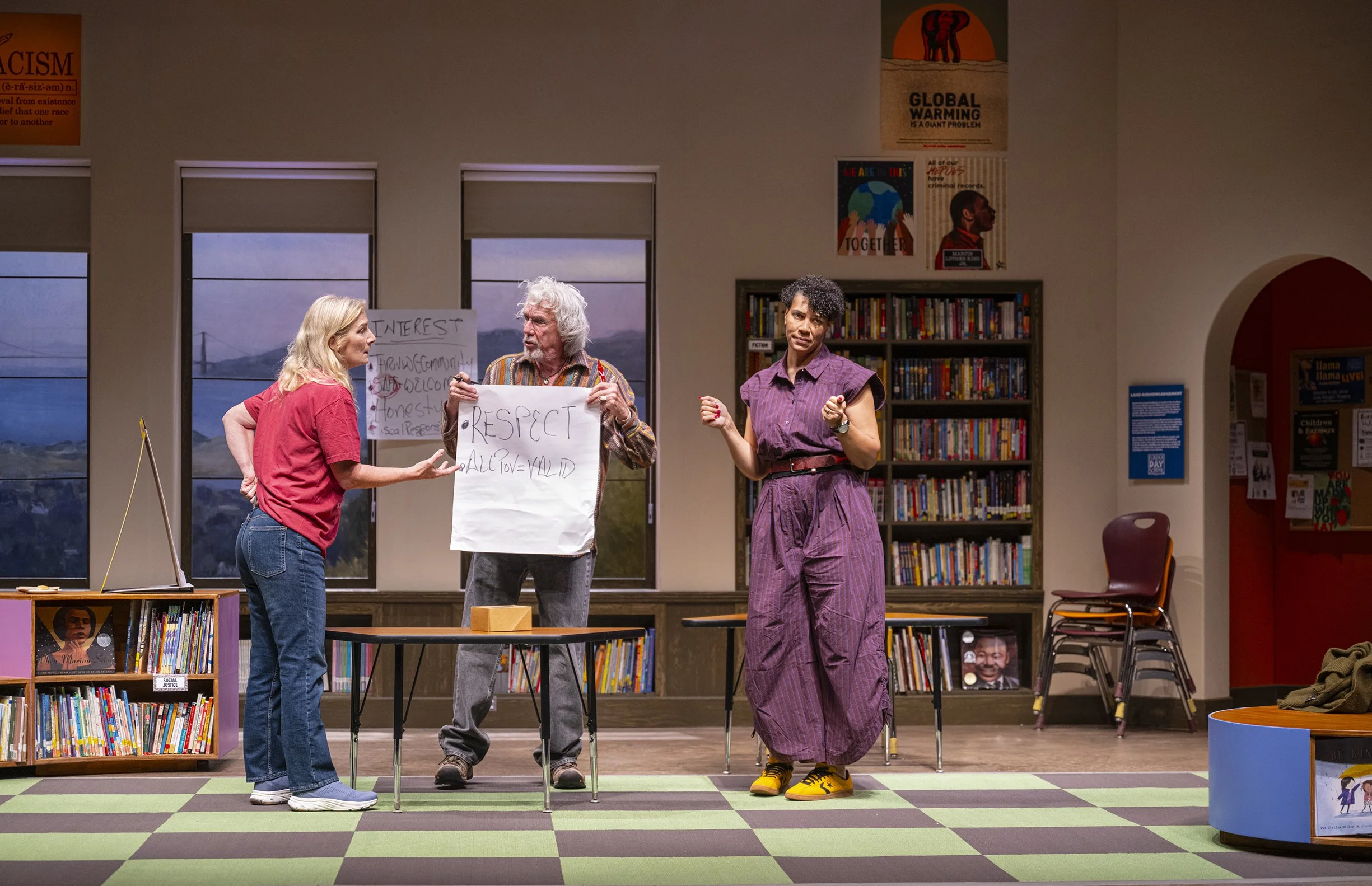
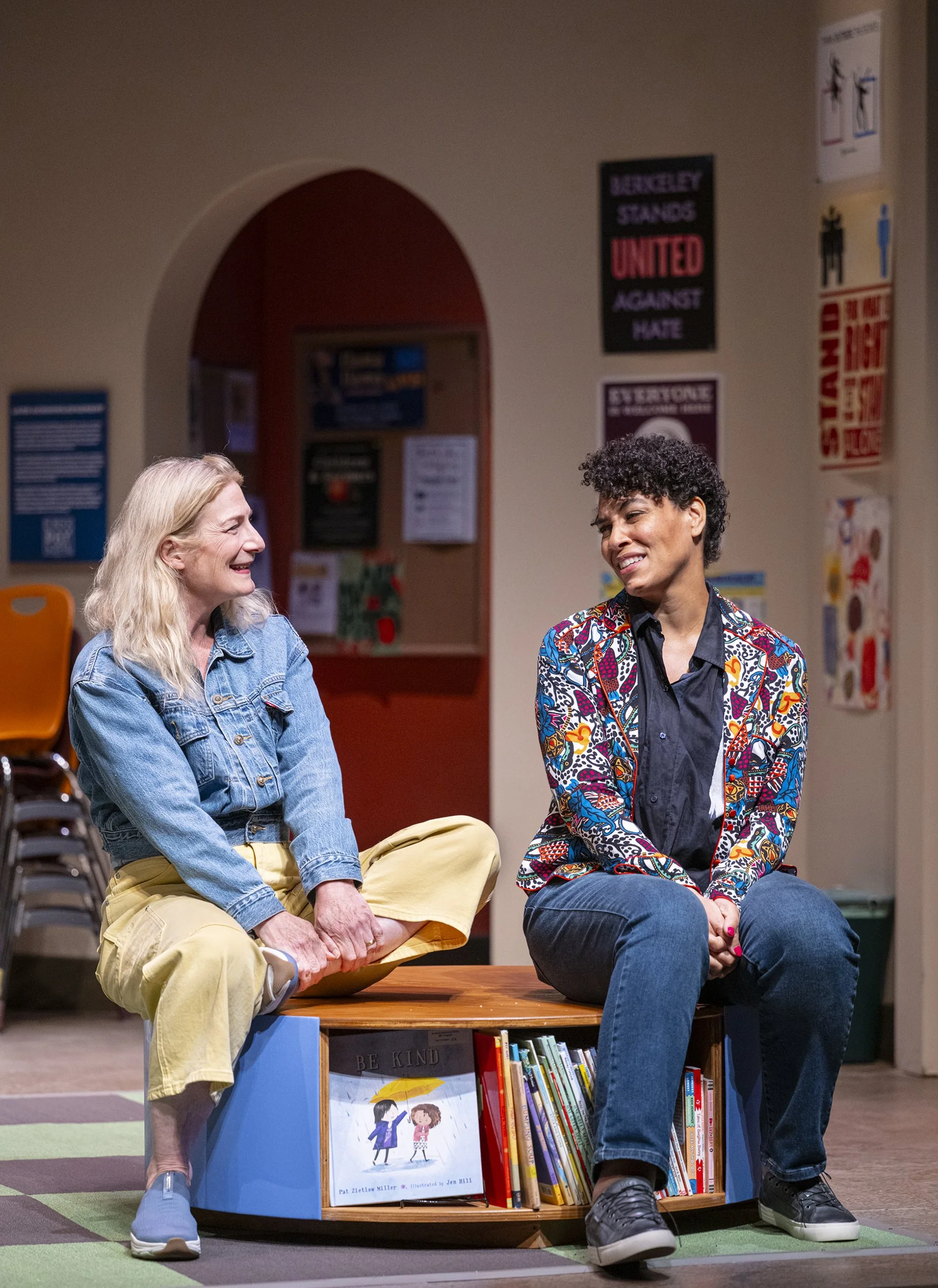
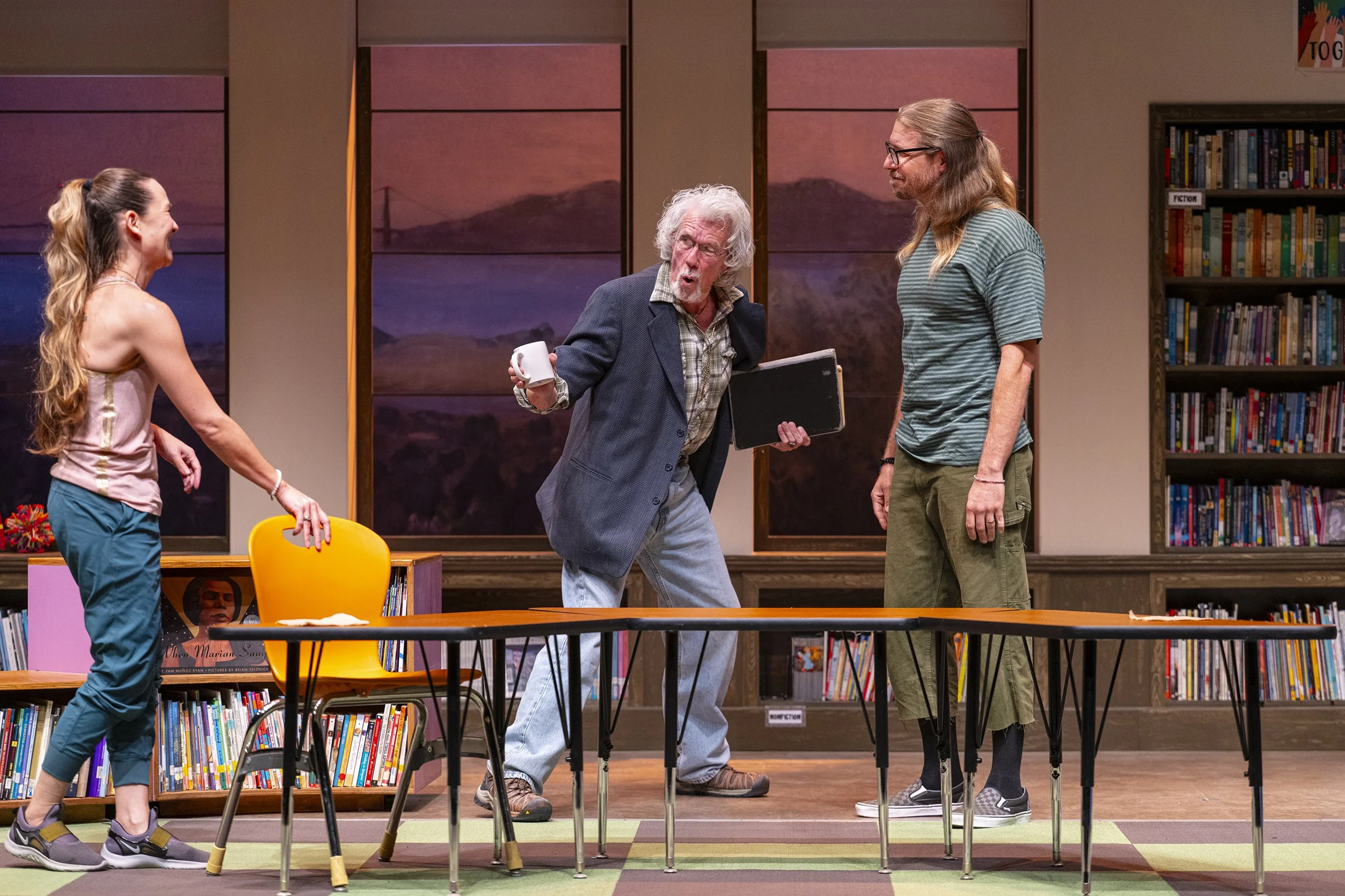
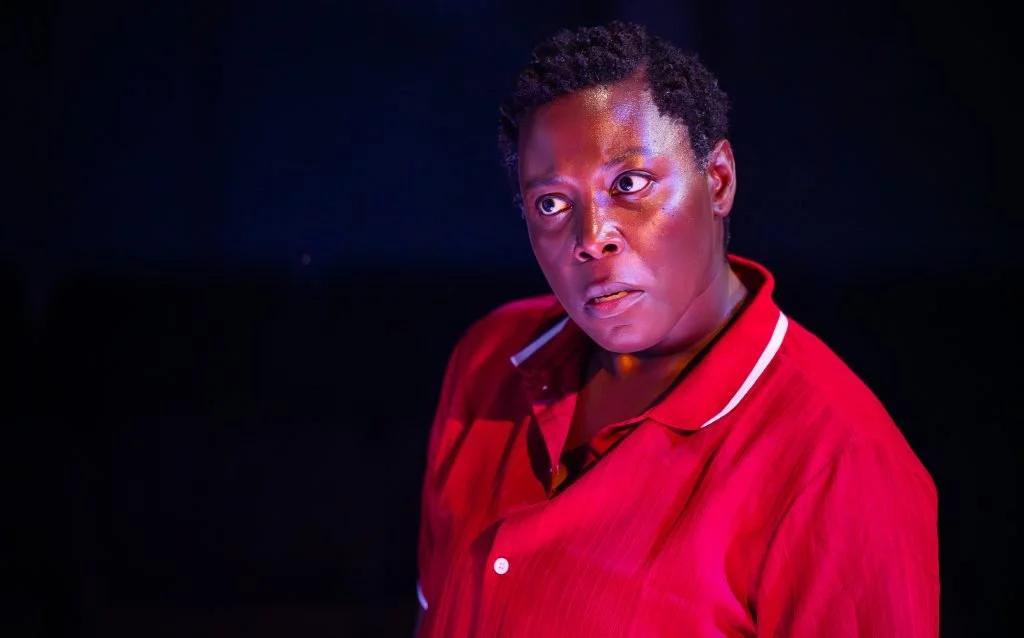
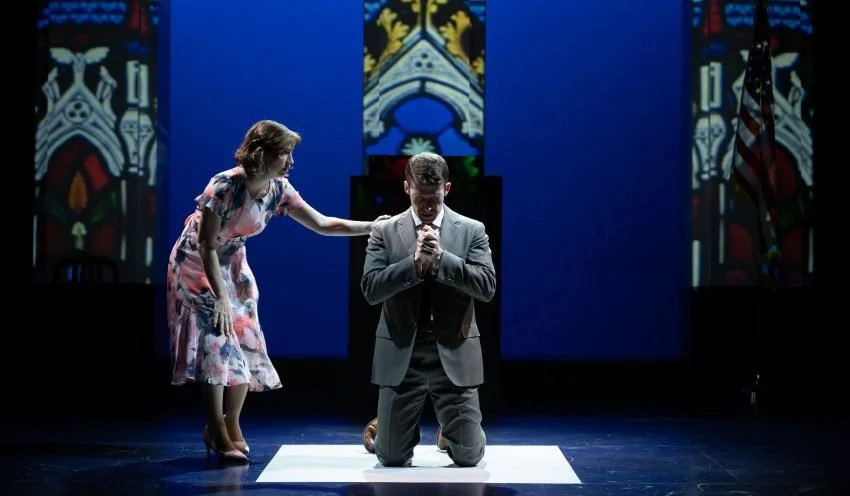
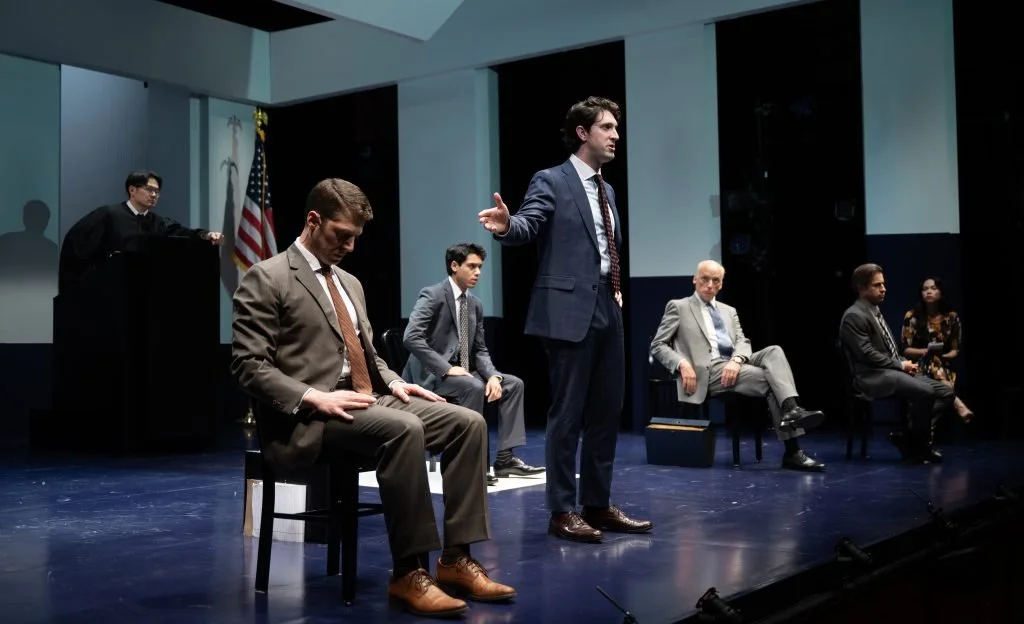
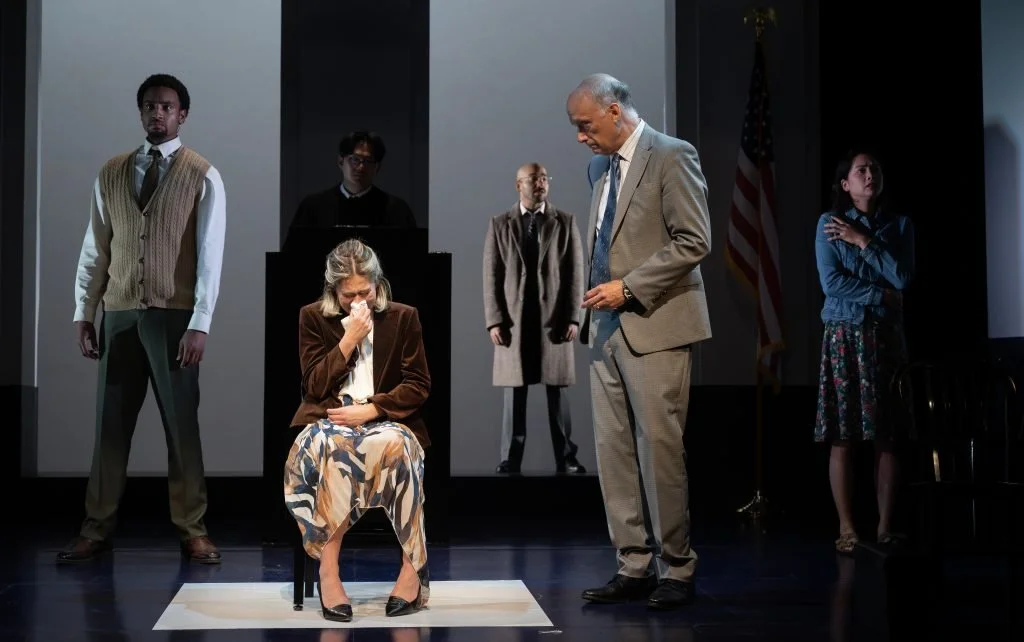
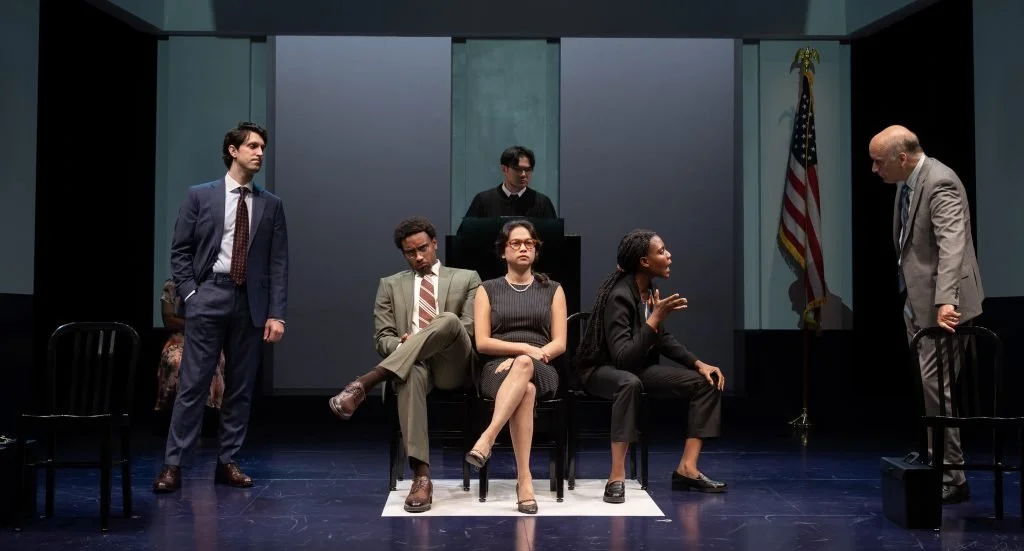
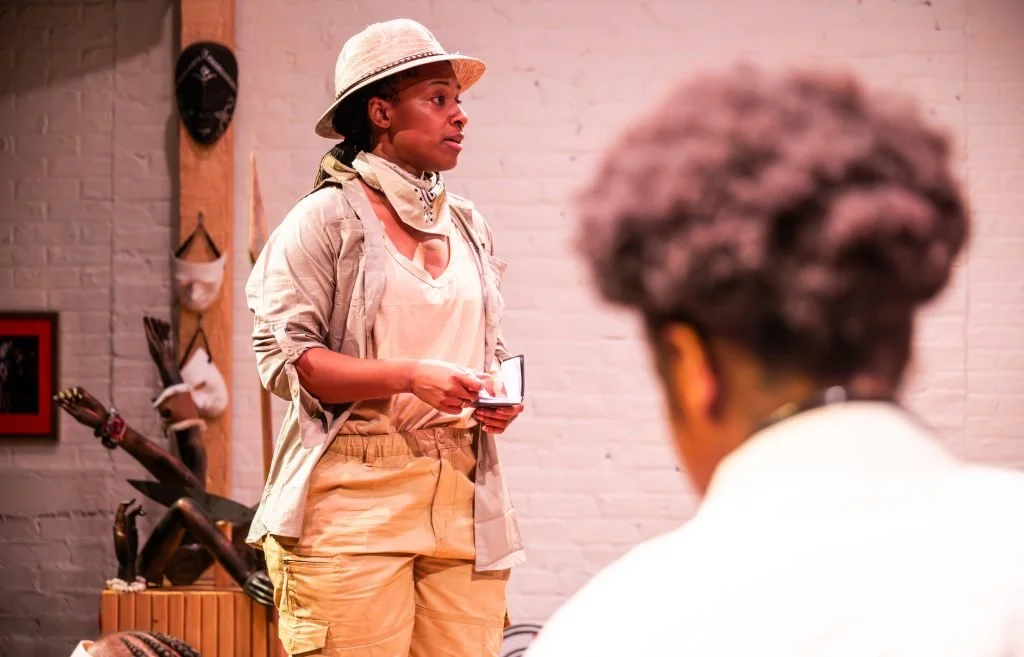
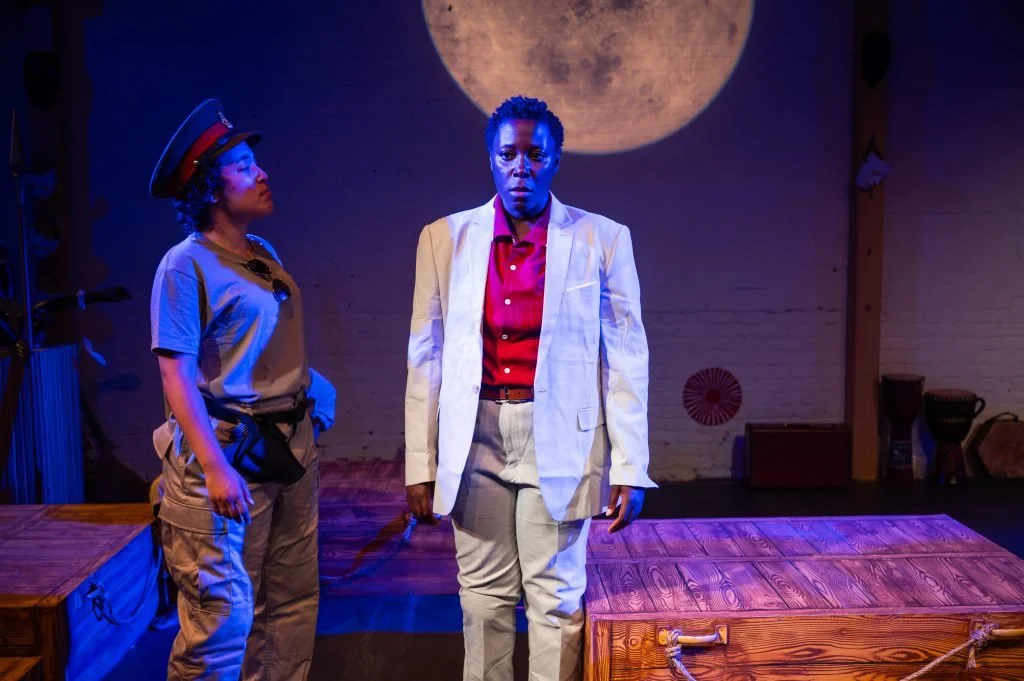
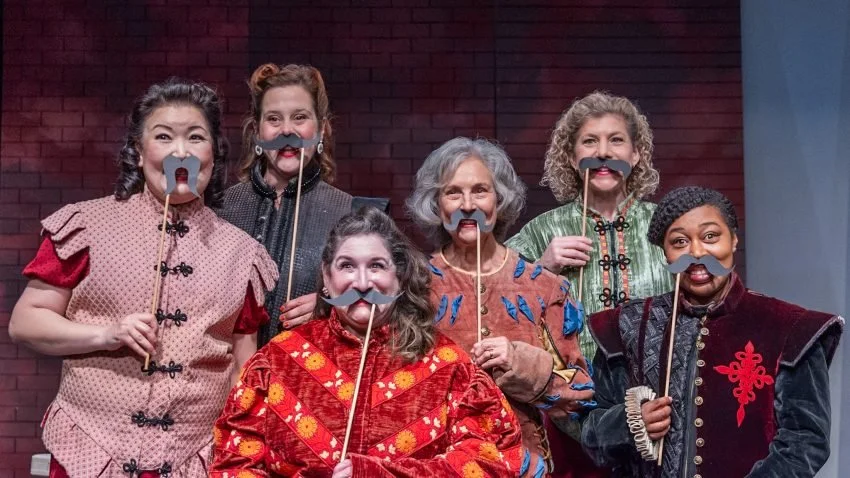
“Lost in Yonkers” Finds Tenderness in Tough Love—at CenterREP
By: Mary Lou Herlihy | Date: Apr 9
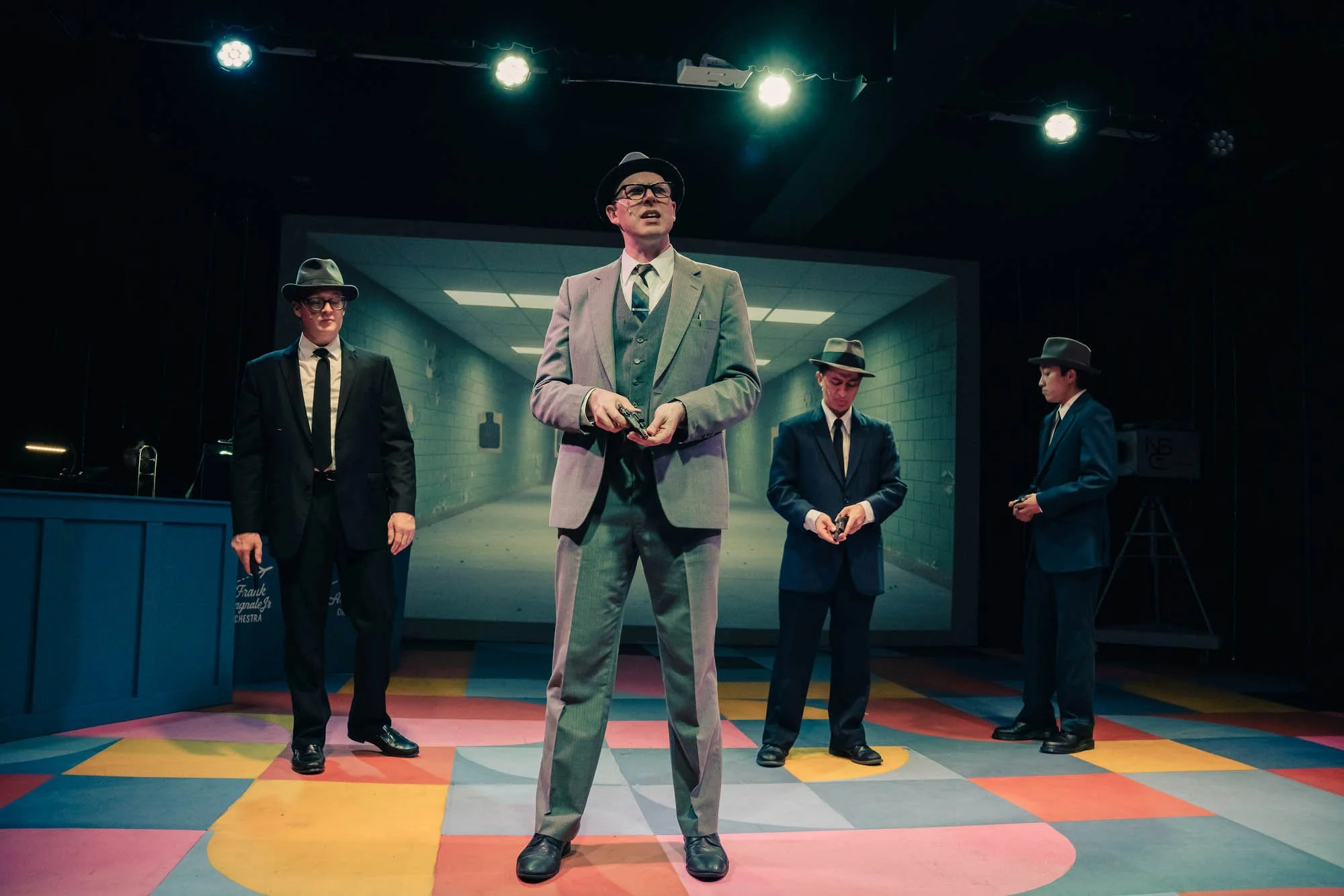
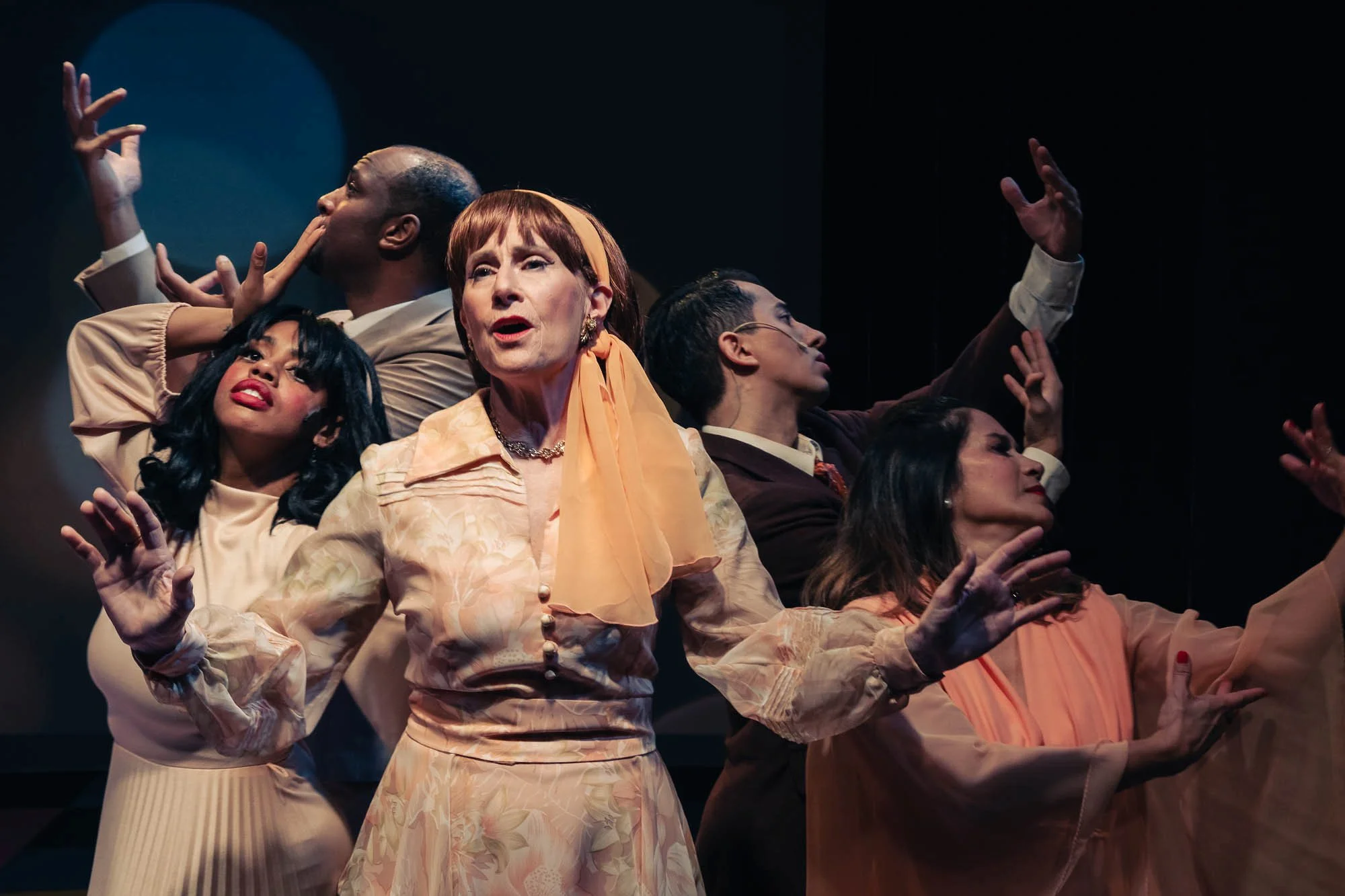
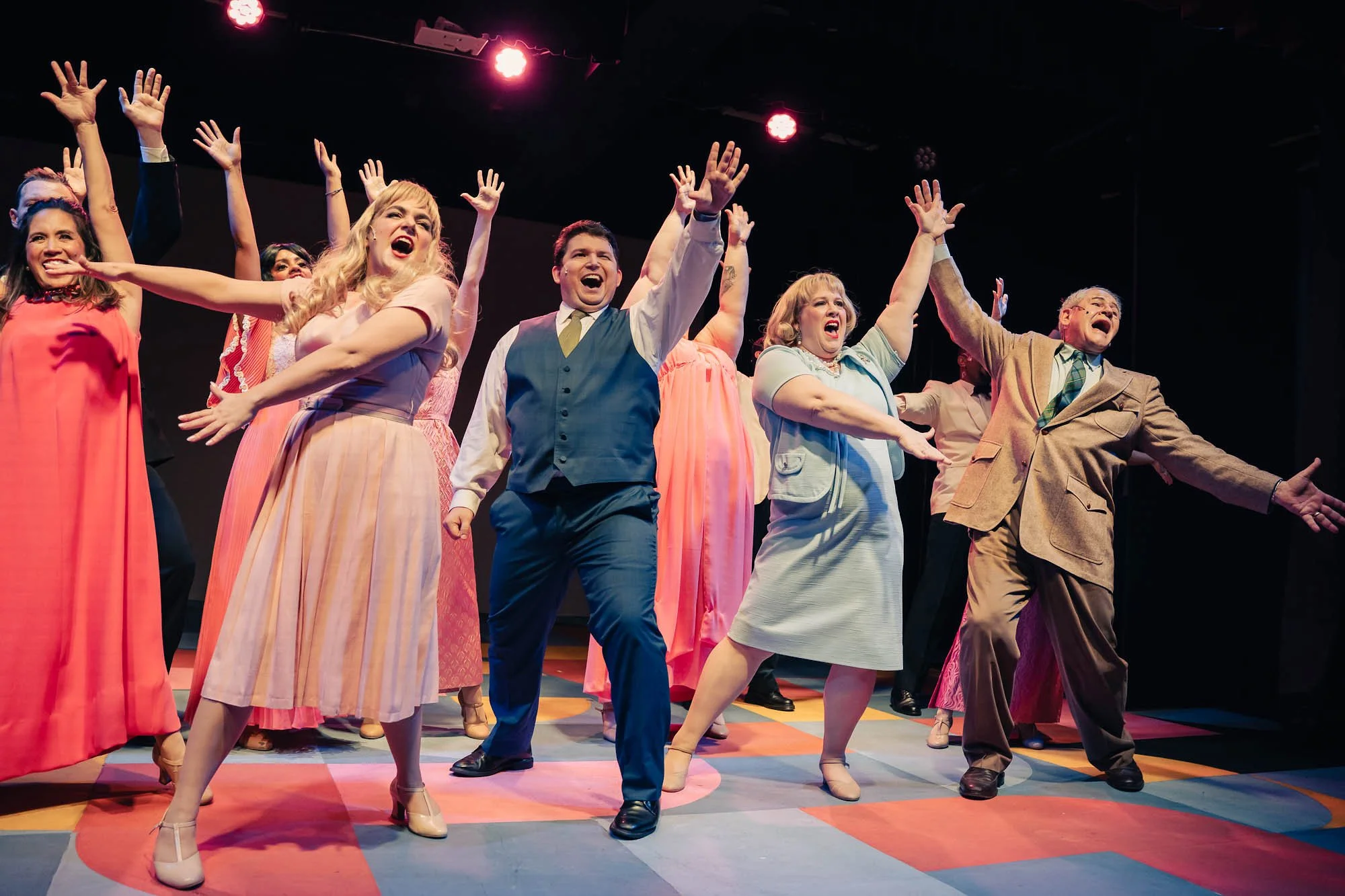
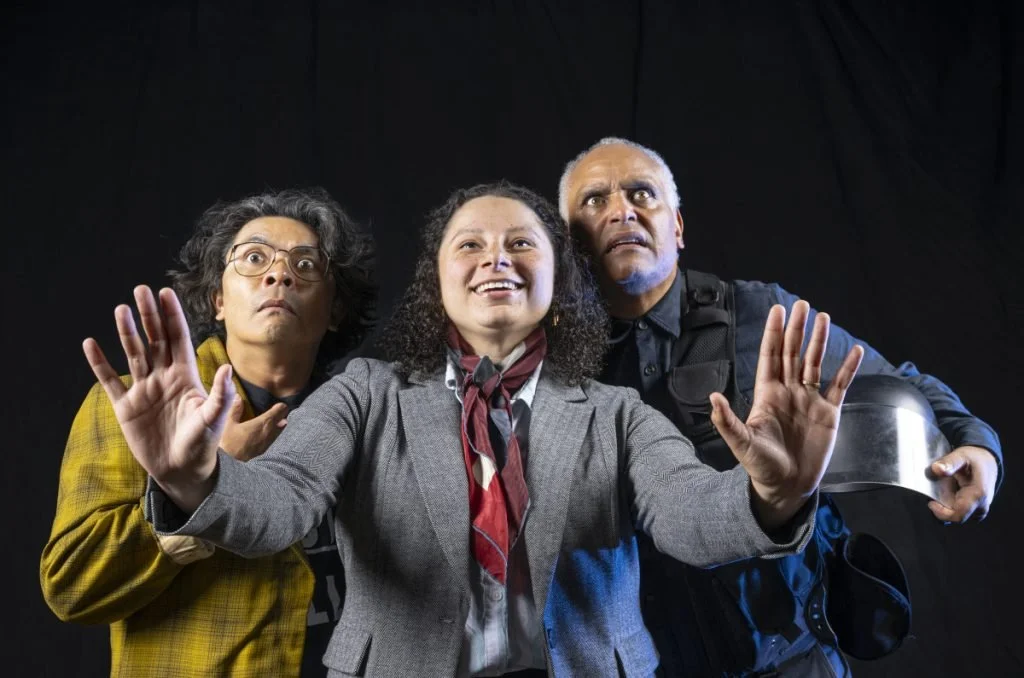
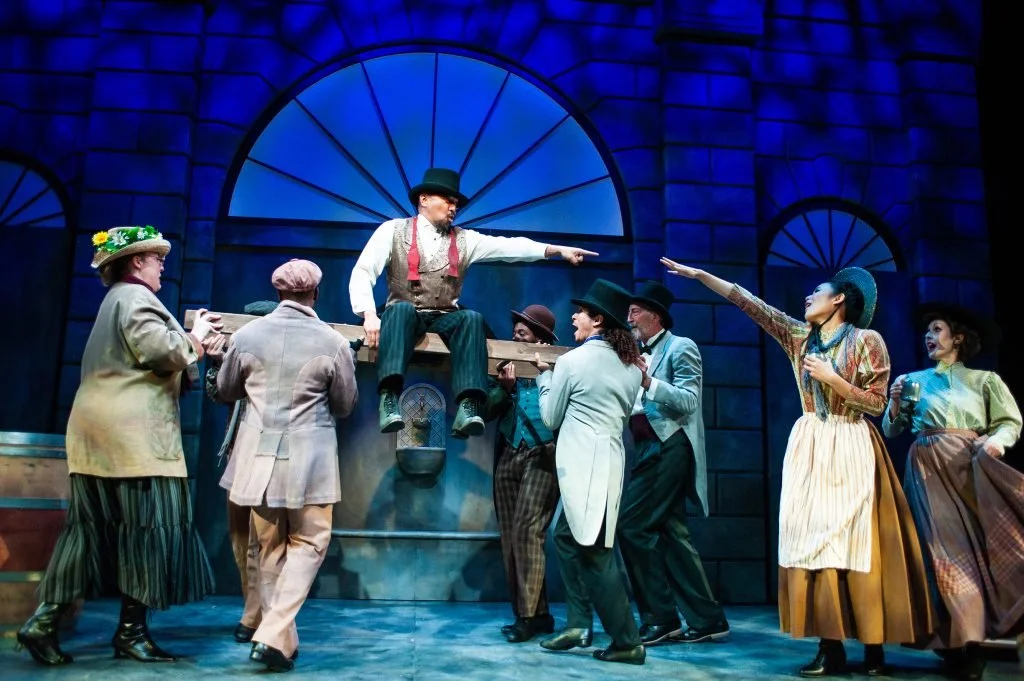
Generations of bitterness cast a pall over the Kurnitz family. But the unexpected arrival of an estranged son with two teenage boys renews hope for these Jewish immigrants as they chase the “American Dream.”
Neil Simon’s “Lost in Yonkers” is set in 1942 at the start of WWII. Written 50 years later, Simon won the Pulitzer Prize in 1991, when the Gulf War was raging.
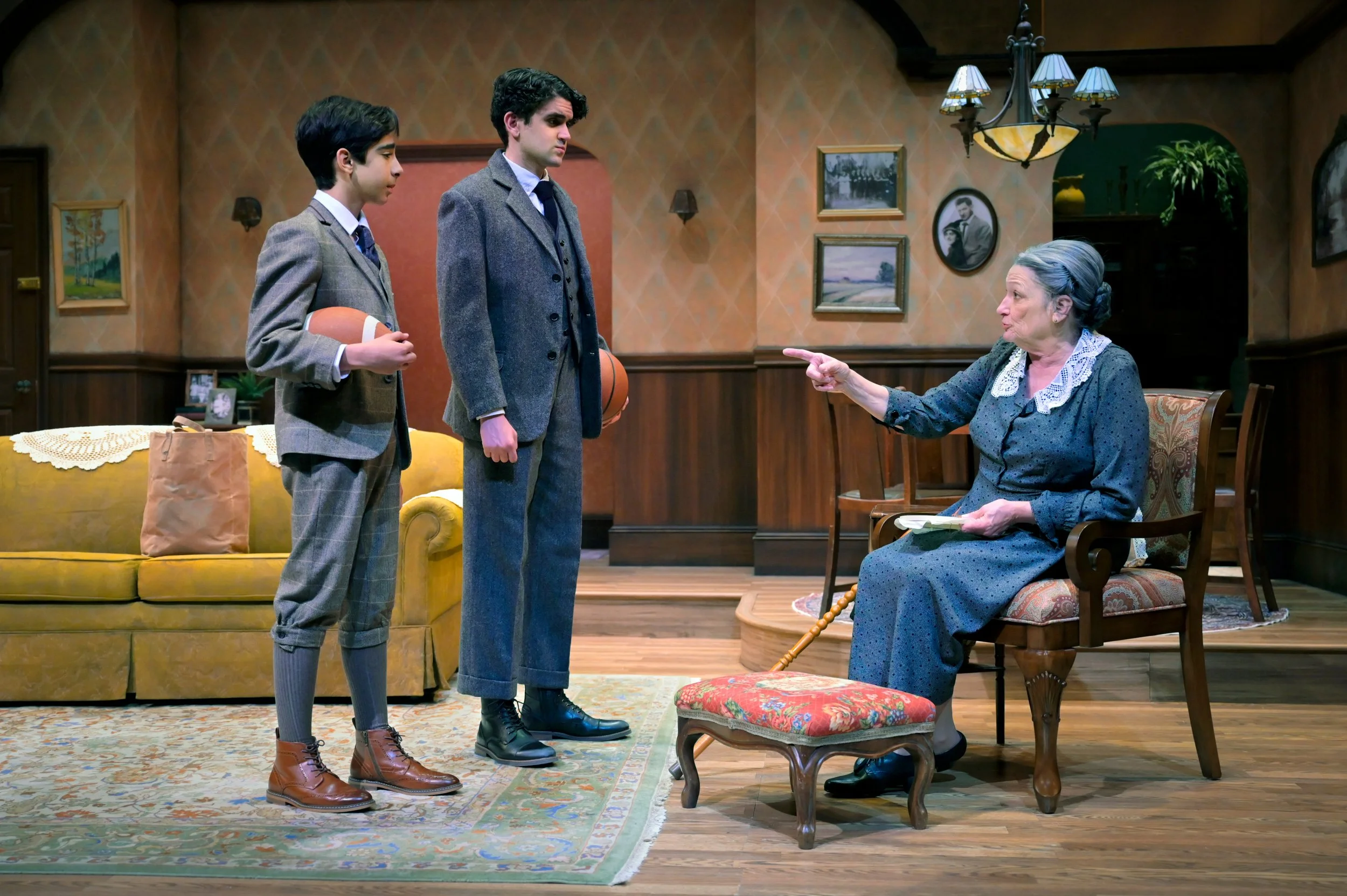
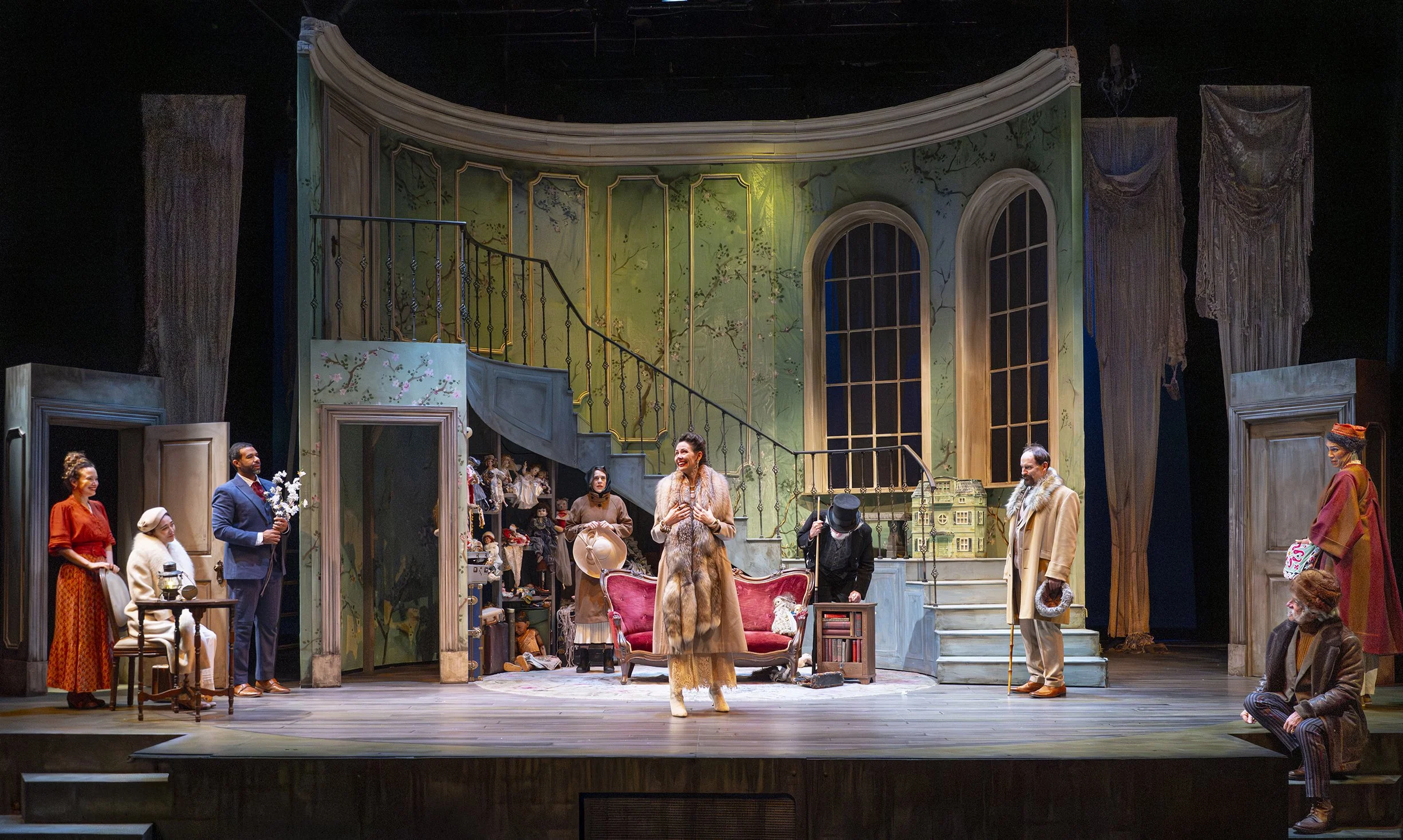
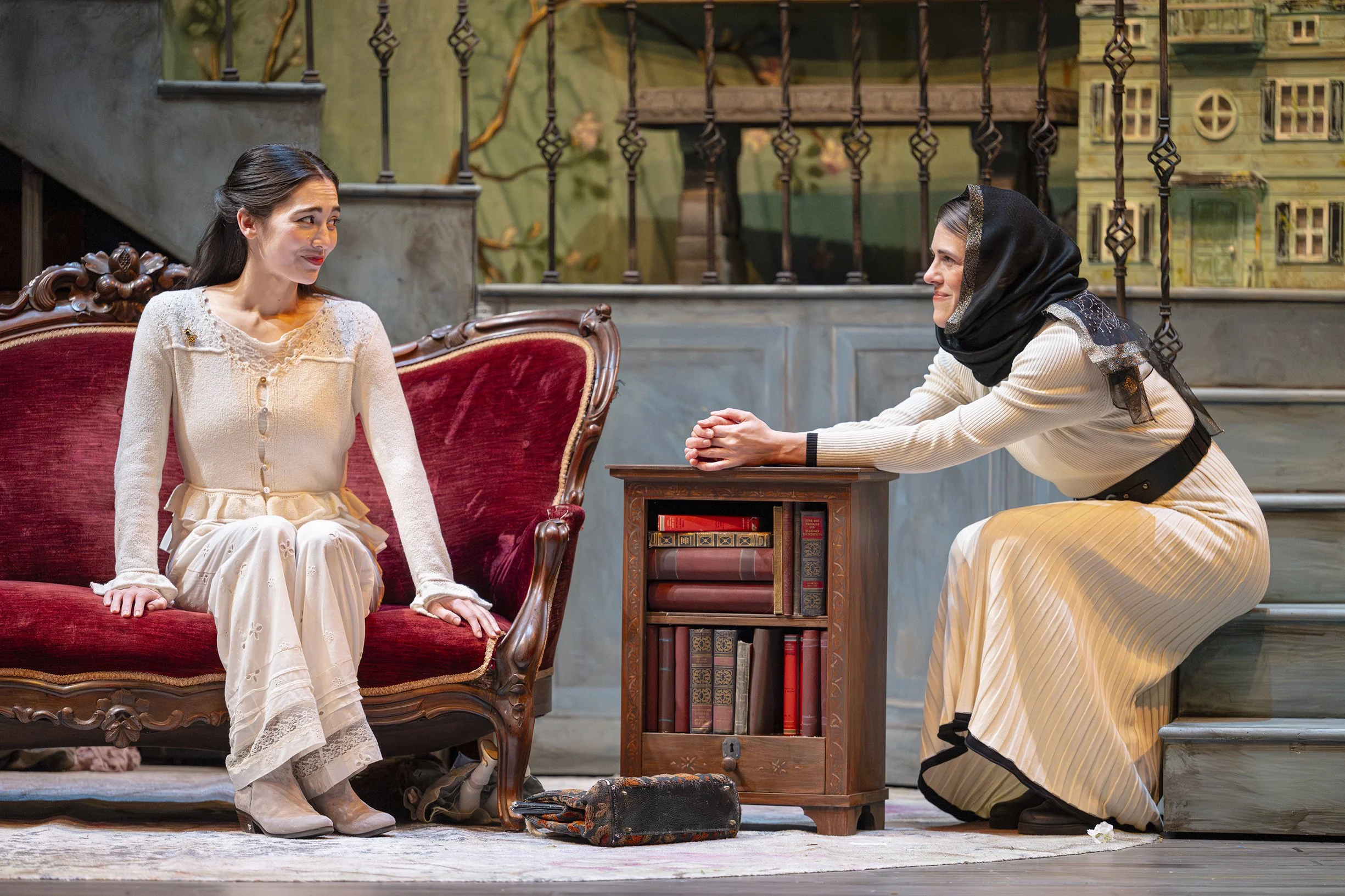
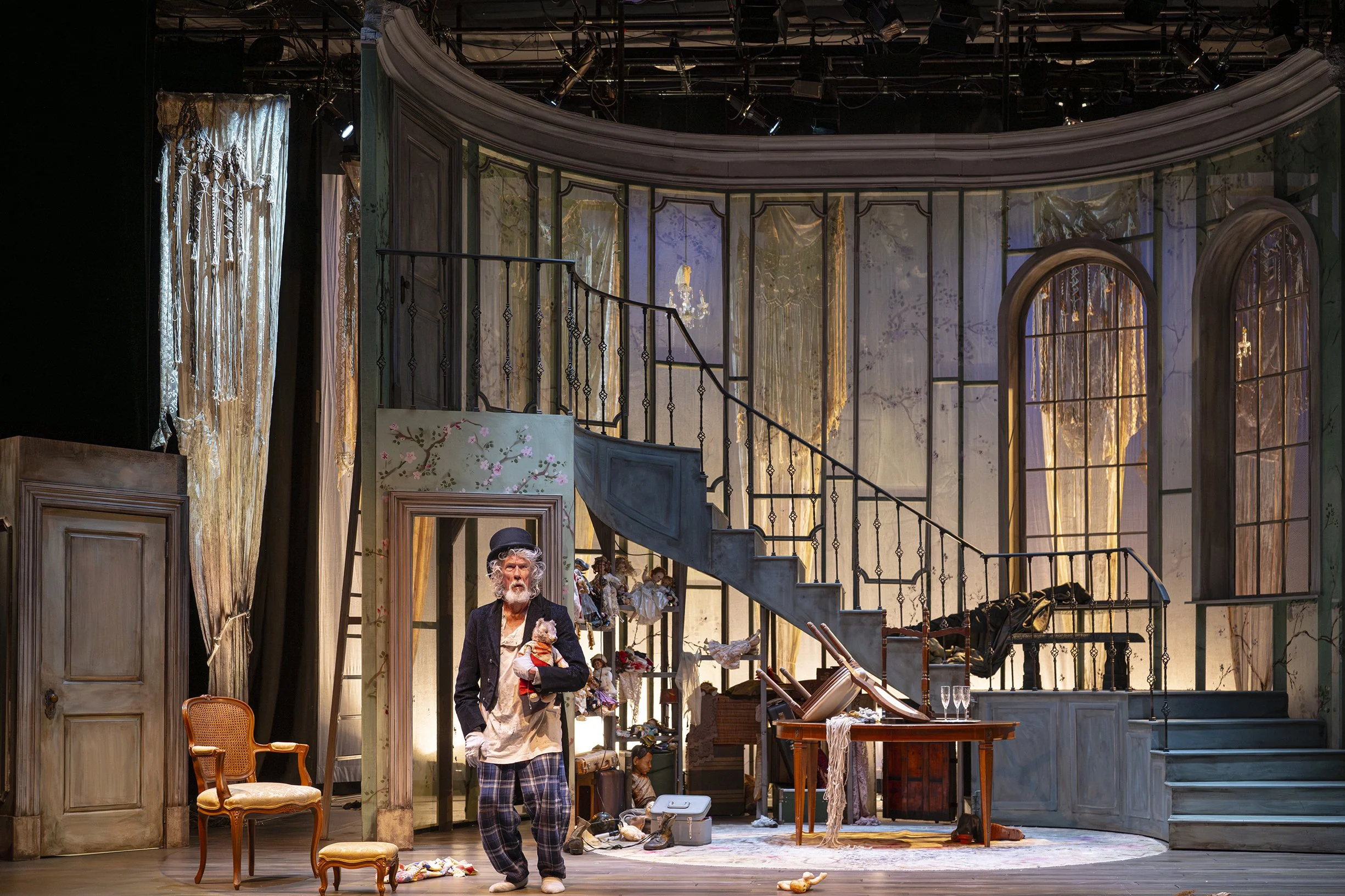
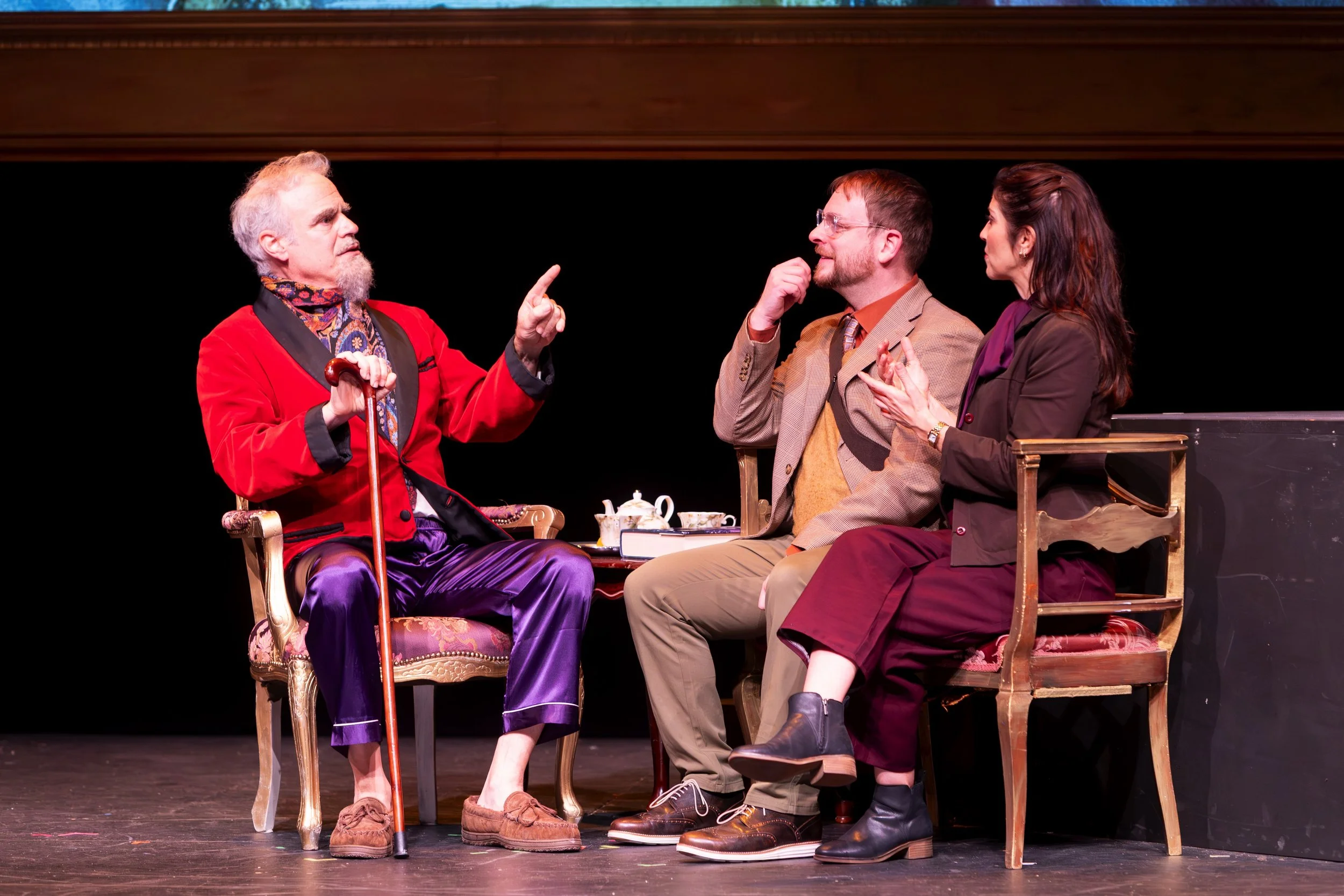
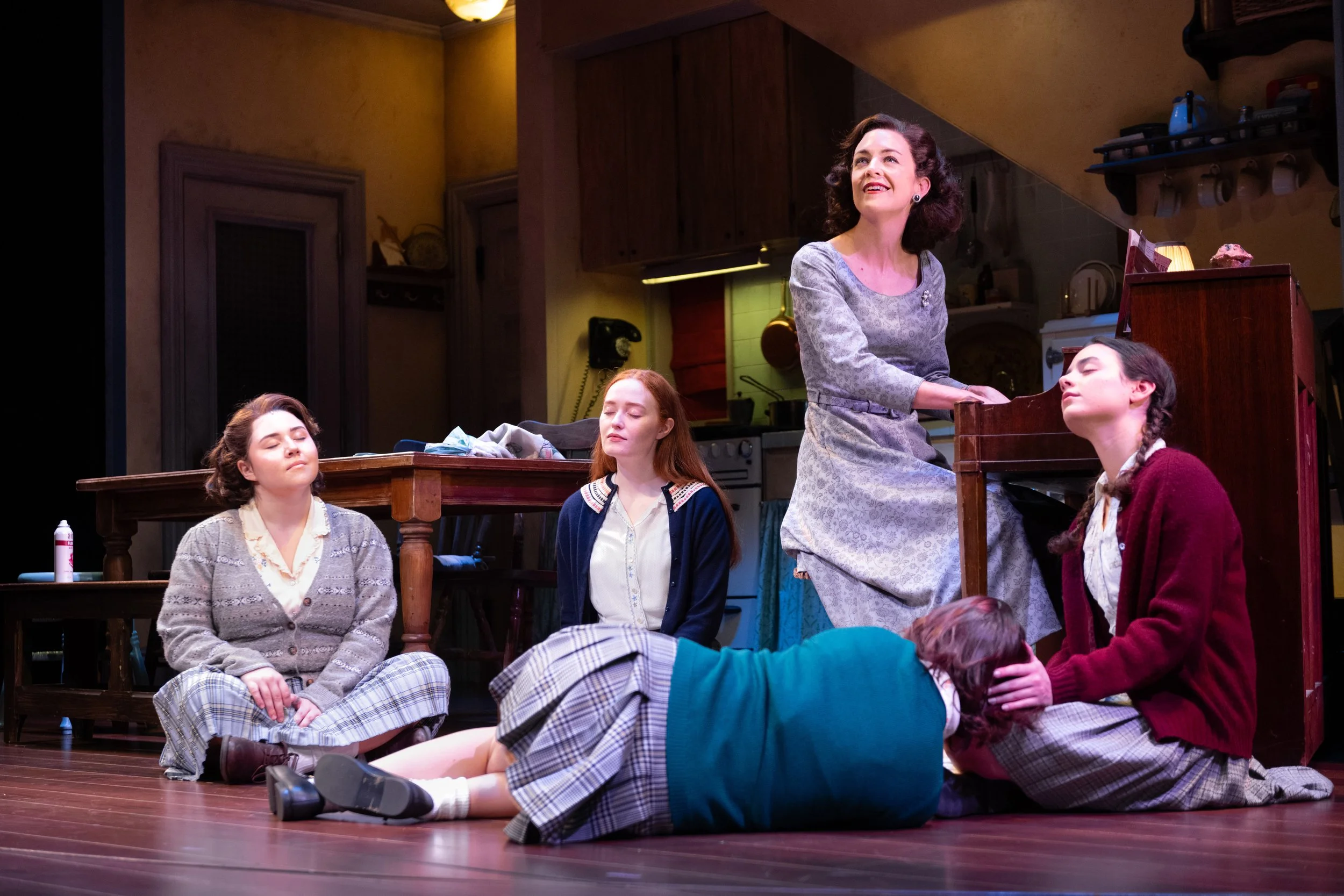
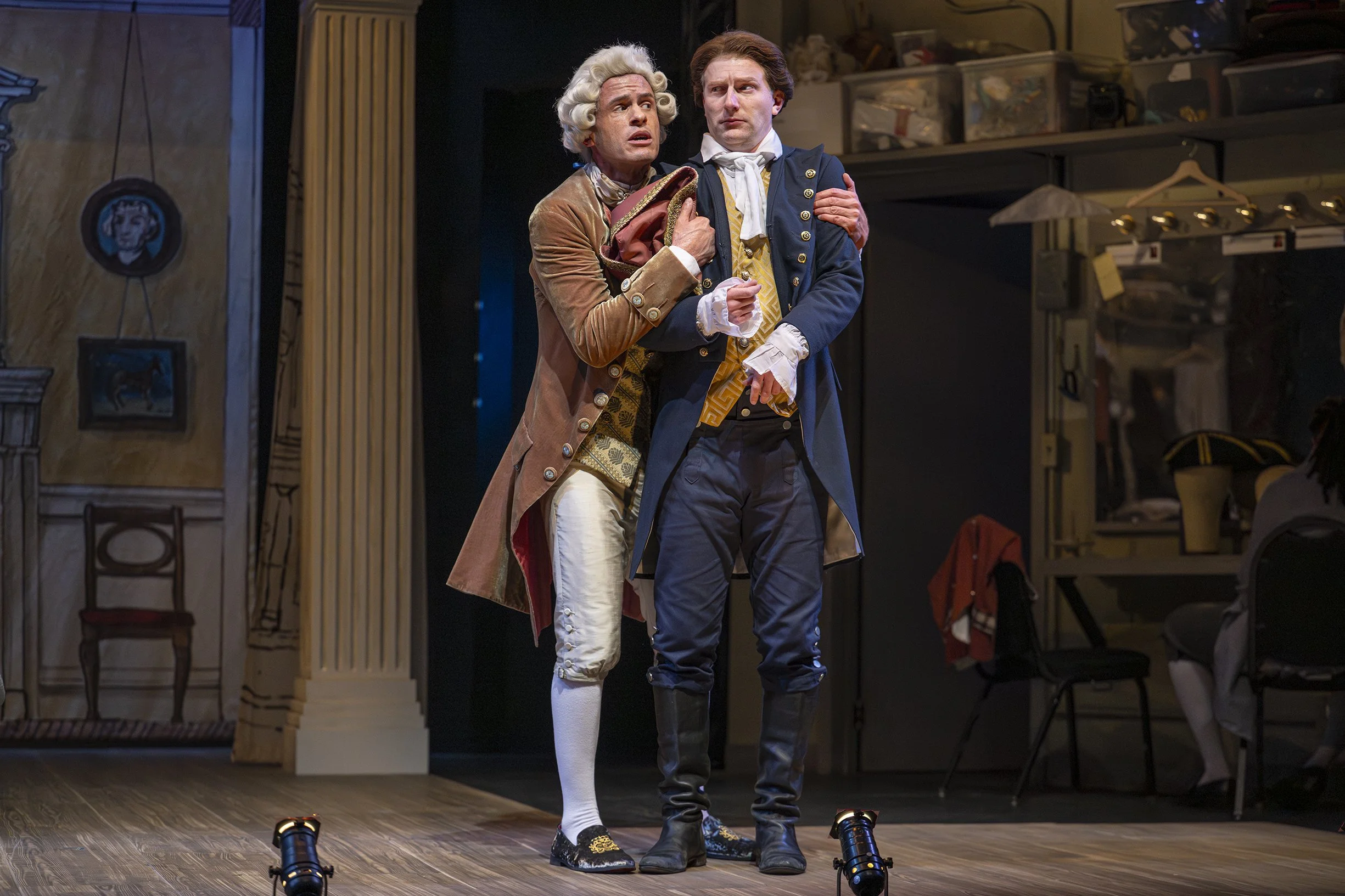
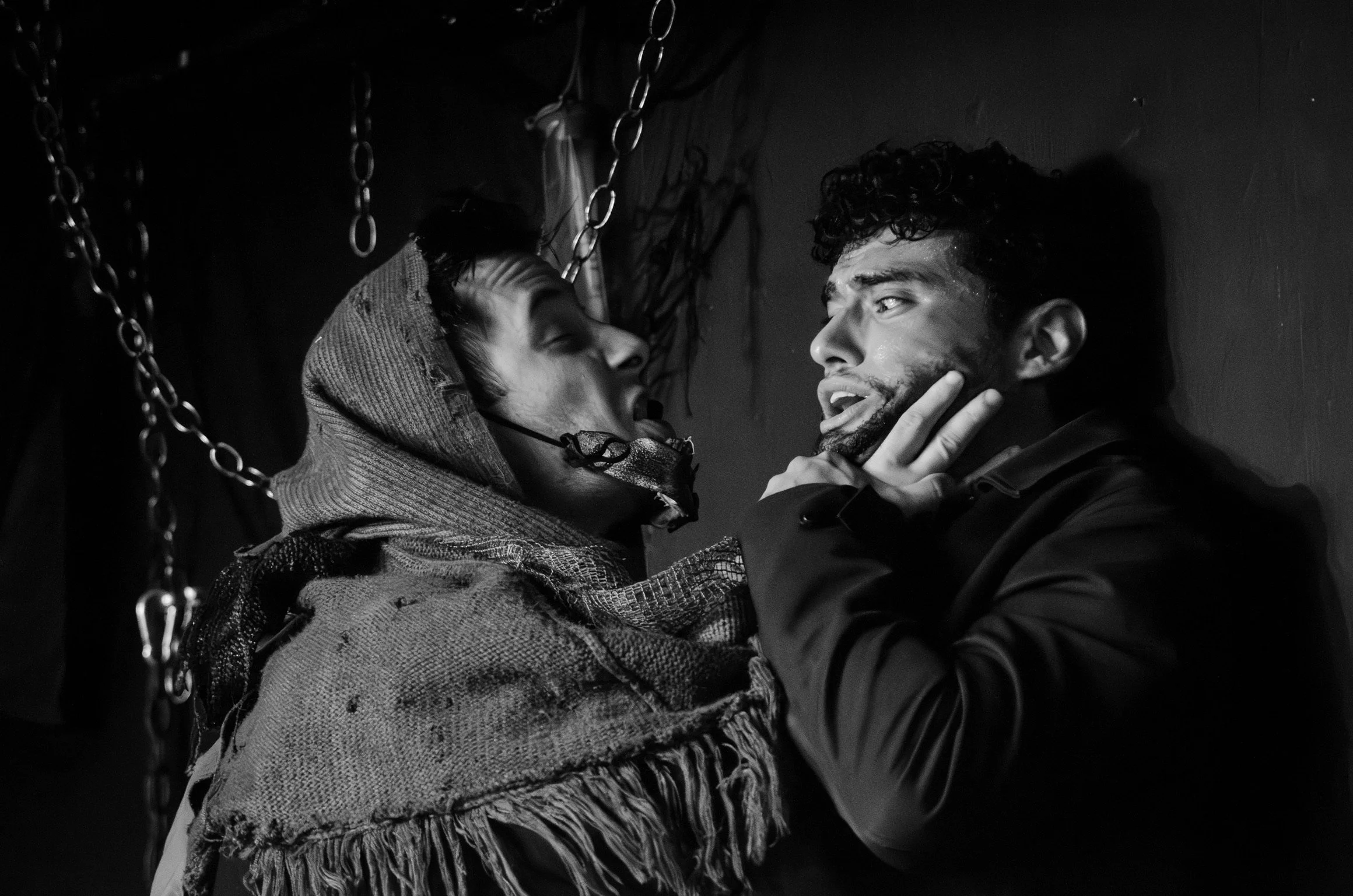
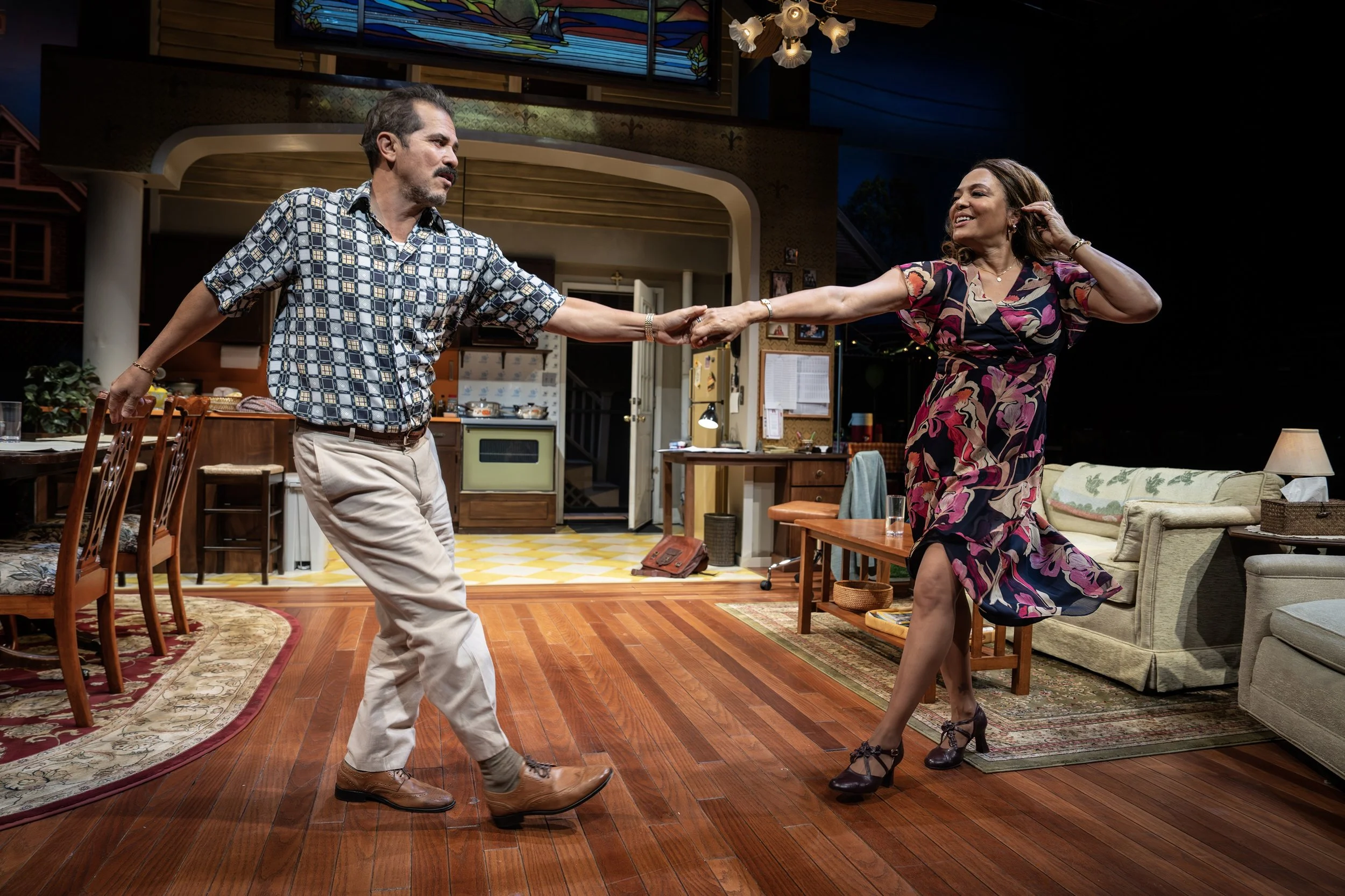
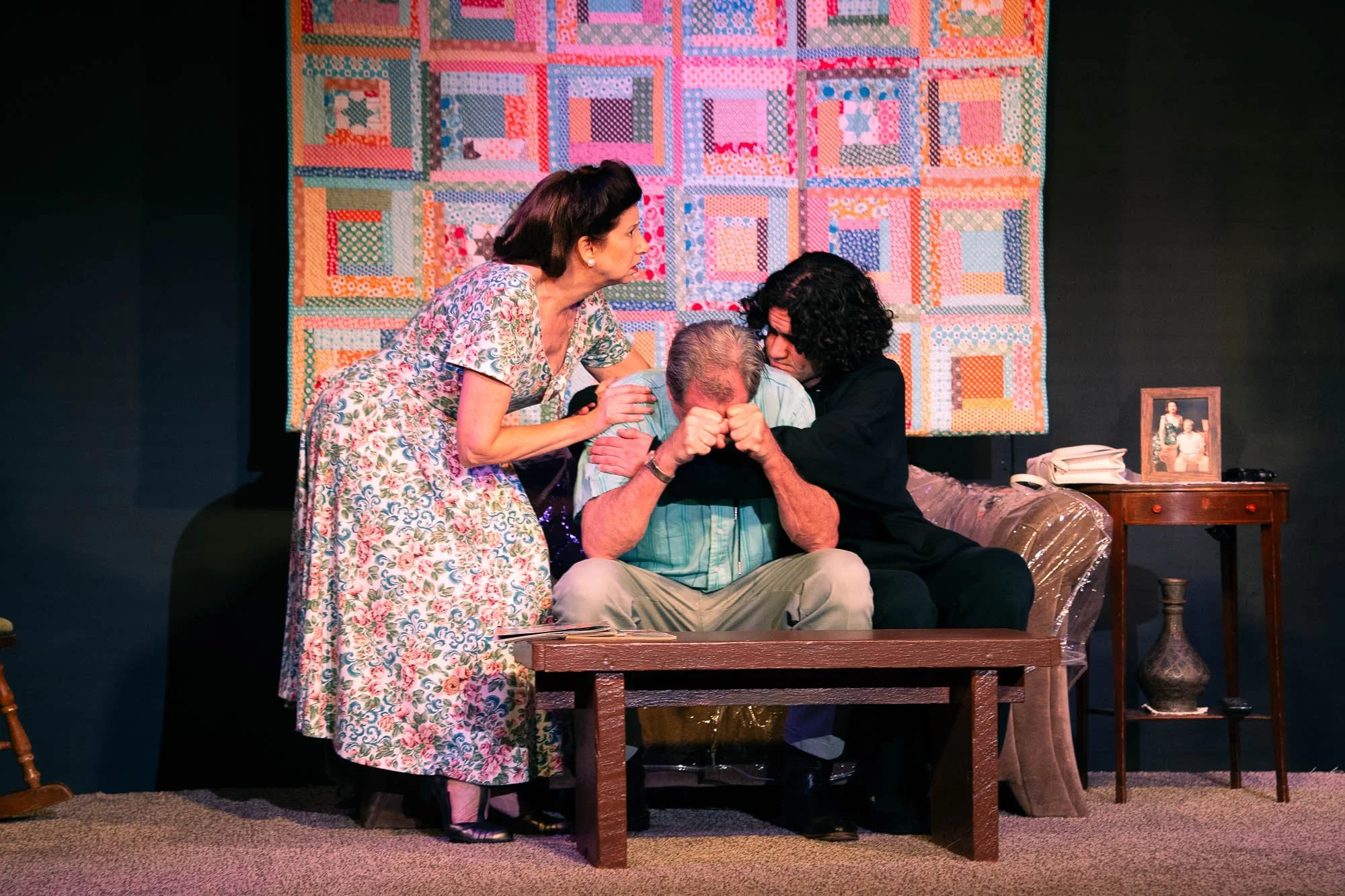
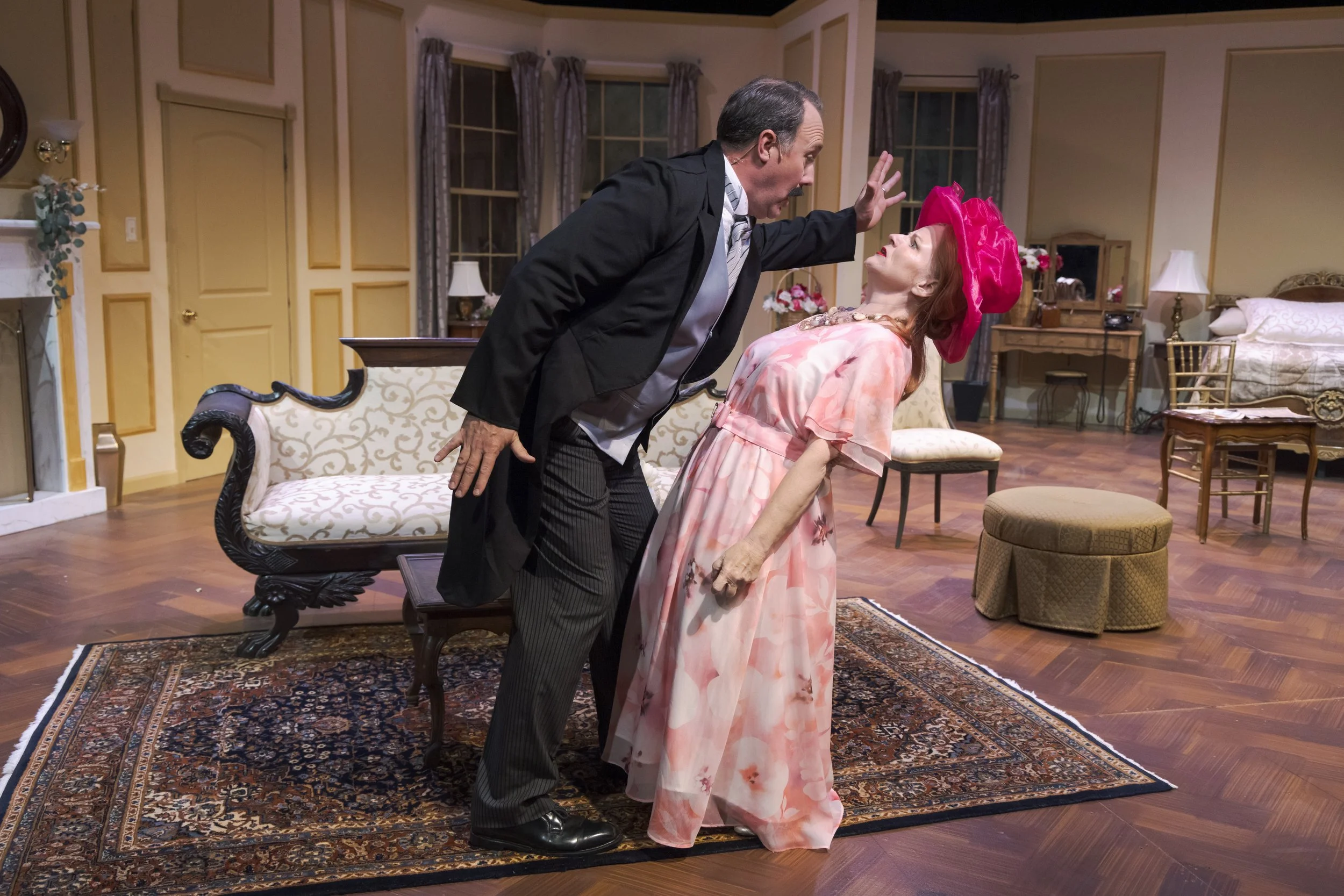
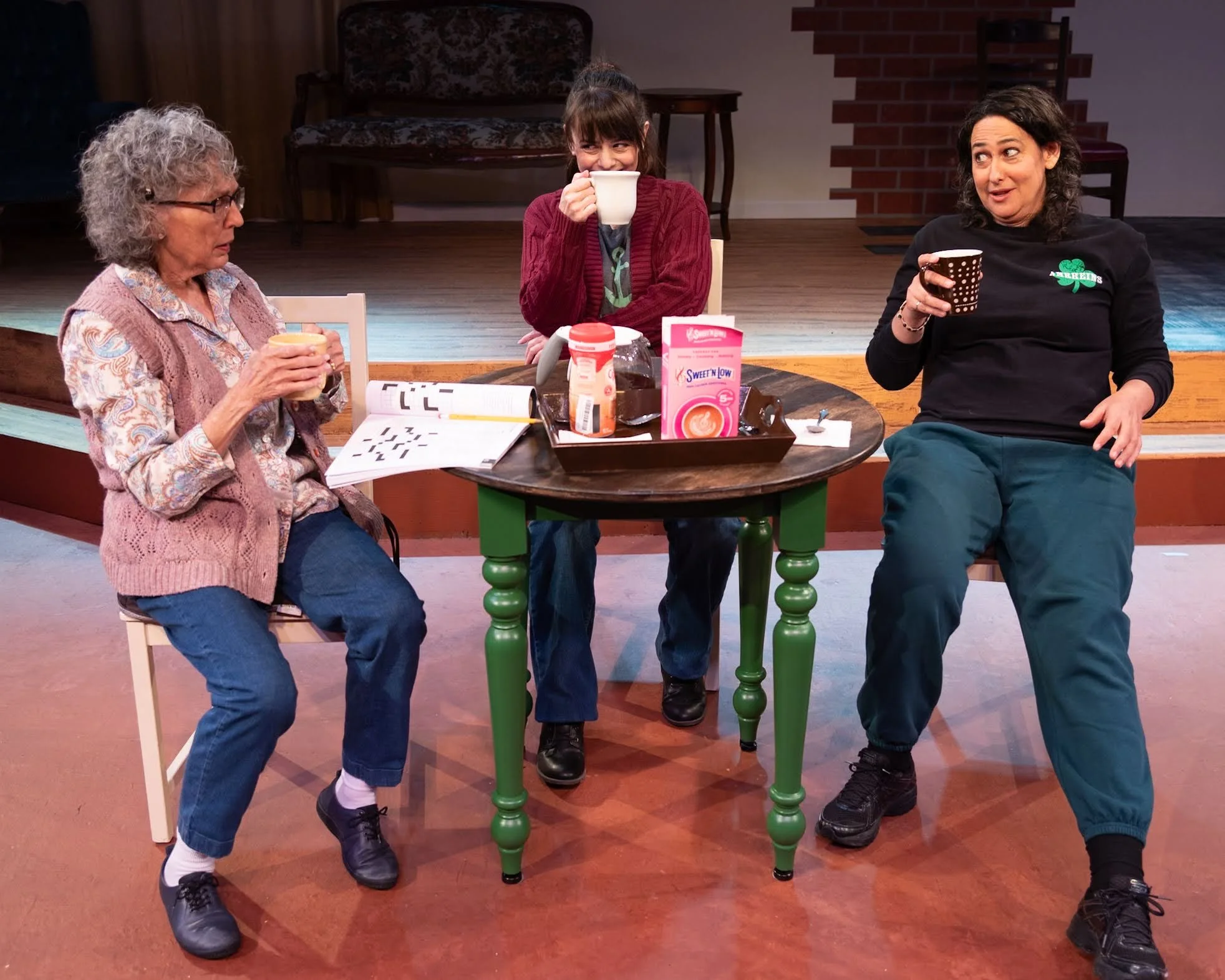
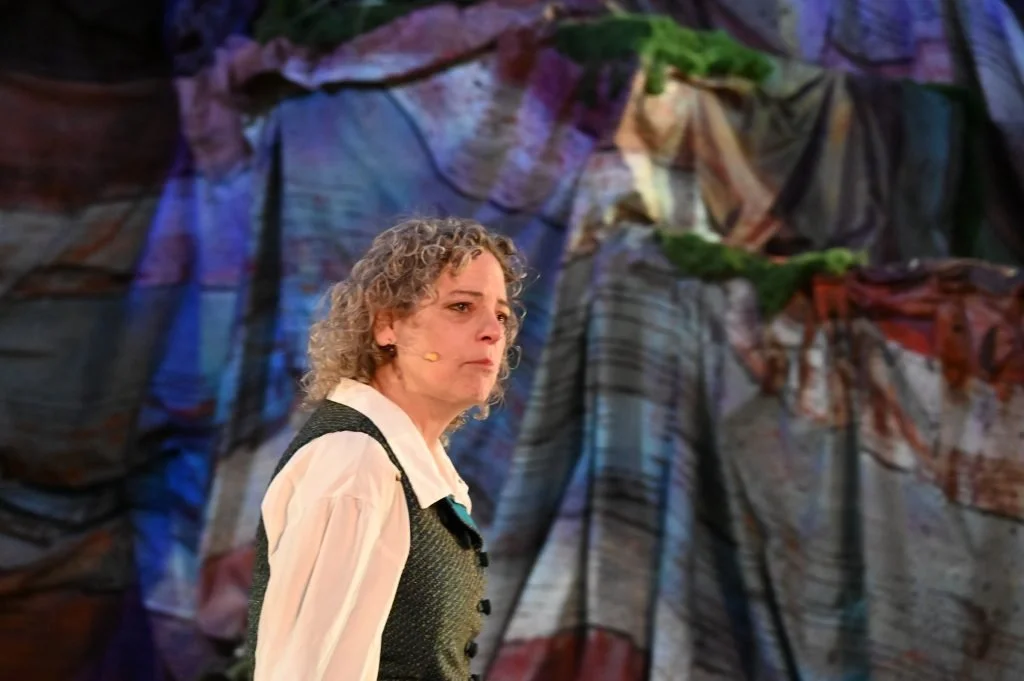
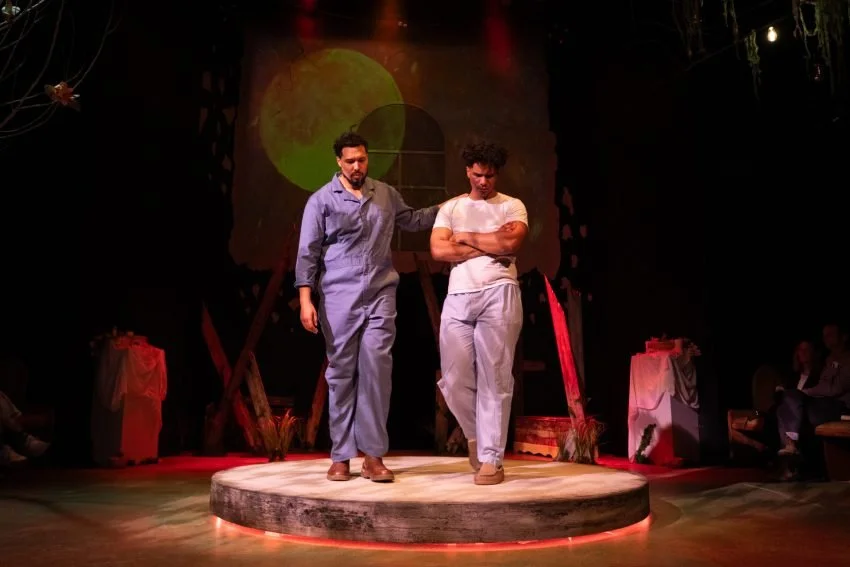
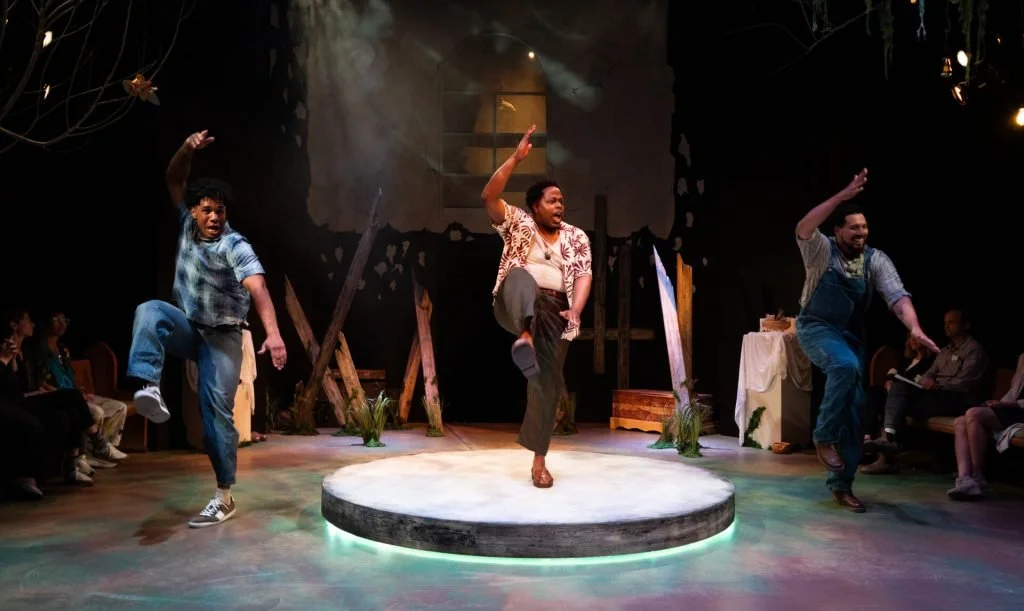
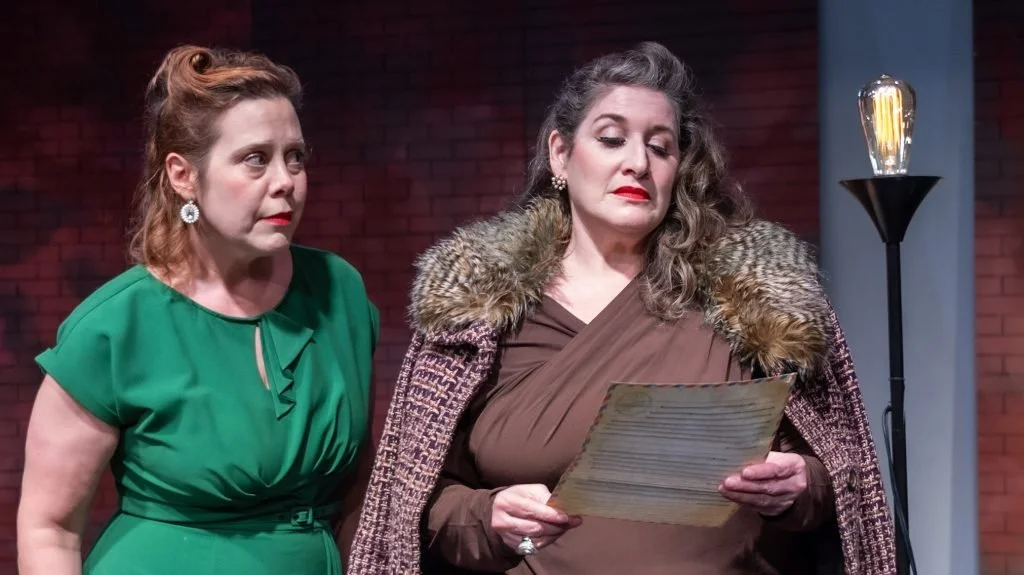
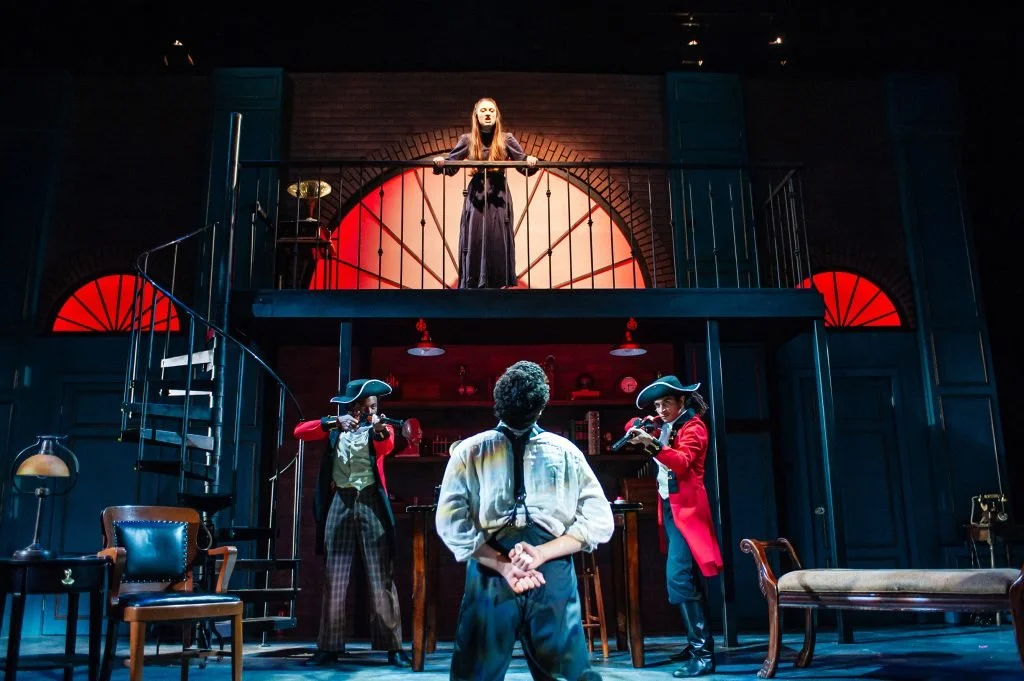
Formidable Grandma Kurnitz (powerful Ellen Ratner) enters through the central arched hallway of Deanna Zibello’s impressive set. Grandma plods toward her ‘throne’ to size up her estranged grandsons. “Which is the smart one?” she asks in a German accent. Her notorious walking cane serves as warning and weapon.
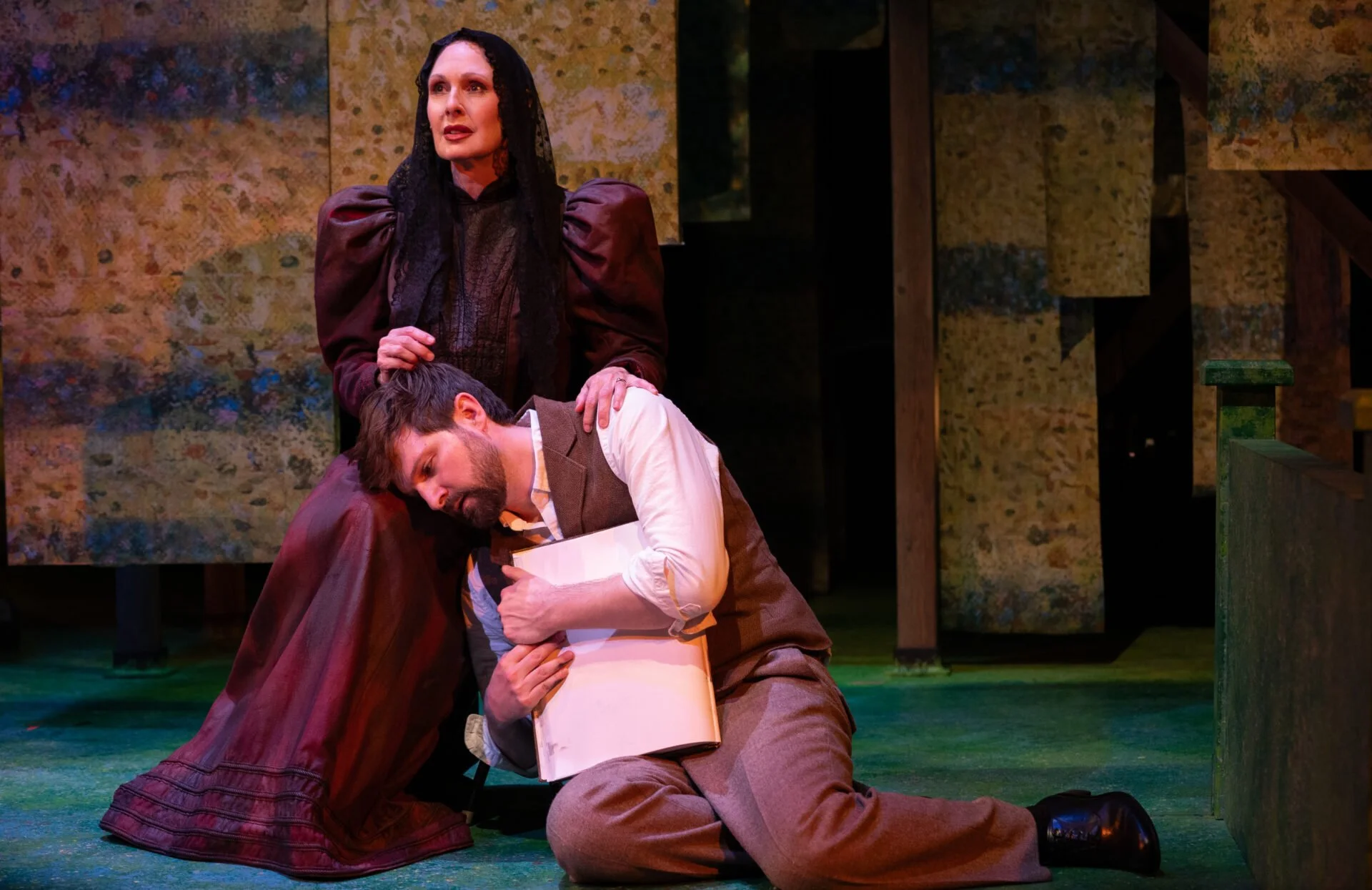
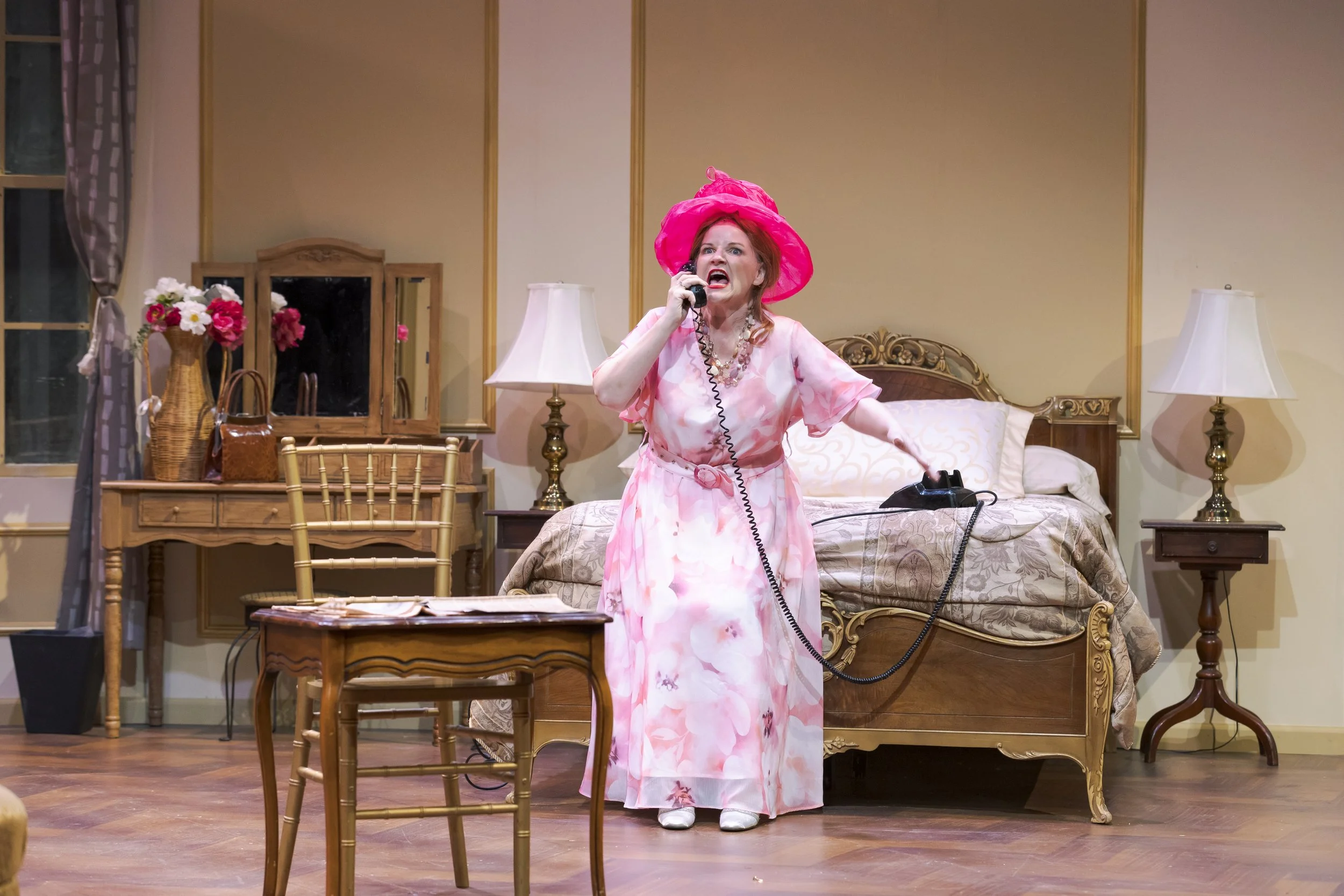
Grandma Kurnitz carries scars from WWI Germany that make her “American Dream” a wretched one. Her death grip on misery poisons the whole family. Grandma keeps her afflicted daughter Bella (brilliant Renee Rogoff) on the tightest leash and threatens to “put her in a home if she’s not a good girl.”
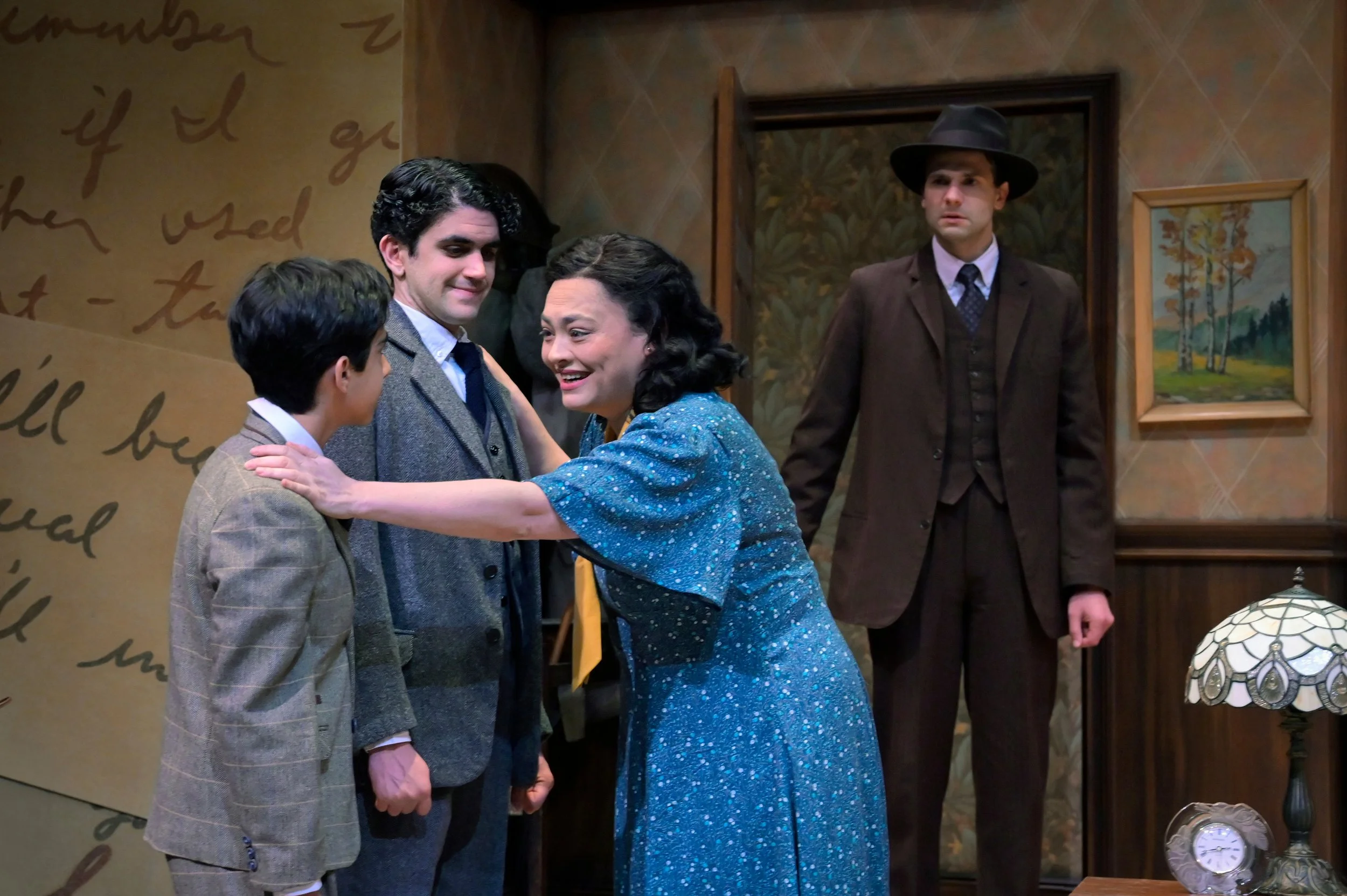
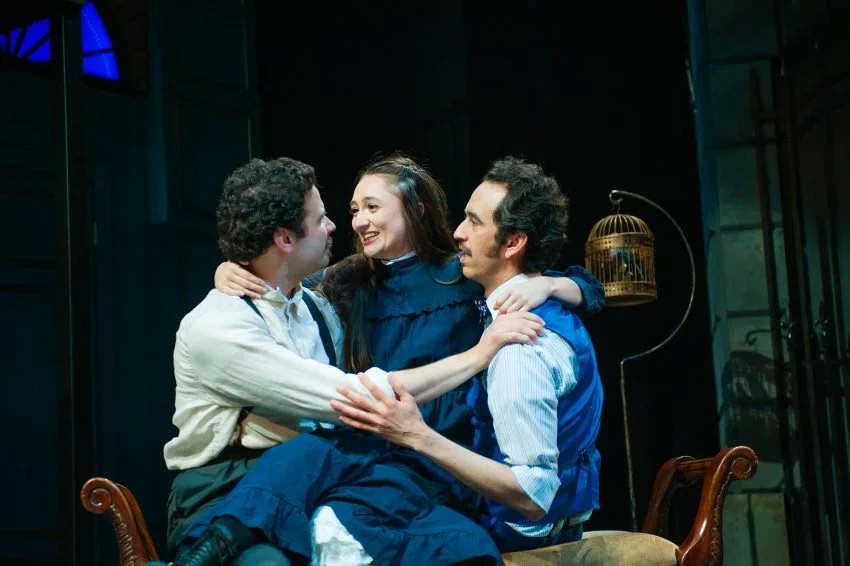
But child-like Bella radiates love. She smothers her nephews with hugs and cannot stop talking. “Where is your mom?” she asks. When the boys register shock, then pain, she backpedals, saying, “I mean, where is she buried?” Her awkward kindness means the world to these dislocated kids!
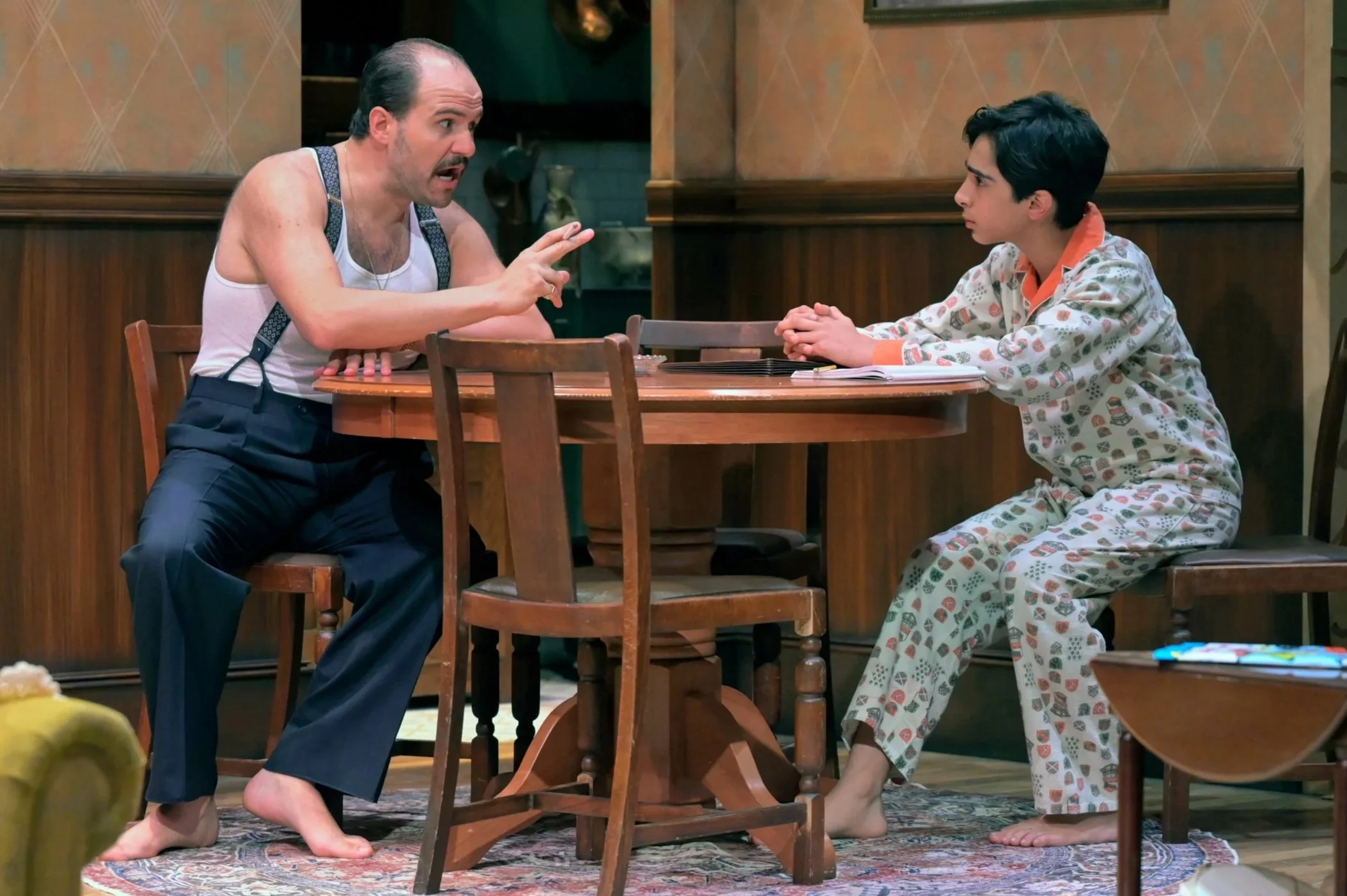
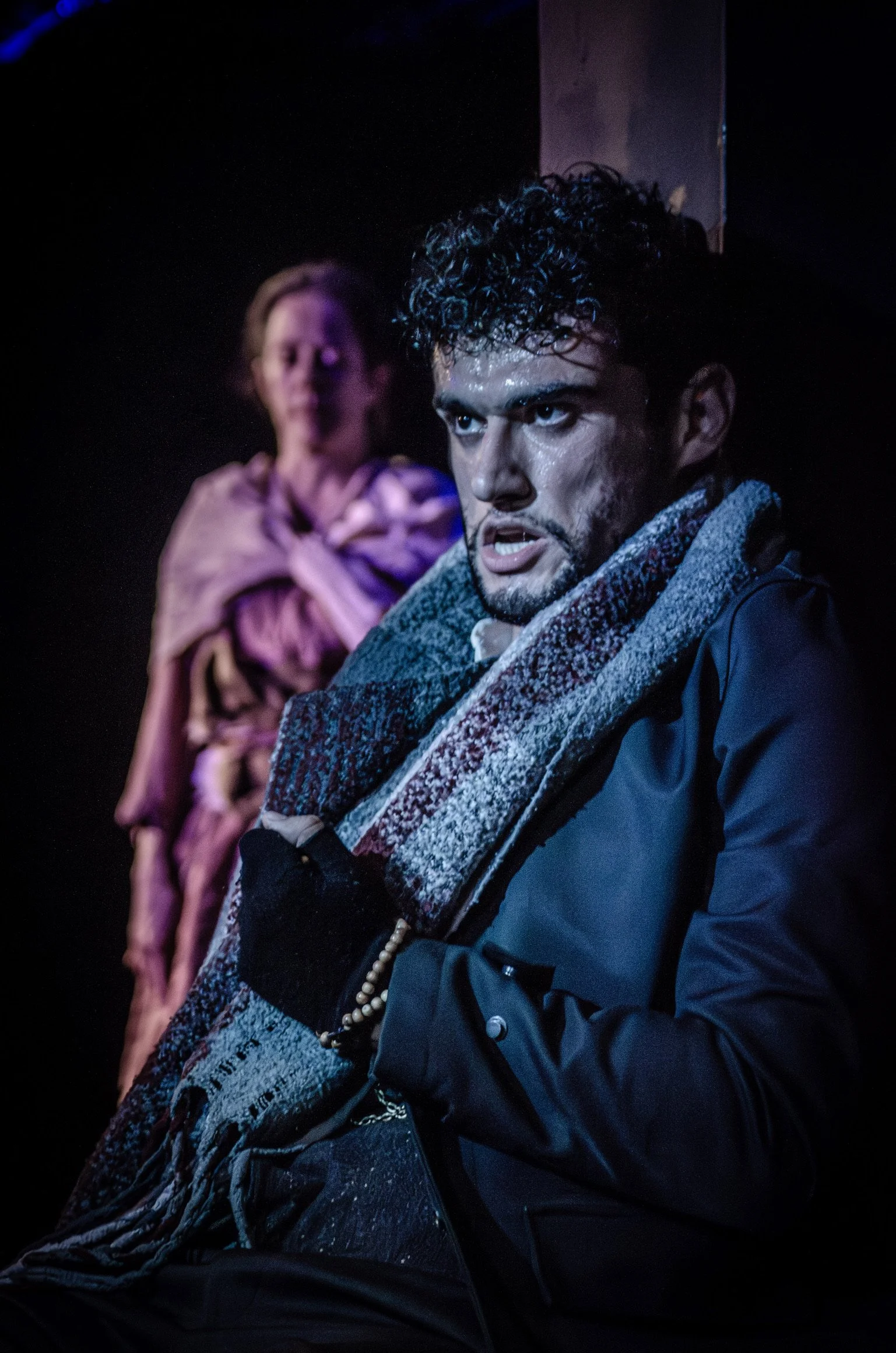
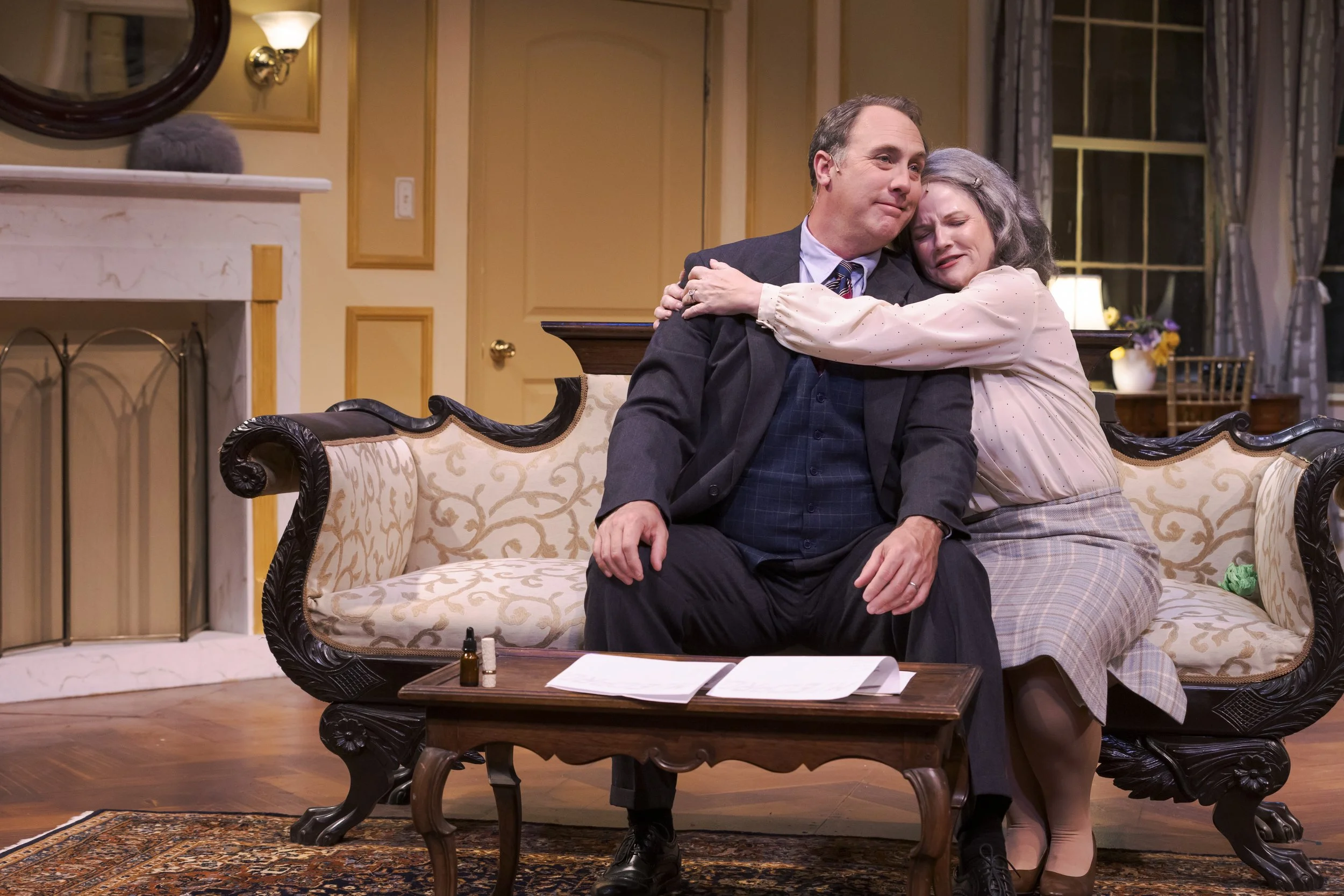
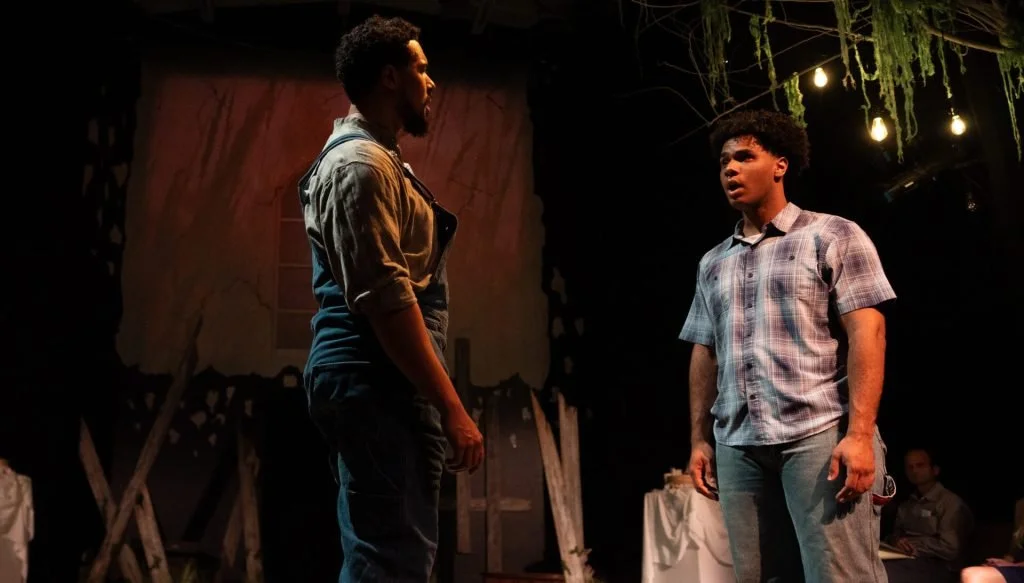
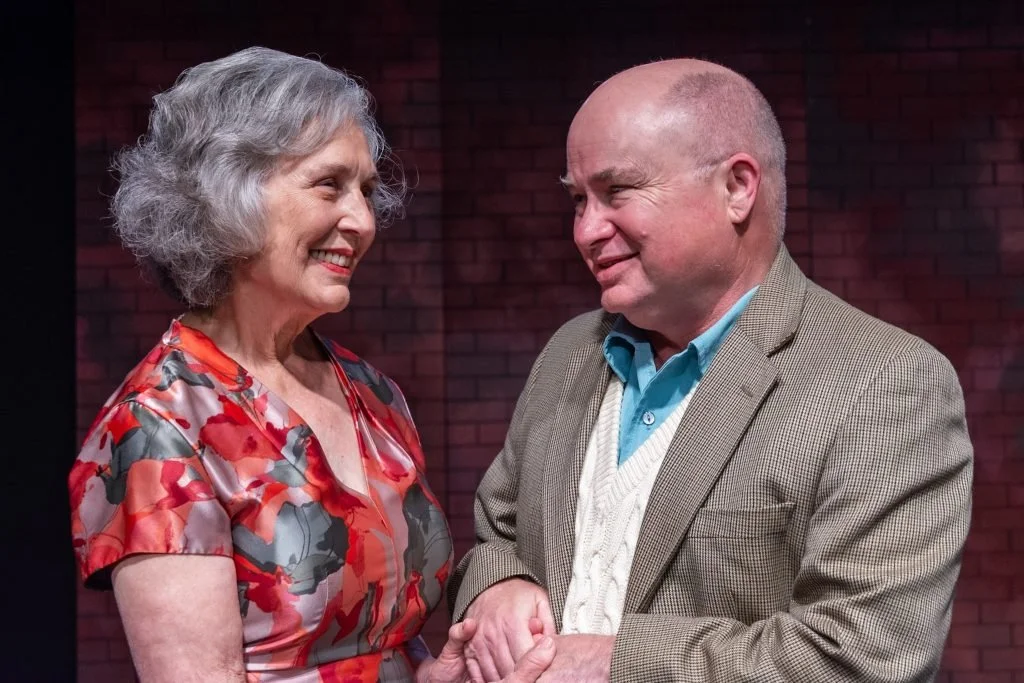
Bella’s estranged brother Eddie (masterful Adam Magill) returns to his mom’s unhappy home in desperation. He begs her to take care of his boys while he works down South. He needs money FAST. He owes mountains of medical debt to ruthless loan sharks.
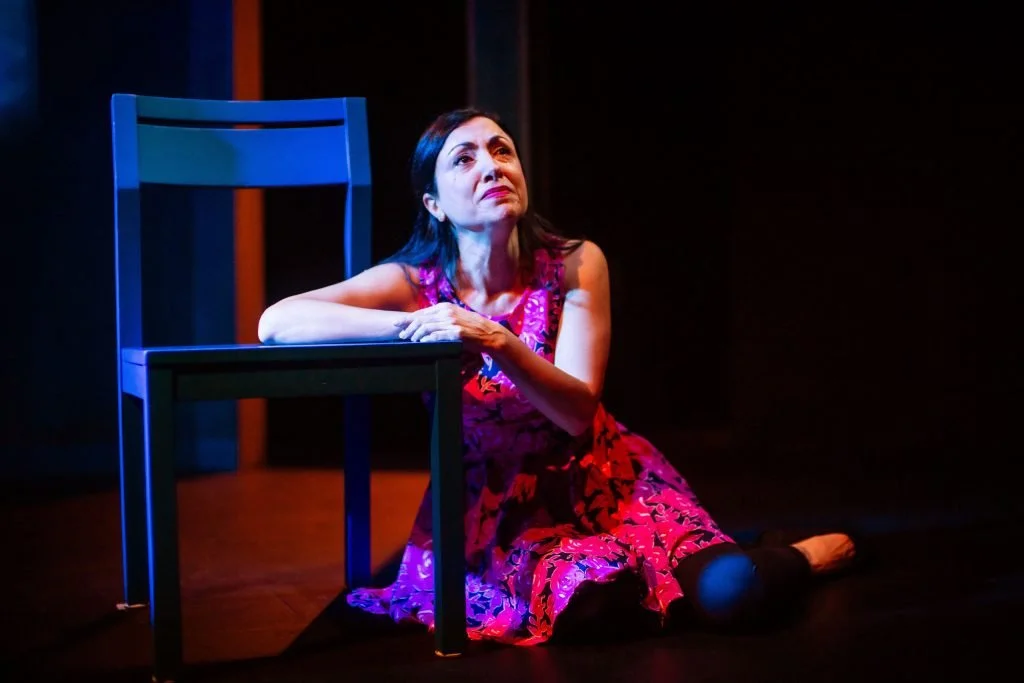
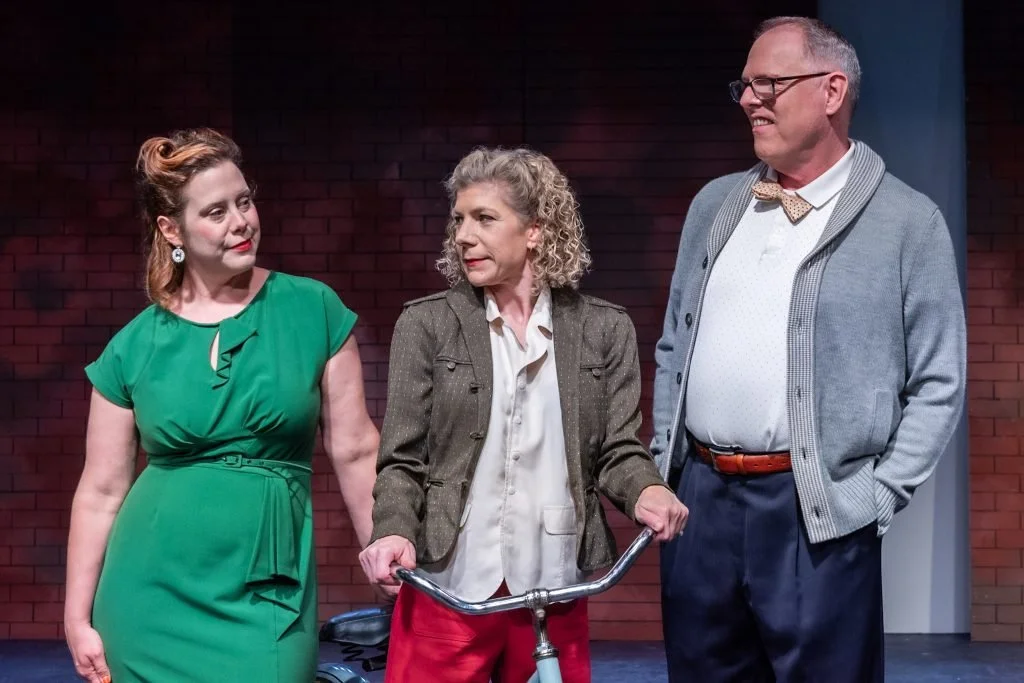
His mom refuses but sister Bella announces that the boys WILL stay, standing up to her mother in a glorious act of defiance. Rogoff imbues Bella with such depth of feeling that when she cries out to be held, we ache with pain for the broken woman-child. When Bella’s sister steps in, we feel the rush of love that their mother cruelly denies.
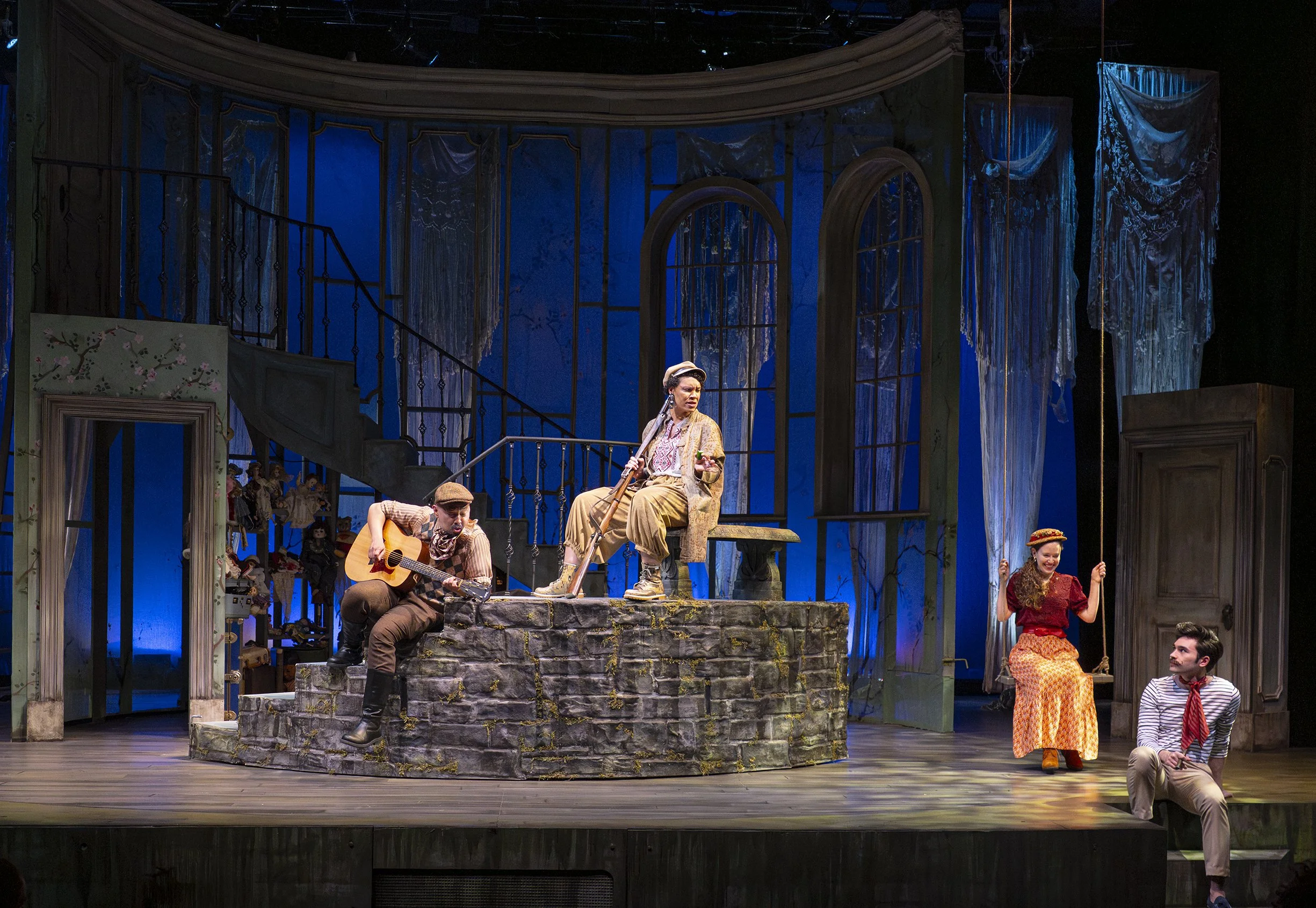
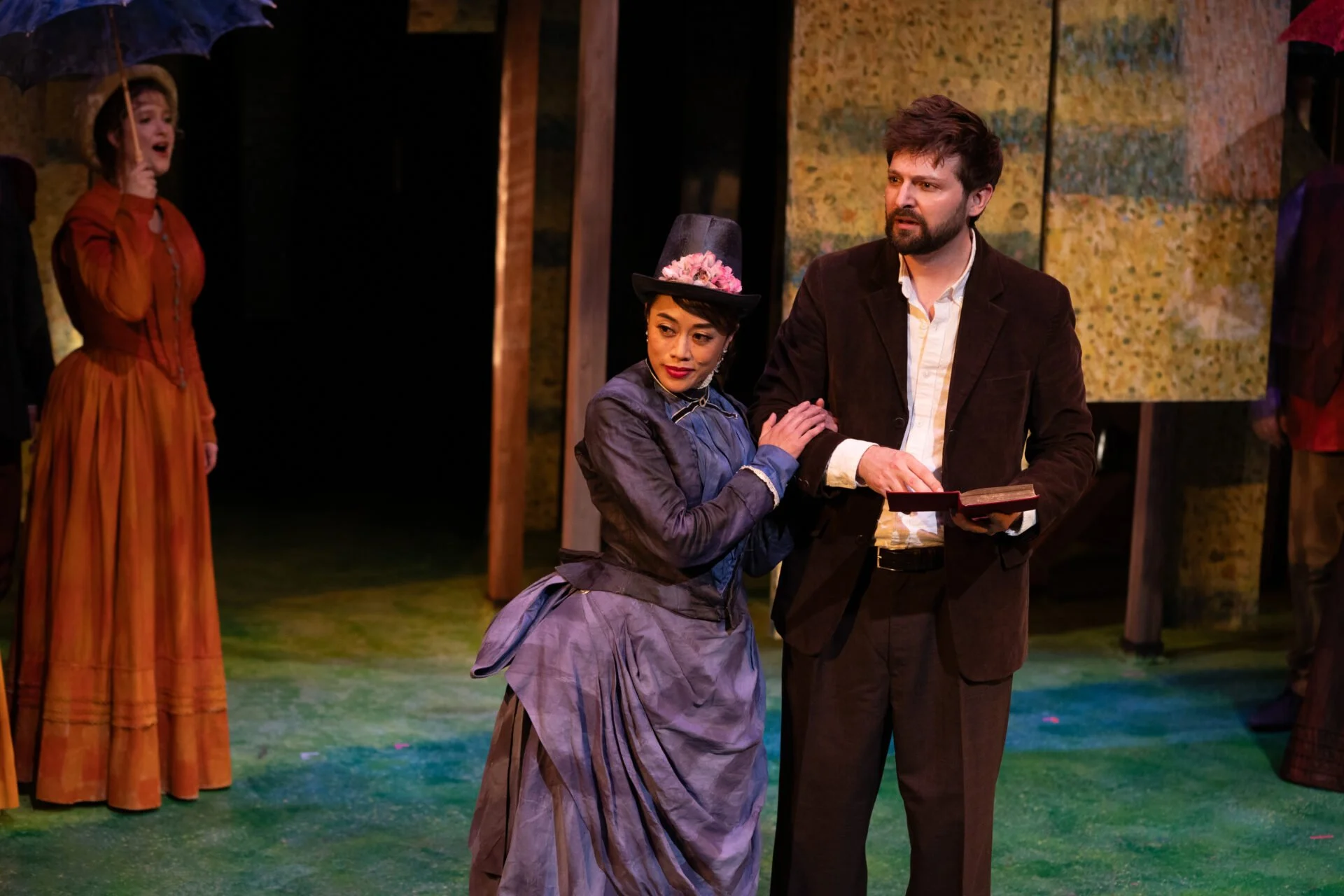
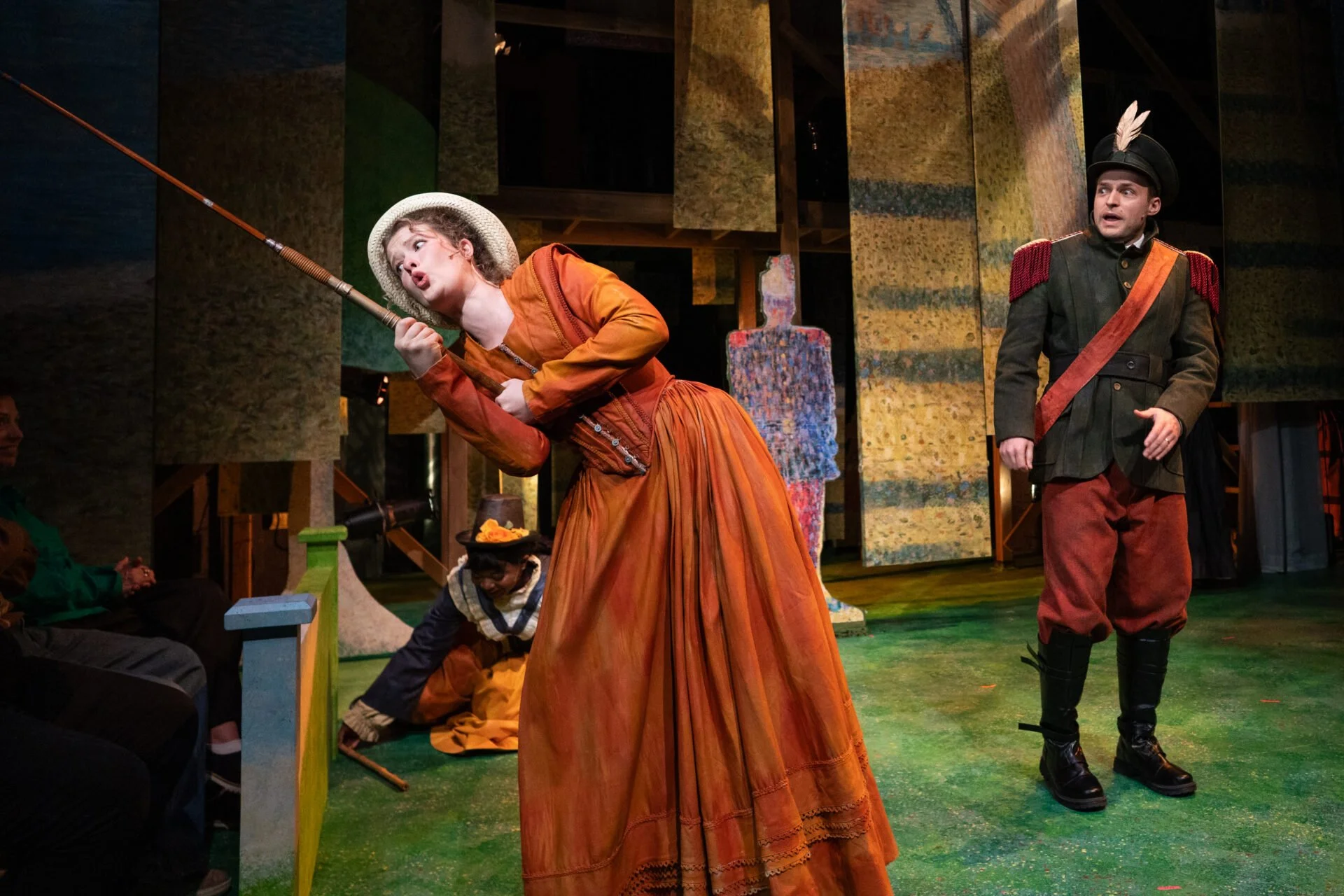
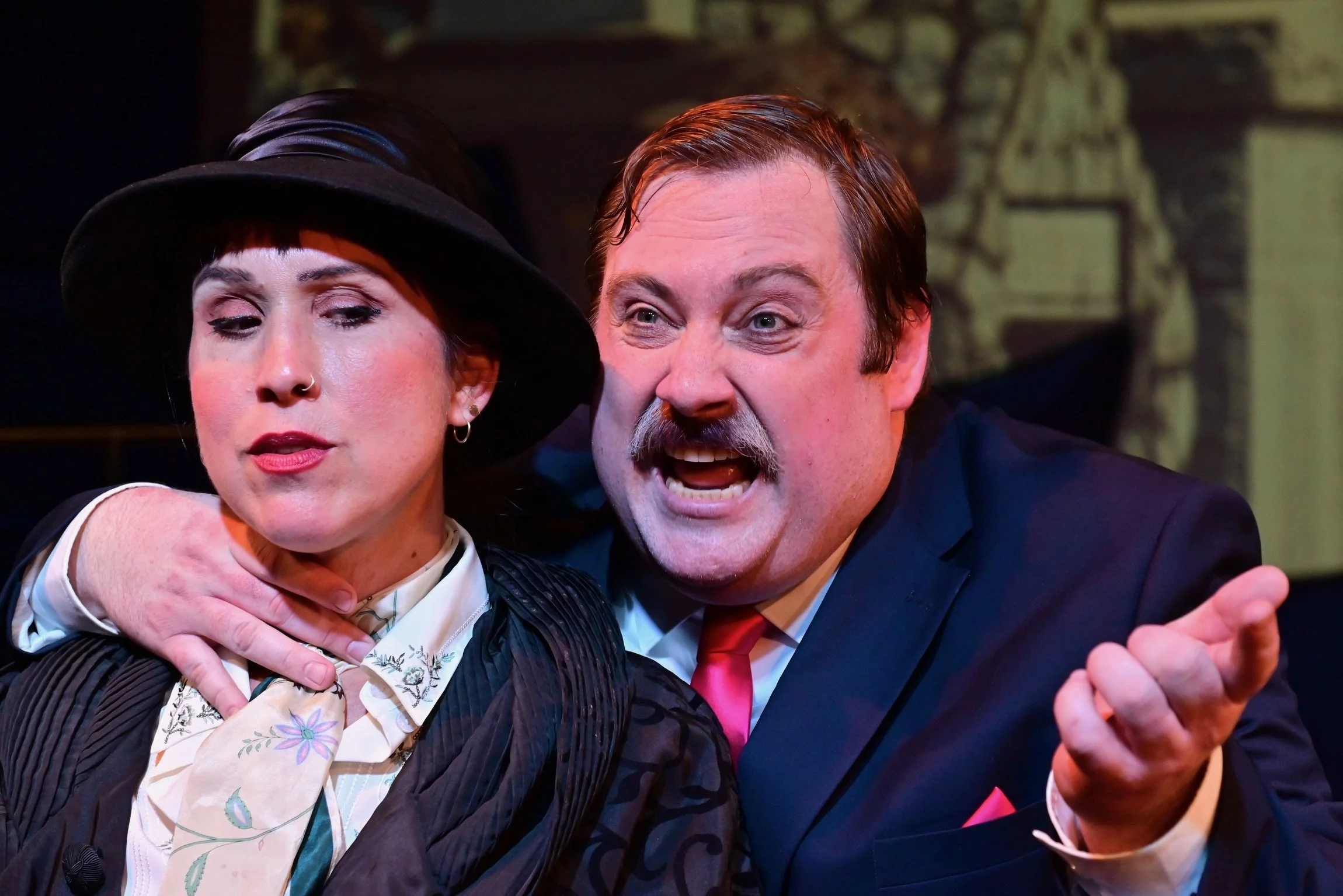
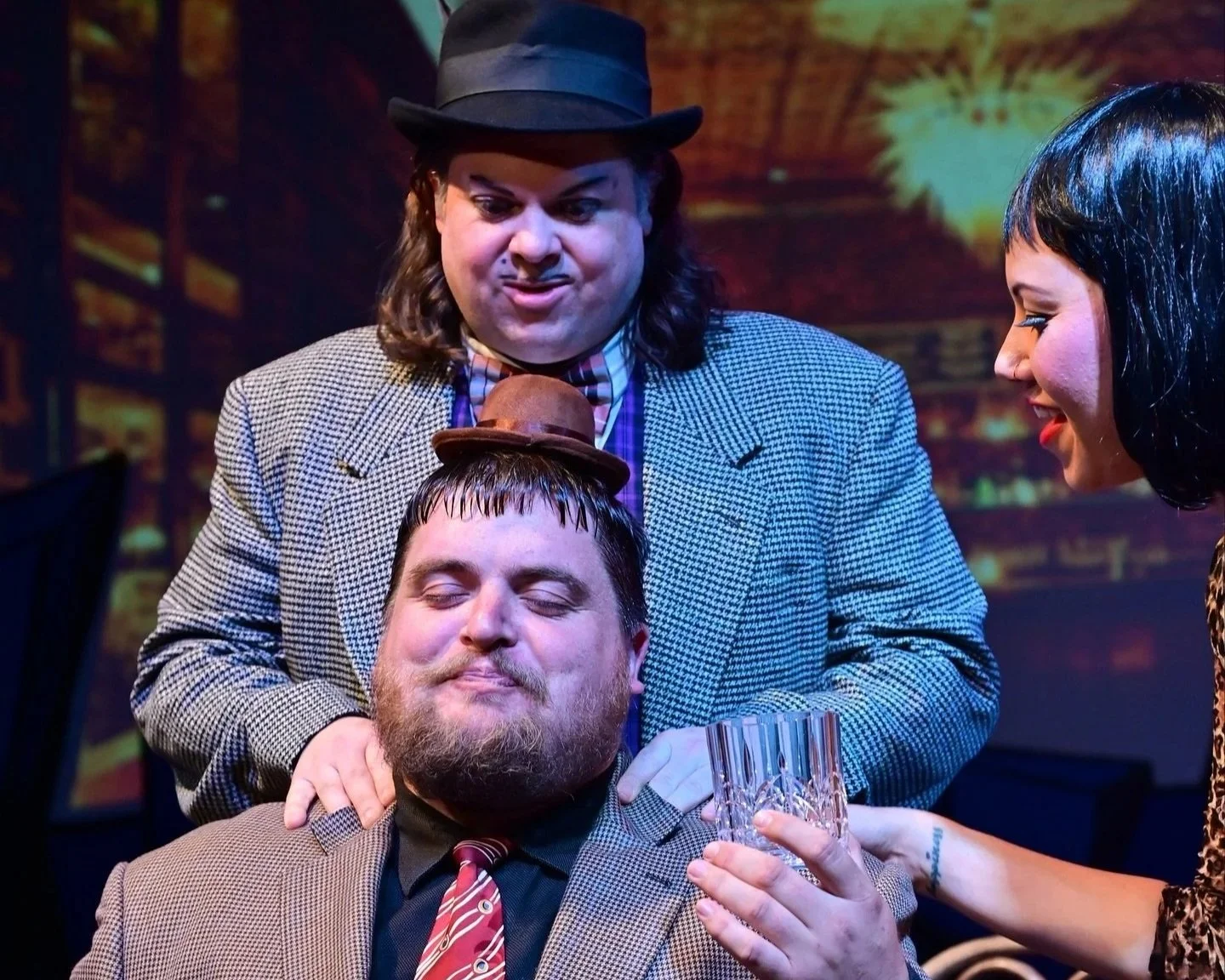
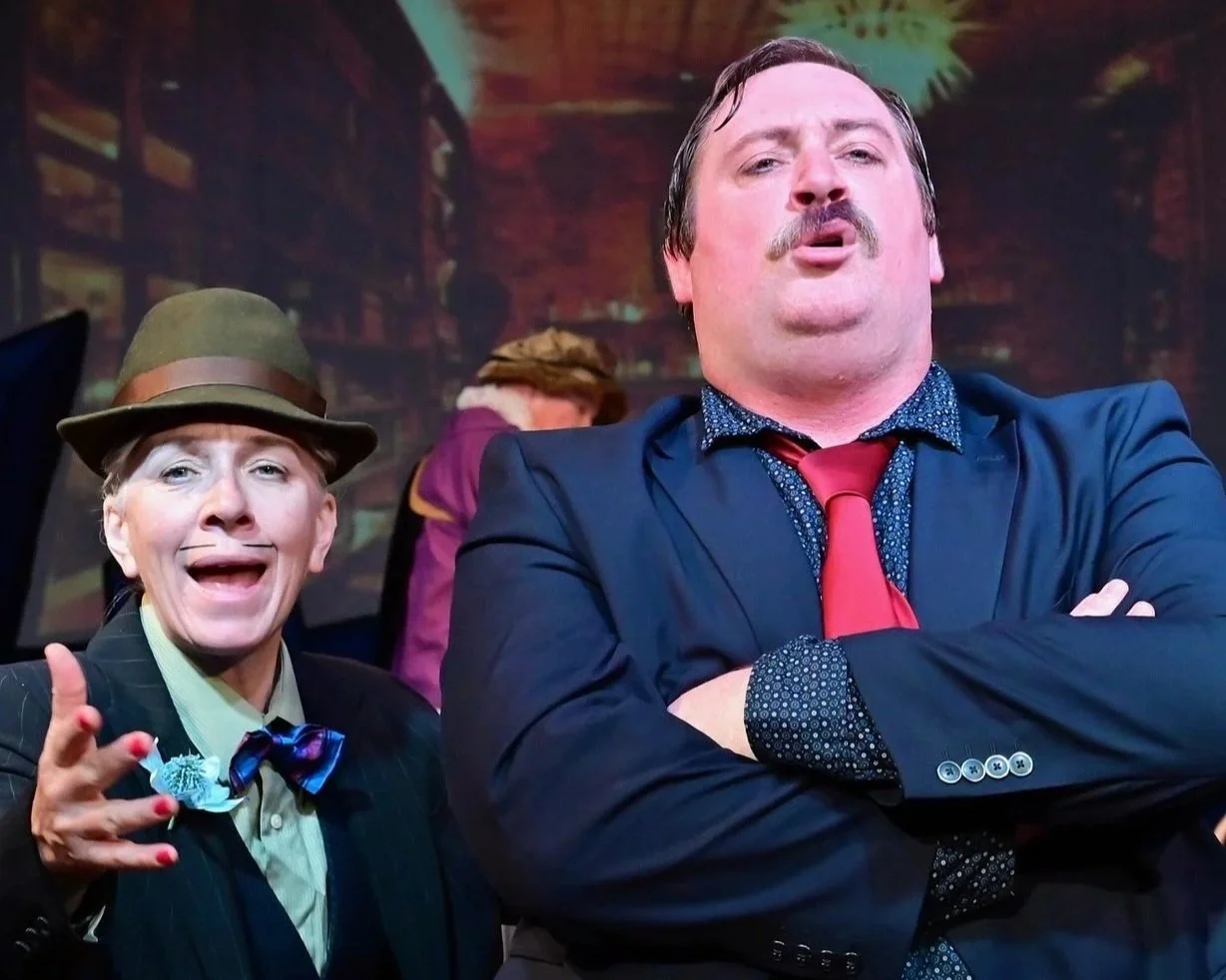
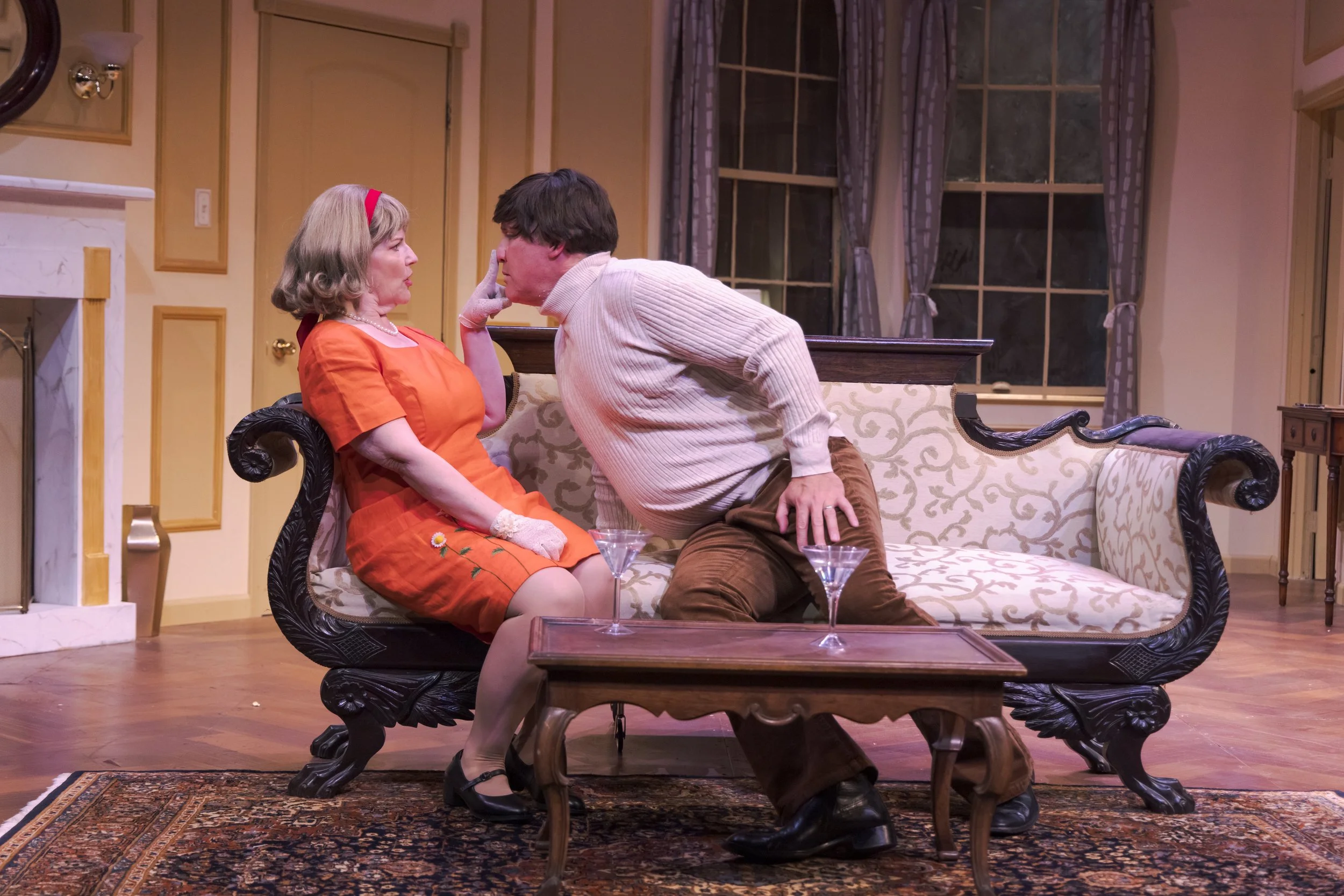
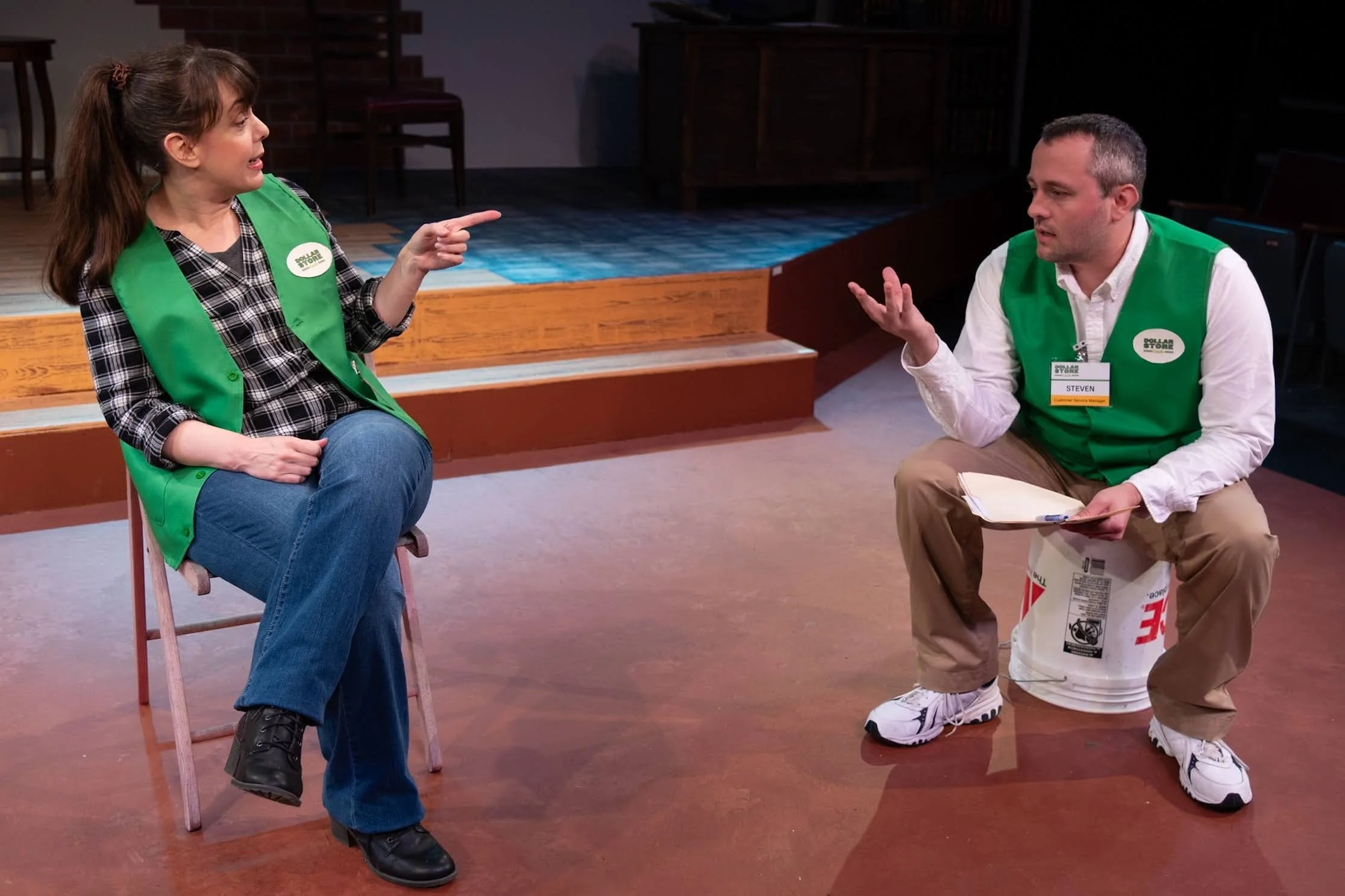
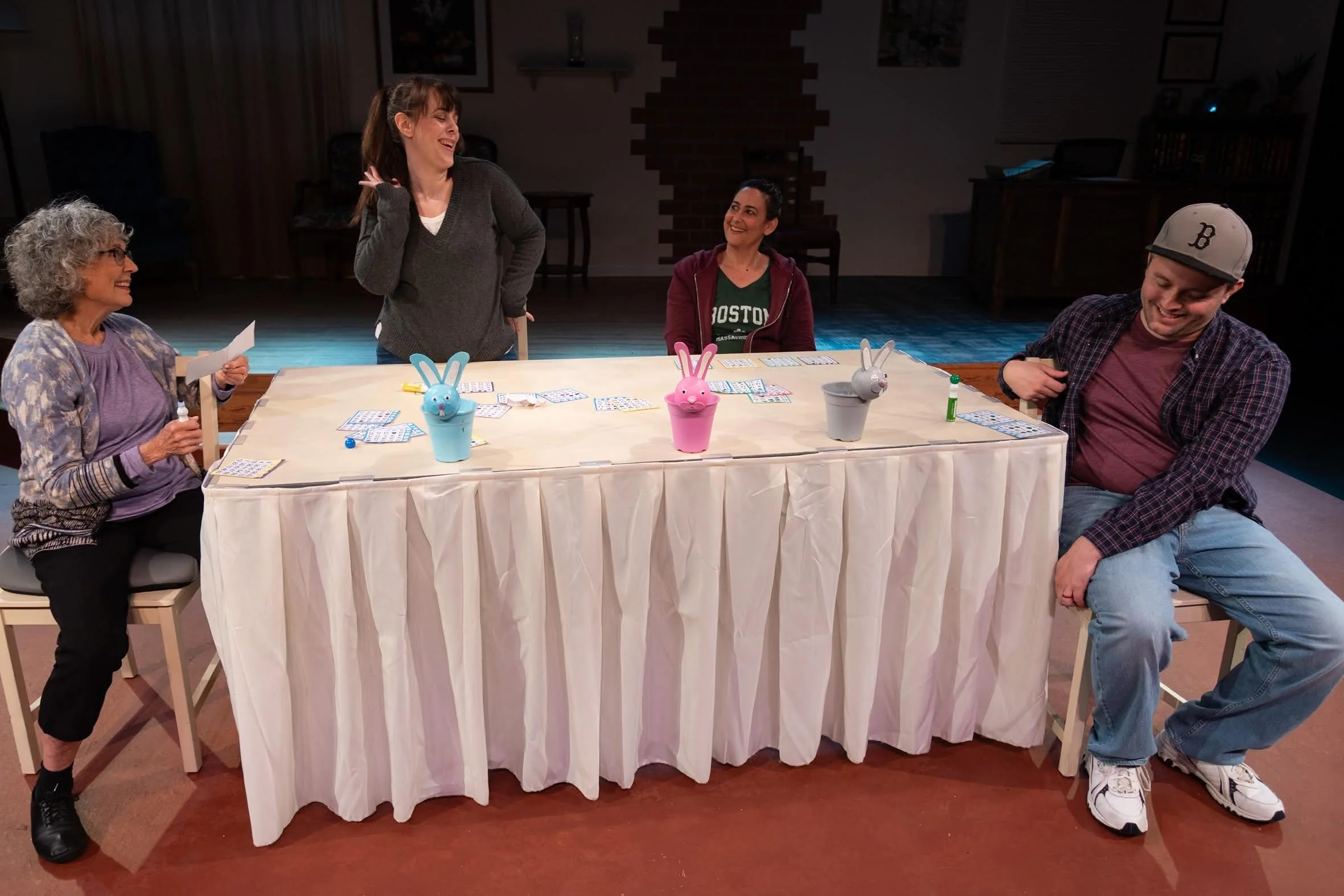
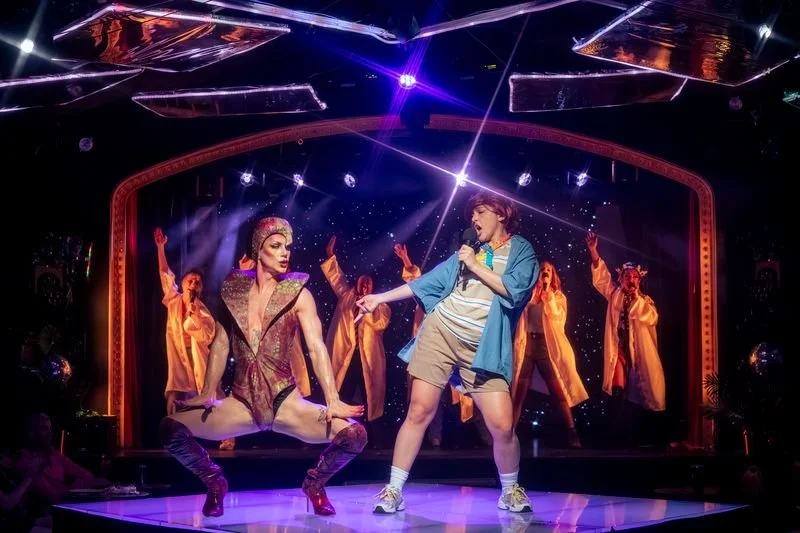
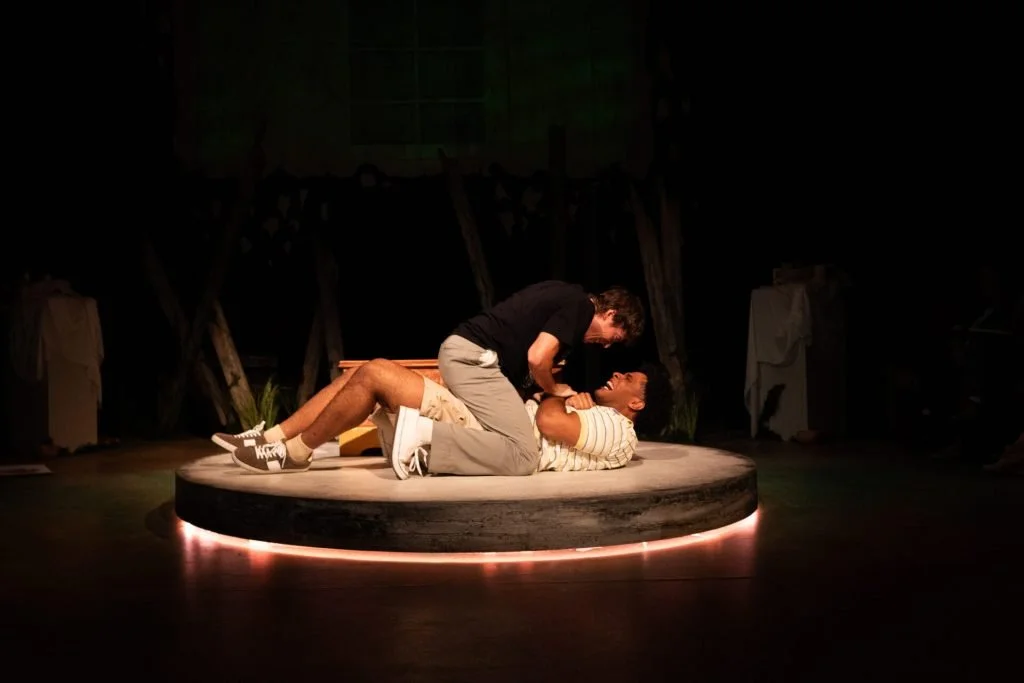
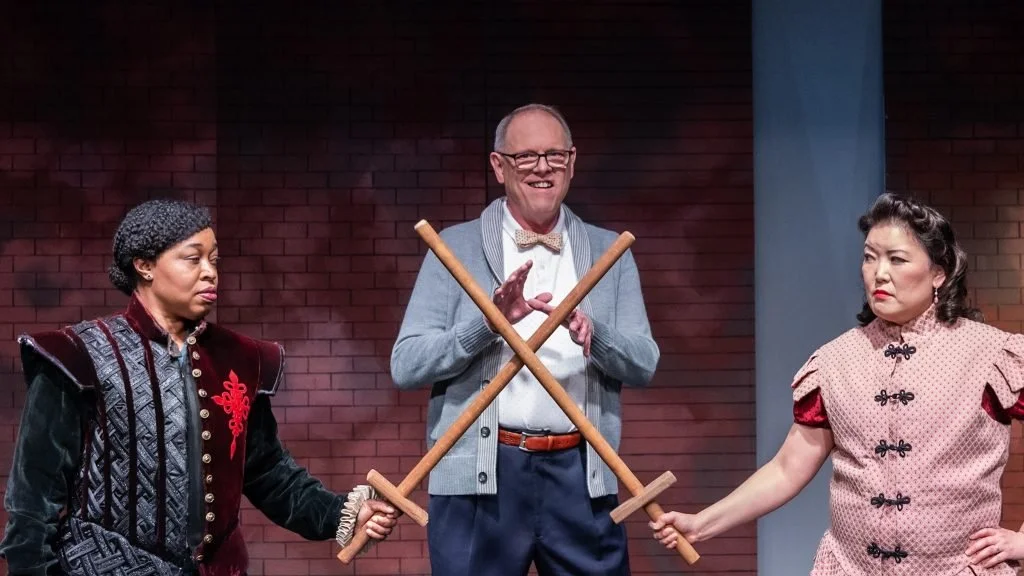
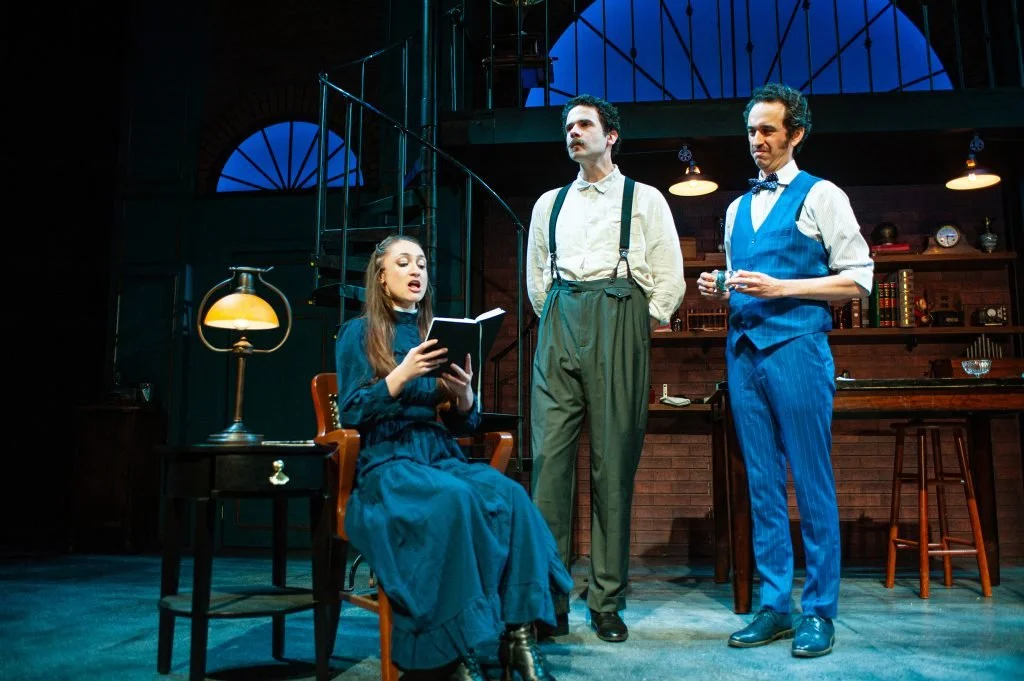
Eddie’s precocious teenage sons, Arty (delightful Ray Khalili) and Jay (charming Tristan A. Rodriguez) feel trapped in Grandma’s fastidious Yonkers apartment. As the boys swelter in their suits and ties, they swap stories and practice hysterical imitations of their peculiar family. Grandma, Uncle Louis (talented Vinny Randazzo), Aunt Gert (hilarious Sarah Mitchell), and Aunt Bella are simply comedic characters to the innocent boys.
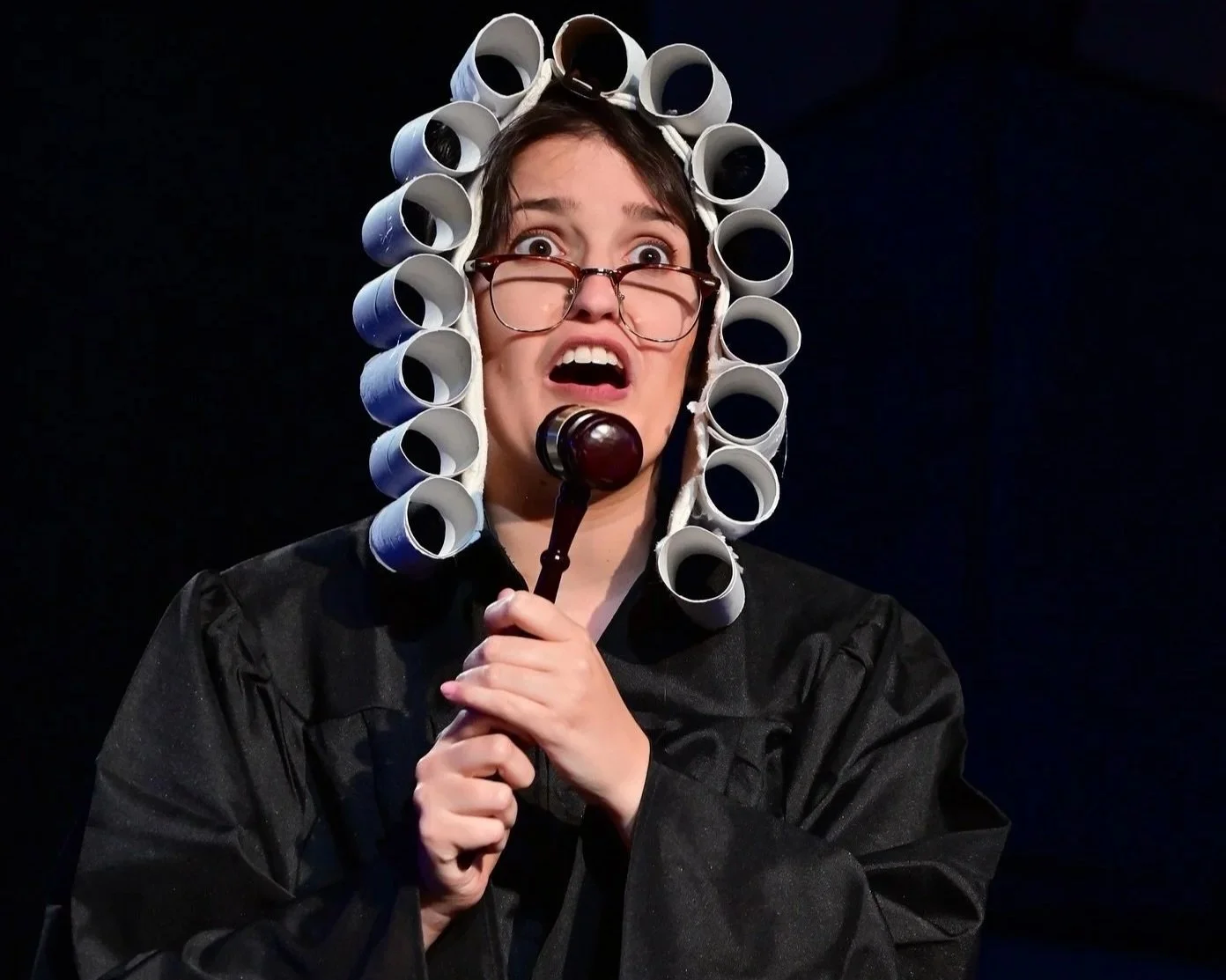
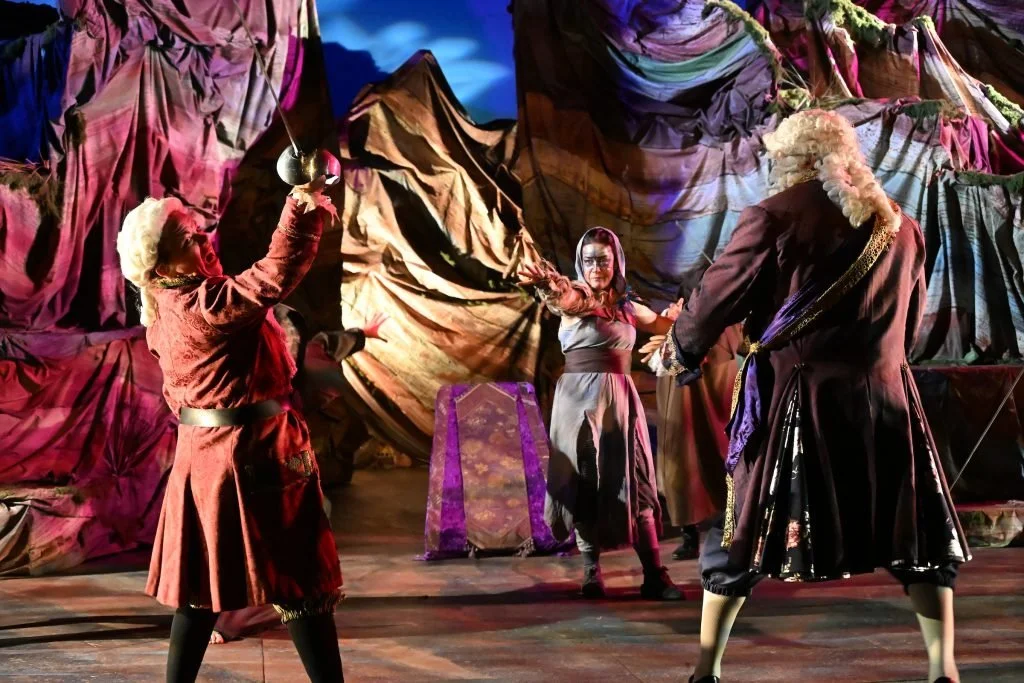
Director Nancy Carlin highlights the family’s eccentricities. Bella wanders forgetfully. Nervous Louis cannot sit still. Tiny, fearful Gert gasps for air as she speaks. Tyrannical Grandma commands from her throne.
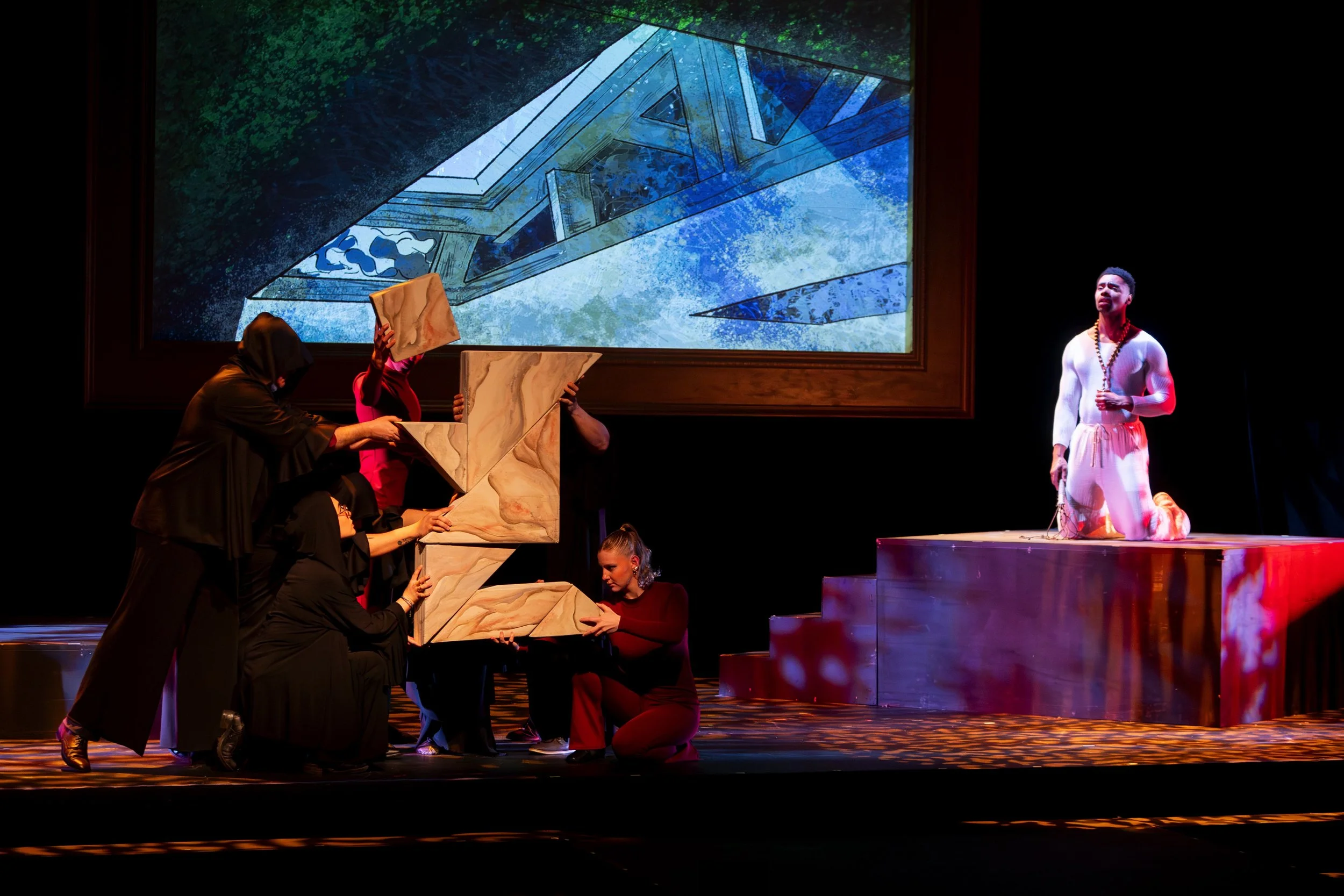
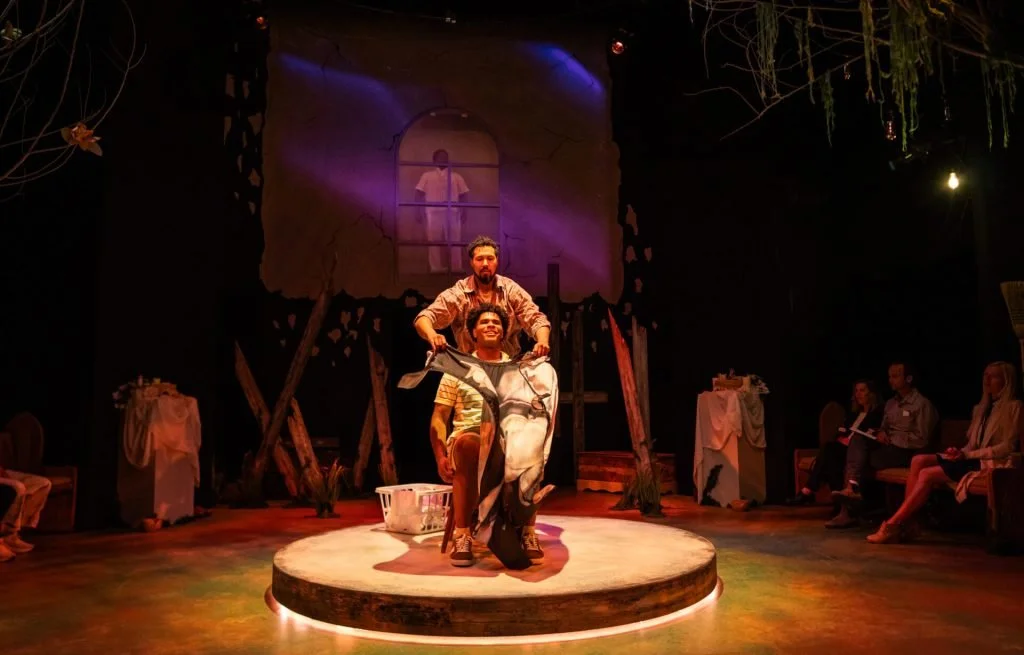
Projected on large columns with oversized handwritten letters, we see footage of Eddie, usually on a train, speaking to his sons. On grandma’s pull-out couch, the boys read his letters, hanging on his every word. And upon Eddie’s triumphant return, it seems everyone has grown.
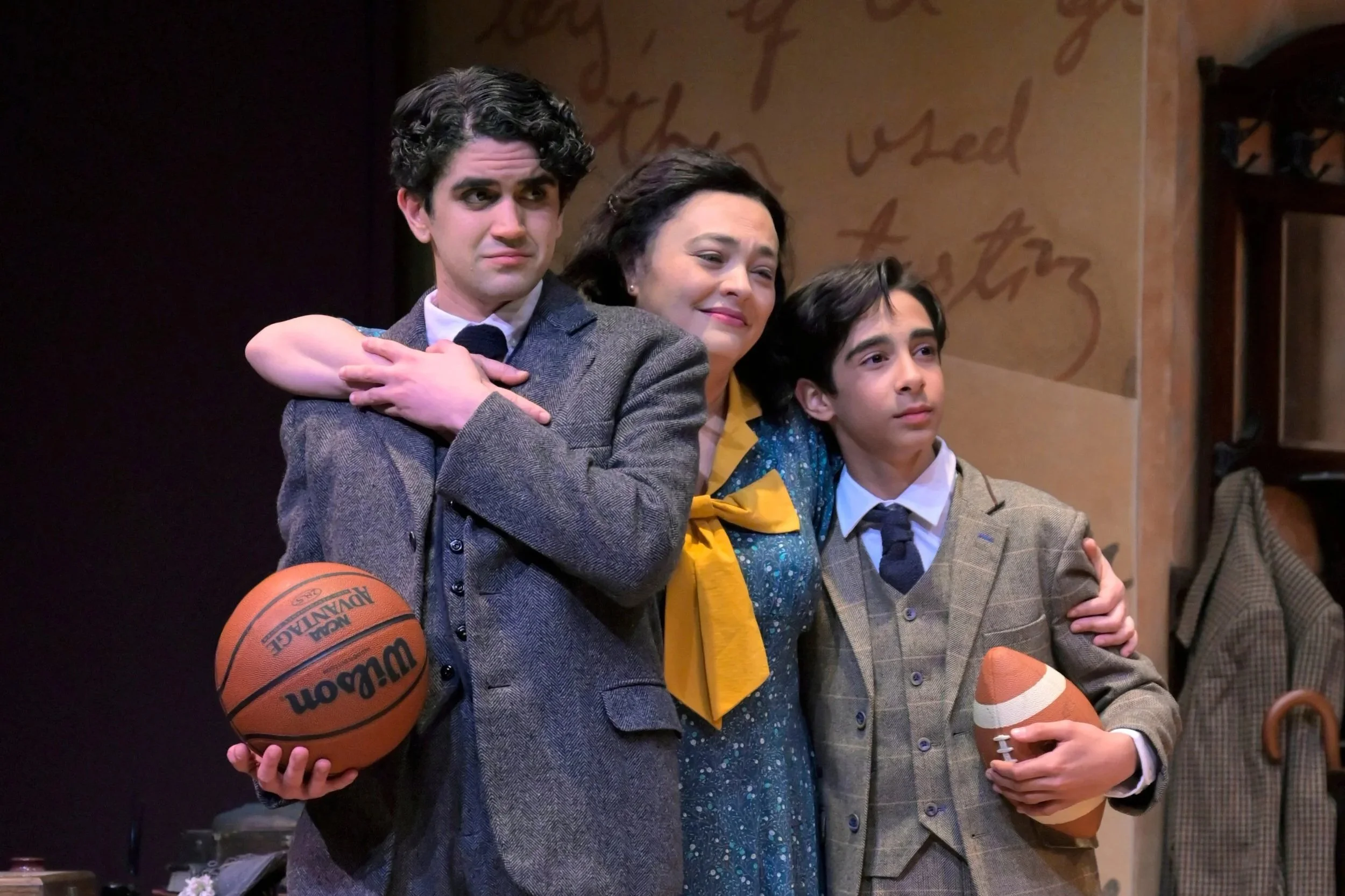
Nephews Arty and Jay help their Aunt Bella grow up. As she challenges the cruelty of her mom, Bella gains confidence. When the boys accept Bella’s playful goodbye gifts, a lightness emerges in the Kurnitz family, and anything seems possible.
Through all the laughter, “Lost in Yonkers” leaves us with plenty to ponder. What seeds of grief are being planted by Trump’s War with Iran?
“Lost in Yonkers” by Neil Simon, directed by Nancy Carlin, scenic design by Deanna Zibello, costumes by Becky Bodurtha, lighting by Christian Meija, and sound by Cliff Caruthers, at CenterREP, Walnut Creek, California. Info: centerrep.org - to April 19, 2026. Cast: Ray Khalili, Adam Magill, Sarah Mitchell, Vinny Randazzo, Ellen Ratner, Tristan A. Rodriguez, and Renee Rogoff.
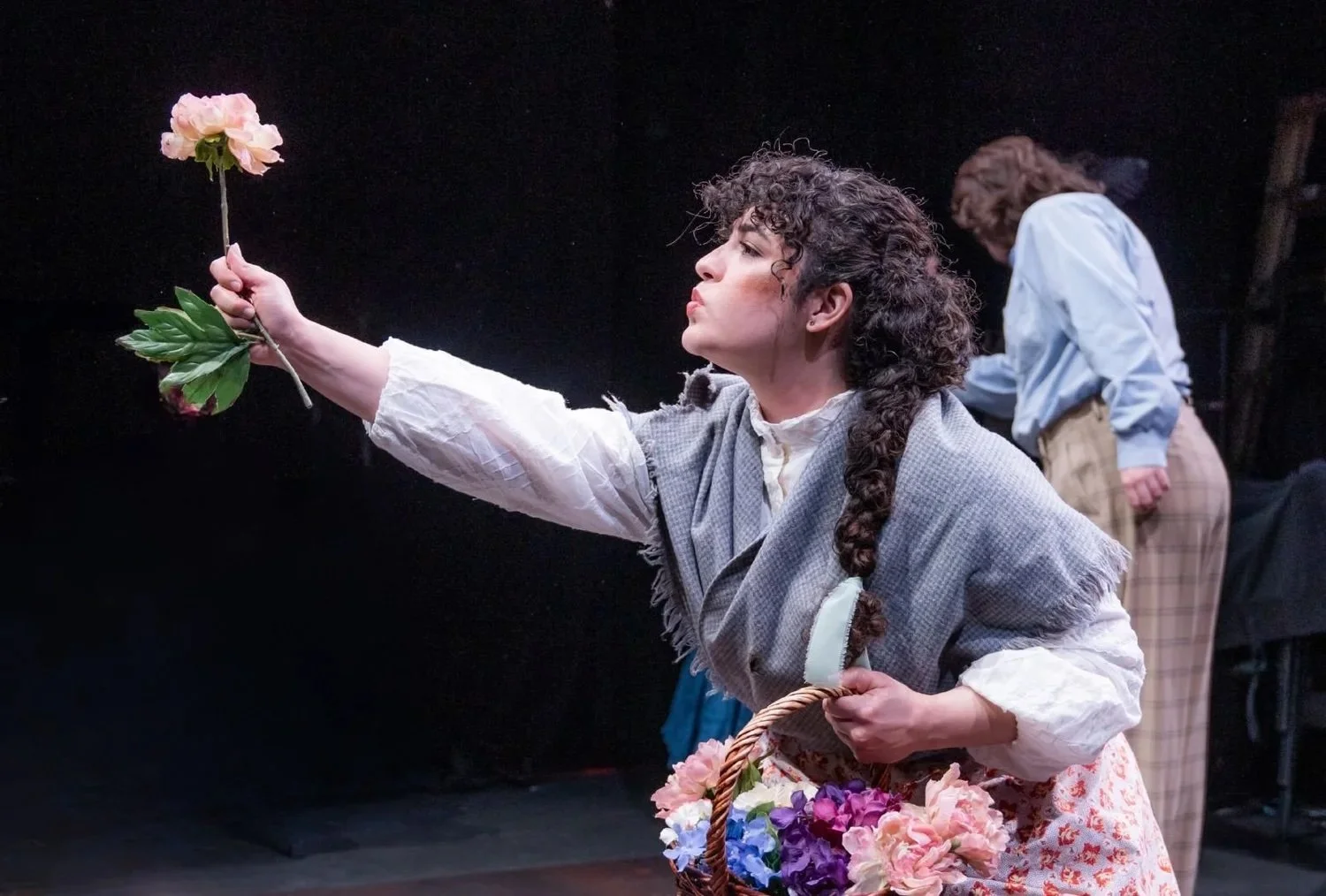
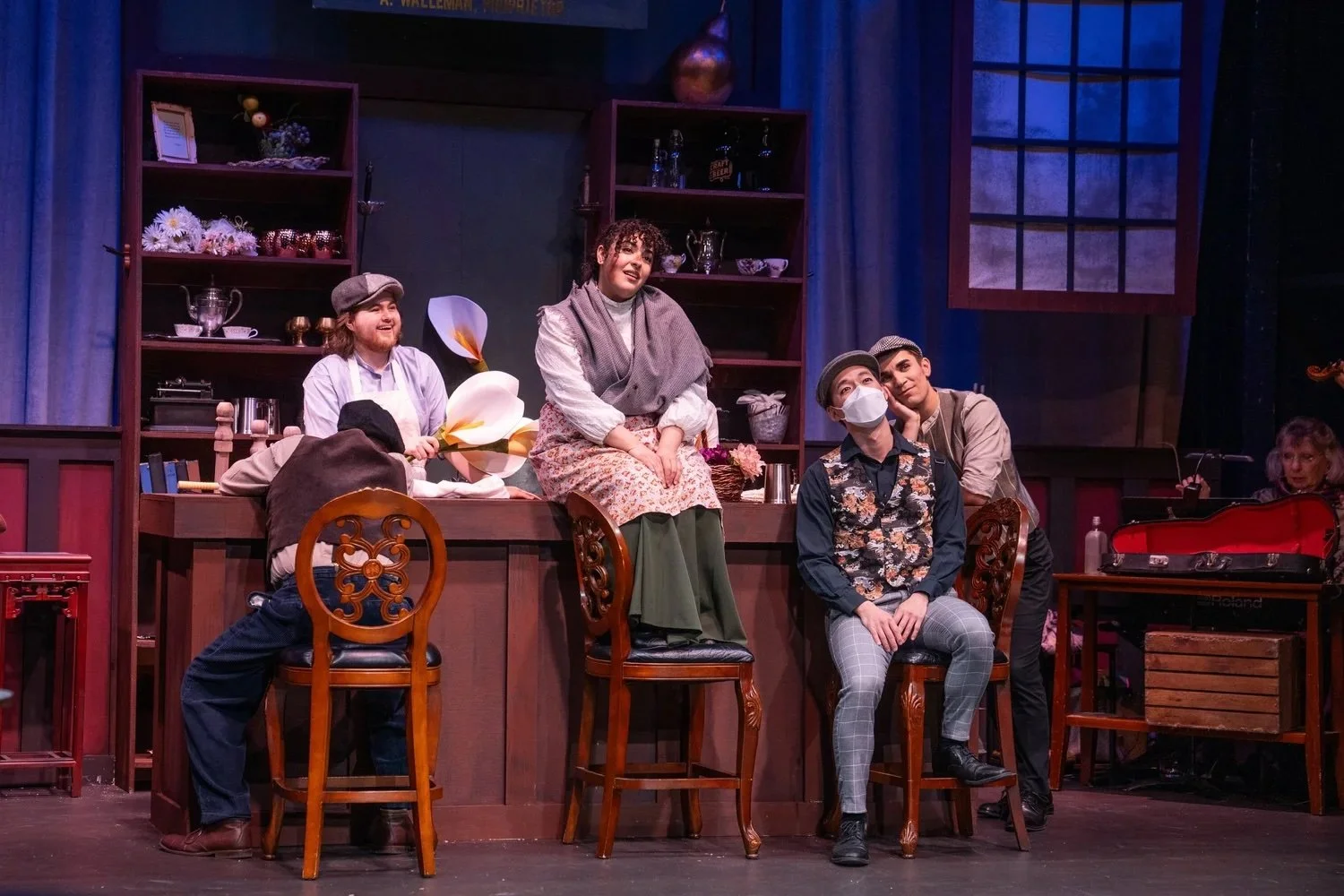
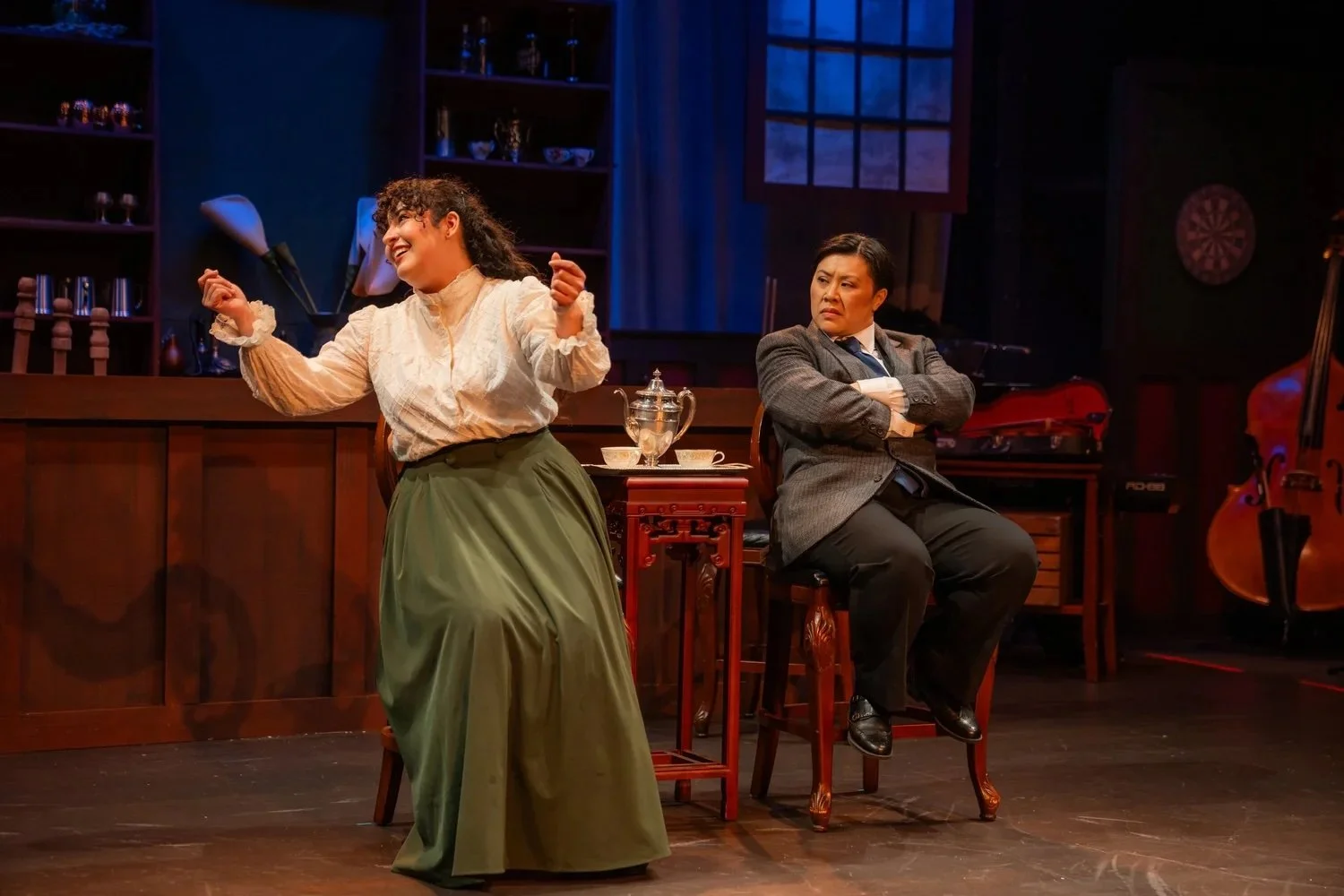
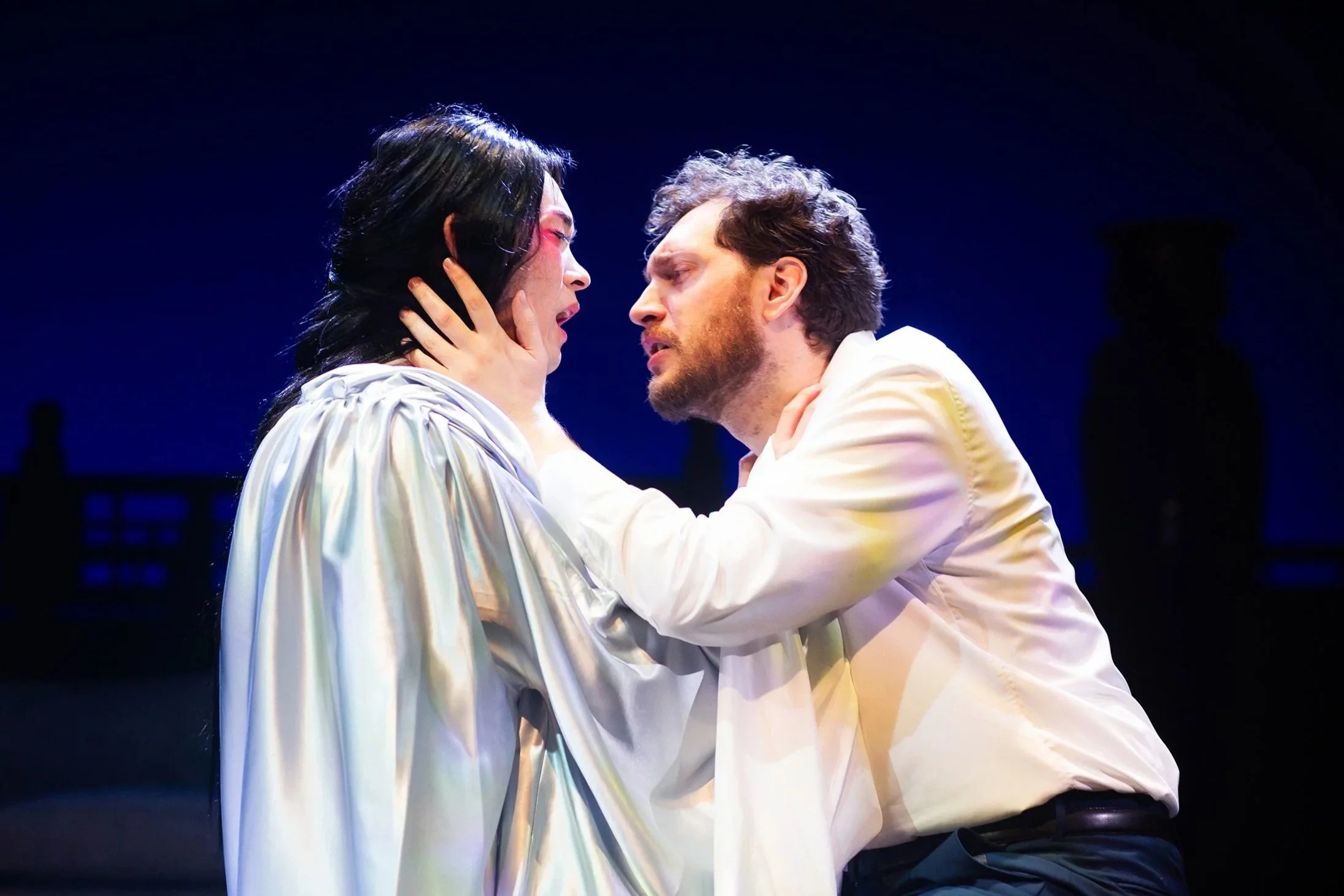
Production Photos
View Photo Captions
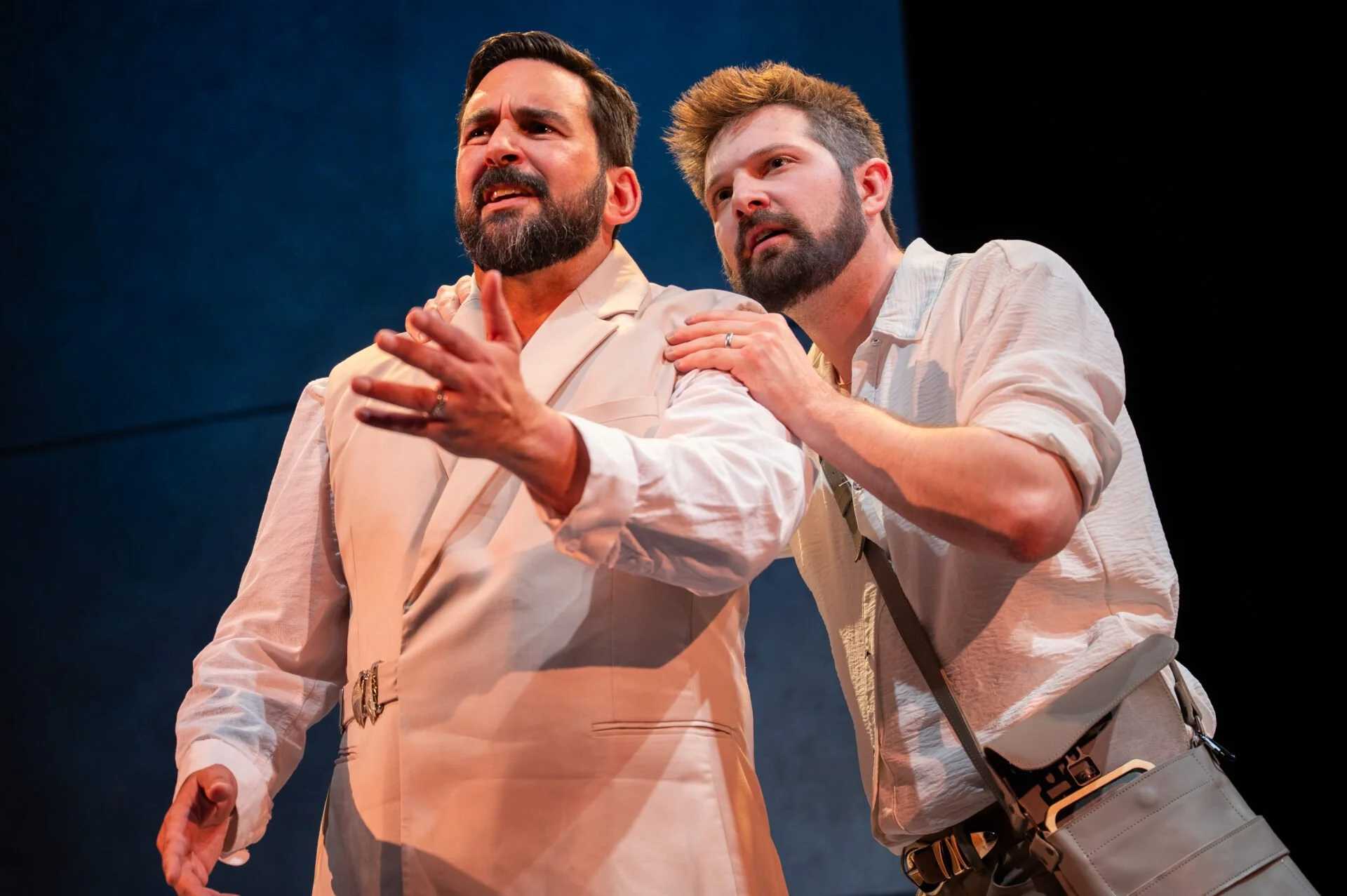
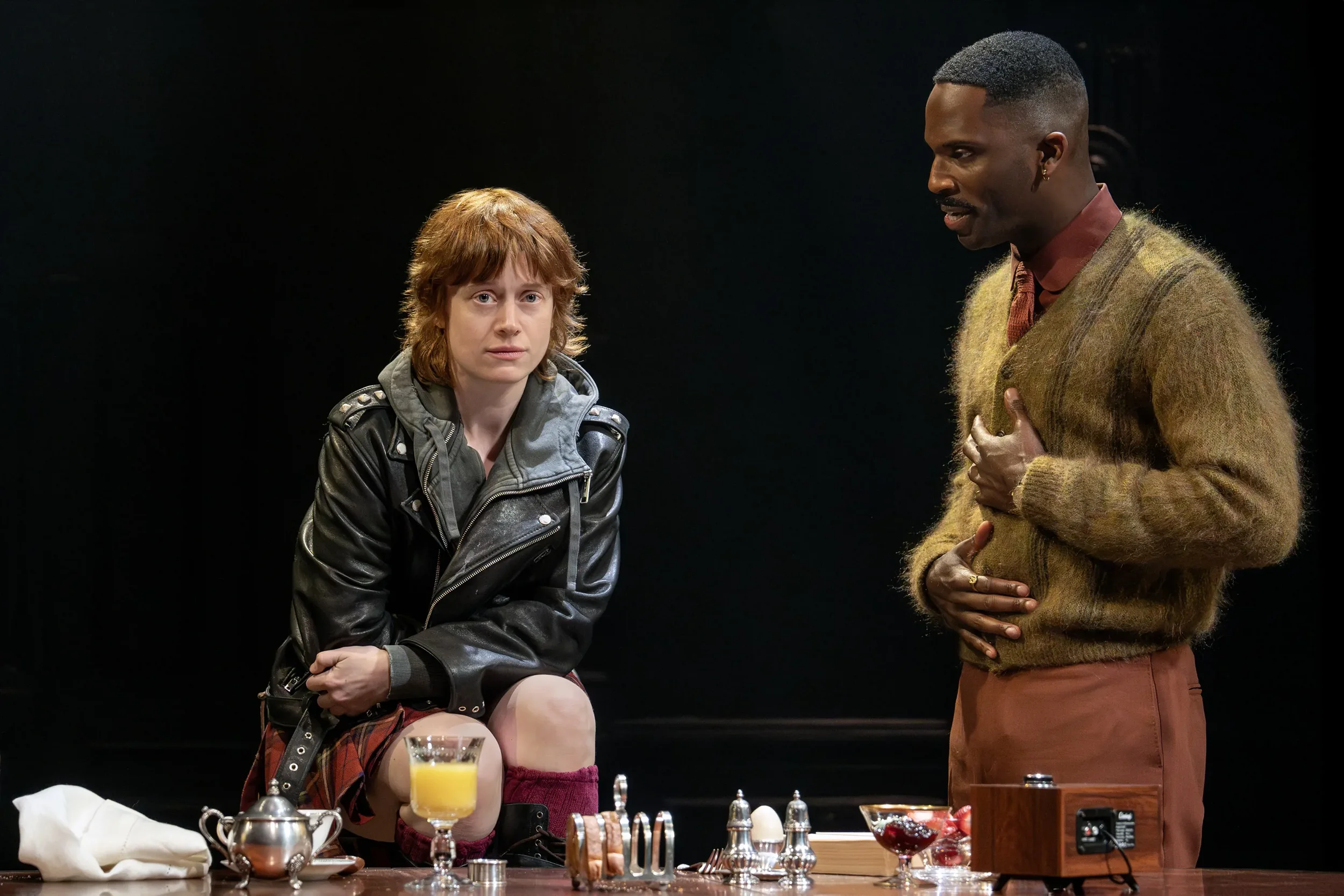
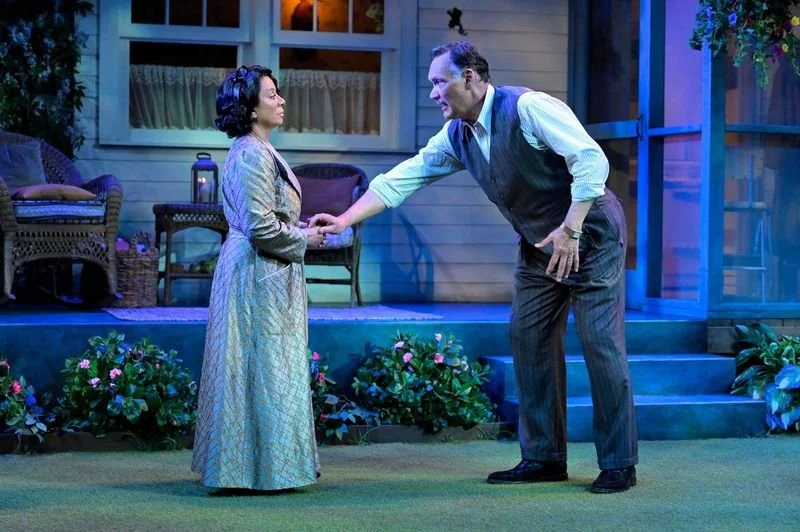
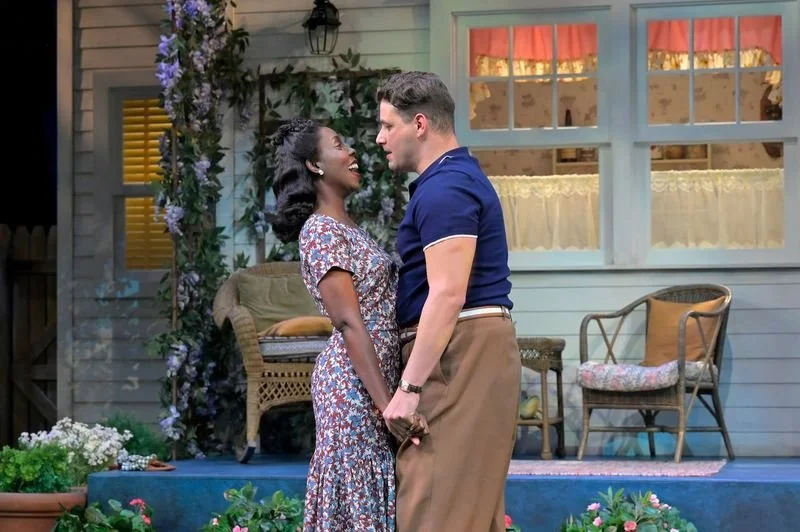
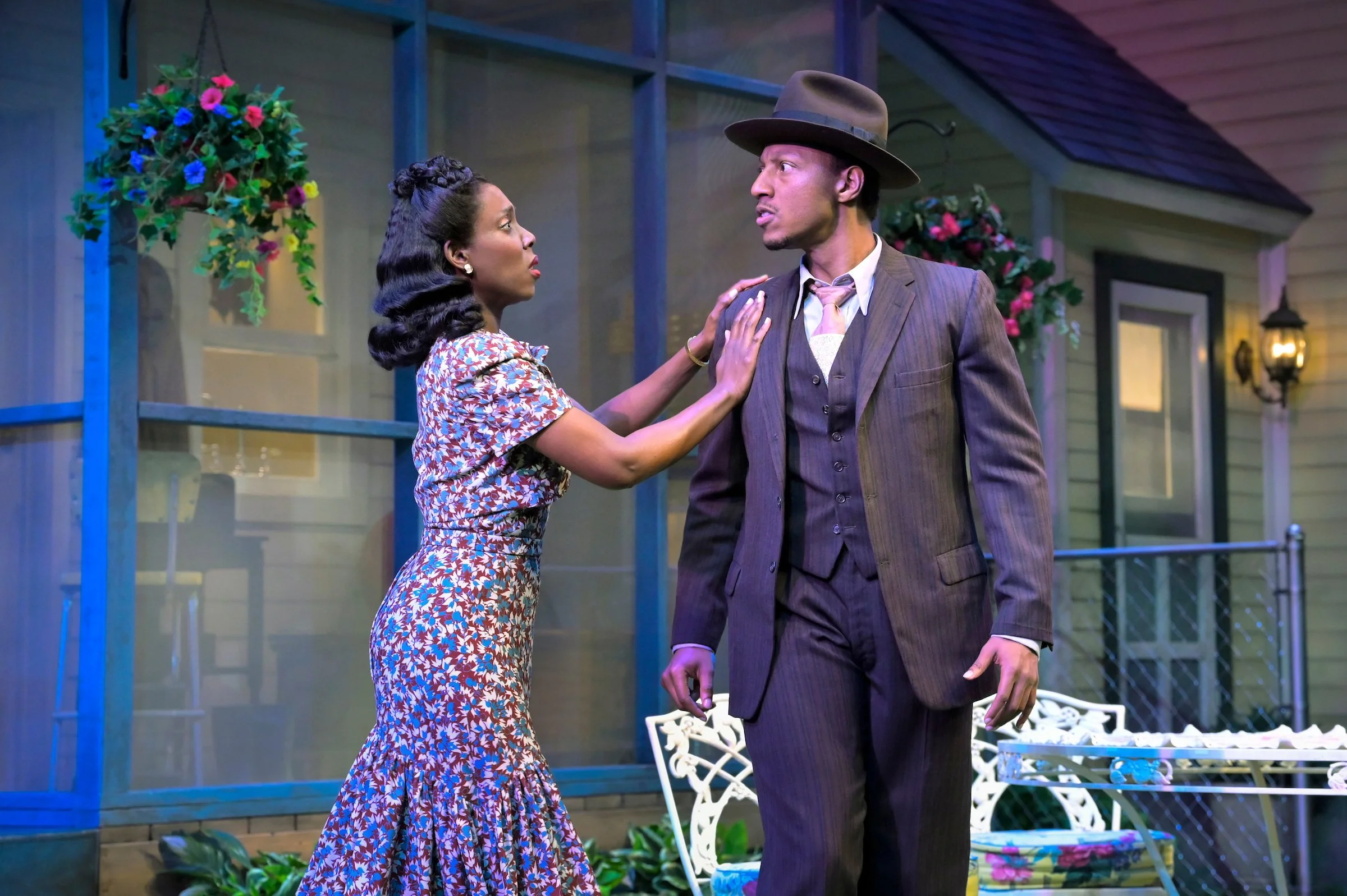
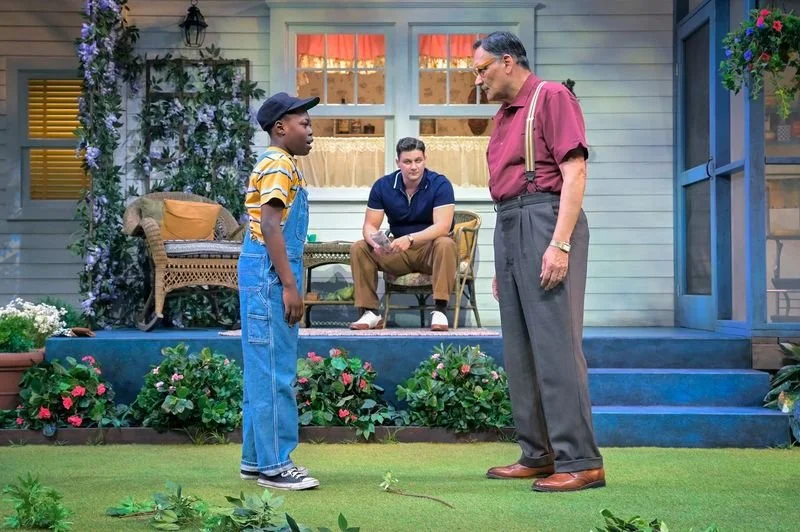
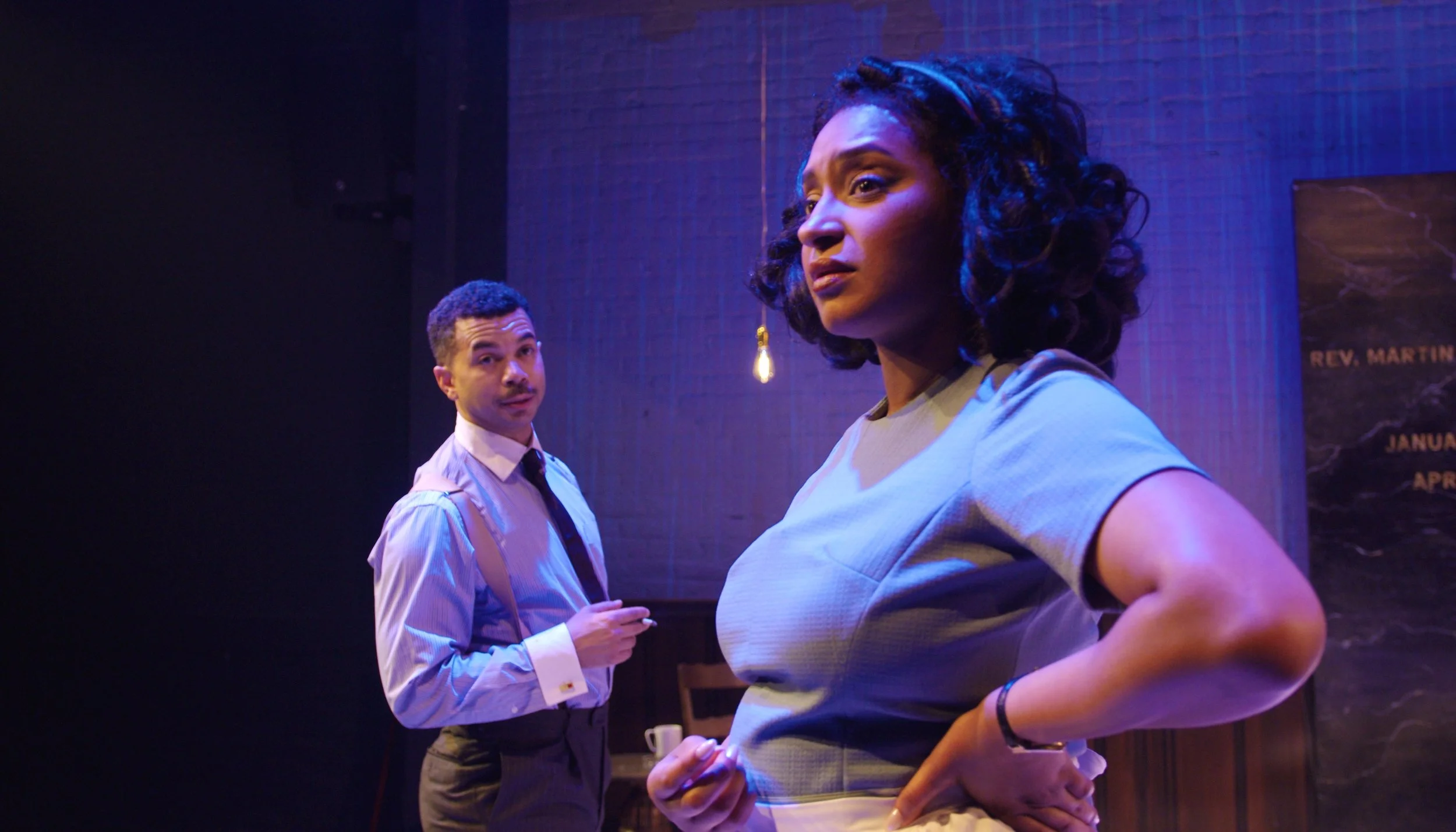
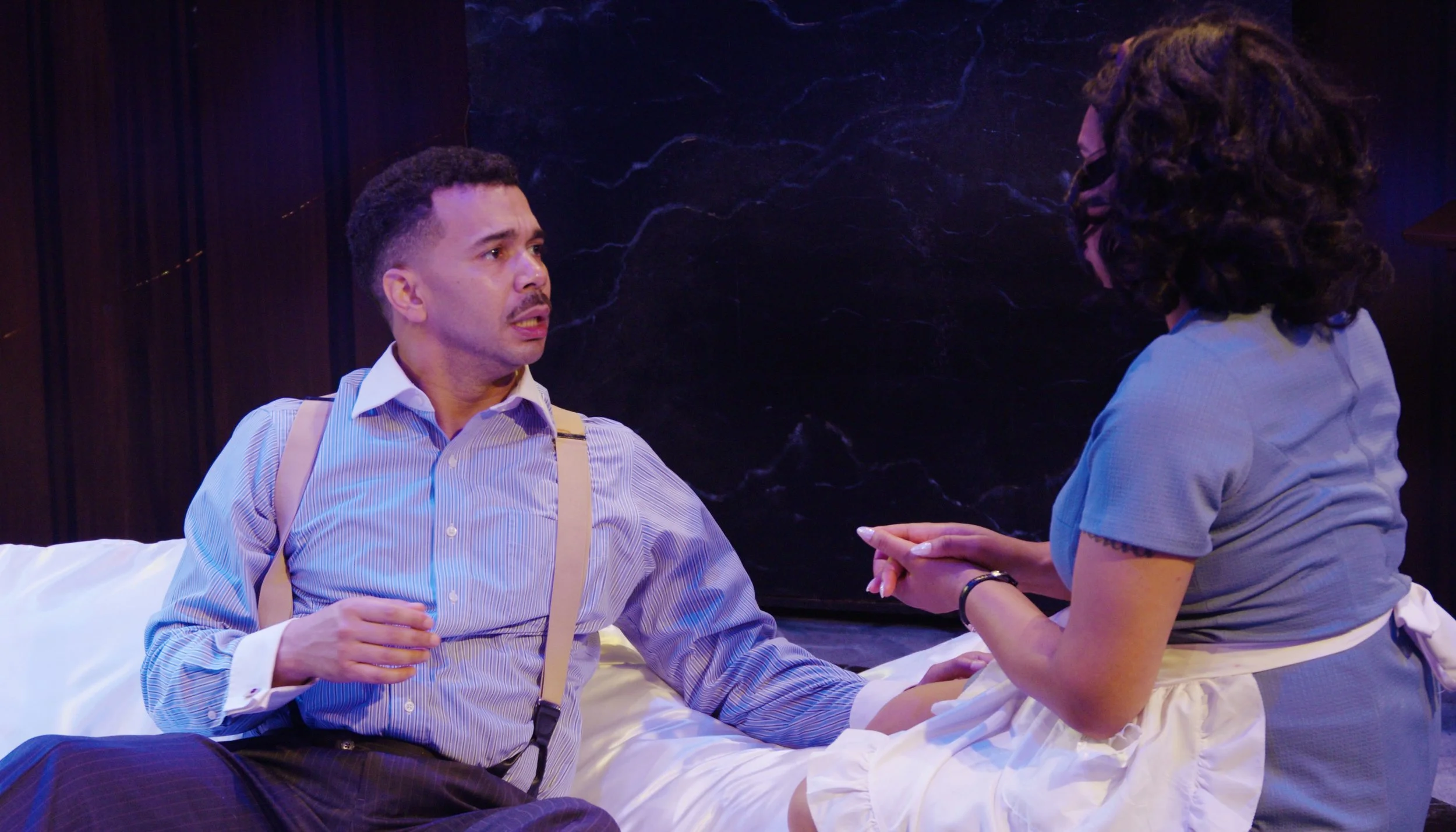
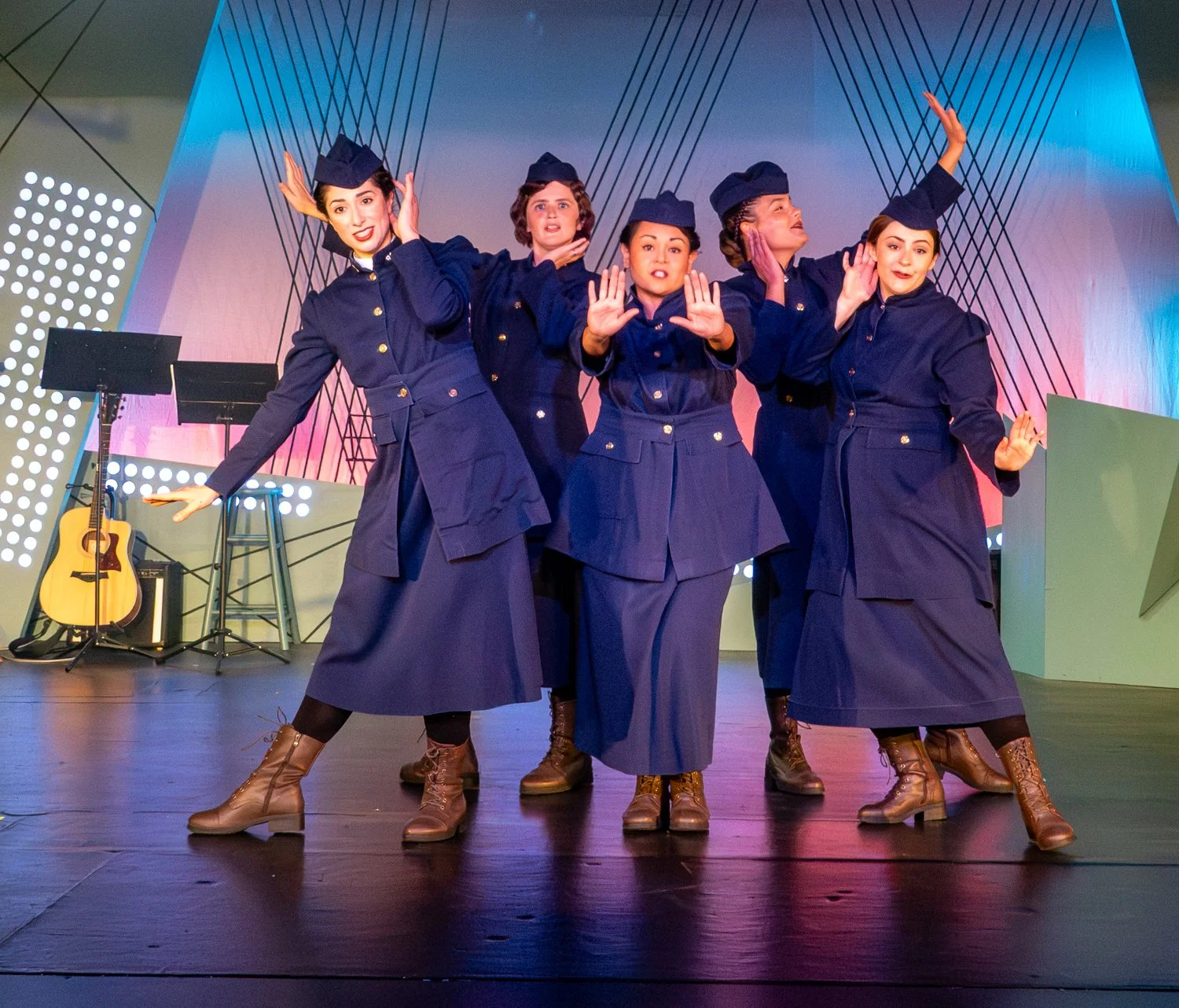
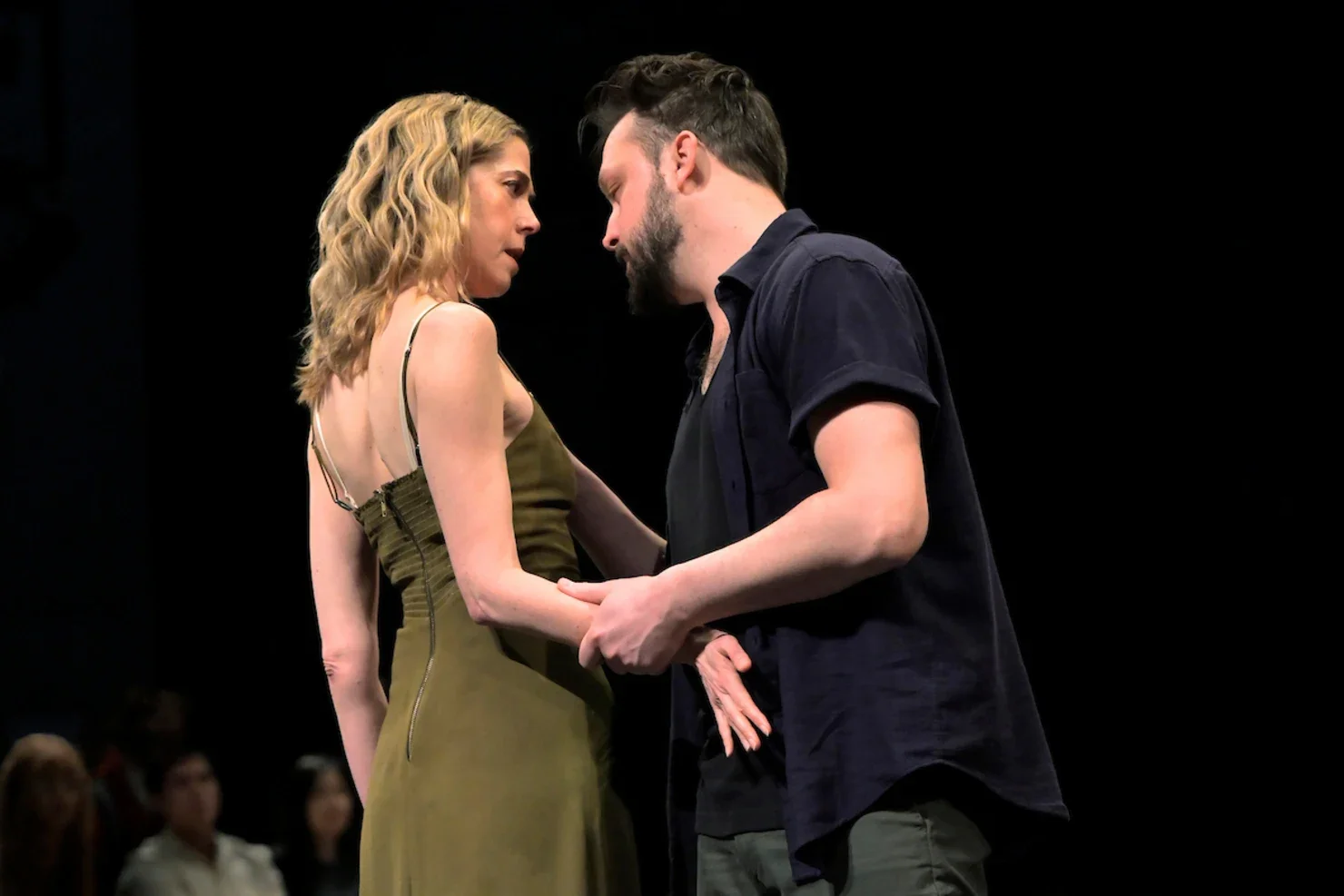
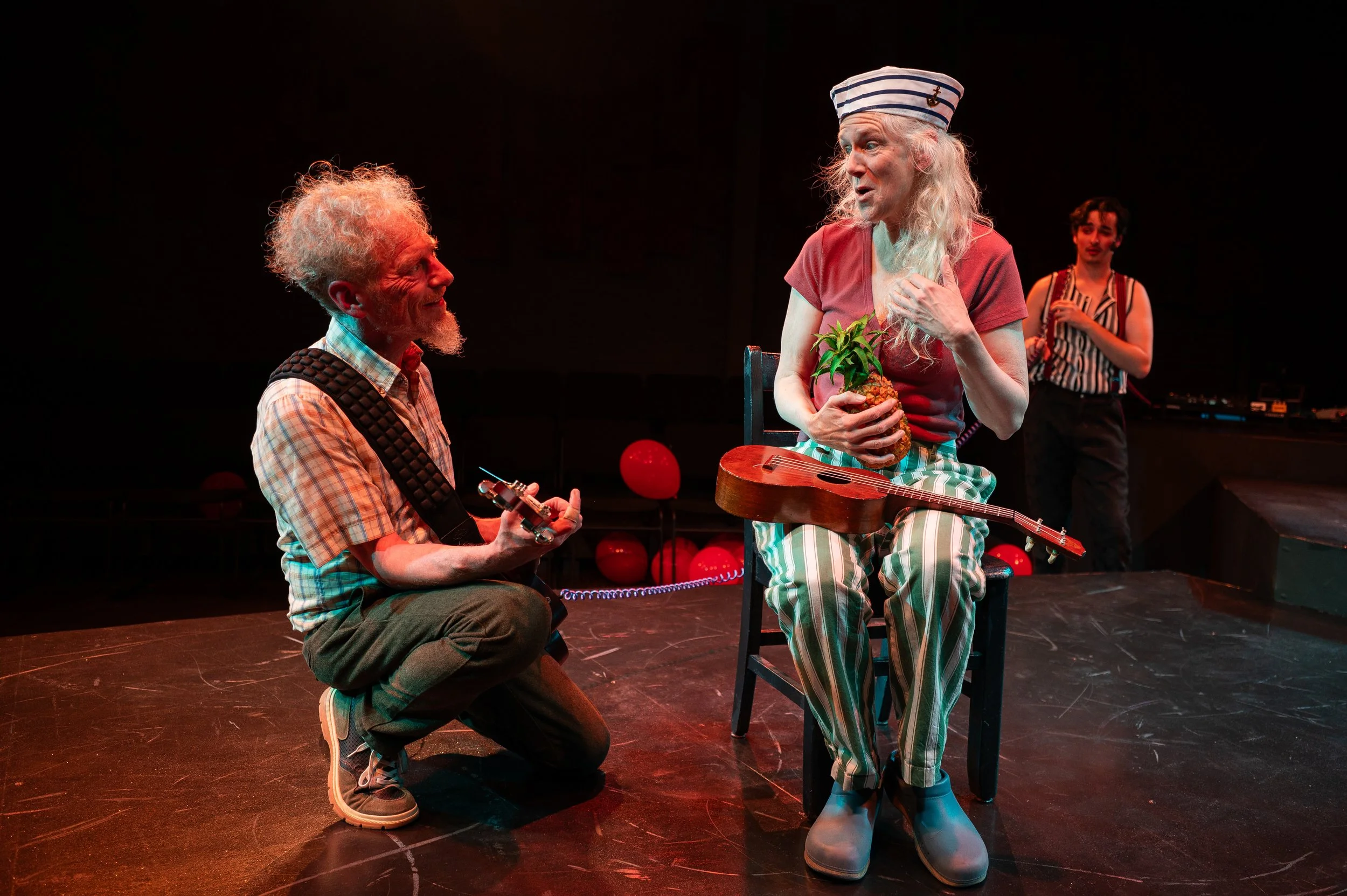
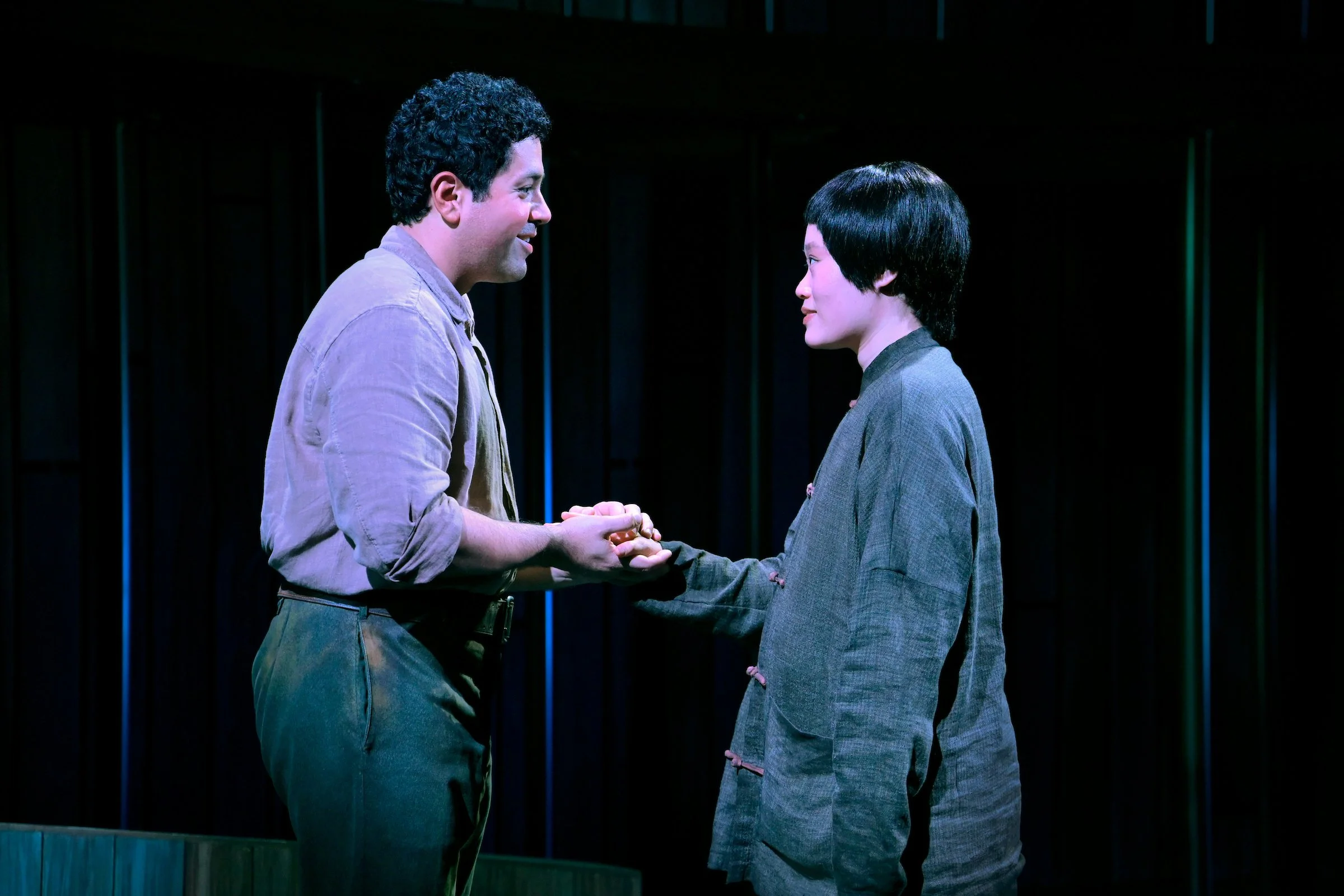
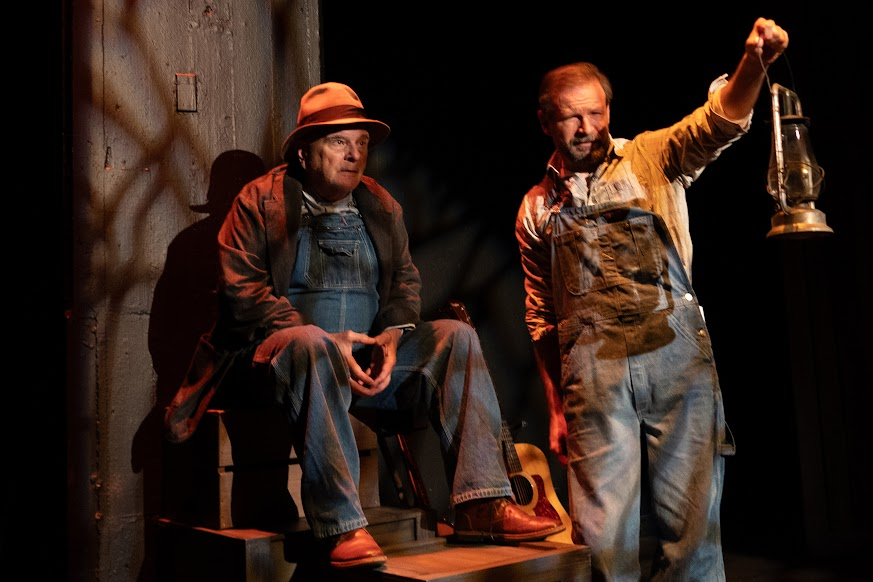
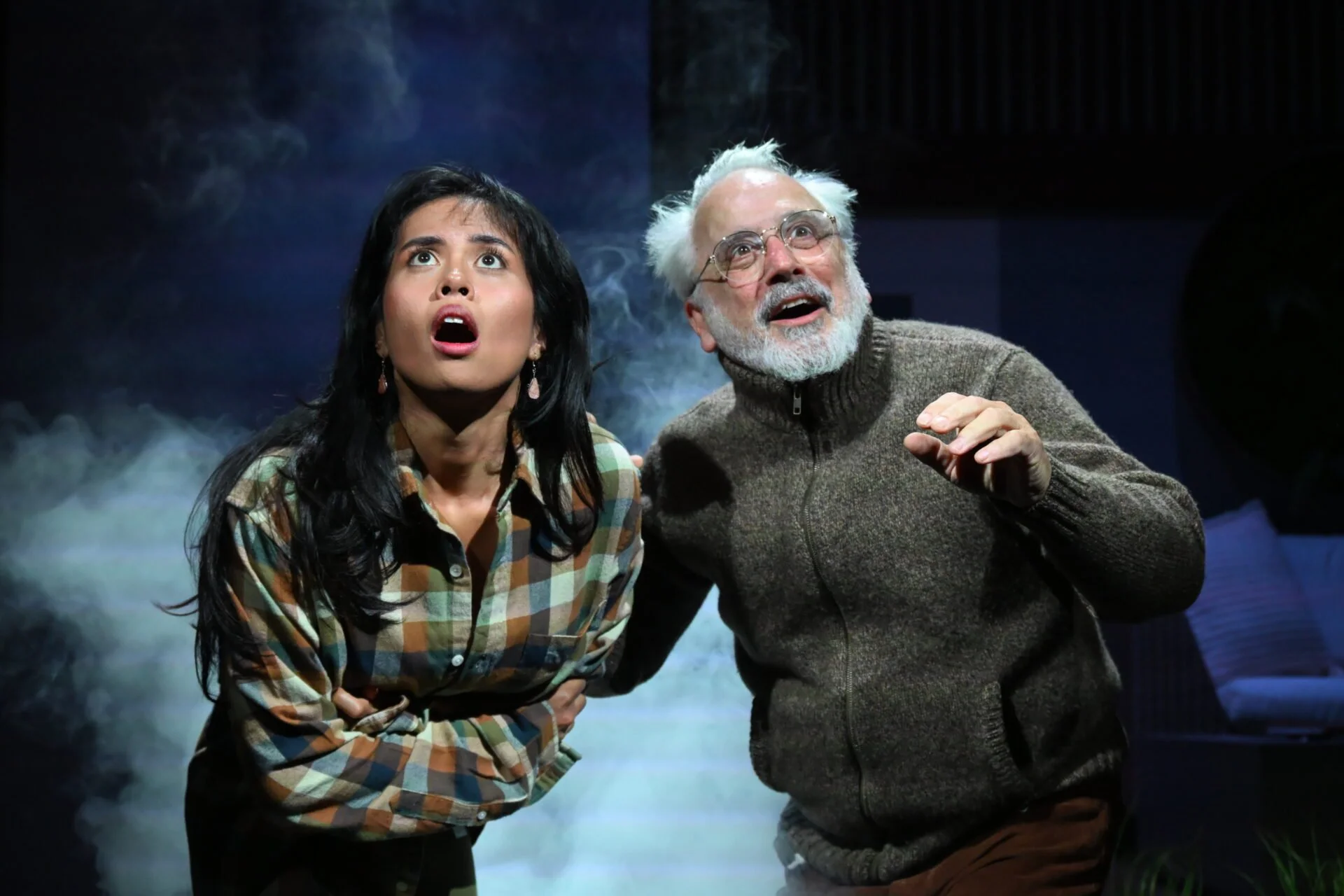
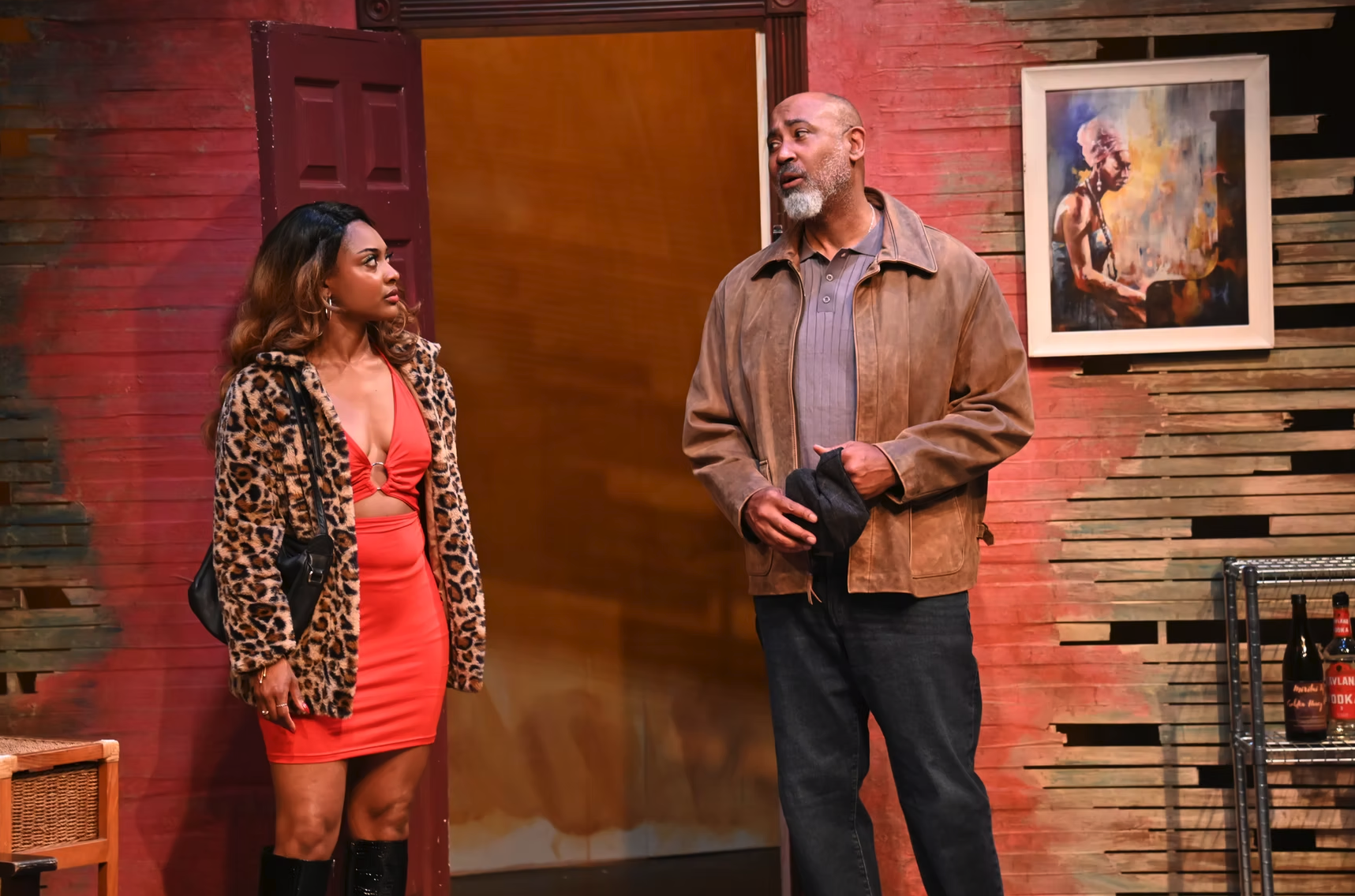
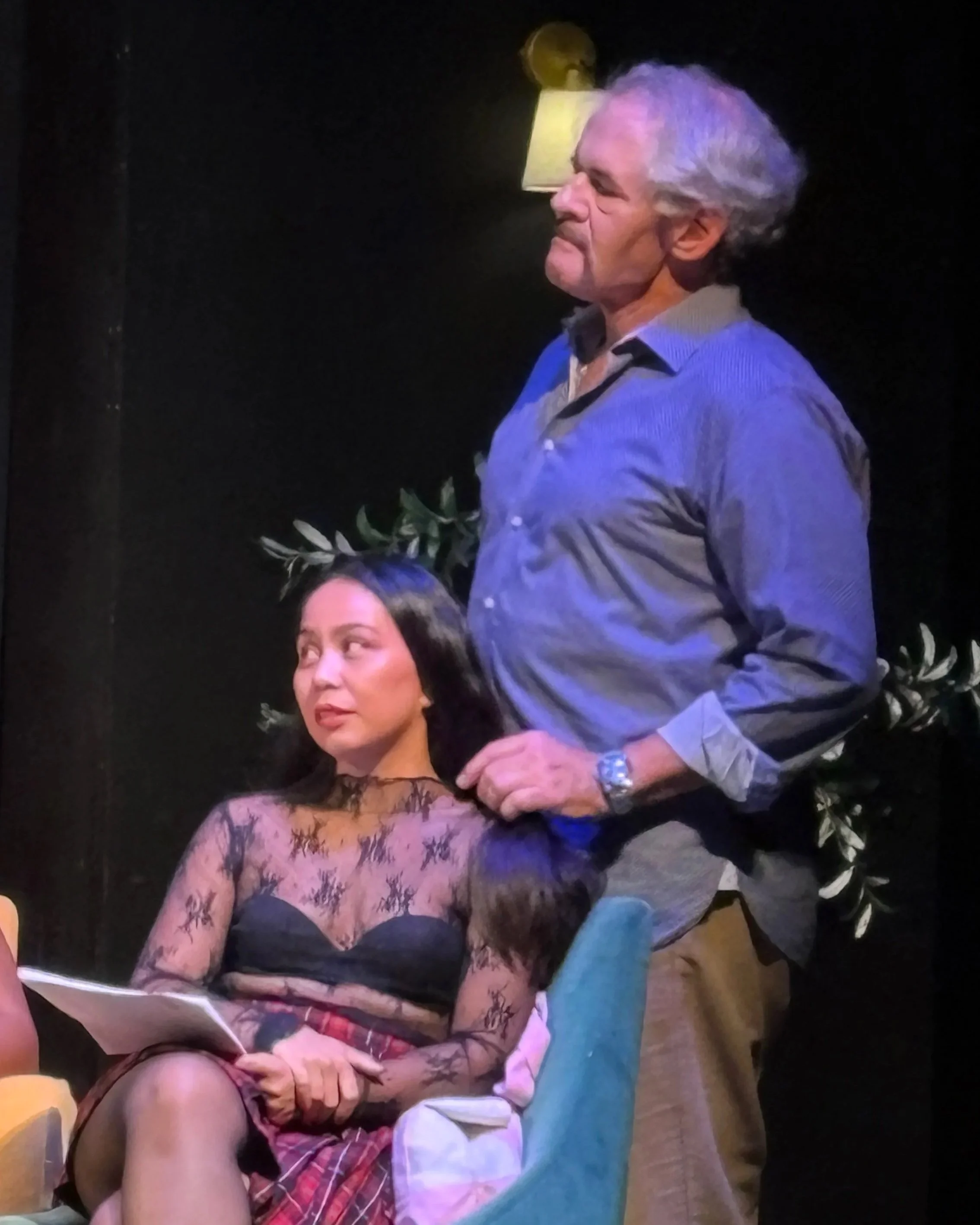
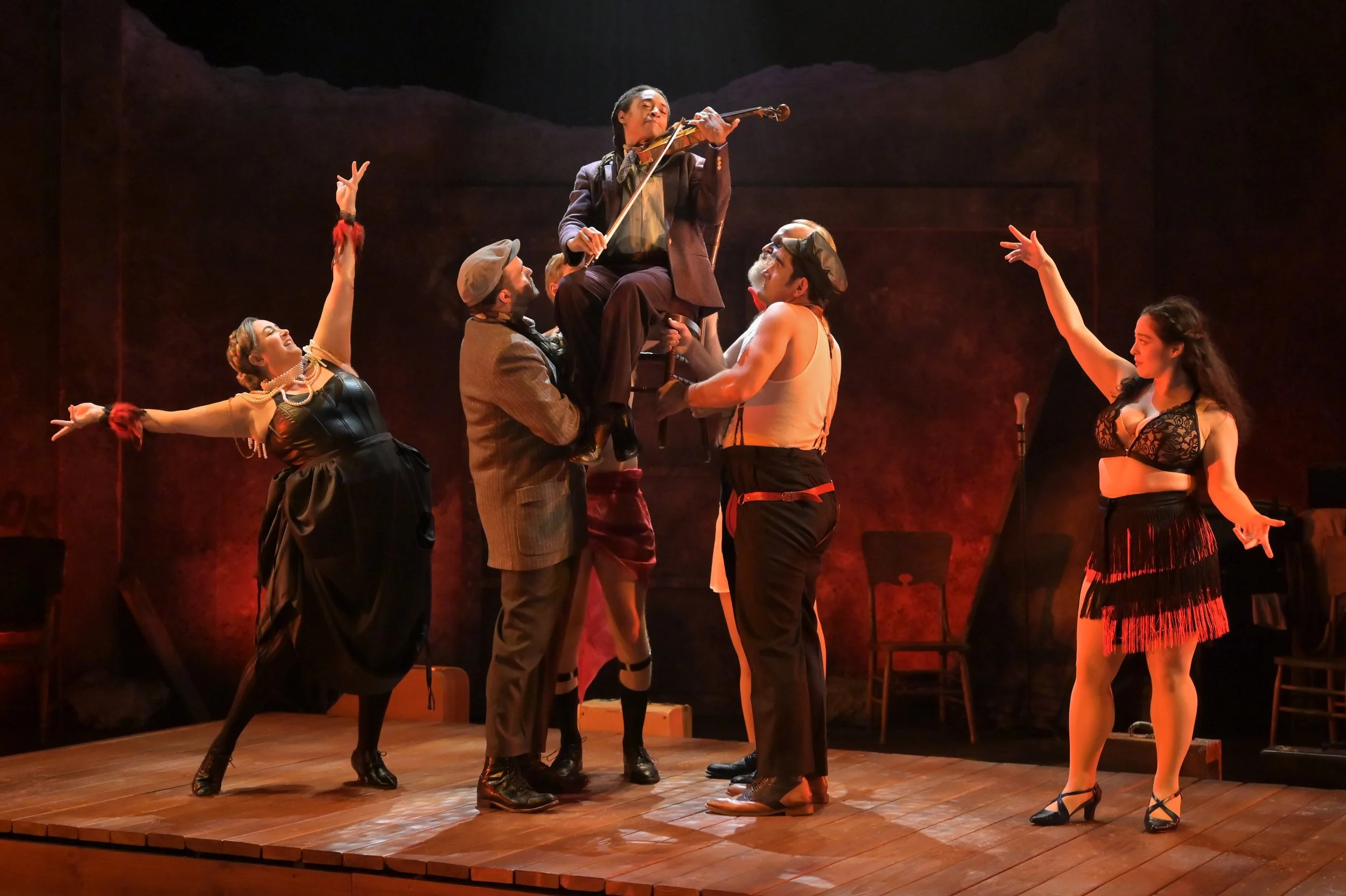
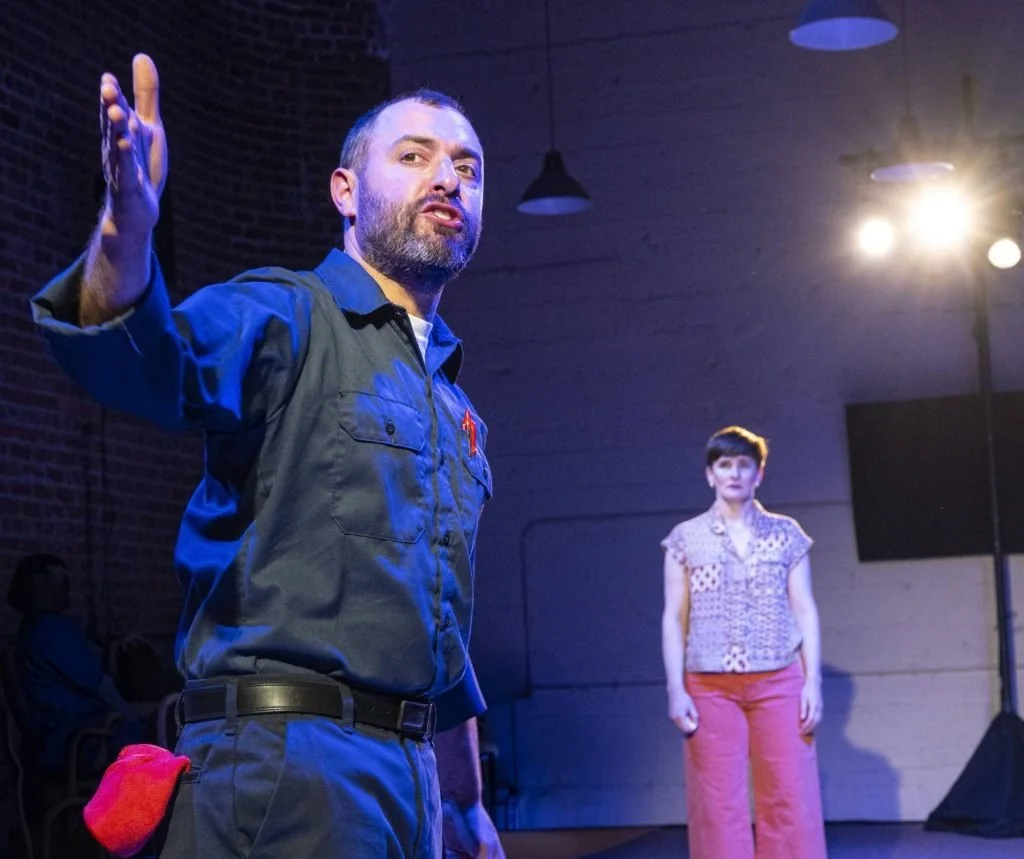
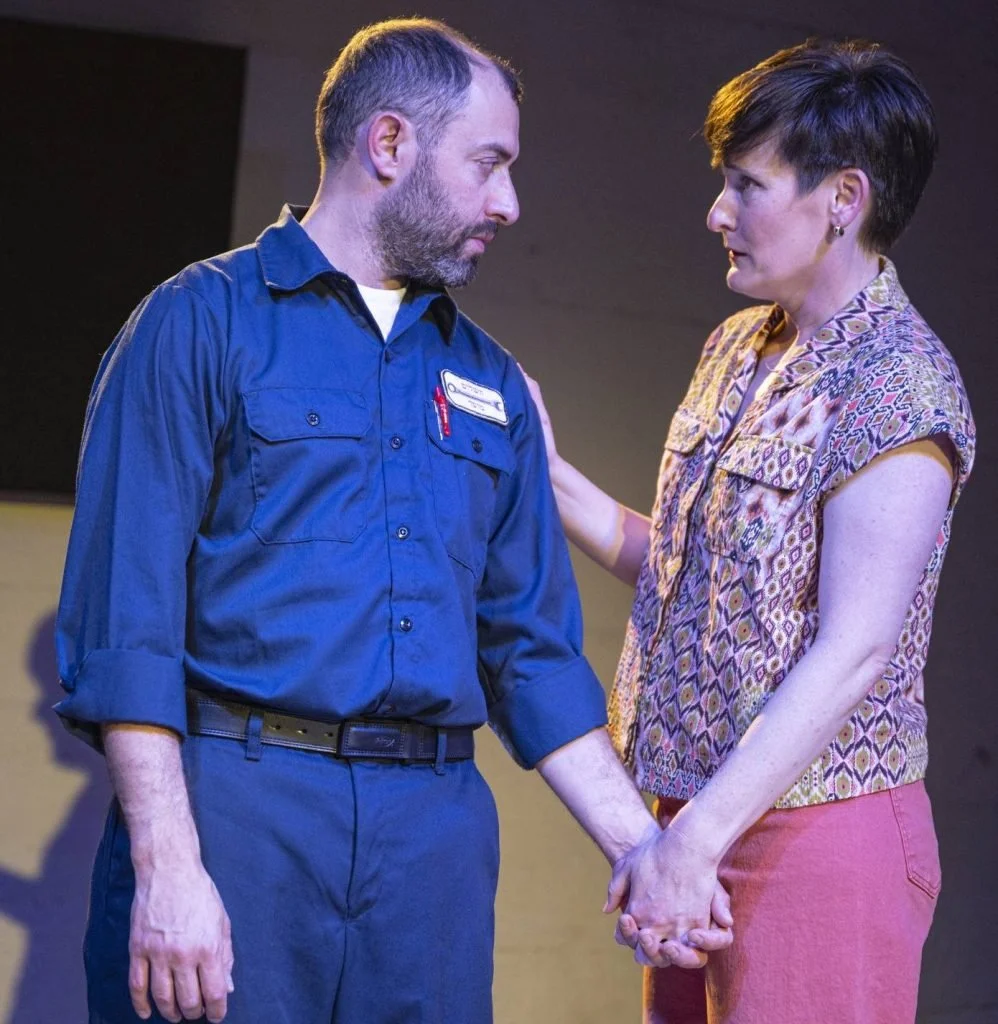
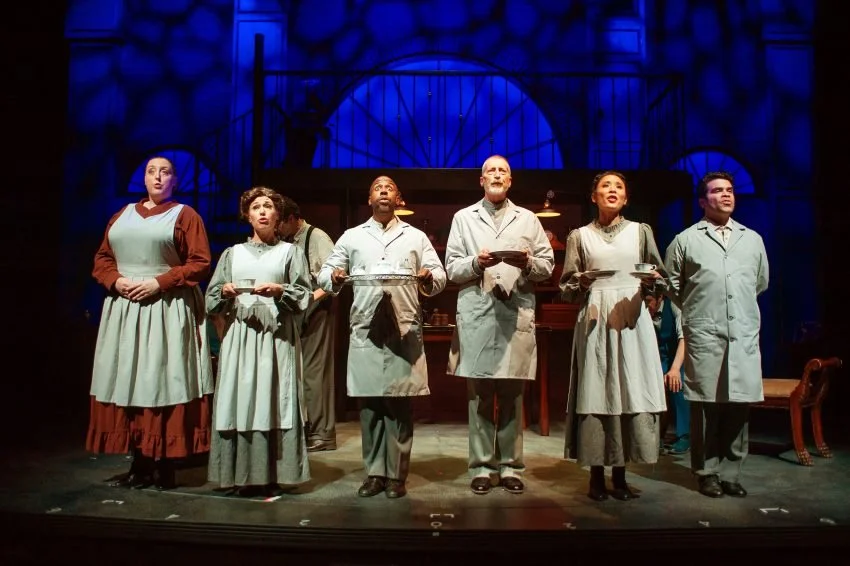
- Ray Khalili, Tristan A. Rodriguez, Renee Rogoff, Adam Magill.
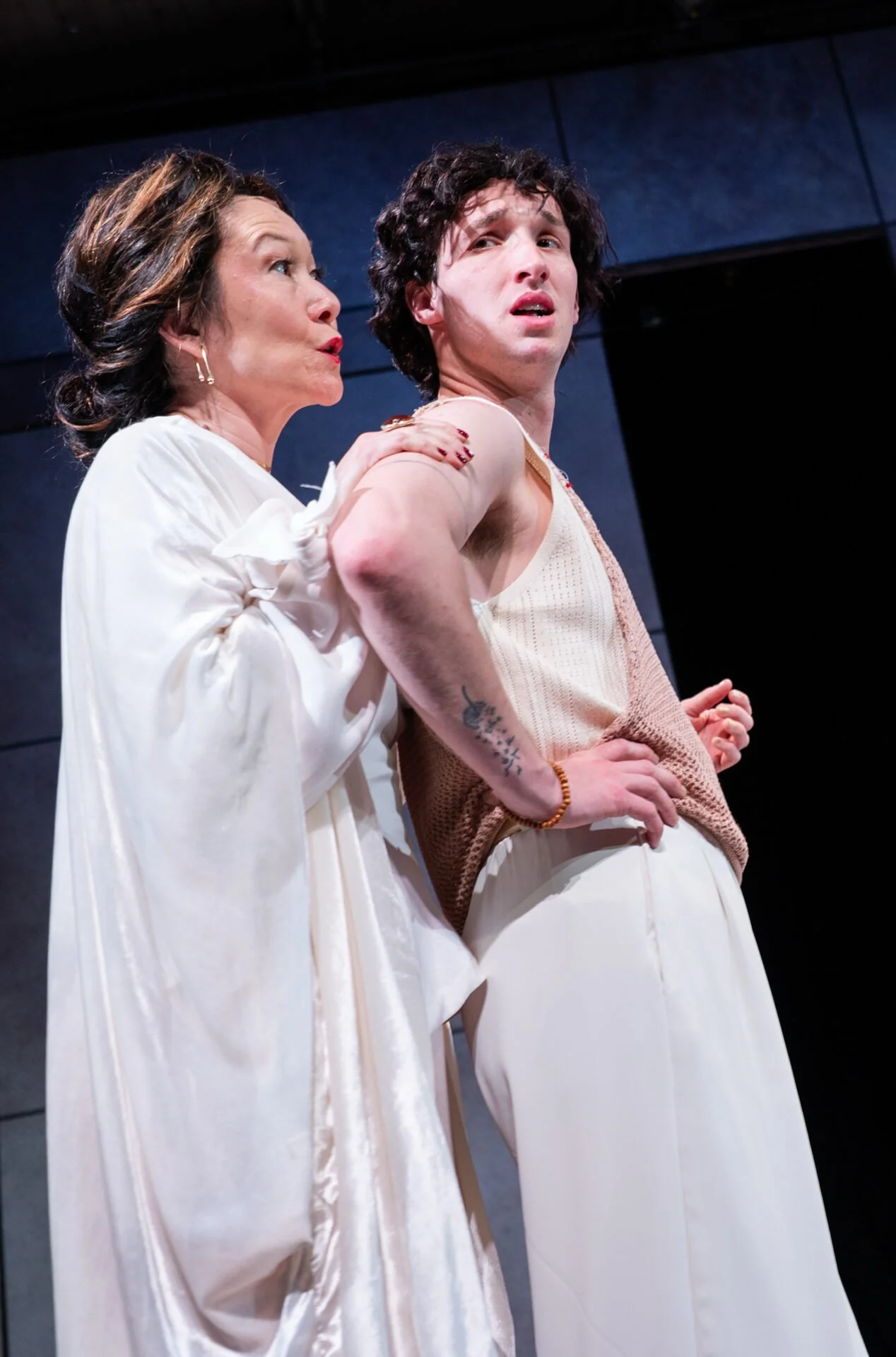
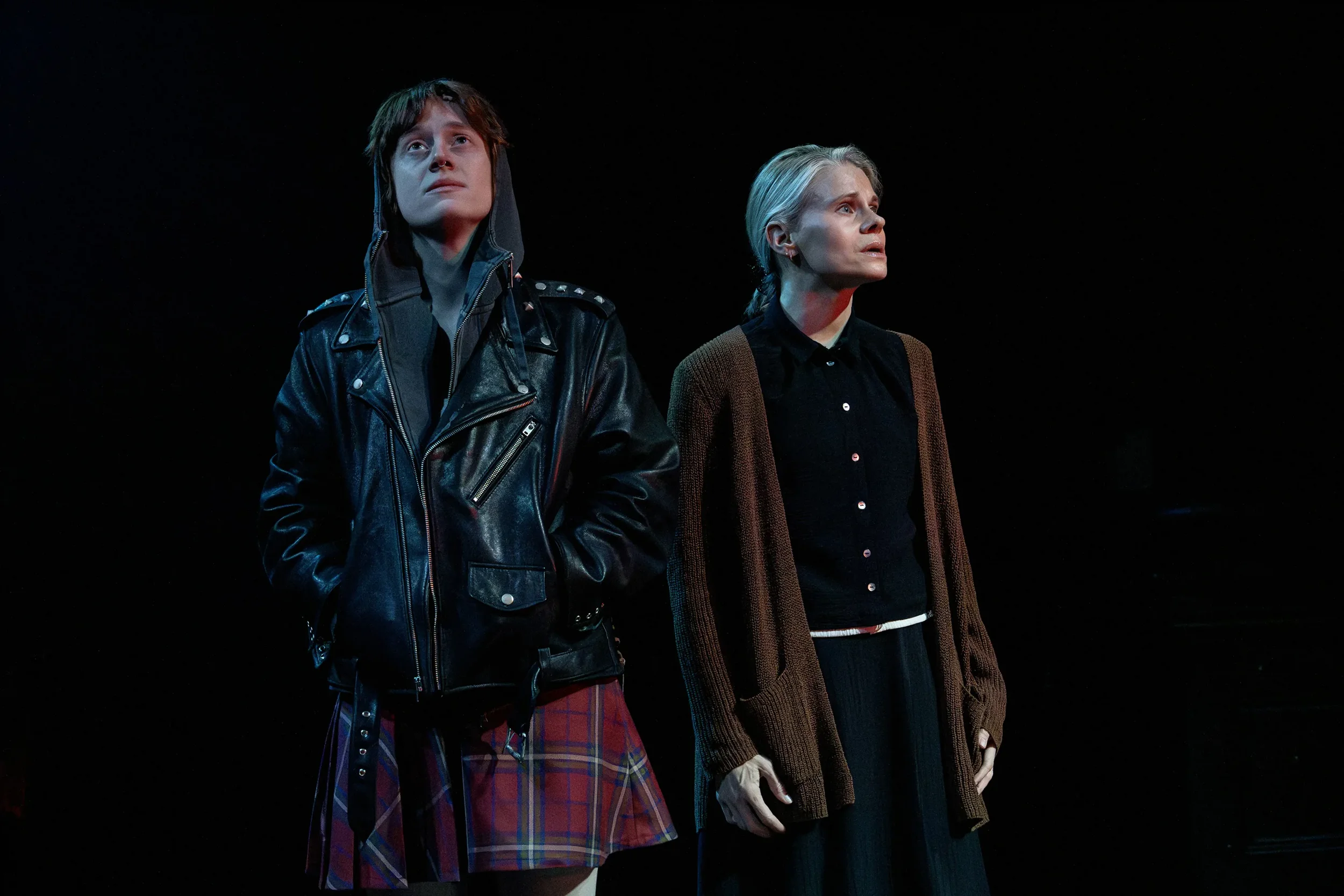
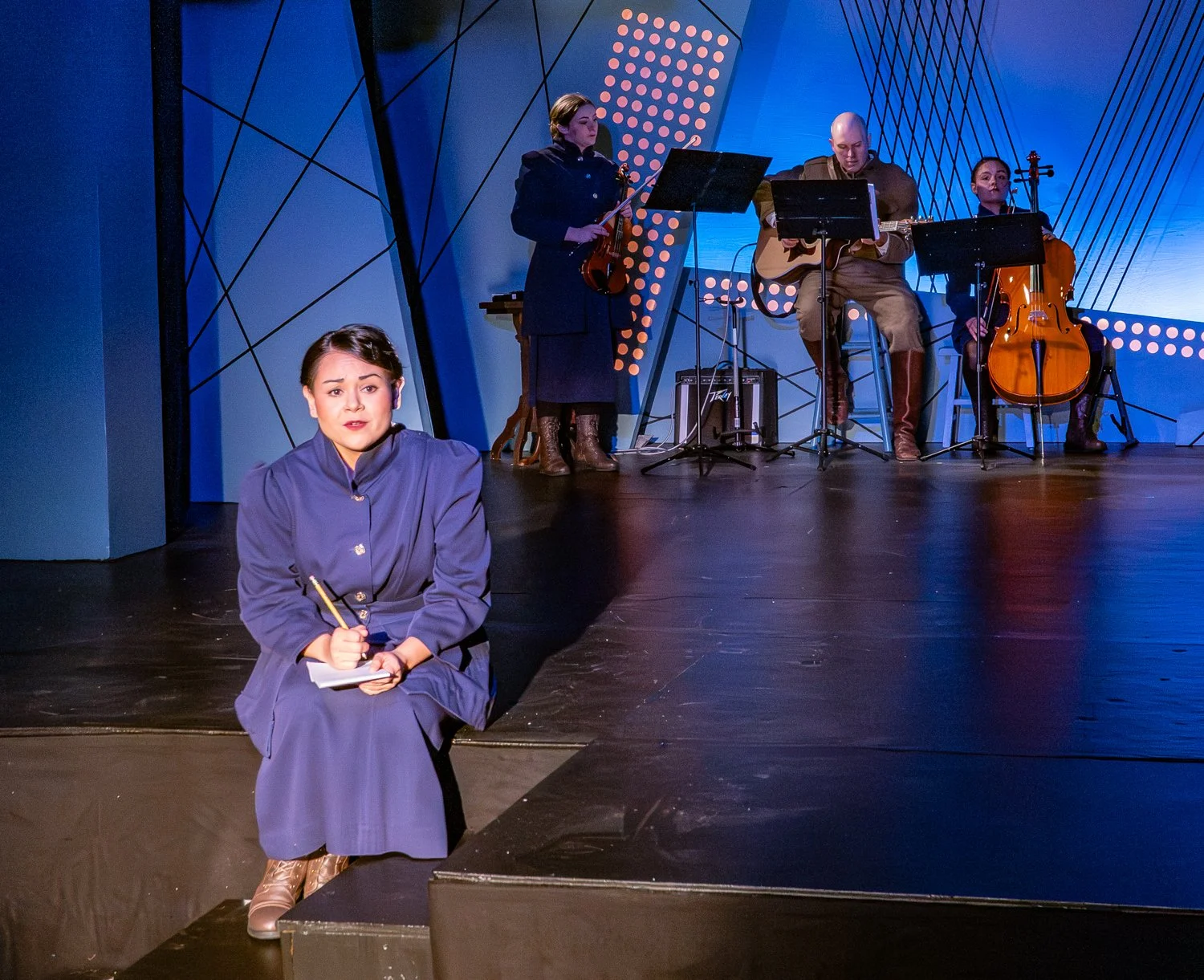
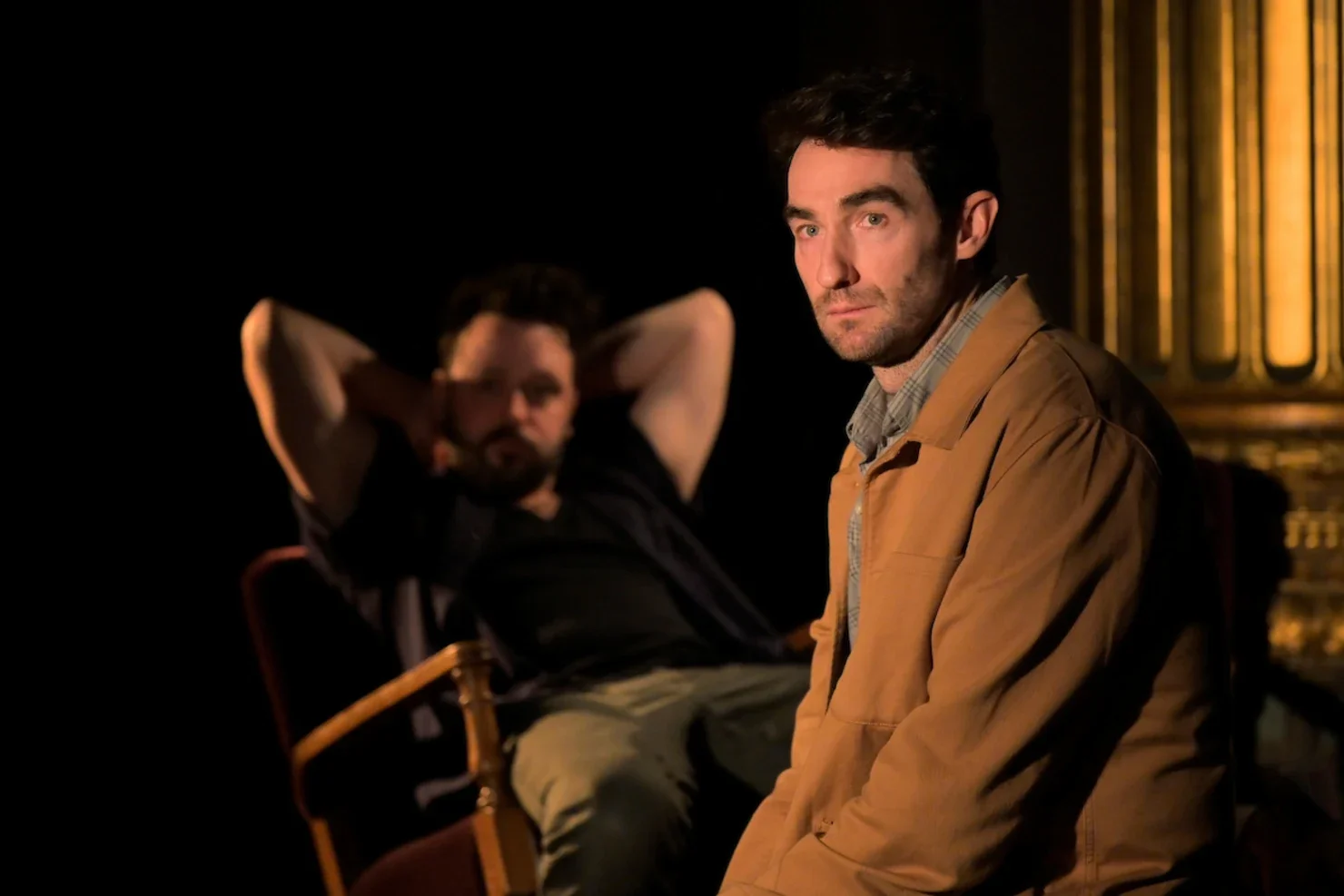
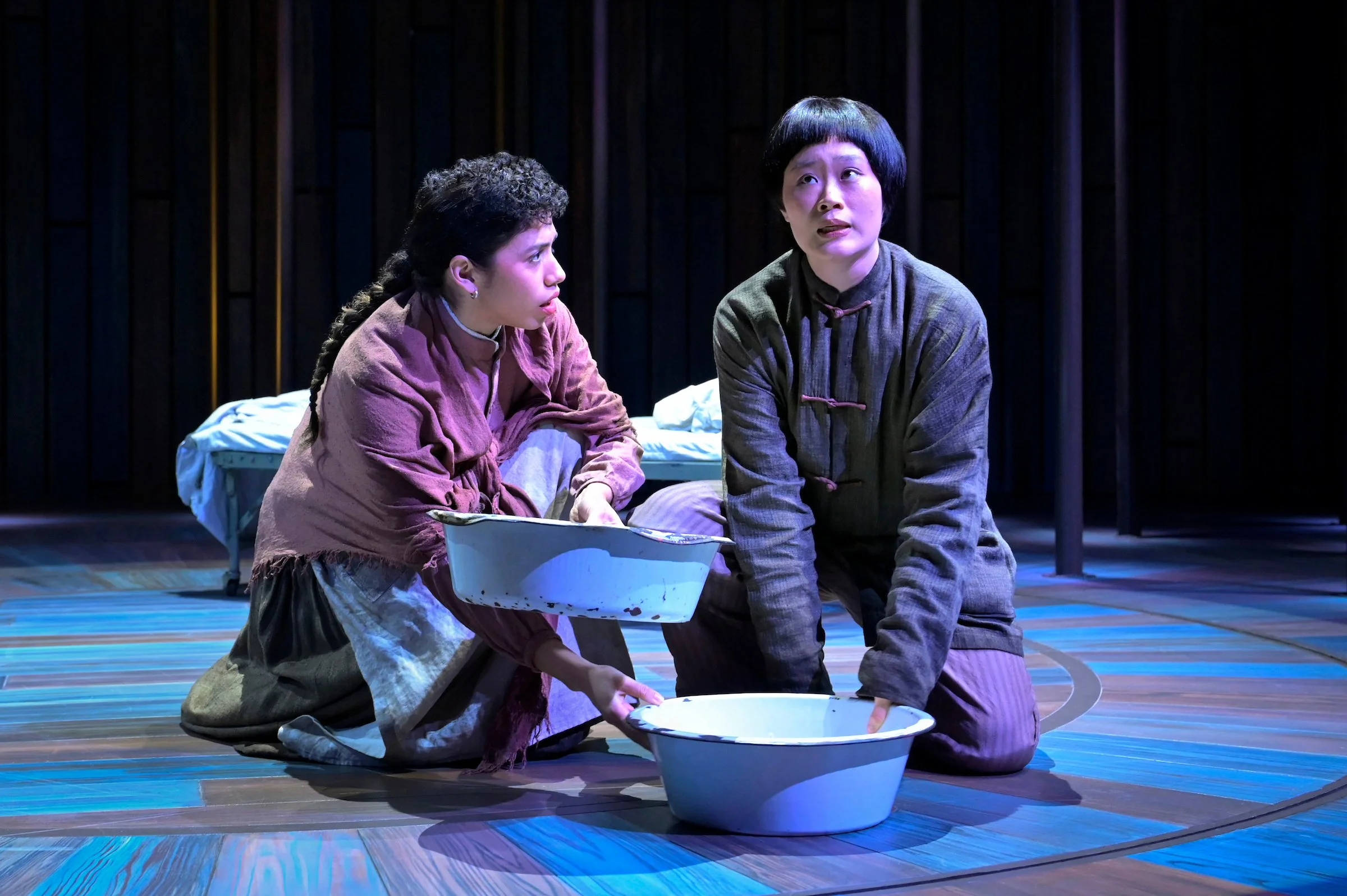
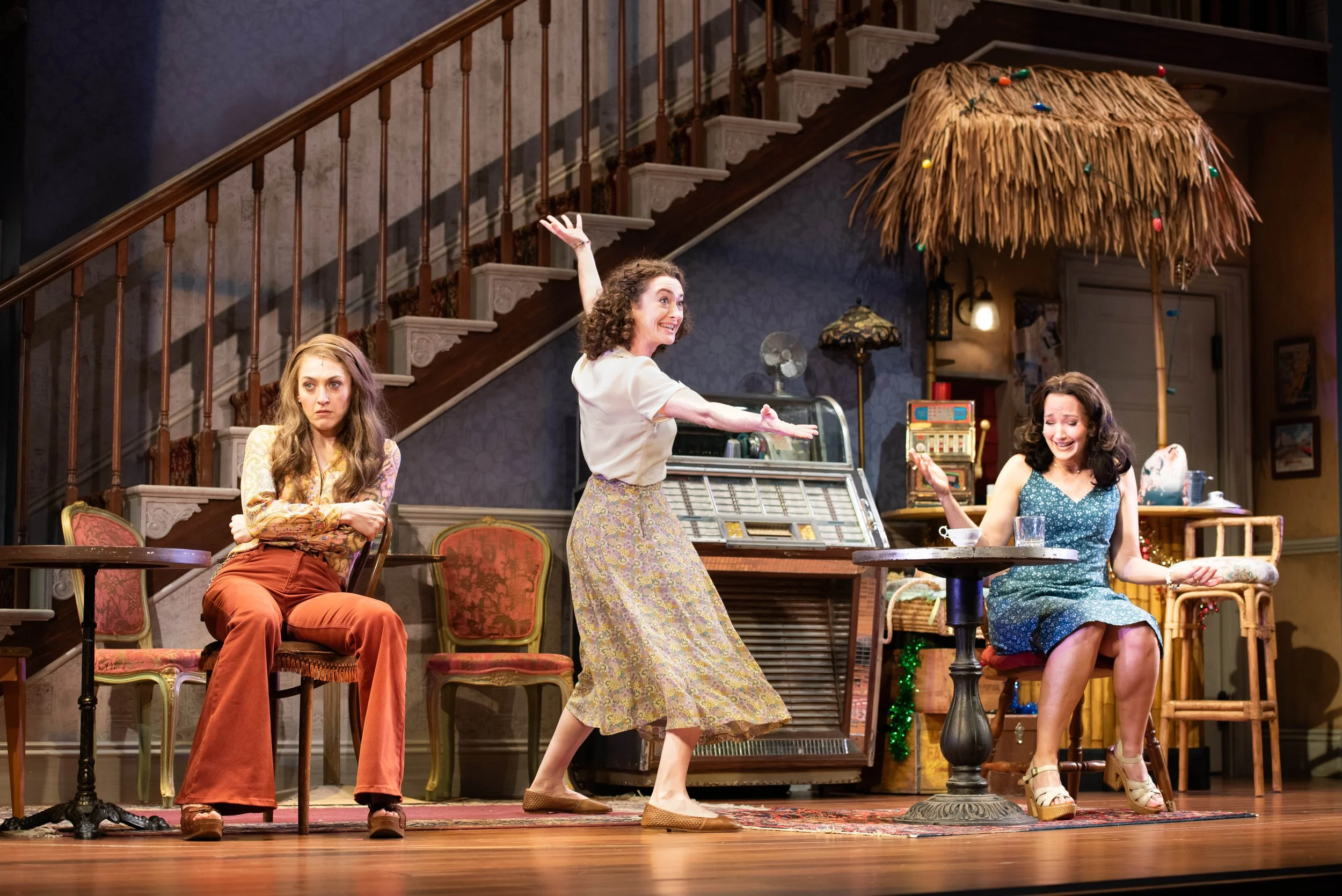
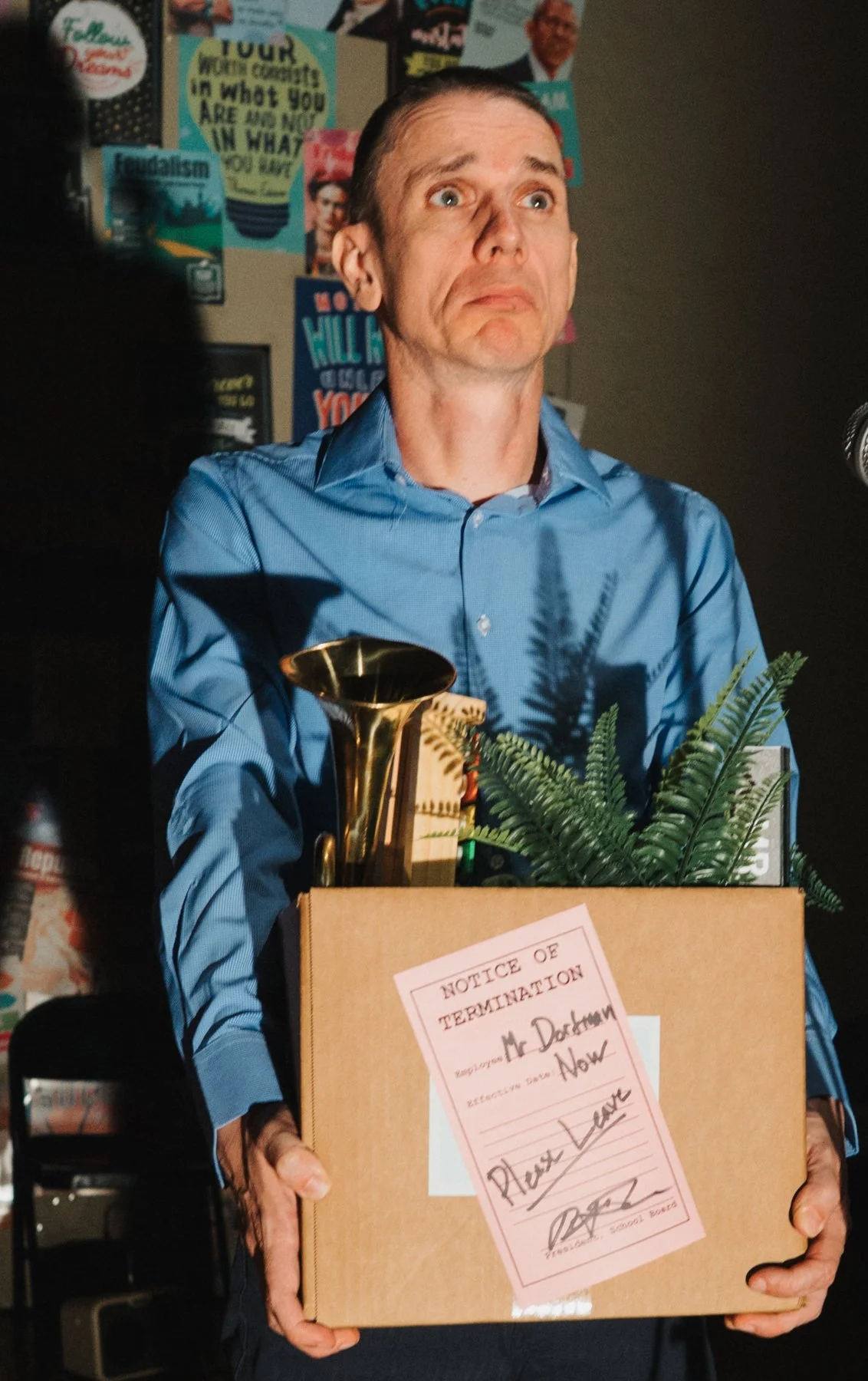
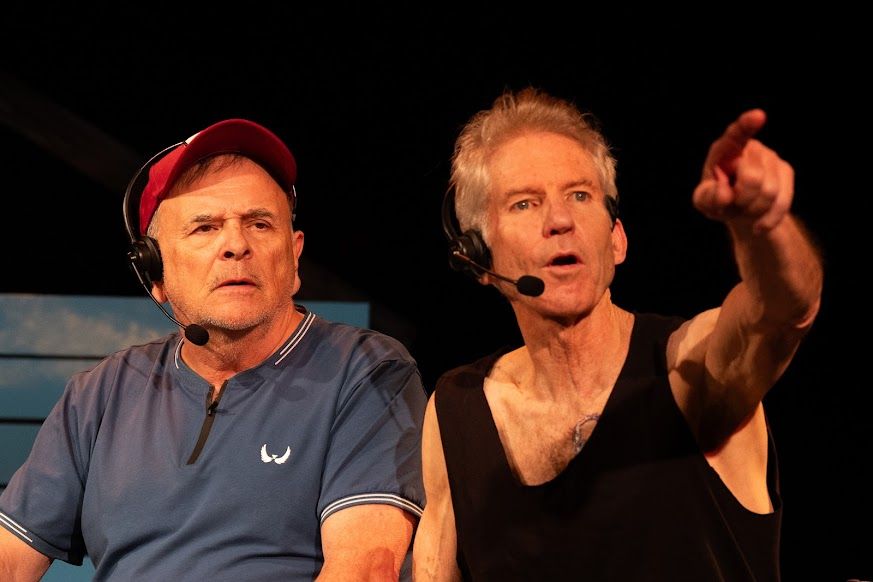
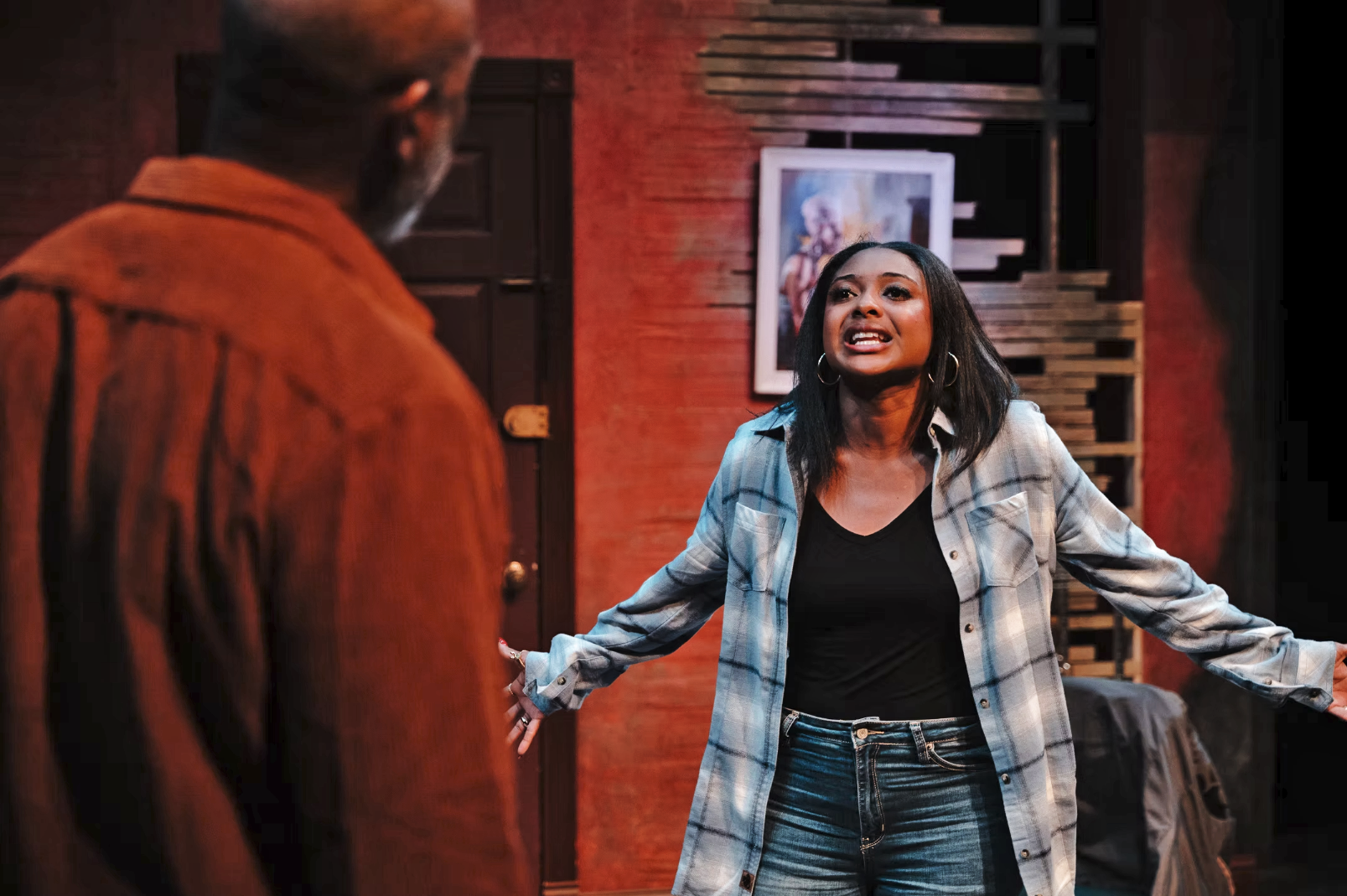
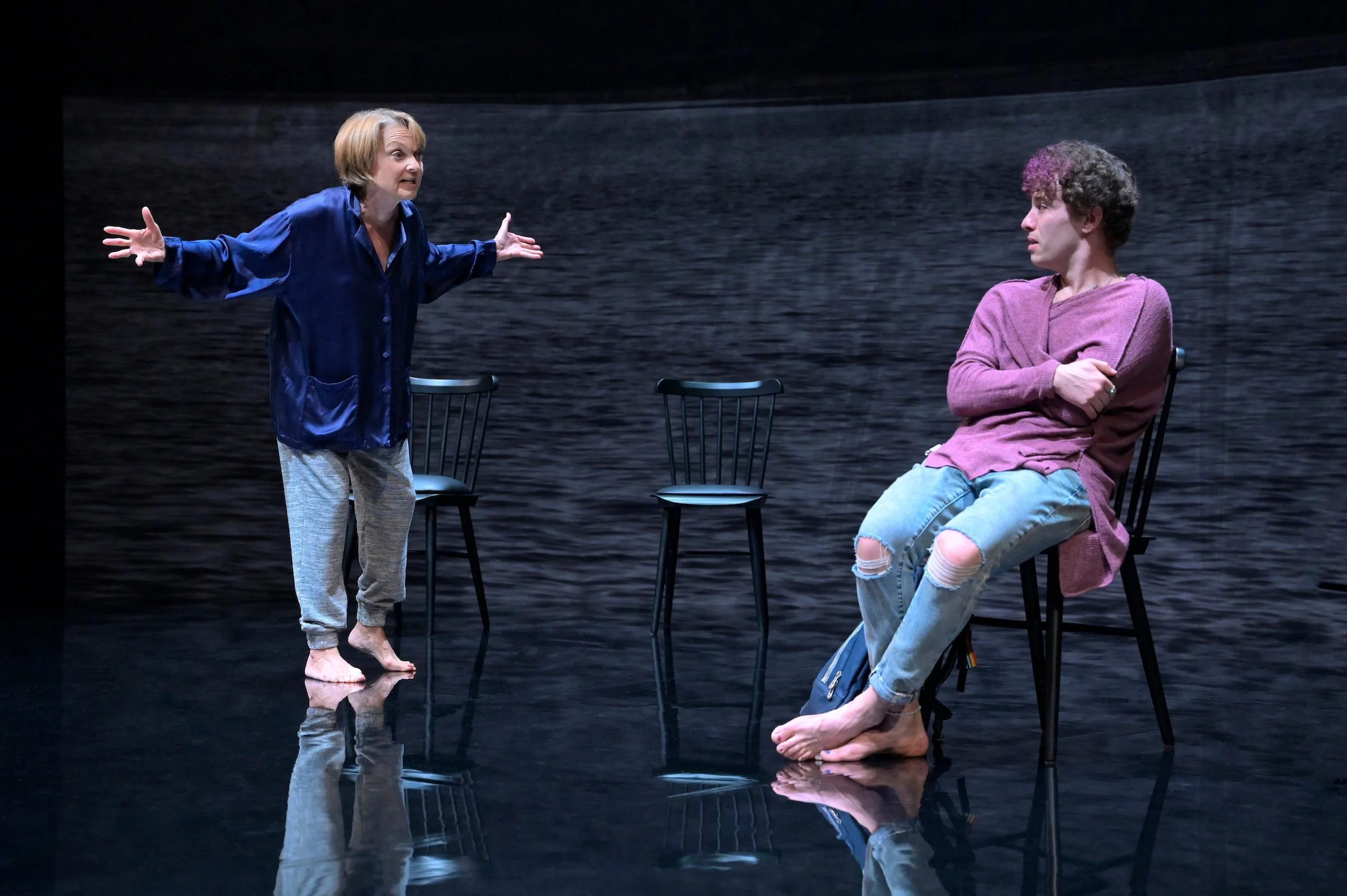
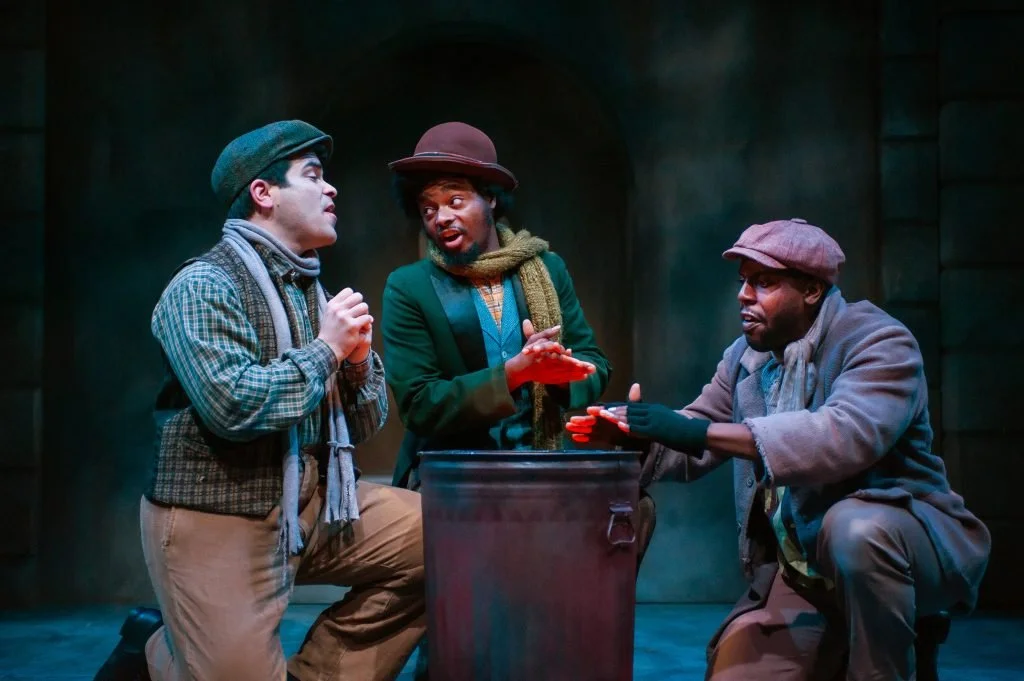
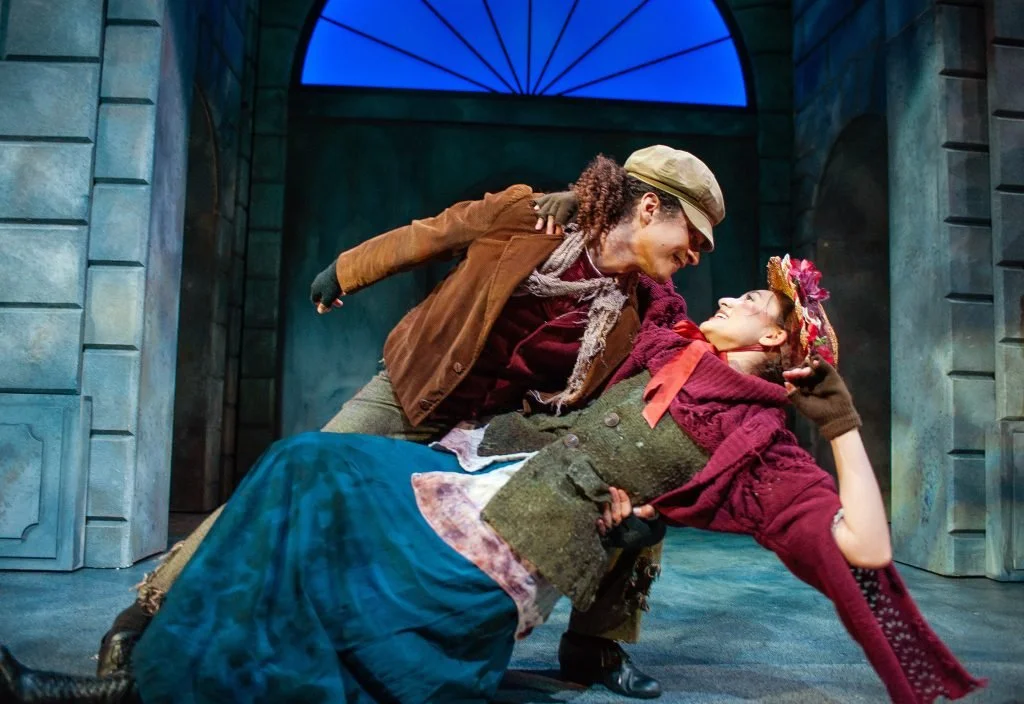
- Vinny Randazzo, Ray Khalili.
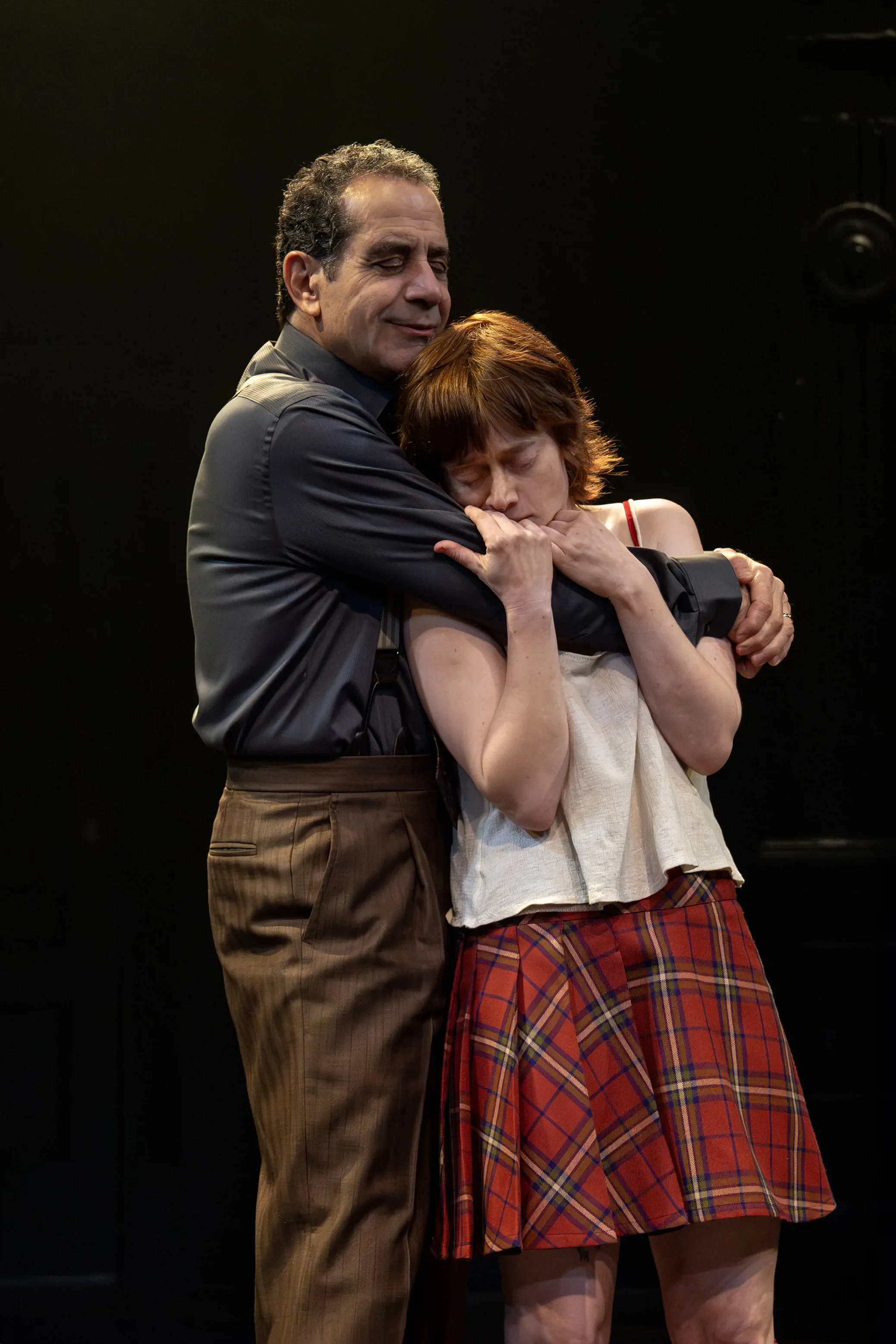
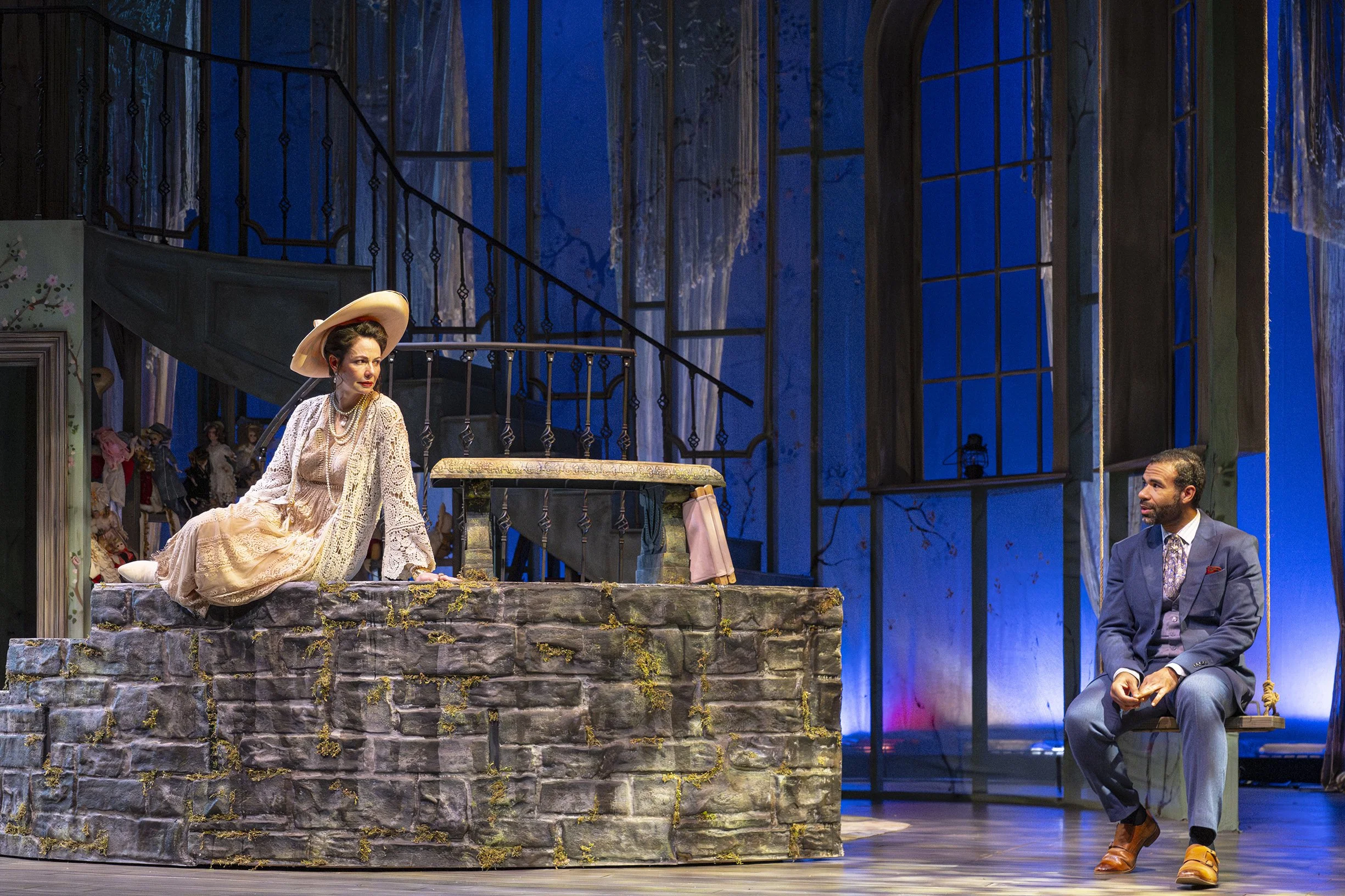
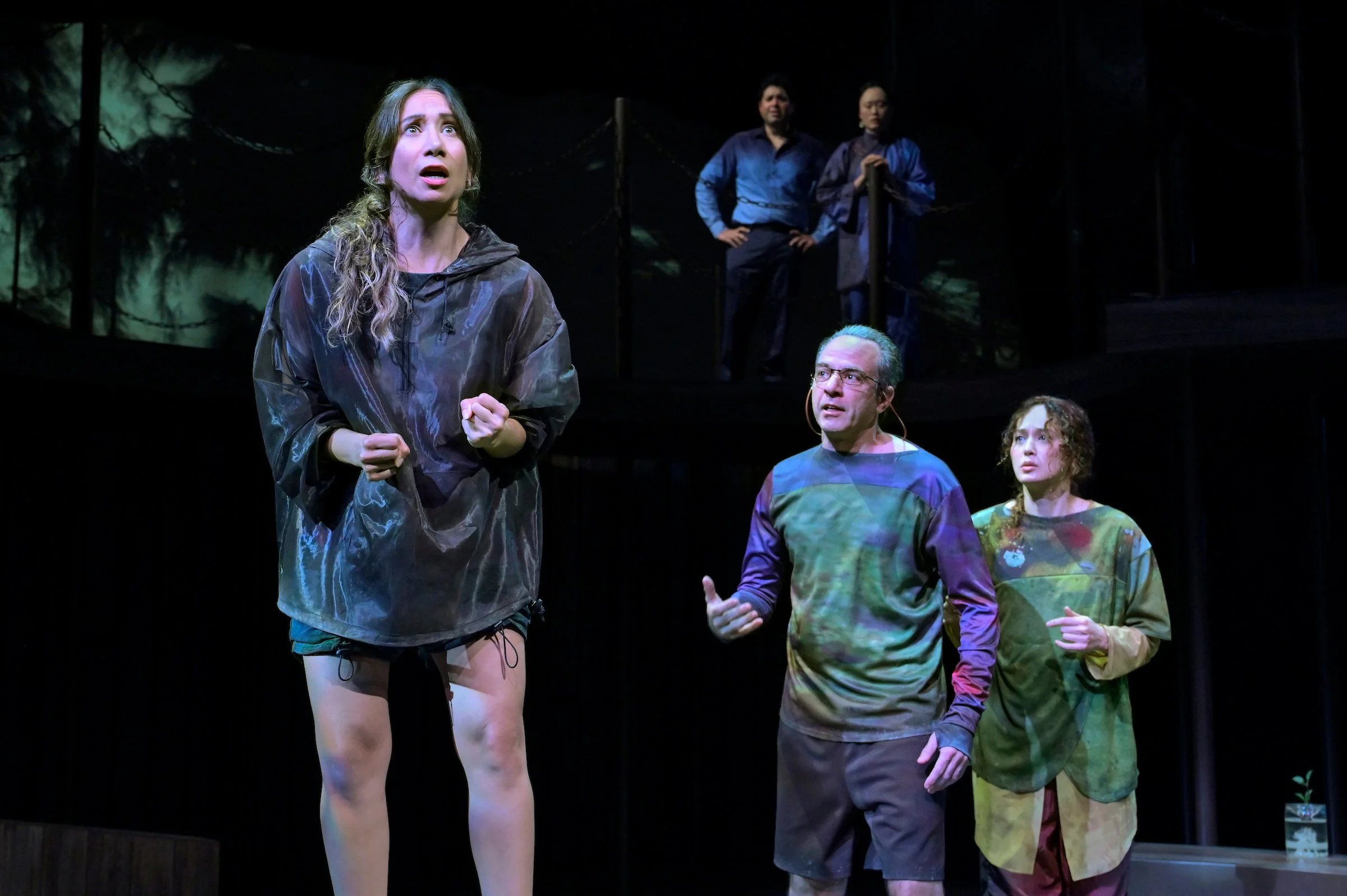
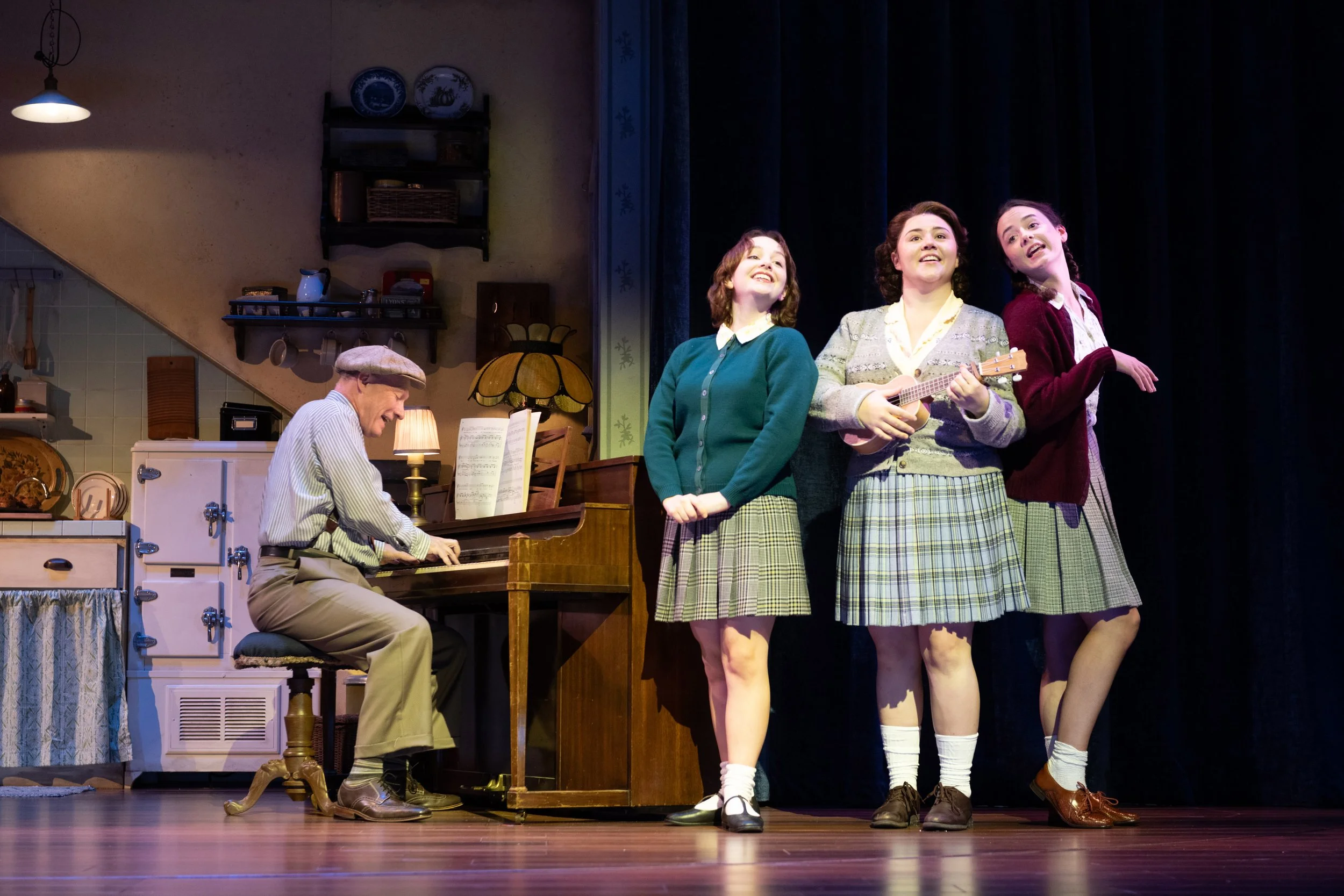
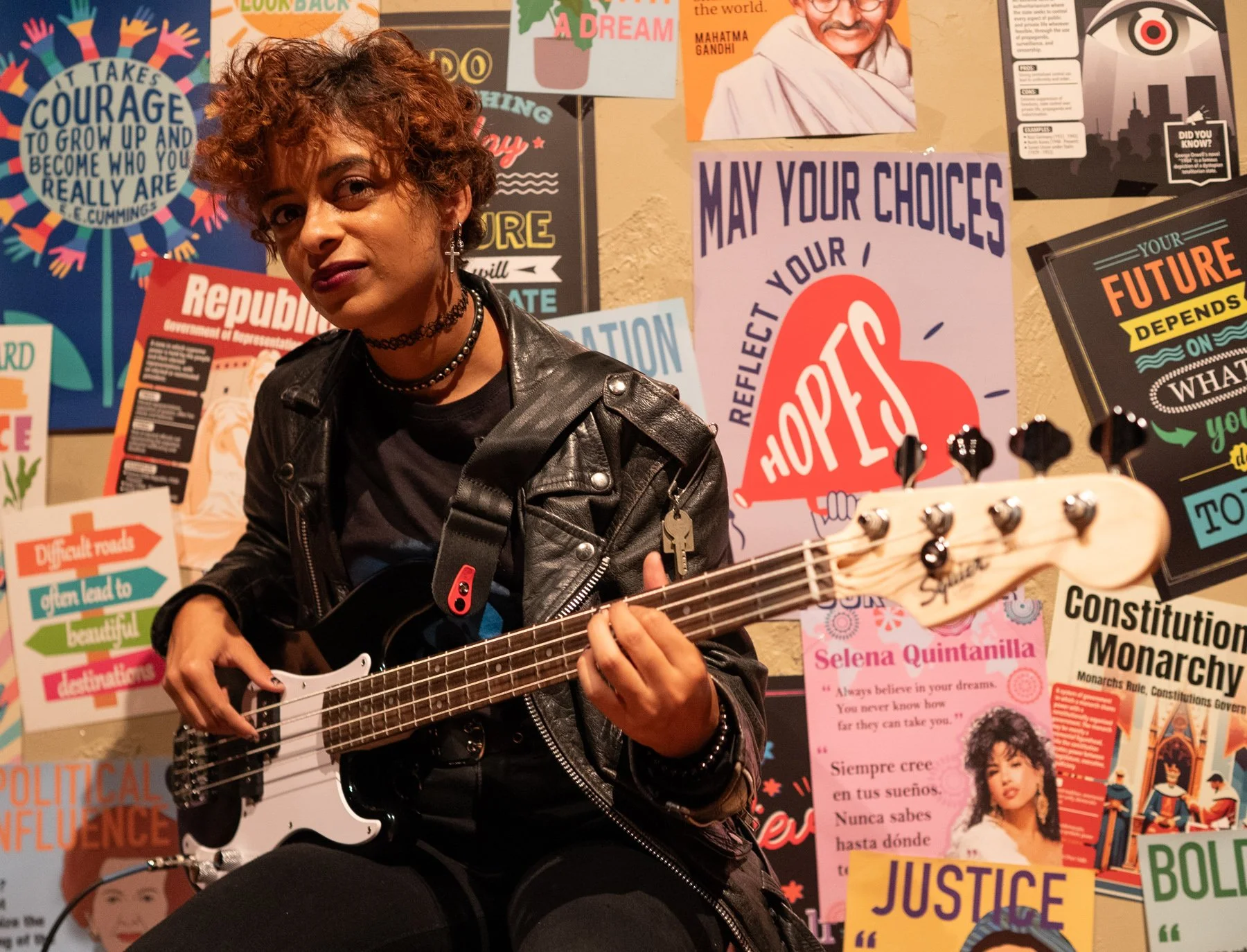
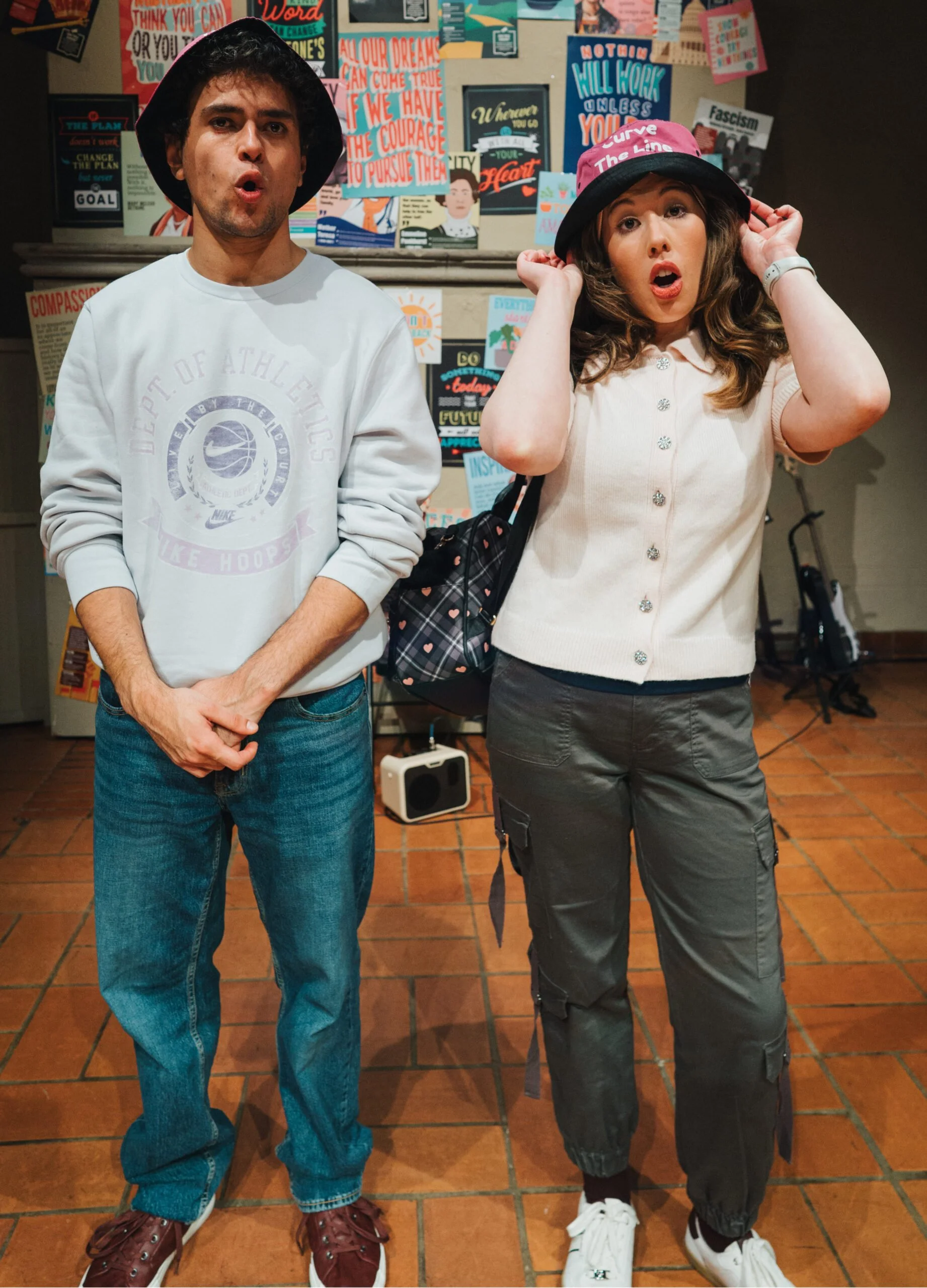
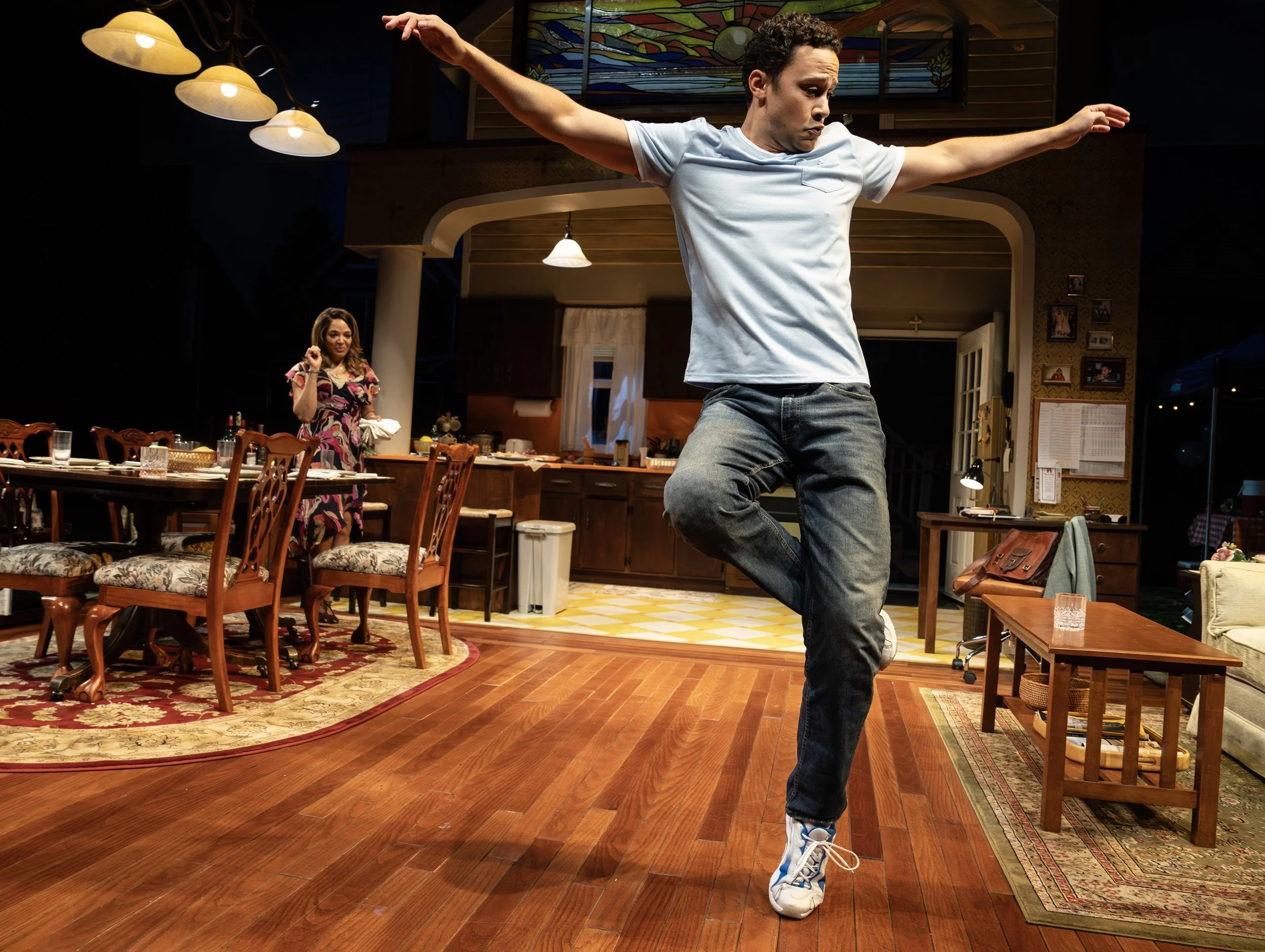
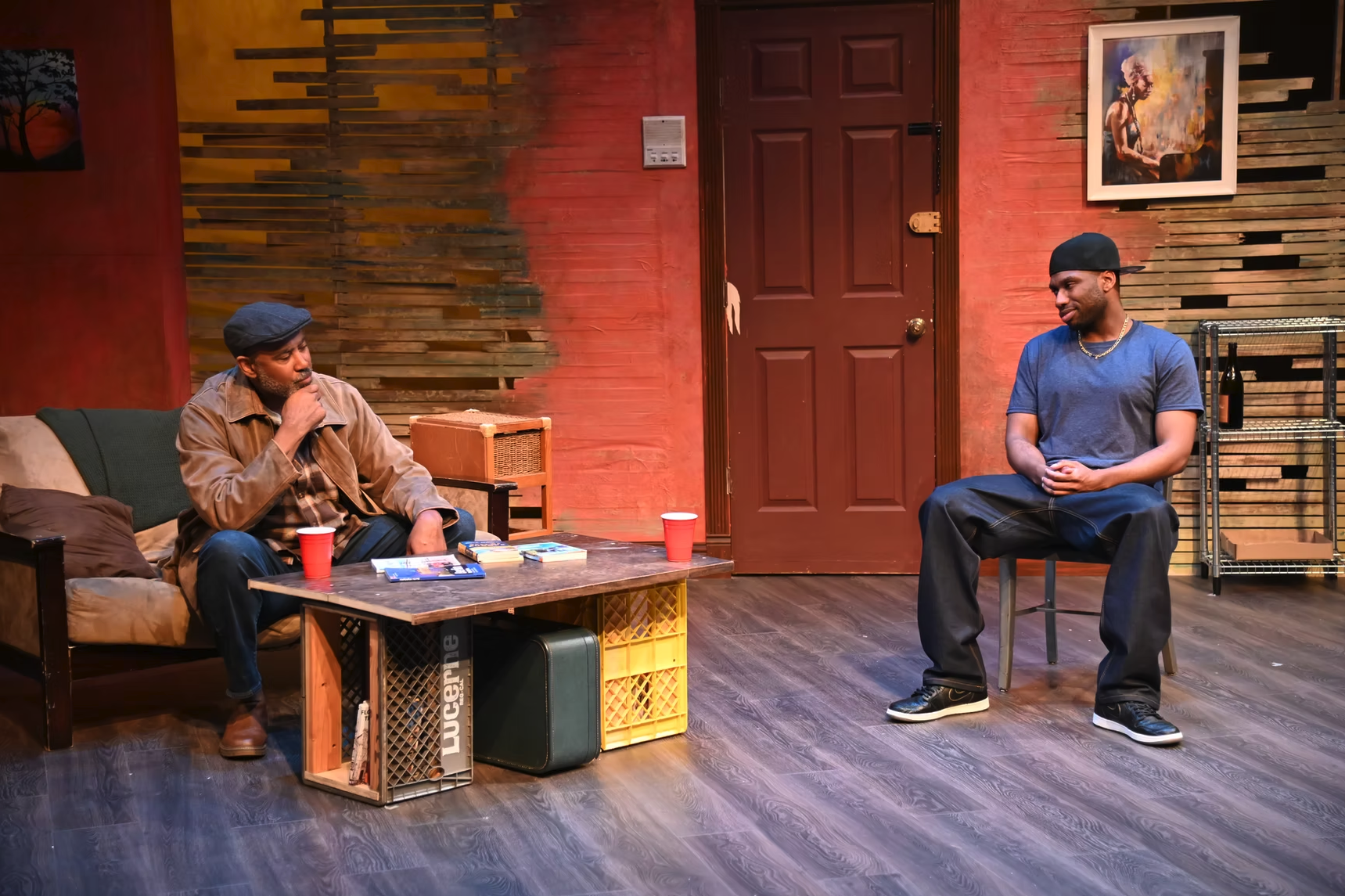
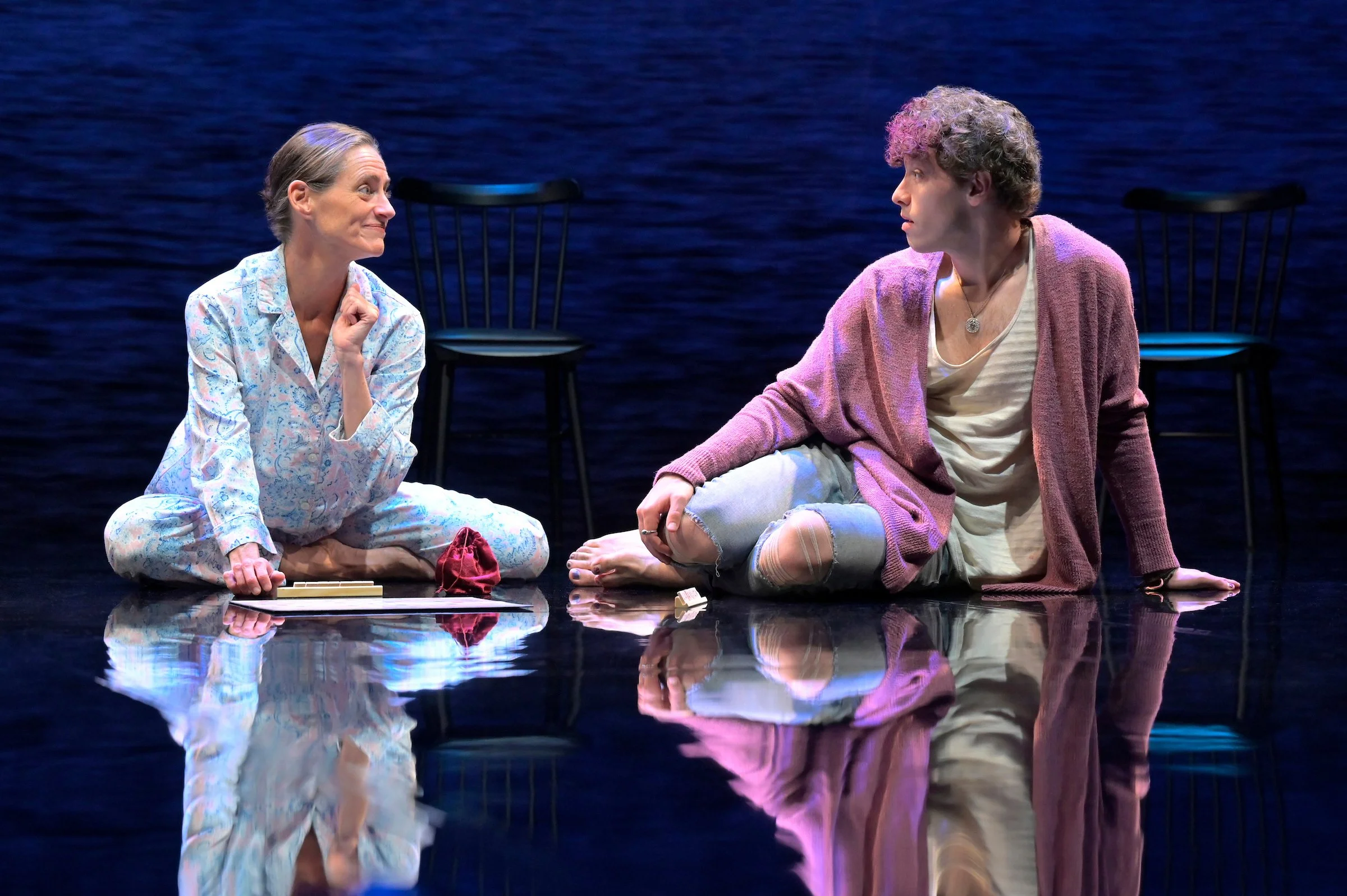
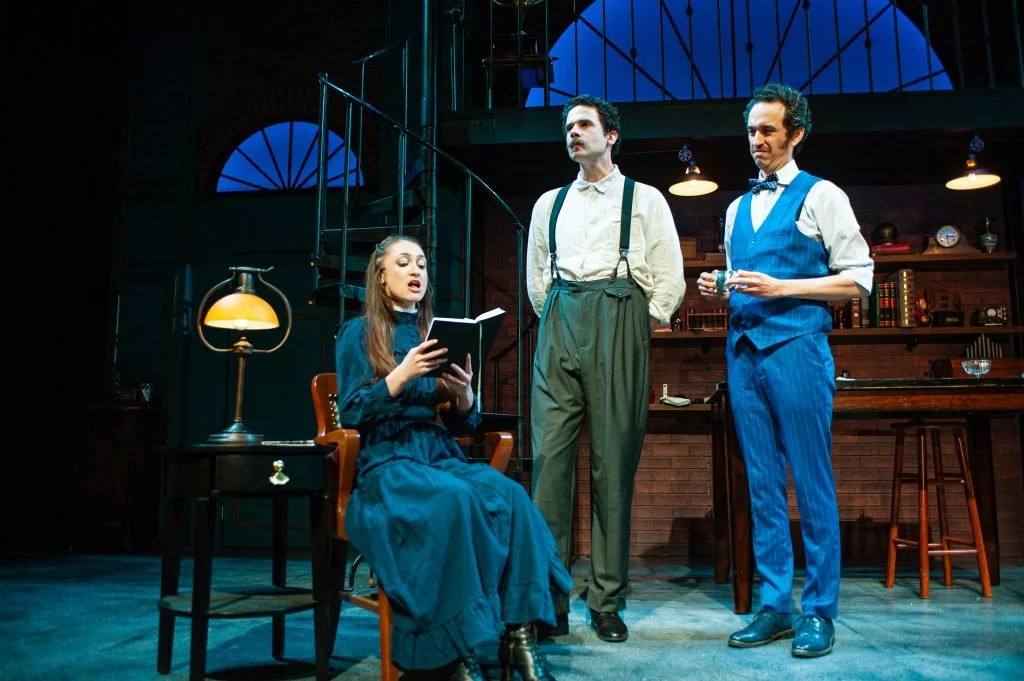
- Tristan A. Rodriguez, Renee Rogoff, Ray Khalili.
“Flex” Features Black Female Athletes Yearning to Break Free—at SF Playhouse
By: Jenyth Jo | Date: Apr 5
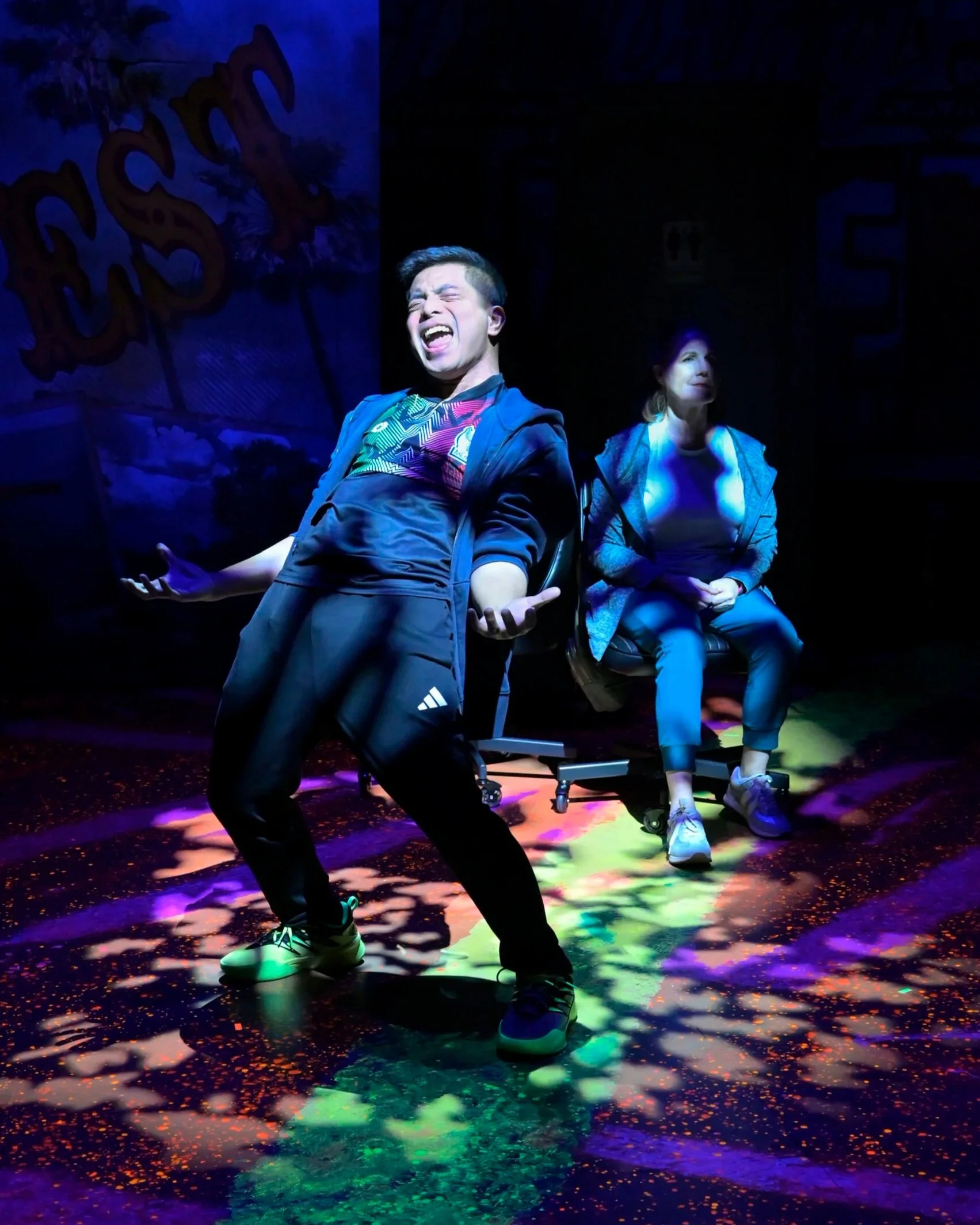
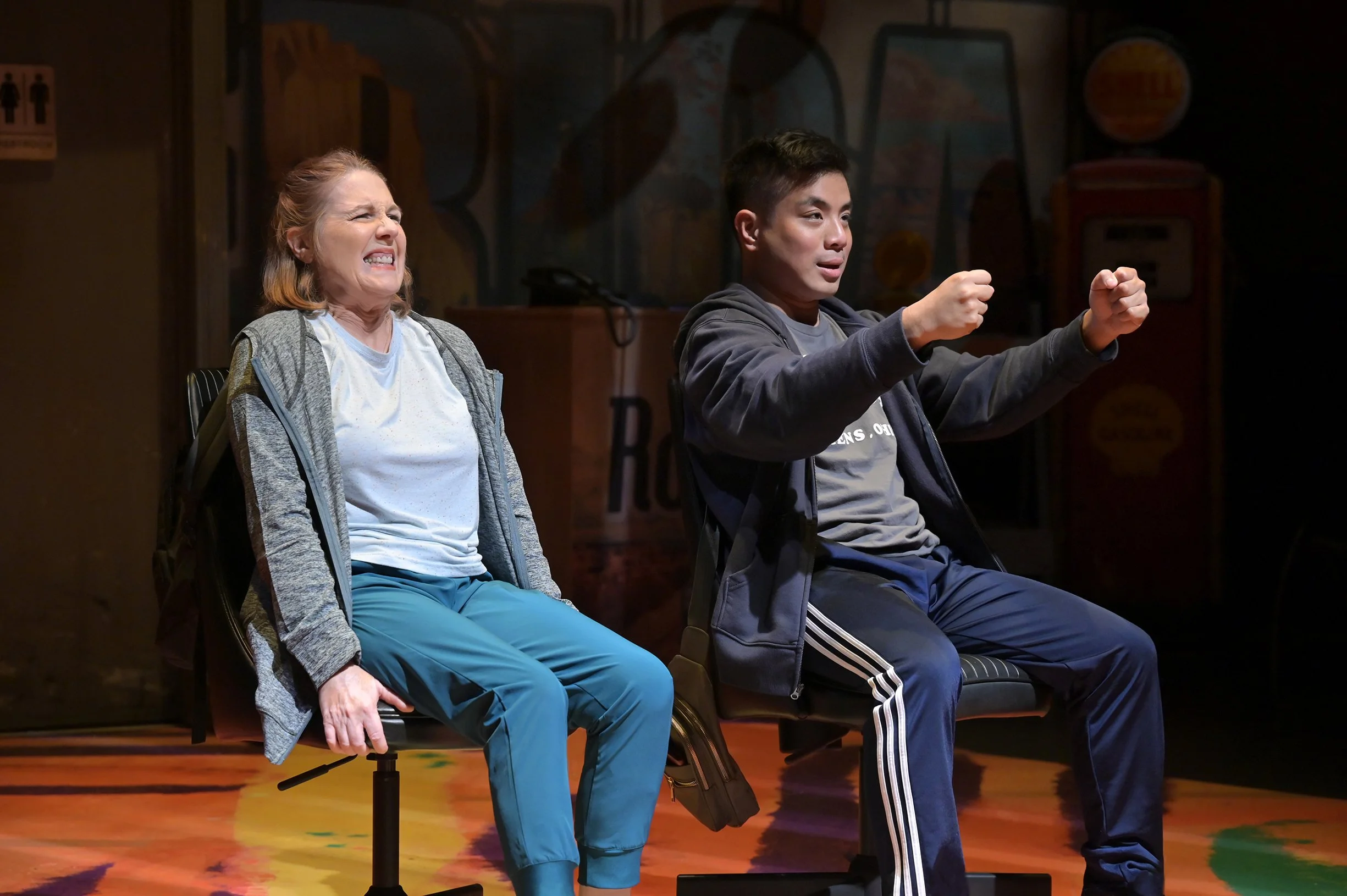
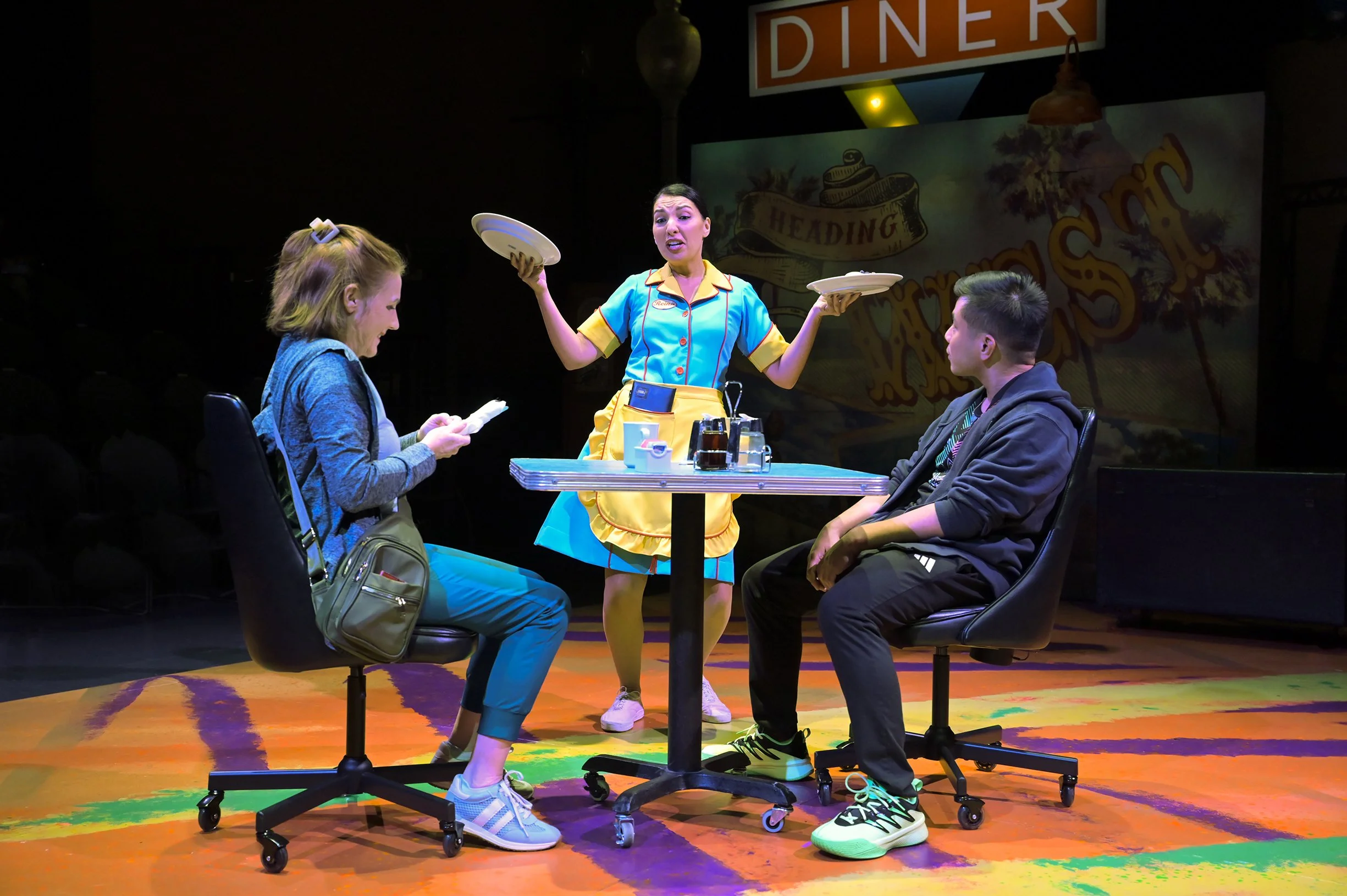
As a former Division 1 athlete from Stanford, I wondered whether watching a play about basketball would be as much fun as going to a Valkyries game. Director Margo Hall and her team have created a many-layered show that’s more intense than live basketball.
In “Flex,” playwright Candrice Jones takes us inside the minds of desperate young women who believe basketball is their ticket out of oppression in the 1990s American South.
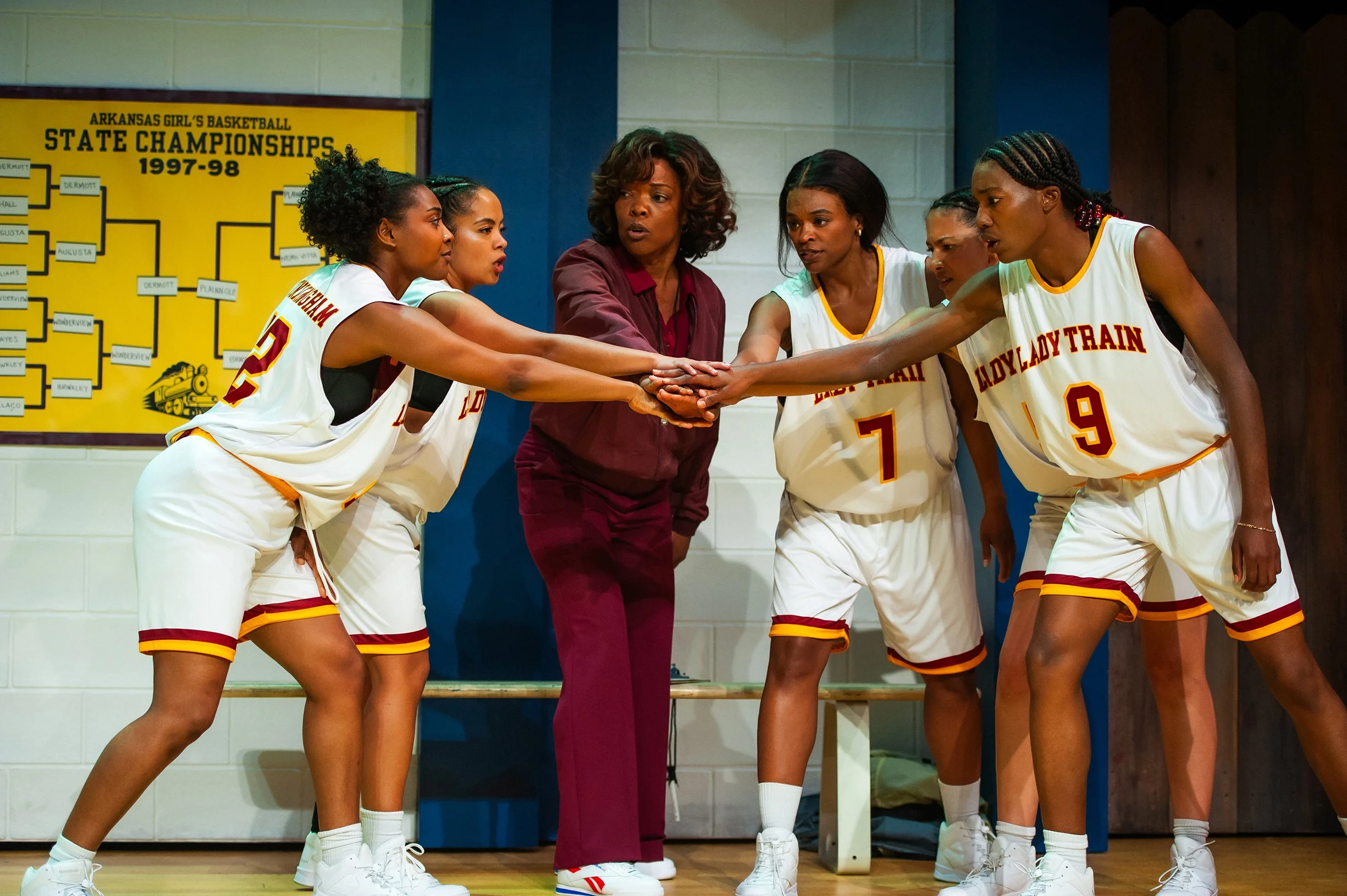
Two hoops bookend Bill English’s strikingly realistic set design. One hoop, with a chain net, hangs above the team captain’s backyard dirt court. Inside team Lady Train’s high school gym, a shiny glass backboard sports a brand-new white nylon net. Can these Black female athletes escape the chains of Plainnole, Arkansas, by getting a college bid? Can they even reach the new WNBA?
Team Captain Starra Jones (impeccable Santeon Brown) has the moves and sass necessary to attract the scouts. Her mother told her: “it’s not a foul if the referee doesn’t blow the whistle.” Brown’s dribbling prowess (she did play high school ball) resembles Steph Curry’s wizardry. She’s got a real hoopgirl’s game face and sinks her clutch shots onstage.
But Starra can’t stand the new girl from California, Sidney (dazzling Paige Mayes) who has mastered the side-eye slam. Hotshot Sidney has attracted college scouts already. Starra and Sidney trade jealous verbal jabs and fab dance moves, bad attitudes intact.
With soft Southern accents, Brown and Mayes capture smack-down, trash-talking jock lingo. Their words sing and sting. We enjoy the heckling.
Steamy teenage hook-up dreams and condom training on a cucumber keep us hooting during a team sleepover. These women bond before they battle.
The players took an oath not to drink, smoke, or have sex, but April Jenkins (spicy Camille Collaço) is benched for pregnancy. Coach Pace (terrific Halili Knox) prioritizes the unborn child above the upcoming state tournament.
After playwright Candrice Jones artfully reveals each player’s secret, she provides a crisis to repair their broken bond. Will Starra learn there’s no “I” in TEAM before it’s too late?
Coach Pace creates a “come to Jesus” moment, asking Starra: “Do you play the game you love, or do you play to show off?” With her booming voice and commanding presence, Halili Knox makes everyone play fair.
Cherise Howard (talented Emma Gardner) wants to preach pro-life religion; her top-notch singing brings the church to us. Donna Cunningham (clever Courtney Gabrielle Williams) provides persuasive witness, even as she weighs her college options.
Basketball consultant Emmanuel Blackwell has the actors dribble, shoot, and run plays onstage, adding energy and tension with crisp passes and defensive triple-stances.
“Flex” tackles baptism, abortion, back-stabbing, and revelations as the team chants and draws us into the game, too. With creative stage movement and shot blocking, this game feels real. We root hard for these young women to keep their dreams alive.
Yes, I miss the early days of women’s sports, when a teen girl’s dream was simply a college scholarship. “Flex” reveals how much harder Southern Black women have to work for their opportunities.
“Flex” by Candrice Jones, directed by Margo Hall, scenic design by Bill English, lighting by Ray Oppenheimer, costumes by Jasmine Milan Williams, and sound by Ray Archie, at San Francisco Playhouse.
Info: sfplayhouse.org- to May 2, 2026.
Cast: Santeon Brown, Camille Collaço, Emma Gardner, Halili Knox, Paige Mayes, and Courtney Gabrielle Williams.
Production Photos
View Photo Captions
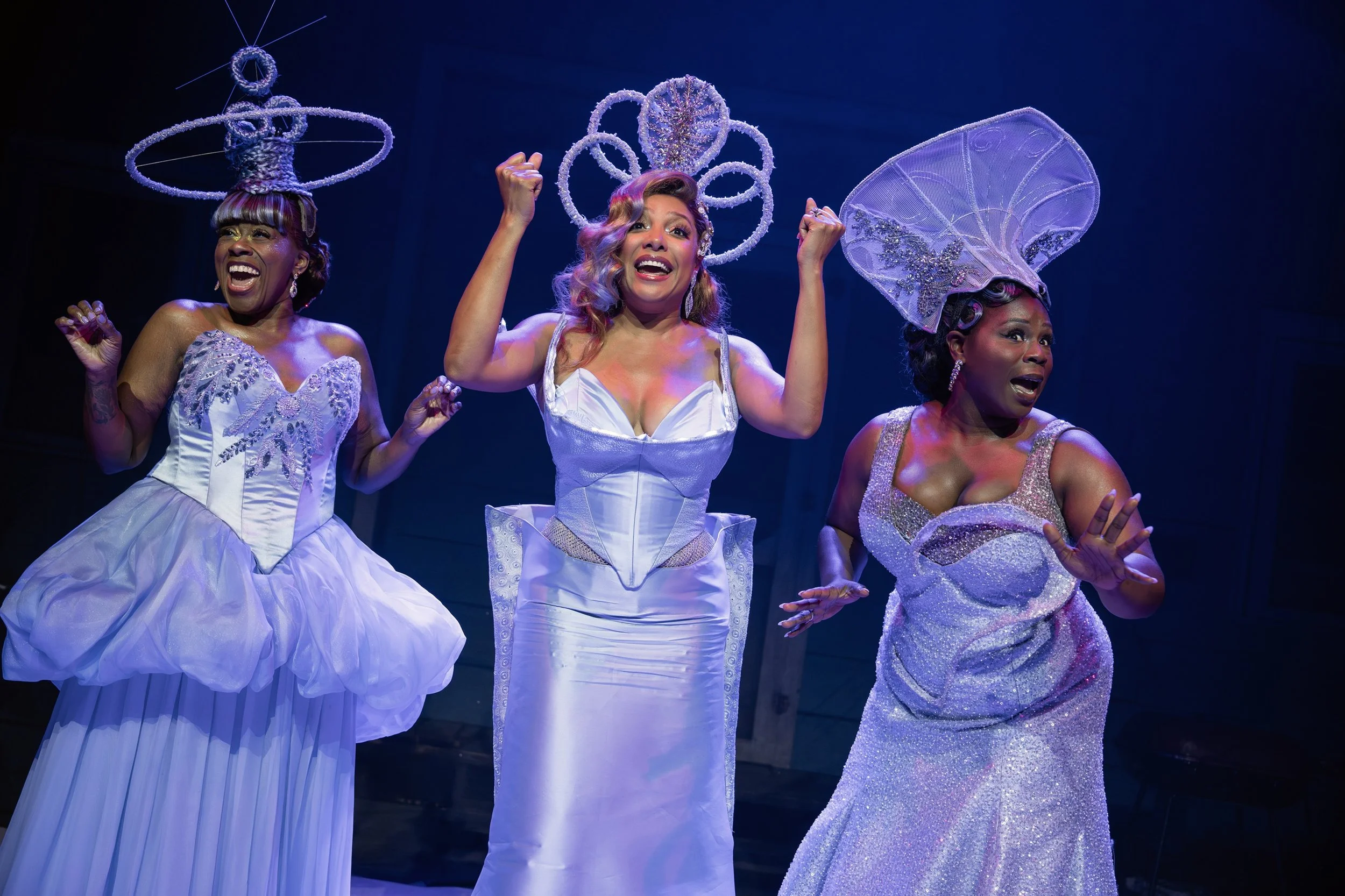
- Paige Mayes, Courtney Gabrielle Williams, Camille Collaço, and Emma Gardner
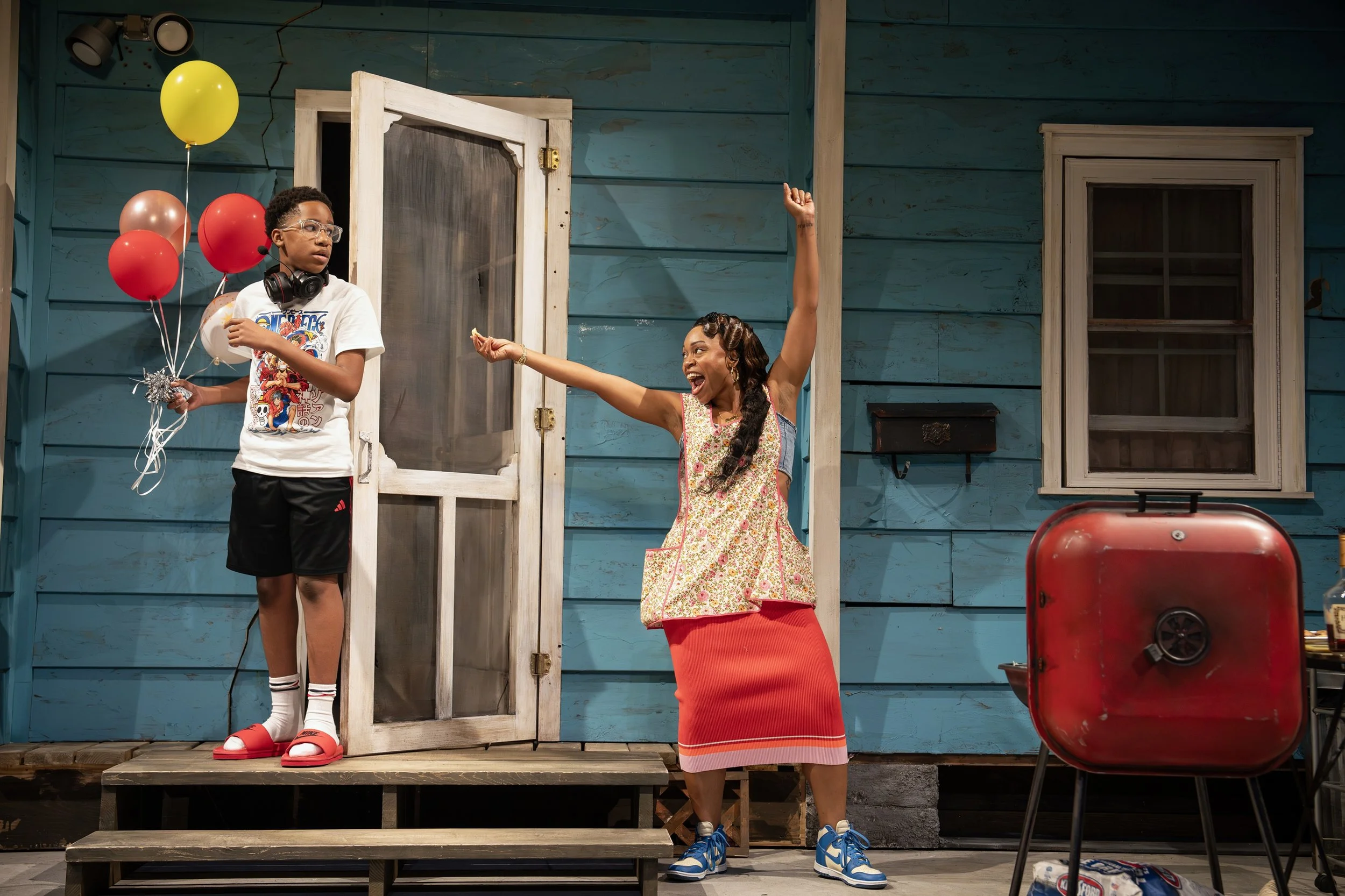
- Starra (Santeon Brown) plays basketball with Sidney (Paige Mayes)
“The Monsters”: An Intense Sibling Love Story—at Berkeley Rep
By: Kheven Lee LaGrone | Date: Apr 5
Berkeley Rep’s production of Ngozi Anyanwu’s ‘The Monsters’ seduced me from its beginning. Anyanwu has created an intense, beautifully written sibling love story. While she sets the play in the world of competitive mixed martial arts (MMA), it is not just another sports story. Here, fighting becomes a metaphor for the struggles in a big brother/little sister reunion.
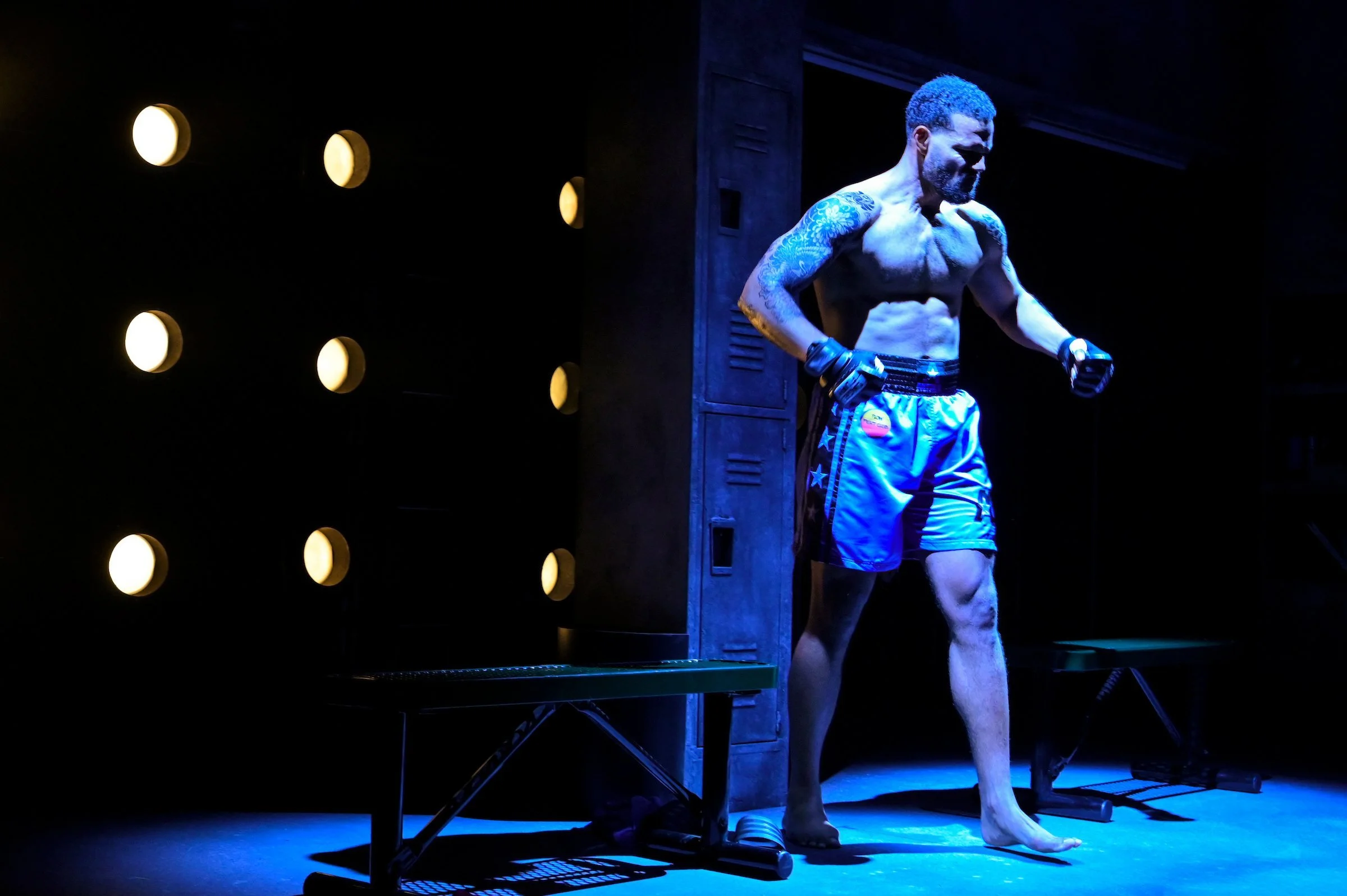
Pleasantly handsome Sullivan Jones delivers a magnificent Big. Six-foot-four and athletically built, Jones projects physical power as he performs MMA moves. He is completely believable as an MMA champion and a confident big brother.
The opening scene stands out, as Jones exhibits his sculpted body, an impactful announcement of his character’s strength and beauty. We want to follow his story.
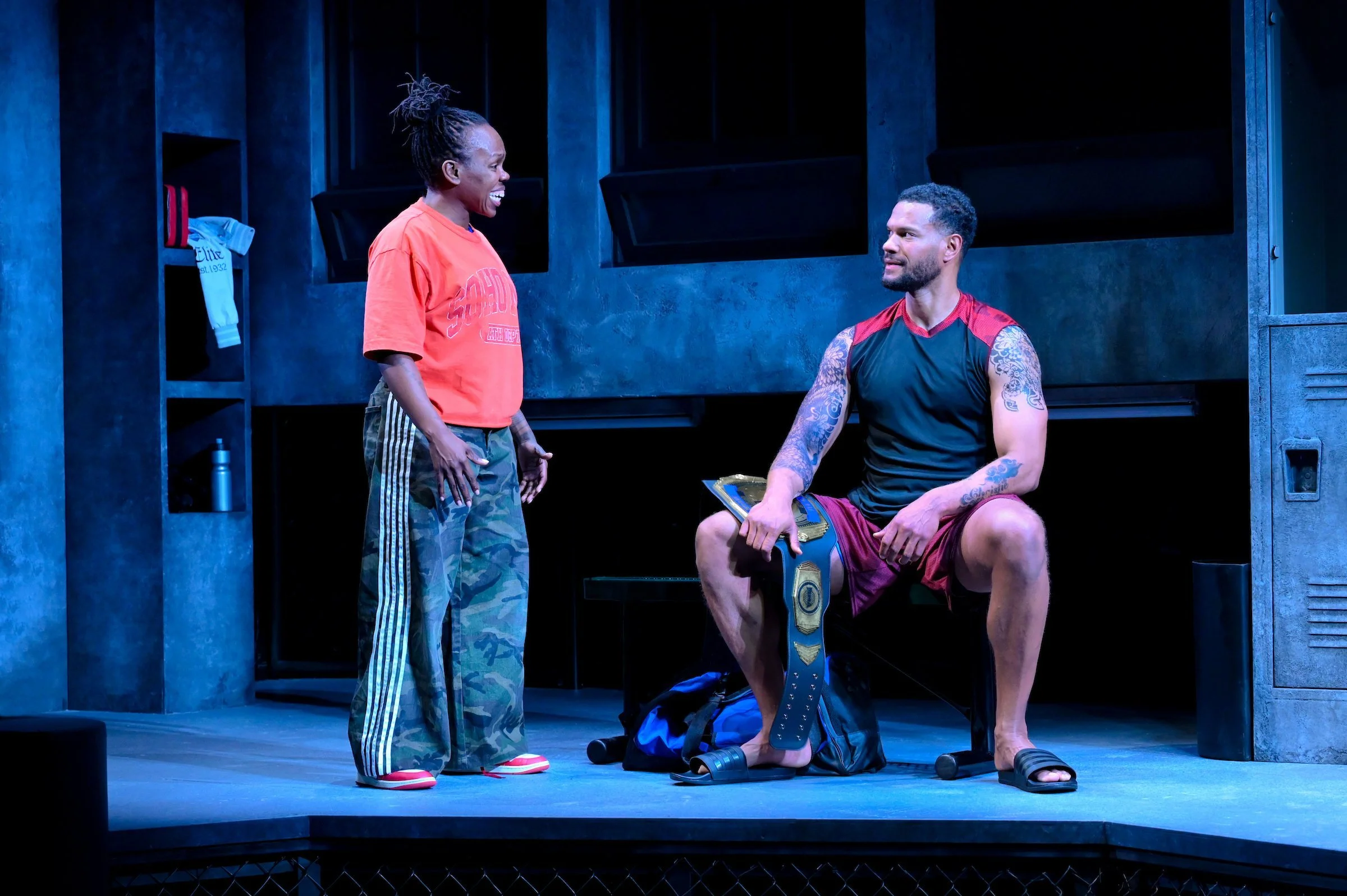
Big, an aging MMA fighter, has not seen his estranged half-sister, Lil (played by playwright Ngozi Anyanwu) in years. He does not know that she is proudly watching him from a distance. Lil wants to compete like her half-brother.
After he wins a fight, Lil shyly approaches to congratulate Big. He does not recognize her. When she tells him who she is, he does not want to be bothered. He snaps at her that sharing a father is not enough for a sister/brother bond.
The past few years have been tough for them. He feels dehumanized and has become bitter and jaded, but he still wants to be loved and not treated as a “monster.” Lil has not been allowed to be his little sister anymore. She misses it. She is searching for Big, the loving, protective brother of her memories; but he no longer exists. Only the face of a lovable brother remains.
The ‘big brother-little sister’ experience ties them in a unique sibling bond. When they were young, he protected her and gave her guidance. She has never forgotten his love and sees through his tough exterior to his hidden heart.
As Lil, Anyanwu brings comedy to her feisty, yet adorable, character. As a pesky little sister, she knows how to annoy and challenge Big. She fights to retrieve the brother she knew. I laughed and cheered for her.
Skilled director Tamilla Woodard has crafted a strong, detailed, and emotional production. Choreographer Adesola Osakalumi and MMA consultant Sijara Eubanks have designed MMA dances that often communicate better than words. They form the muscle of ‘The Monsters.’ Rather than hugs and proclamations of love, Big and Lil connect through graceful dance-exercises and even fighting.
Two critiques: First, the play goes back-and-forth abruptly in time, which can be confusing. Second, the over-use of the n-word puts me off.
But the surprising revelation at the climax makes it all worthwhile. I love ‘The Monsters’ and I’ve already recommended it to my friends.
“The Monsters” by Ngozi Anyanwu, directed by Tamilla Woodard, choreographed by Adesola Osakalumi, scenic design by Nina Ball, costumes by Celeste Jennings, lighting by Reza Behjat, sound by Bailey Trierweiler&Uptownworks, co-produced with La Jolla Playhouse, at Berkeley Repertory Theatre. Info: berkeleyrep.org - to May 3, 2026. Cast: Ngozi Anyanwu and Sullivan Jones.
Production Photos
View Photo Captions
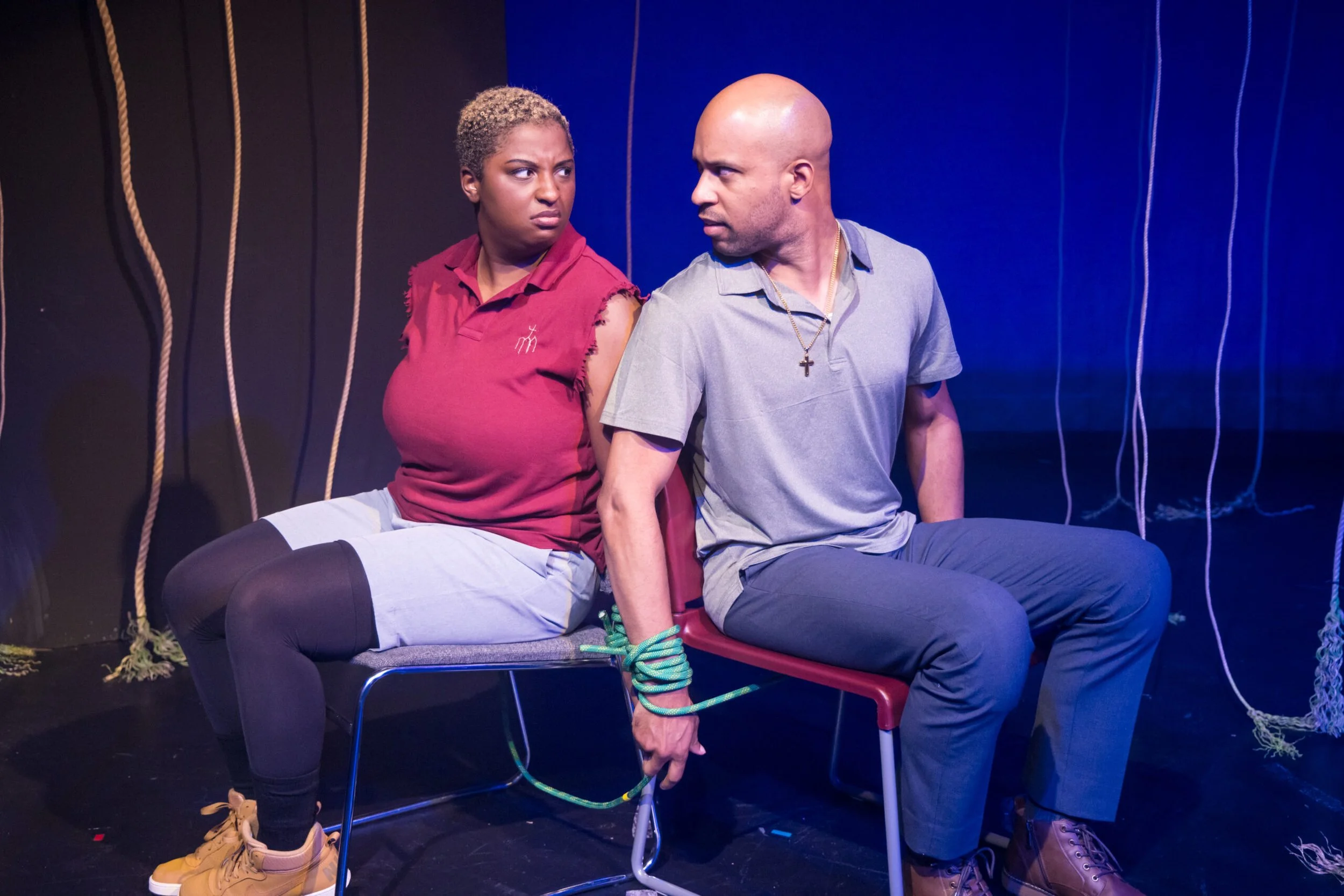
- Ngozi Anyanwu (LIL) and Sullivan Jones (BIG)
- Ngozi Anyanwu (LIL) and Sullivan Jones (BIG)
“The Goat or, Who Is Sylvia?” Tears the Veil & Confronts Us—at Shotgun
By: Bevon Benet Brye | Date: Apr 2
In “The Goat or, Who Is Sylvia?” Edward Albee uses bestiality as a scorched-earth metaphor for the limitations of modern empathy. The playwright challenges us to extend our feelings beyond the liberal pieties about race, gay, and “others.” Here, everything is included.
Sylvia, The Goat, “them,” is less about the goat and more about the terrifying unknown in ourselves. Four great actors tear the mask from the visceral, messy reality we avoid in the streets of San Francisco.
Shotgun Players’ production will make your skin crawl in the best way. Brilliant director Kevin Clarke takes provocation to new heights, shoving our faces into the gritty life that his spoiled, privileged characters fear and detest.
Martin (urbane William Giammona), a world-class architect, has fallen deeply in love with a goat he encounters in the countryside—a goat with “a bag of nipples dragging in the dung.” Giammona makes us feel like we are trespassing on a man’s mental breakdown. It’s invasive, gross, and I could not look away!
Elegant Martin is “hopelessly” in love and trapped by his success. He cannot bear the splendid isolation of his wealth and fame. Nature calls out to him, luring him to an earthier world. His brain has become a sieve, as he comically loses track, while his life catches fire.
Liliana Duque Piñeiro’s elegant single-wall set and Sharon Peng’s loose white clothing suggest Greek tragedy. Their elite offense is arrogance in over-insulated lives.
As Stevie, his wife, the extraordinary Erin Mei-Ling Stuart, engages Martin in off-the-cuff, Noel Coward banter. She plays her role as sophisticated lady-wife with fervor. She goes from arranging flowers to screaming, “GET YOUR GOAT-FUCKING HAND OFF ME!!”
Stuart’s unfolding intensity feels like a horror film. In this symbolic show, there are no props, just sound to indicate her destructive acts. As an elegant, spoiled lady, she cannot comprehend Martin’s utter degradation. Their privileged world shatters because it’s too perfect.
Joel Ochoa’s vivid performance as the 17-year-old, clever gay son Billy, provides the jolt for the family’s collapse. He’s “gay as the nineties,” but the gut-punch comes when Billy confronts his father. Their contact is physical and threatening, tearing another veil from their conformist life. Like Oedipus, they have been living a lie.
They are out of touch with their emotions. Standing in contrast is Kevin Singer’s diabolical Ross, the Judas friend who pens the snitch letter that destroys the family. Singer plays him as an ethical torturer, a puritanical prick we soon despise. Ross shows that we have lost the ability to feel anything about those who are “unlike” us.
When Martin stands “at the top of the hill,” staring into the “pure and trusting” eyes of a beast, his city life becomes a “pit so deep” he cannot climb out. He sees his own superficiality and falls into a comic despair.
Shotgun Players dares to take a powerful new tack on Albee’s “The Goat,” and open our eyes to fear. After the doubly shocking climax, we will never be the same. A masterpiece.
“The Goat or, Who Is Sylvia?” by Edward Albee, directed by Kevin Clarke, lighting by Sophia Craven, costumes by Sharon Peng, set & props design by Liliana Duque Piñeiro, and sound by Matt Stines, at Shotgun Players, Berkeley, California.
Info: shotgunplayers.org – to April 26, 2026.
Cast: William Giammona, Joel Ochoa, Erin Mei-Ling Stuart, and Kevin Singer.
Production Photos
View Photo Captions
- William Giammona & Kevin Singer
- Erin Mei-Ling Stuart & Joel Ochoa
“Public Charge” Proves Diplomacy Is Difficult & Worth Pursuing—at The Public
By: Andrea Libresco | Date: Mar 30
“Public Charge” feels like the foreign policy companion to Michael Lewis’ Who is Government?: The Untold Story of Public Service. Lewis’ book celebrates committed, creative professionals in our government. They are the best of the best—a far cry from the current violence-prone “leader” and his chainsaw-wielding sidekick.
Our current regime has scorned diplomacy, starting with DOGE-ing USAID, a model of soft power. And now they are waging, unilaterally, a barely thought-out war against Iran. But the true story of Julissa Reynoso shows how government can work for us.
Reynoso and Michael J. Chepiga’s “Public Charge” performs the neat trick of presenting the diplomatic world of the Obama years, while contrasting that hopeful time with today’s darker world. The contrast takes place in our minds, raising a double consciousness like the double meaning of the play’s title.
“Public Charge” opens in 1981, at the US Embassy in the Dominican Republic, with 6-year-old, Spanish-speaking Julissa Reynoso being denied admission to the US. The consulate sees her as a probable drain on U.S. coffers.
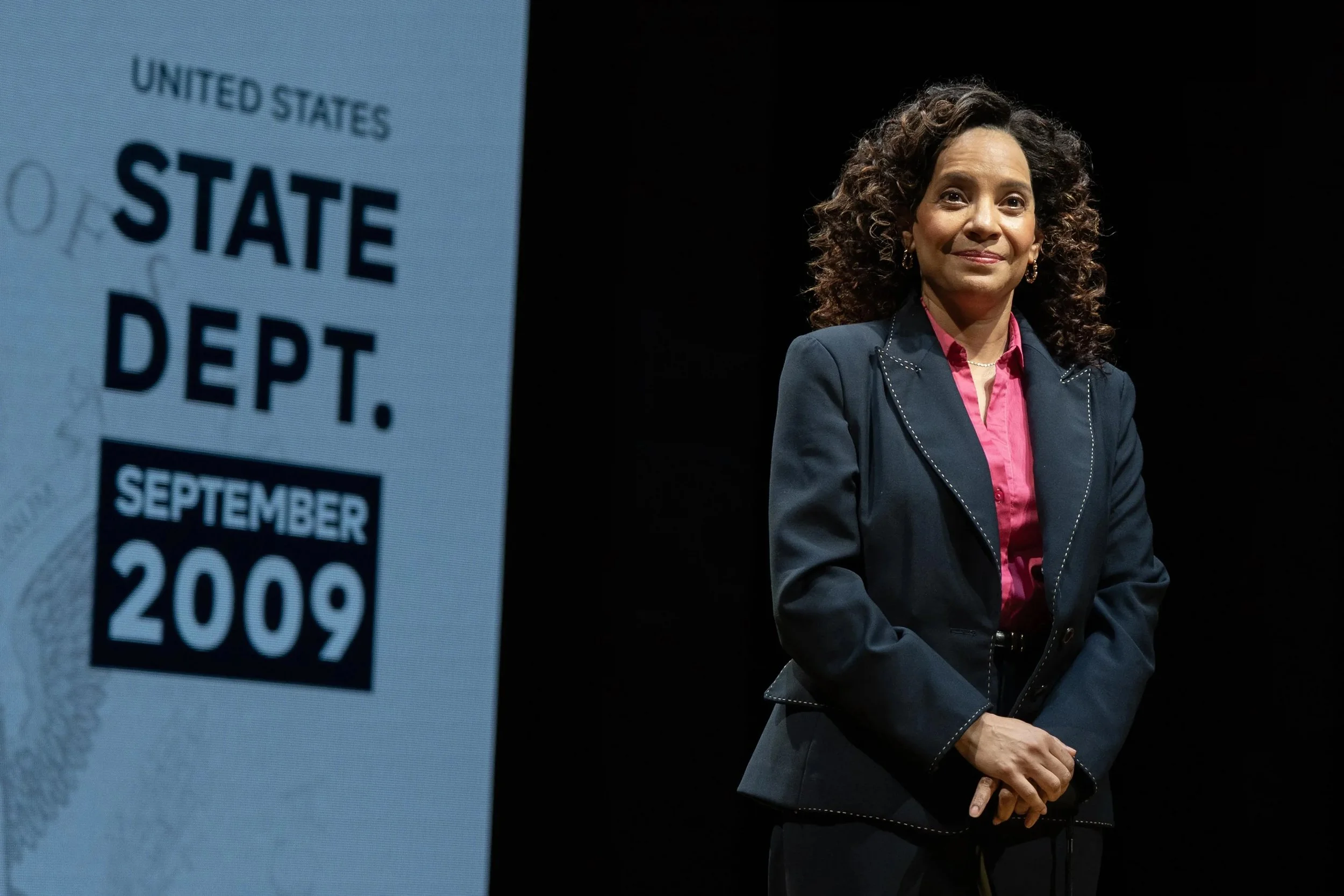
Fast forward to 2009, when Julissa is hired at President Obama’s State Department, encouraged to apply by Hillary Clinton. Julissa’s perfect English and Harvard education make her a brilliant hire. She becomes a diplomat who has a public charge to represent the U.S. in Latin America.
What if she had been permanently denied citizenship? We would never have had the benefit of a woman who left a high-paying law firm to serve her adopted country in public service.
“Public Charge” is not just an autobiographical tour of one woman’s work. Its narrative tension revolves around the quest to free American hostage Alan Gross. Can President Obama change half a century of hostile foreign policy toward Cuba?
The play charges forward, with diplomats constantly circulating. The audience sits on opposite sides, a staging that suits the ongoing encounters. Diplomats present subtle arguments to multiple stakeholders. Where is that art now?
As Julissa, sympathetic Zabryna Guevara engages with complex characters: the Cuban representative (wonderfully calculating Maggie Bofill), Julissa’s boss (strong Marinda Anderson), and the hostage’s wife (gripping Deirdre Madigan). Julissa has nightmares over the American hostage.
Admirably, Reynoso casts a colleague in the most nuanced role. Ricardo Zuniga (Dan Domingues) plays a powerful diplomat who served several presidents. Zuniga remains when Reynoso leaves; but he has been touched by her idealism.
Again, our double consciousness: these civil servants serve country, not leader. How can they operate today with a president who demands loyalty to himself over country?
Diplomacy is necessary. Diplomacy has multiple actors. Diplomacy requires patience and persistence.
The end of the play ought to be a triumph; Cuba has released the hostage at long last. And yet, we feel anything but release. Alan Gross spent five long years in a Cuban prison, separated from his wife.
Julissa believes “things are falling into place,” as she anticipates that Secretary of State Hillary Clinton will be the first woman president: “We are going to be the most progressive, inclusive country in the world. The best is yet to come.”
Sadly, we know better. For us, the ending is brutal.
Creative Team: Julissa Reynoso & Michael J. Chepiga, directed by Doug Hughes, scenic design by Arnulfo Maldonado, costumes by Haydee Zelideth, lighting by Ben Stanton, and sound by David Van Tieghem. Info: publictheater.org - to April 12, 2026. Cast: Marinda Anderson, Nate Betancourt, Maggie Bofill, John J. Concado, Dan Domingues, Zabryna Guevara, Yesenia Iglesias, Paco Lozano, Deirdre Madigan, Nairoby Otero, Armanda Reisco, and Al Rodrigo.
Production Photos
View Photo Captions
- Zabryna Guevara, Al Rodrigo, John J. Concado
- Maggie Bofill and Al Rodrigo
- Armadno Riesco, Zabryna Guevara, and Al Rodrigo
Macbeth Updated to 70s New York, A Vital New Vision—at Magic
By: Jo Tomalin | Date: Mar 27
The Magic Theatre’s new vibrant production of “Macbeth,” in a modern version by Migdalia Cruz, directed by Liam Vincent, is led by an earthy and feisty Catherine Castellanos as the ambitious general Macbeth. Castellanos is a force of nature commanding every scene!
Macbeth chats to us, and Castellanos displays mischievous unrest with a delicious, casual delivery, as if hanging out with us. Castellanos’ engaging manner breaks apart not only Macbeth’s character, but also Shakespeare’s language in this new adaptation. Playwright Cruz has translated Shakespeare’s words into a streamlined, user-friendly script for this 95-minute performance.
In these days of assault and ambition, Macbeth mirrors and highlights cutthroat political competition, literally. This queer re-telling shows the strength and gutsiness of the Macbeths in their lust for power at any cost. Yet, because Castellanos initially welcomes us warmly, we are hooked with empathy from the start.
Macbeth lives in New York. Sure! And in the gritty 70s, with dynamic societal changes like gay relationships, gangs, and immigration emphasized boldly in the casting. The 70s costumes include tracksuits and heavy gold chains.
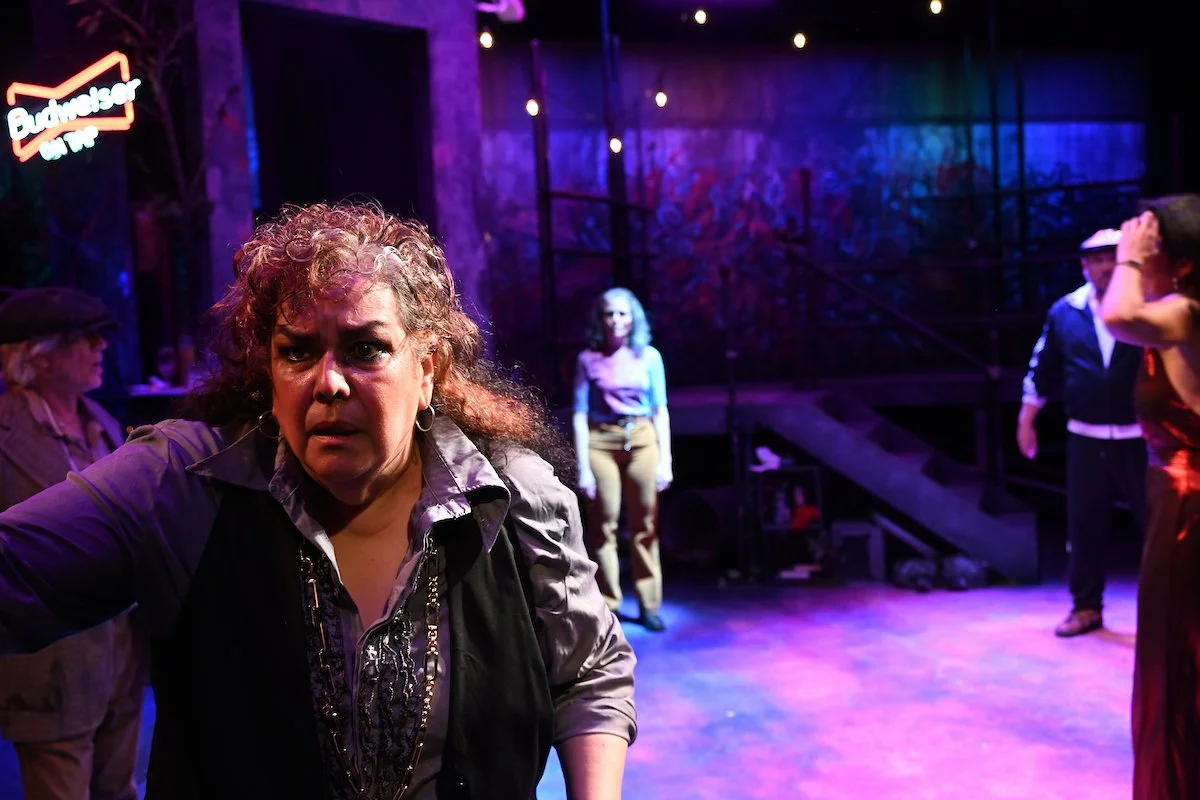
Scenic Designer Carlos-Antonio Aceves creates a dark, theatrical world that evokes the lurid darkness of NYC at night. The set design features a creative multi-level set with a bar, alley, and steep stairs, all in black, surrounded by grunge and graffiti. This is a perfect setting for the underhanded scheming we see from Macbeth and others living in the neighborhood.
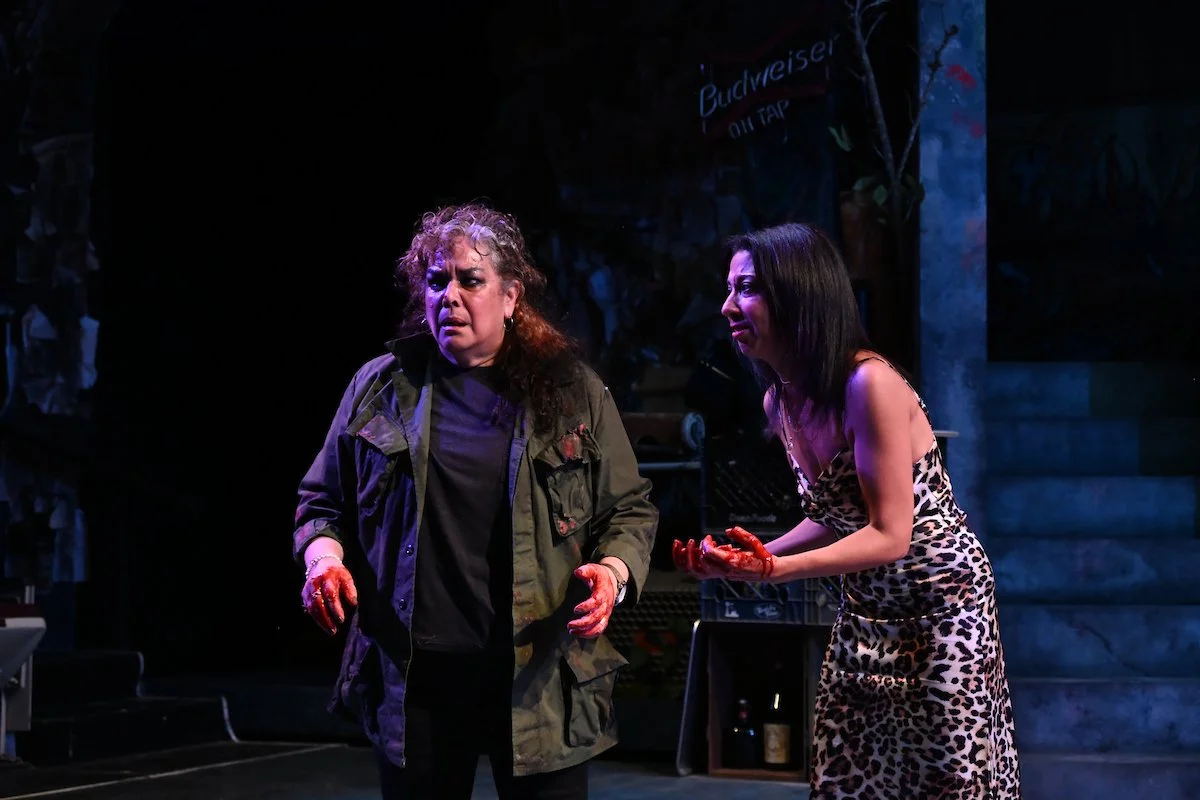
Both Macbeth and Lady Macbeth are played by women, a focal feature of this production, which populates the play with people who truly reflect our communities. Sarah Nina Hayon plays a glamorous, super ambitious Lady Macbeth, wearing a leopard skin coat and a silky red negligee. As she struts across the stage, Lady M is the cool power player leading Macbeth into a complex web of greed.
When cajoling Macbeth, Hayon reminds us of a viper hissing. Castellanos and Hayon make a forceful pair in their complicated relationship and interactions. Their bursts of strength and vulnerability show us the balance of emotions switching back and forth.
Nora El Samahy plays Banquo, Macbeth’s good friend, imbuing the character with heartfelt honesty from their first meeting. When Macbeth suggests Banquo’s days are numbered, a groan of sympathy rises from the audience.
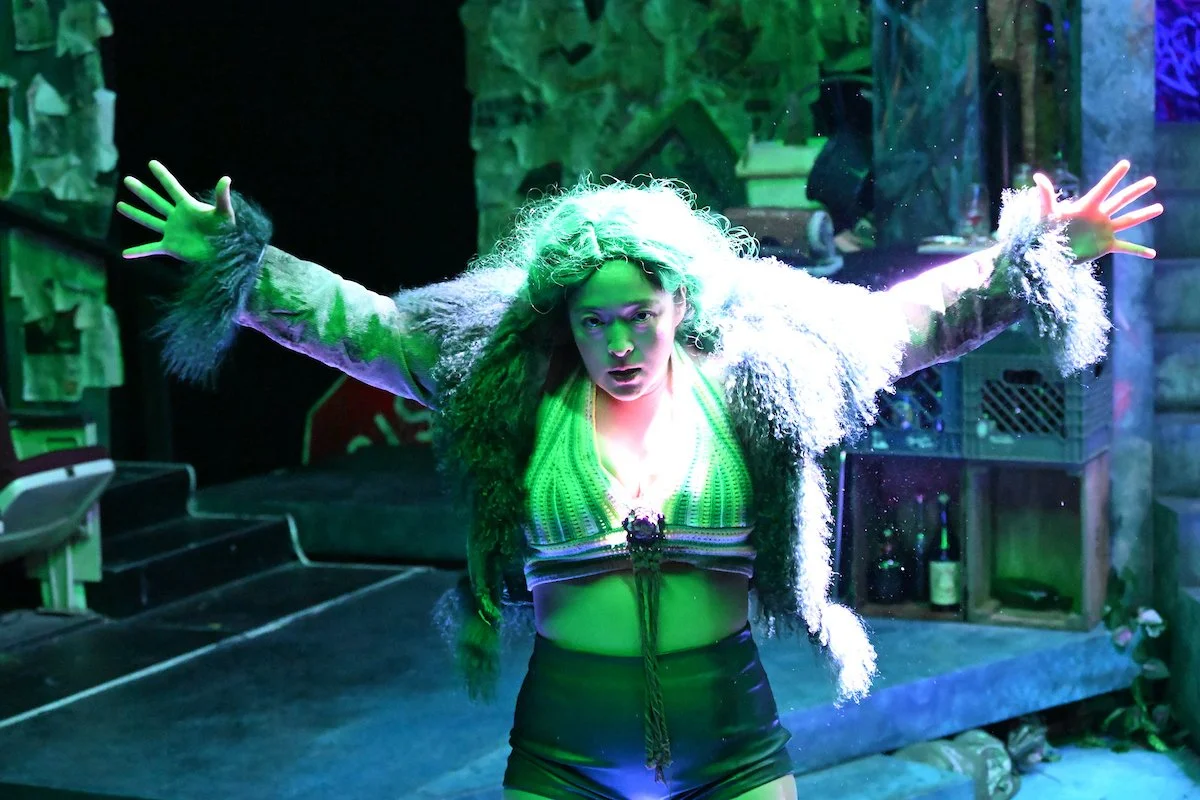
Bright fluorescent lights flash and change color for every scene, evoking excitement and frenzy! A complete wash of green lights illuminates the witches’ scene, highlighting three gnarly witches in green wigs and quirky, unmatched clothing in shades of green.
The strong ensemble cast, led by Castellanos in an outstanding and layered performance, vividly shows how quickly conflict and violence escalate when ambition is the driving force—a tragedy indeed. Migdalia Cruz and Magic Theatre have produced a new “Macbeth” that is not only powerful but also passionately enlightening and entertaining.
Creative Team: “Macbeth” by William Shakespeare, new modern version by Migdalia Cruz, directed by Liam Vincent, scenic design by Carlos-Antonio Aceves, costumes by Alina Bokovikova, lighting by Justin Partier, sound by Matt Stines, props by Imani Wilson, by Magic Theatre, San Francisco. Info: magictheatre.org - to April 5, 2026 Cast: Catherine Castellanos, Juan Amador, Nora el Samahy, Sarah Nina Hayon, Danny Scheie, Kina Kantor, and Brian M. Rivera.
Production Photos
View Photo Captions
- Danny Scheie, Catherine Castellanos, Nora El Samahy, Brian Rivera, Sarah Nina Hayon
- Kina Kantor
“Pass the Nails & Shame the Devil” Lifts Up Black Women Changemakers—at The Marsh
By: Mary Lou Herlihy | Date: Mar 24
“Pass the Nails and Shame the Devil,” is a love letter to Pearl Louise’s powerful mom. Small in stature and monumentally ambitious, her mom fights against poverty, drugs, and racism with HOPE and HARD WORK.
As a kid, Pearl constantly heard about hope and hard work. Her parents looked to MLK Jr. for inspiration while chasing their dreams. Without a chance to chase her own, Louise gets pulled into their dream of building a duplex in East Oakland. Unfortunate timing—the height of the 80s crack cocaine epidemic!
Louise relates her remarkable story with charm and generosity. Still early in her late-blooming acting career, she pulls us into uneasy pauses with “Hey guys” and “Excuse me.” When she draws a blank on a musician’s name, she solicits our help. Her spontaneous, endearing pivot lands beautifully.
While playing the slouching, fast-talking, bullshitter DeMarcus, Louise is hilarious. DeMarcus convinces her parents to hire him, even though he is blind to their charity. We wait in dread for the pay-off.
Playing her younger self, her parents, and quirky neighbors, Louise moves easily between characters, conjuring “deep” East Oakland in the 1980s. With Blockbuster video stores and crack cocaine on every corner, Louise recounts a neighborhood awash with drugs and desperation. In the “Reagan years,” as Louise puts it, America was going “from sugar to shit.”
As a teenager, looking out over the empty lot where her parents envision a beautiful new duplex, she sees only piles of garbage, old tires, rusted cans, and broken bottles. The stench of urine is sickening. Where’s her dream?
With few choices, teenage Pearl finds a silver lining. She basks in the adoring glow of her brilliant mother. Self-educated and proud, her mom teaches herself how to survey their property using equipment that “only white men in yellow vests” know how to use. Now, Louise understands why her mom loved libraries.
When curious neighbors refer to other black folk as ” these people,” her mom corrects them: _“Our_ people.” Her mom reminds Pearl about Louisiana, and her own parents’ hope for greater opportunity. Dirt poor, they scrounged for pennies and dimes to send to the newly formed NAACP. They were proud Black folk, contributing to a meaningful cause.
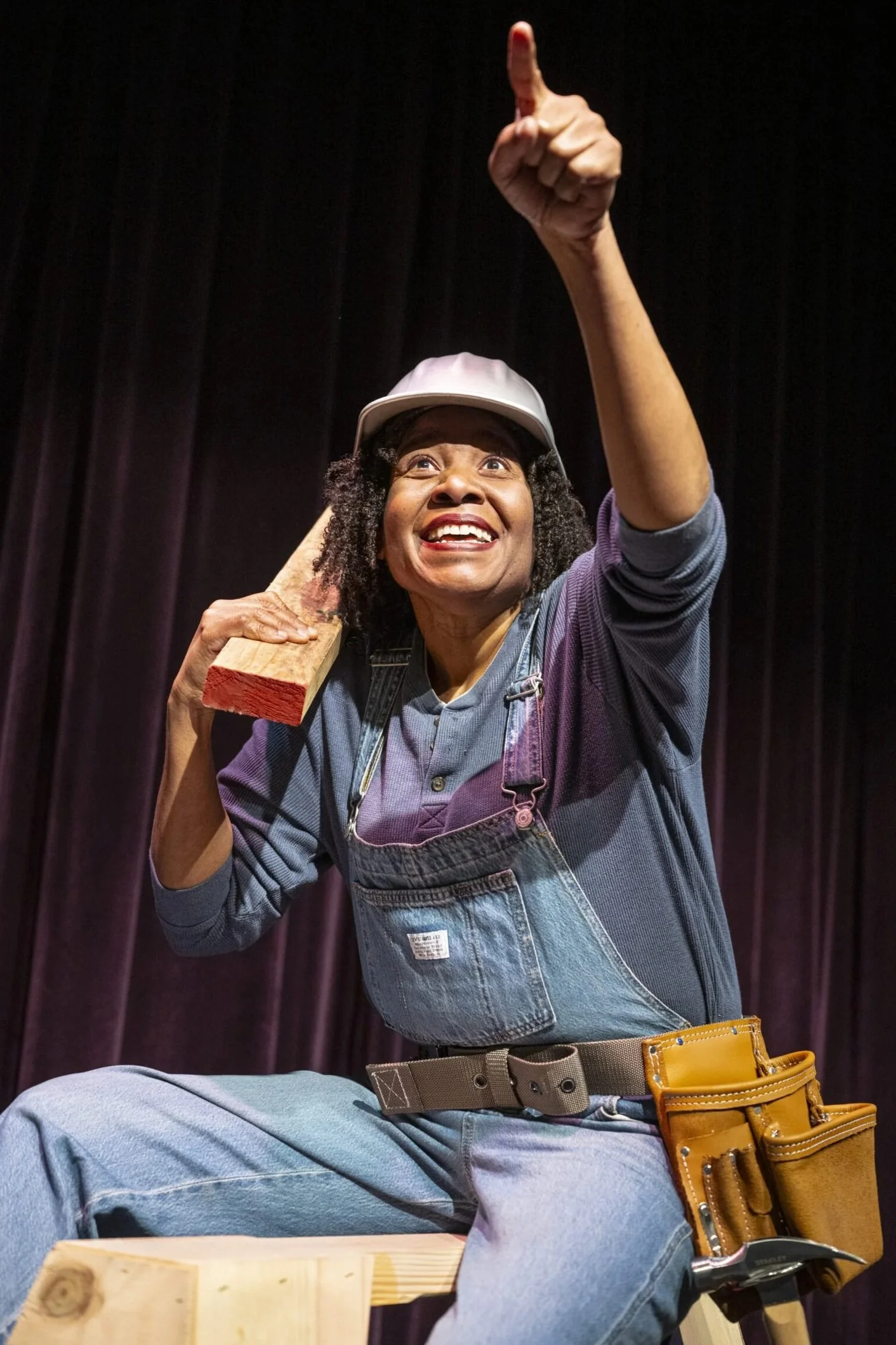
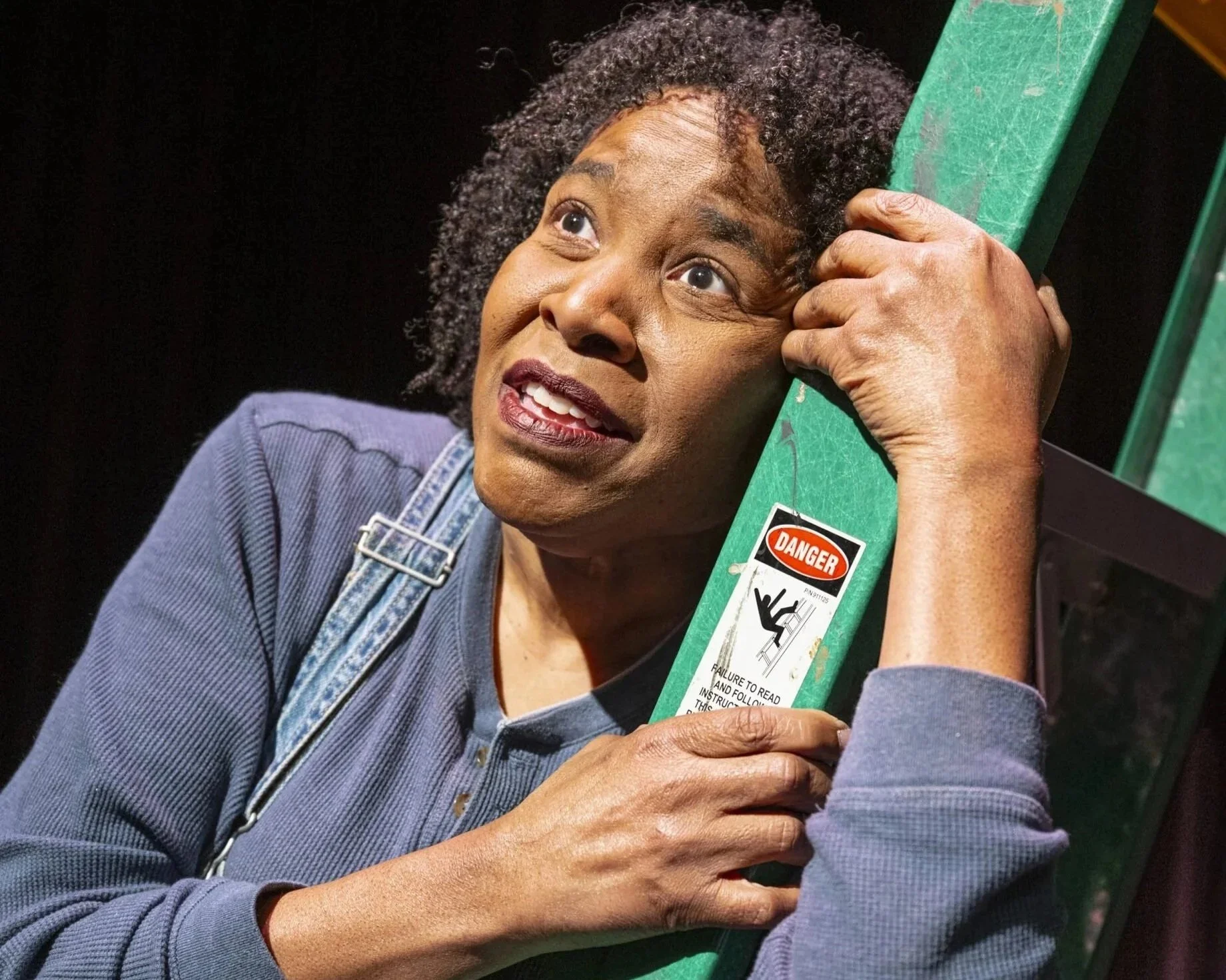
Onstage, a small ladder, a couple of boxes, and her dungaree overalls let us know that Pearl Louise is here to work. She does a terrific pantomime of hammering, pulling handfuls of nails out of huge boxes. She hoists walls, demonstrating the physical demands of the work, keeping her story moving. But one fight scene drags, and a dubious “hero” sends mixed messages.
“Time passes,” Louise says as we witness immense sacrifices to build the dream. Eventually, weakened by illness and exhaustion, Pearl’s mom asks, “What’s Happened to Our people?” Only then do we see her heartbreaking moment of despair.
But a surprise ending throws a bright new light on everything that came before.
We celebrate mother and daughter as Pearl Louise chases her own dreams. Don’t miss this beautiful limited run of “Pass the Nails.”
“Pass the Nails and Shame the Devil” –written and performed by Pearl Louise, directed by David Ford, assistant directed by Quinn Gilchrist, tech by Shaila Sarathy, at The Marsh, Berkeley. Info: themarsh.org – to April 18, 2026. Cast: Pearl Louise (playing many roles)
Production Photos
View Photo Captions
“Assassins” Reveals What Triggers Alienated Americans—at OTP
By: Jenyth Jo | Date: Mar 24
Oakland Theater Project has delivered a great run-up to the next No Kings March in “Assassins” preshow montage. Projected on a garage wall, APTAP (TikTok’s allpower2allpeople influencer) says, “If the ruling class can ignore you, you’re not a movement.”
In these days of mass shootings, assassination attempts, and military takeovers, all the presidential assassins in Stephen Sondheim’s musical try to convince us that “guns do right wrongs.”
Weston Scott directs dynamic Adam KuveNiemann in a fresh, solo approach to this controversial musical. Starting with John Wilkes Booth, “Assassins” introduces the angry, disenfranchised Americans who killed Presidents Lincoln, Garfield, and McKinley.
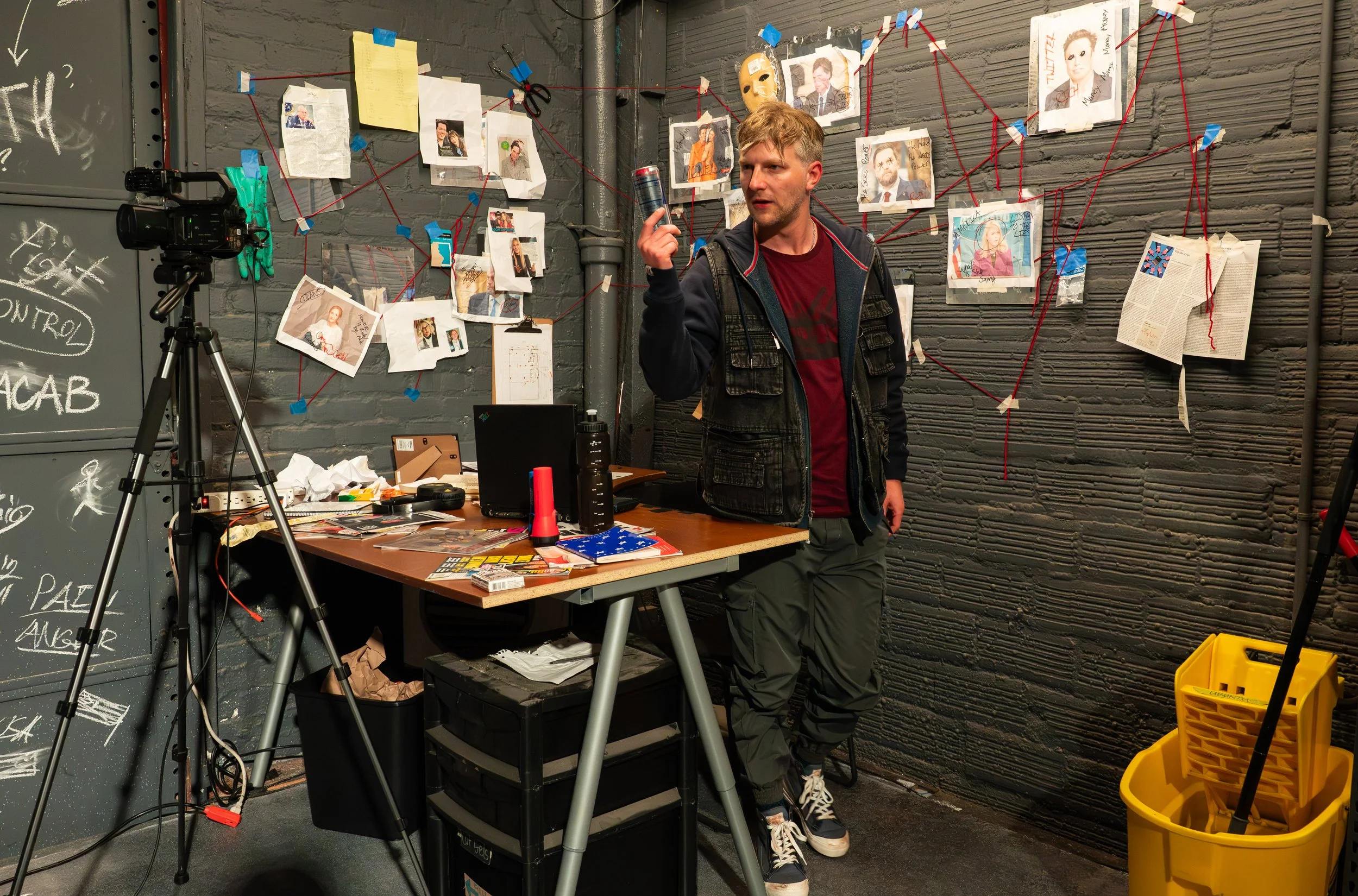
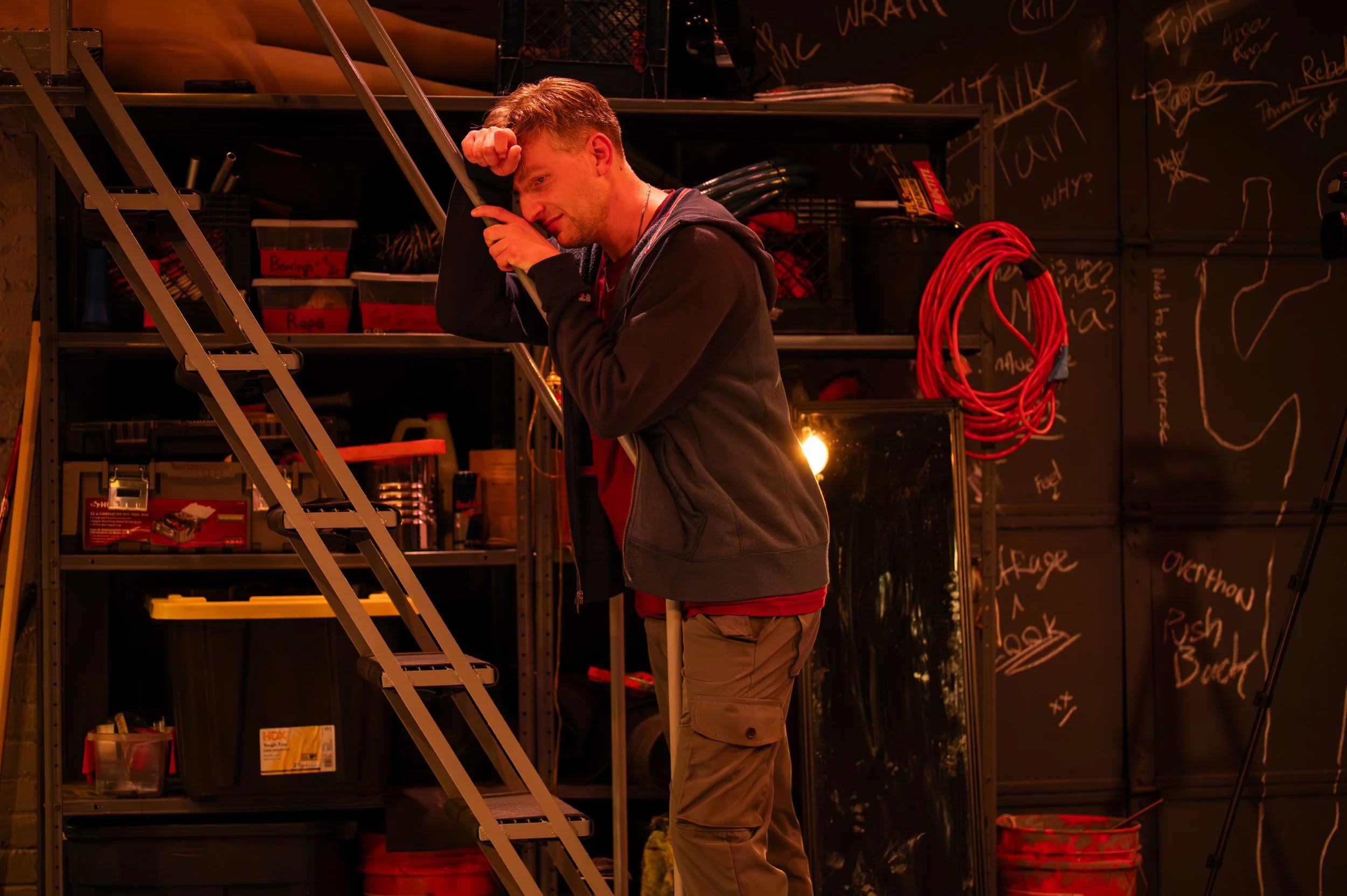
Thankfully, a character list tells us ‘who killed whom’ in this wildly imaginative one-man montage of U.S. history’s anti-heroes. Kudos to set designer Sam Fehr for his garage décor. The black-walled corner suggests a murderer’s man-cave, with red yarn linking mug shots, an open laptop, and chalk graffiti of a James Bond-like gunman. How many alienated young Americans are still plotting today?
Grunge-styled Adam KuveNiemann paces the floor, glued to his cell phone. He becomes a variety of outcasts, revealing eerie similarities between assassins and near-assassins of our presidents. These citizens feel betrayed by their leaders and their lovers. With nothing left to lose, maybe notoriety could end their loneliness?
Through KuveNiemann’s stunning character portrayals, we begin to understand these tortured loners. When he shines a light on a mugshot of J.D. Vance, the targeted eyes are X’ed out like an evil circus clown’s. We feel the assassin’s growing desperation as he mutters about betrayal of the American Dream.
John Wilkes Booth becomes Johnny, mourning the 600,000 blue and gray soldiers lost in the Civil War. He wants to “kill the man who killed my country.” He blames Lincoln for their deaths.
Booth’s madness permeates subsequent assassins in humorous and macabre scenes. When KuveNiemann becomes both Sara Jane Moore and Squeaky Fromme, their hilarious discussion reveals how even young girls can become malleable instruments of destruction. Rejected and exploited by their elders, they become vulnerable and unpredictable. Love Charlie Manson? Sure.
Through KuveNiemann’s brilliant embodiment of 14 characters, we understand how class injustices have created massive alienation from the American Dream. Among their real-life outrages, we hear how stealing immigrants’ labor creates deep despair. We laugh at inappropriate times, feel guilty, then join him in sympathy for the pitiable characters he portrays.
In a mind-boggling display of verbal dexterity, KuveNiemann becomes the ringmaster, rallying all the “assassins” at once to pressure Lee Harvey Oswald into action. “Shoot JFK,” they say, and “you’ll be remembered like Brutus. Just a move of your little finger … will end a life of quiet desperation.”
Multiple voices invade the mind of the assassin: Is this noise, or rationality? No wonder his “Take a Look, Lee” song is so controversial.
But what happens after the songs end is an unforgettable addition to this compelling play.
Adam KuveNiemann delivers a multi-layered performance, making us wonder when history will repeat itself. There’s no shortage of discontent today. How do we stop the next misguided bullet from a tortured soul?
“Assassins”–music & lyrics by Steven Sondheim, book by John Weidman, based on an idea by Charles Gilbert, Jr., directed by Weston Scott, set by Sam Fehr, sound by Lane Sanders, lighting by Ashley Munday, projections by Sarah Phykitt, and music directed by Diana Lee, at Oakland Theater Project.
Info: oaklandtheaterproject.org - to April 5, 2026.
Cast: Adam KuveNiemann (as ALL the Assassins & more)
Production Photos
View Photo Captions
“||:Girls:||:Chance:||:Music:||” Celebrates Young Women Coming Up—at ACT
By: Aaron Draper | Date: Mar 23
“||:Girls:||:Chance:||:Music:||” follows four young women attending a summer music program, tracing their artistic and personal development as they navigate collaboration and the pressures of performance. While the play is framed as a story about the transformative power of arts education, it ultimately struggles to deliver a clear narrative focus.
Playwright Eisa Davis cleverly uses the “repeat” symbols in the title to include musical notation front and center.
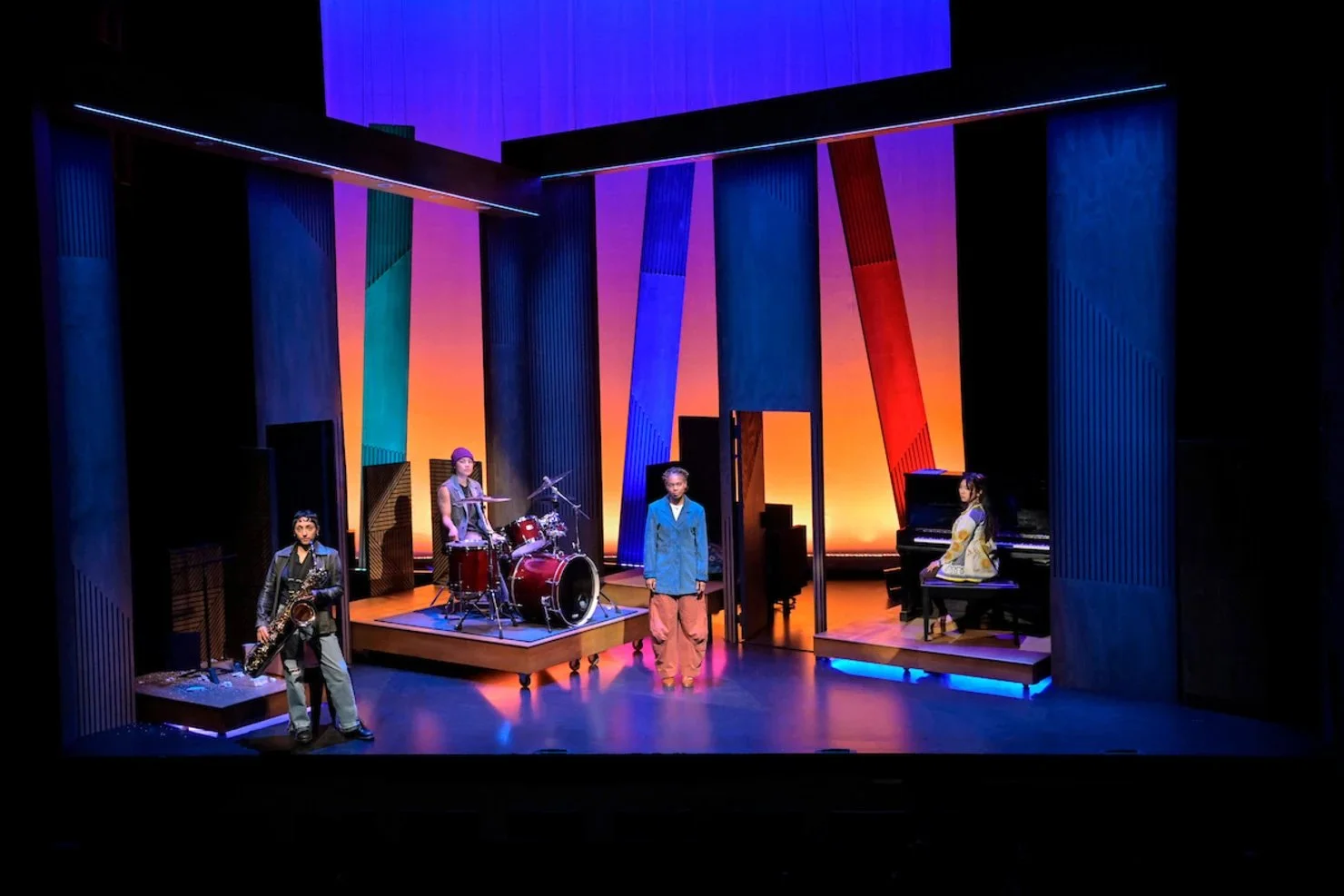
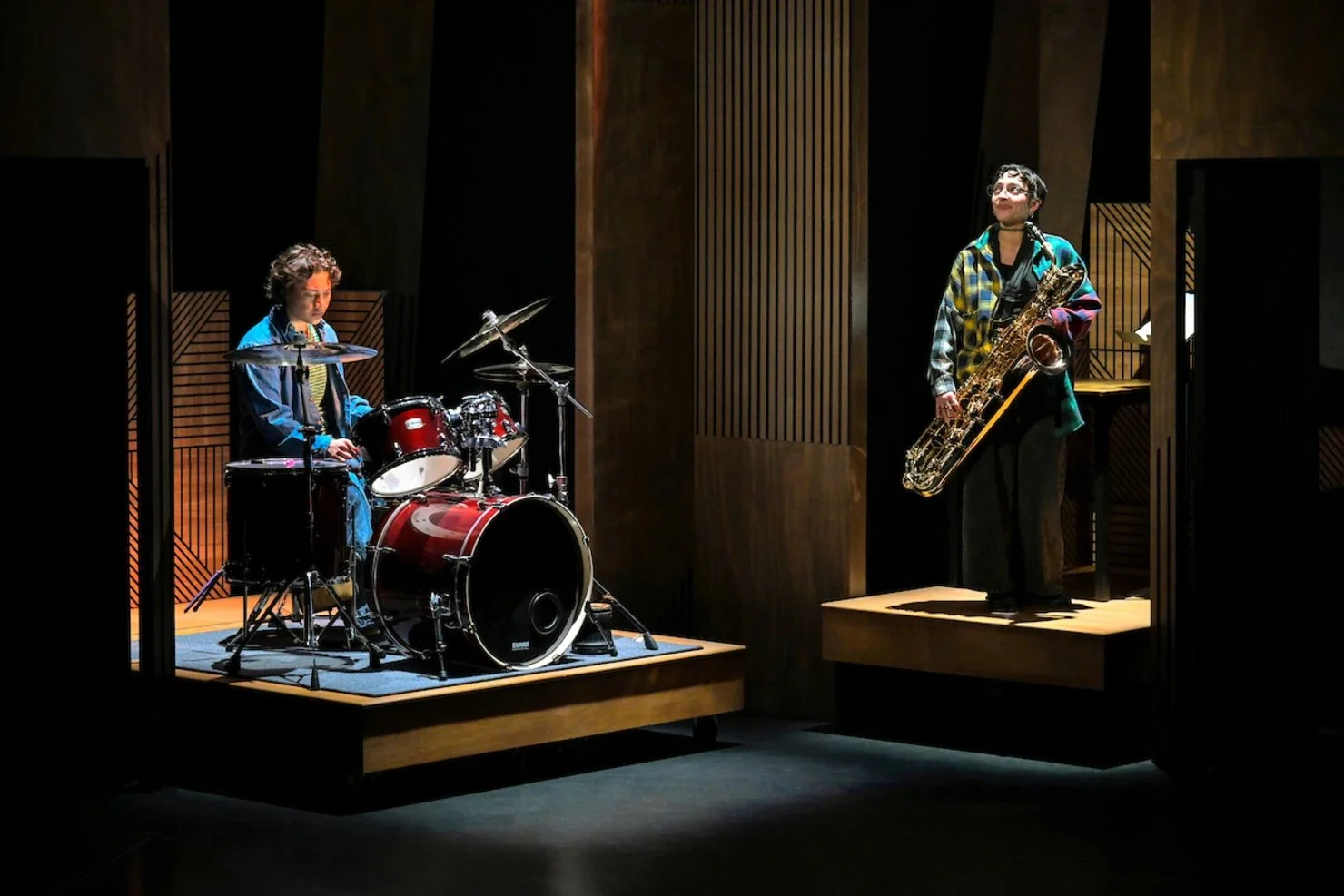
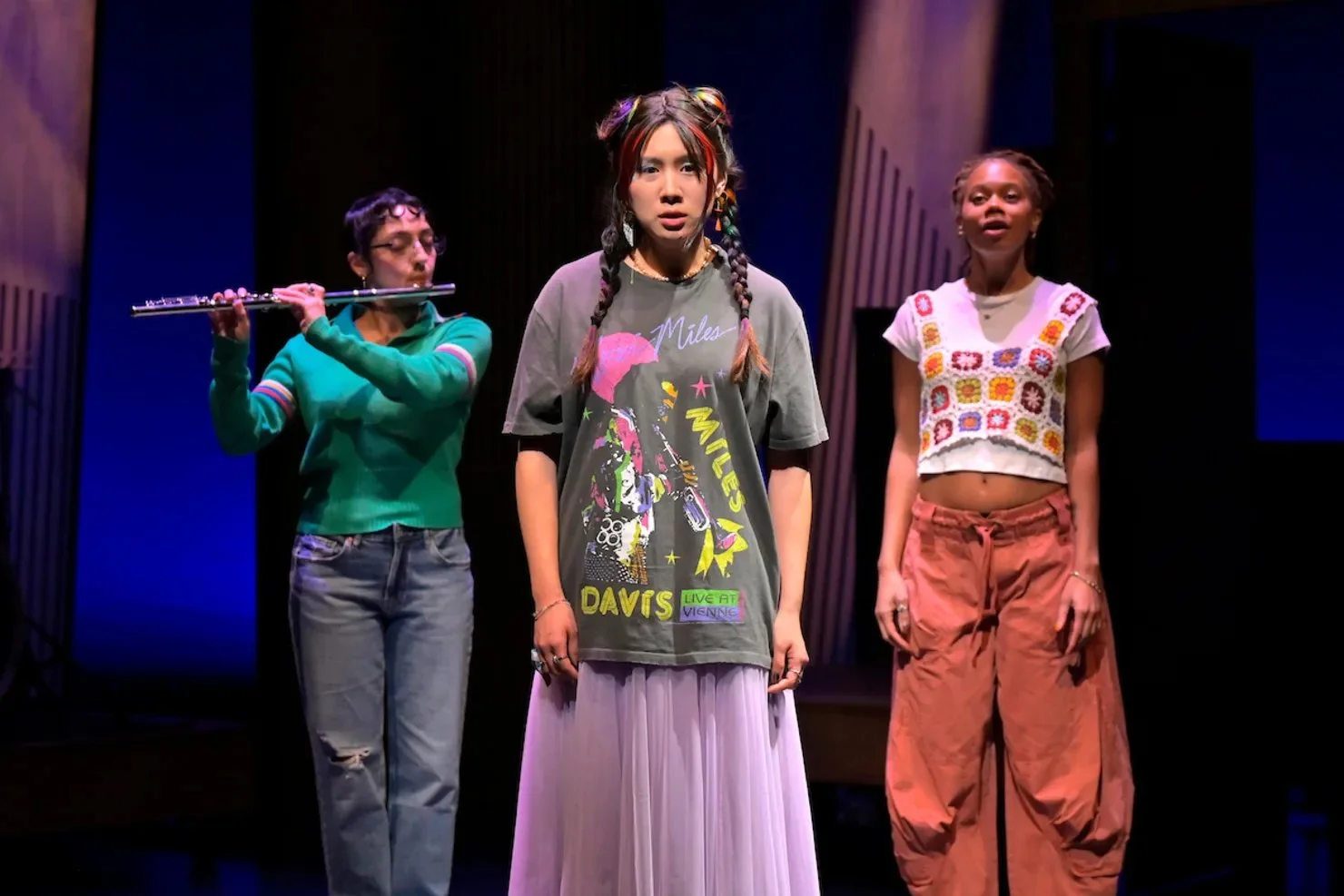
Designer Nina Ball sets the stage for an evening of musical exploration. Ball has created a striking, unique setting with tall pillars at odd angles, as if the building might topple at any moment.
Ball’s visually engaging set is inspired by sheet music and improvisation. The piano, drums, flute, and baritone saxophone clearly put us in a music education setting.
The most compelling thread of the story emerges in the four girls’ evolving connection to improvisation. They journey toward letting go of rigid structure and embracing the chaos of creativity, offering resonant and authentic moments.
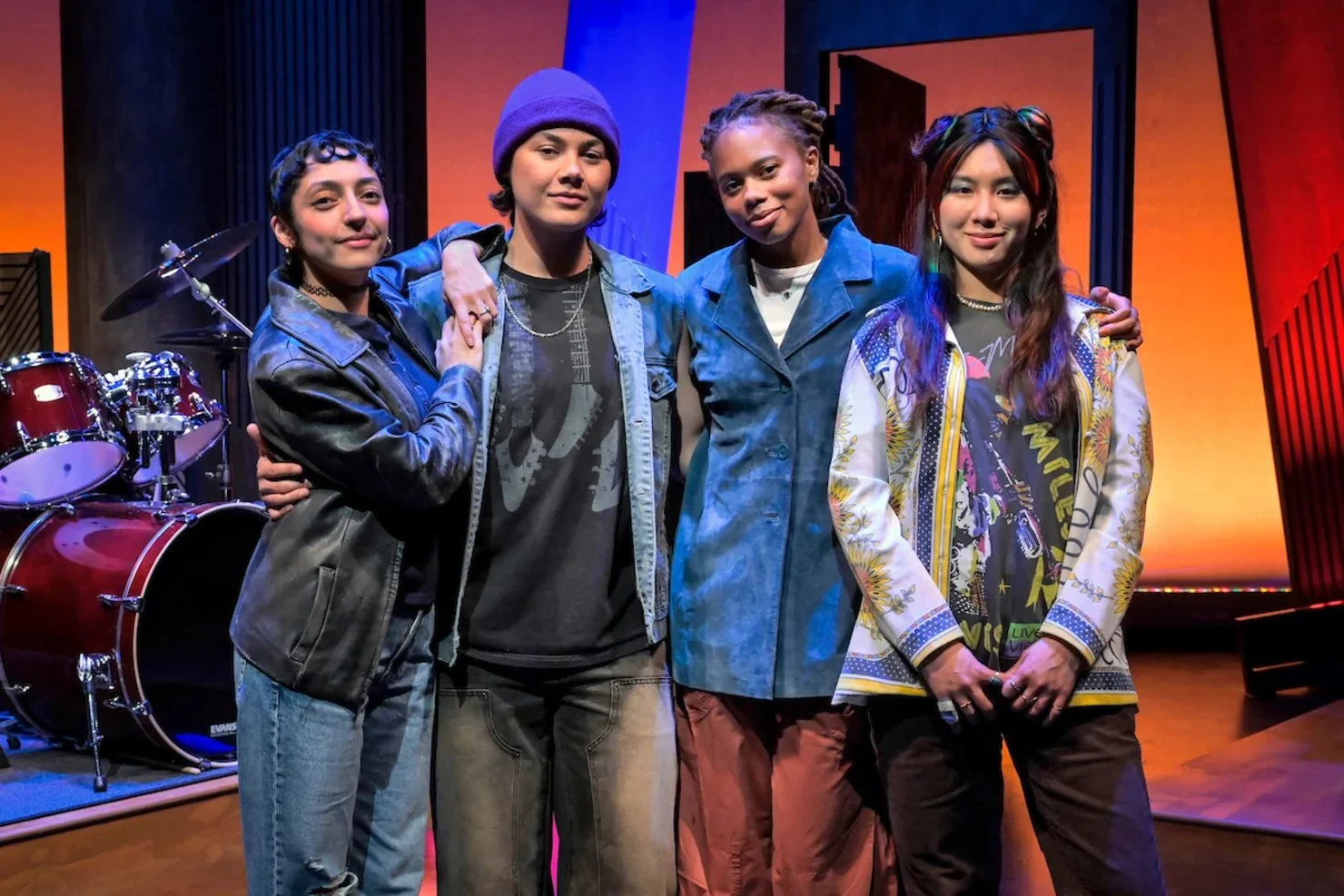
The young women deliver strong musical performances throughout: Hillary Fisher, as the vocalist Fax, stands out for her classical vocal control and presence. Naomi Latta’s portrayal of Margot brings a sharp, rebellious energy—reminiscent of John from The Breakfast Club. Yeena Sung and Gianna DiGregorio Rivera round out the ensemble with equally committed performances.
Collectively, the group demonstrates impressive musicianship, highlighted by their interplay during the improvisational segments.
When the characters simply jam—abandoning written music and trusting their instincts—the play feels most alive. These scenes effectively capture the freedom and exhilaration that improvisation brings to artists.
However, the play is burdened by an abundance of plots that dilute its impact. Storylines involving a shared sperm donor, homelessness, an unexpected explosion that injures a student, and episodes of drunken conflict compete for attention. While each of these ideas has potential, none are given enough time to develop fully, leaving the audience with fragments rather than a coherent journey. The result is a story that feels scattered, without a clear point of view.
The production opens with an unconventional audience interaction: twelve volunteers are invited onstage to select notes from a twelve-tone scale, forming a musical sequence that the performers weave into the music of the show. While inventive, the device takes too much time to develop. The audience is left with a clunky melody that the performers must work around.
Despite its strengths, the play falls short. The frequent monologues directed at the audience feel disconnected from the central action, interrupting rather than enhancing the narrative. Repeated lines such as, “If you feel discouraged, you should be,” hint at a theme, but remain to be explored to deepen our understanding.
In the end, “||:Girls:||:Chance:||:Music:||” offers an abundance of ideas about youth, artistry, and music education, but lacks the cohesion needed to make those ideas land. While the performances and musical sequences are engaging, the play leaves us with information rather than an emotional connection—a collection of intriguing concepts that never quite coalesce into a satisfying whole.
“||:Girls:||:Chance:||:Music:||” by Eisa Davis, directed by Pam McKinnon, scenic design by Nina Ball, costumes by Mel Ng, lighting by Russell H. Champa, sound by Fan Zhang, and original music by Eisa Davis.
By American Conservatory Theater, in co-production with Vineyard Theatre. Playing at: STRAND THEATER, 1127 MARKET Street, SAN FRANCISCO 94103.
Info: act-sf.org - to April 19, 2026.
Cast: Gianna DiGregorio Rivera, Hillary Fisher, Naomi Latta, and Yeena Sung.
Production Photos
View Photo Captions
- Gianna DiGregorio Rivera, Naomi Latta Hillary Fisher, and Yeena Sung
- Naomi Latta and Gianna DiGregorio Rivera
- Gianna DiGregorio Rivera, Yeena Sung, and Hillary Fisher
“Jesa”: Sisters’ Reunion Goes Inevitably Awry—at The Public
By: Andrea Libresco | Date: Mar 22
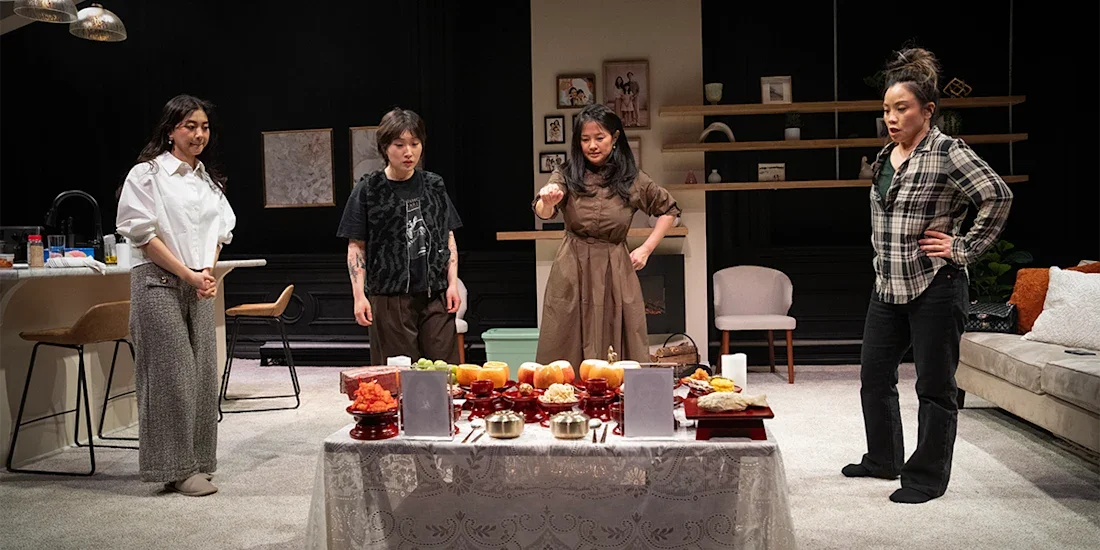
Beige is the dominant color of one sister’s Orange County home, and the setting for Jeena Yi’s play, but the goings-on will hardly be beige. Indeed, those kitchen knives lined up perfectly on their magnetic wall holder will get some use! Four Korean American sisters gather for Jesa, an annual Korean ceremony to honor their dead mother and father and ask for their blessings. As traditional food is arranged and consumed, old animosities surface, secrets are revealed, ghosts visit, and emotions are expressed—and expressed, and expressed.
The sisters, like many siblings, do not appear to have much in common. Tina (Tina Chilip), the oldest, has a big laugh and a foul mouth. Grace (Shannon Tyo), second oldest, hosts them in her suburban home. The third sister, struggling theater director Brenda (genuine Christine Heesun Hwang), has avoided attending the ceremony for years. And youngest sister Liz (Laura Sohn) has enough money from her job in finance to set up a trust for Grace’s daughter.
Playwright Jeena Yi encapsulates the sisters’ differences in small actions, like how they take off their shoes: Grace, the “perfect” host, wears indoor sandals, while Tina kicks off her boots, sending them flying. Liz lines up her shoes just so; Brenda forgets to remove hers and, later, reveals no socks.
But the sisters share a heavy burden: the trauma of being raised in a household marked by their Korean parents’ anger, which, we learn, included physical abuse.
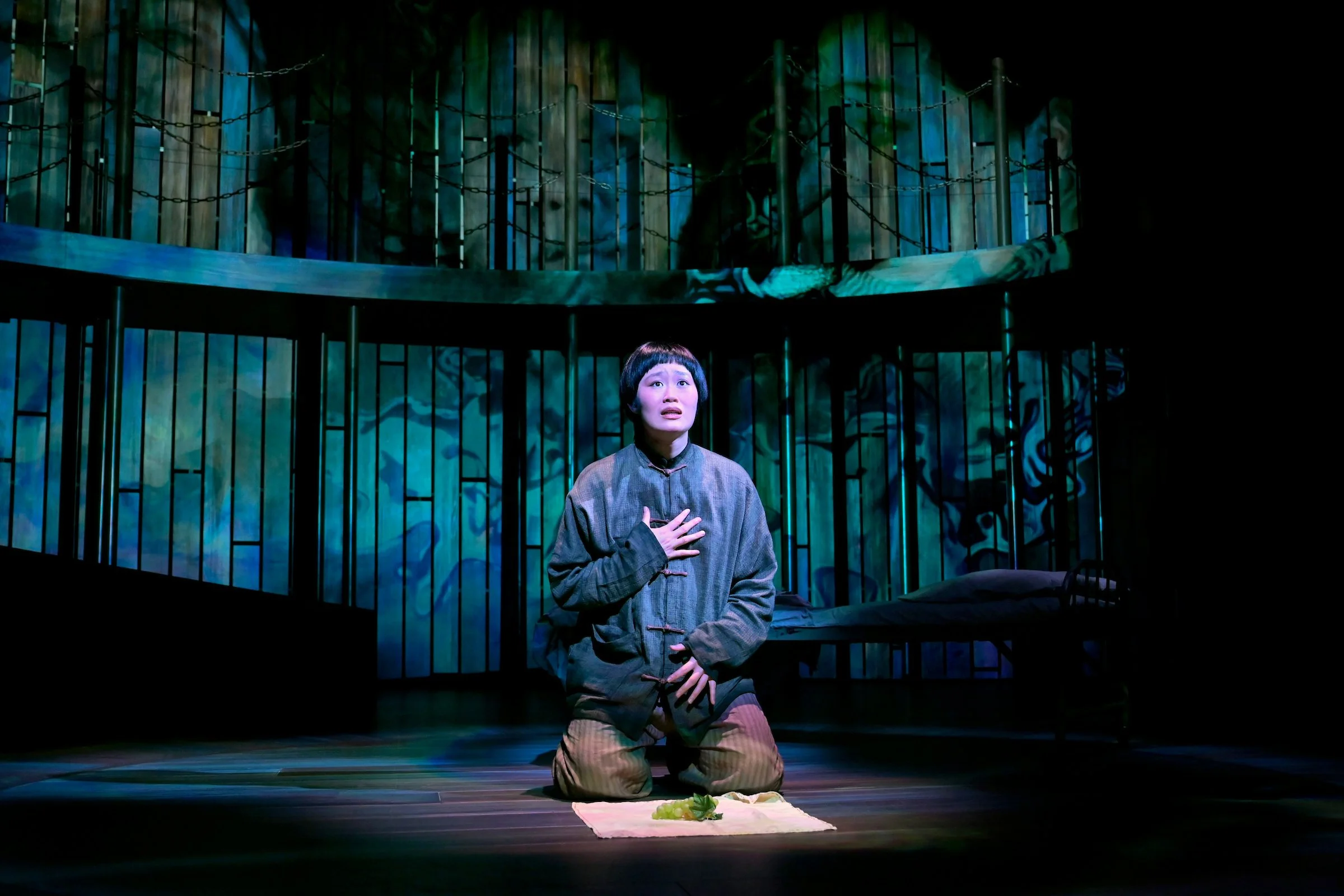
The Jesa ritual, centerpiece of the play, is beautifully realized with traditional food—grapes, chestnuts, shrimp, rice, oranges. They bow together, capturing the stillness and respect of the ancient ceremony.
When none of the sisters can recall the precise order of the rite, Liz googles “Jesa,” but the sites are all in Korean, which they cannot read. Playwright Yi presents their second-generation immigrant struggle simultaneously as comedy.
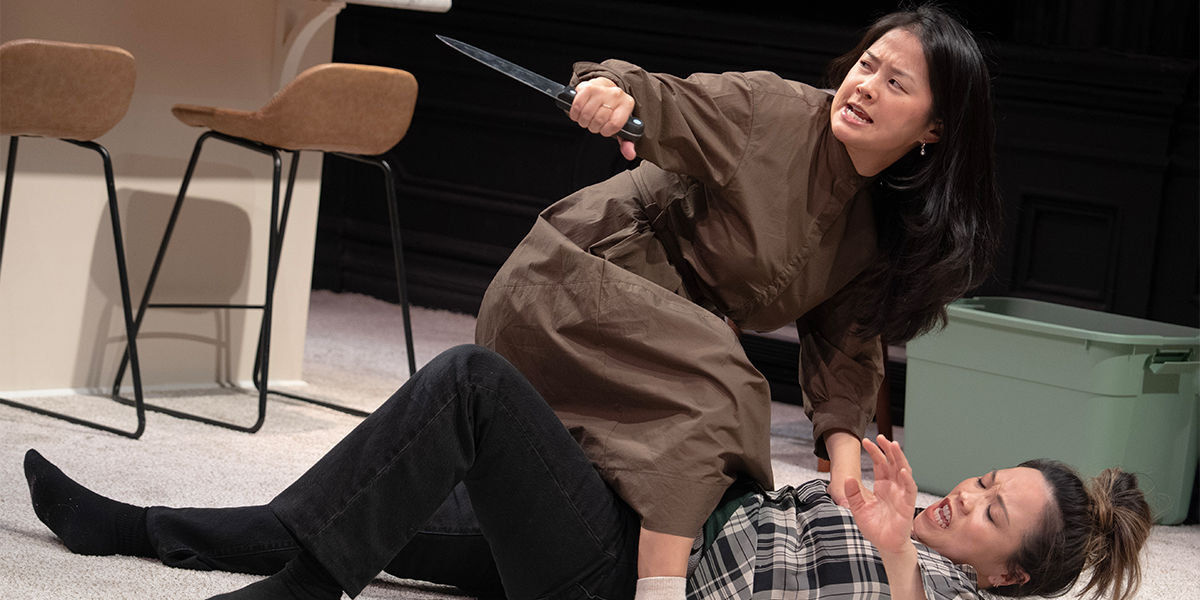
Over the course of the evening, as a physical fight breaks out, the shrimp is burned, the tablecloth is pulled off the ceremonial altar, and the electric candles are knocked over. Humor arrives at just the right moment: “This is why we don’t have real candles.”
All is recovered: sisters salvage the shrimp, the candles, and the altar. The ritual resumes, so that even the skeptical can acknowledge their parents’ spirits and transgressions. But the generational trauma remains. As she reflects on her own DUI and firing from her job, Liz speaks to her father’s photo, saying: “apple, tree.”
This Jesa provokes powerful changes. At the end, we find ourselves hoping that, by naming their trauma and admitting their imperfections, the sisters can move forward. A younger sister finally calls her older sister “Unnie,” the Korean term of respect.
One sister reassures another that her daughter will forgive her because she forgives their mother. Another asks the sister with the once-orderly beige house: “My far-from-perfect confused, loved sister, your whole life is waiting for you; what are you waiting for?”
The sisters are free to plan their next, less haunted, Jesa … in Vegas.
“Jesa” by Jeena Yi, directed by Mei Ann Teo, scenic design by You-Shin Chen, costumes by Mel Ng, lighting by Jeanette Oi-Suk Yew, and sound by Hao Bai, by Ma-Yi Theater Company, at The Public Theater, New York.
Info: publictheater.org - to April 12, 2026.
Cast: Tina Chilip, Christine Heesun Hwang, Laura Sohn, and Shannon Tyo.
Production Photos
View Photo Captions
- The knife comes out… Shannon Tyo, Tina Chilip
“Gods & Monsters” Evokes Tragedy & Laughter in Gay Hollywood Life—at NCTC
By: Sergio Martinez Reyes | Date: Mar 20
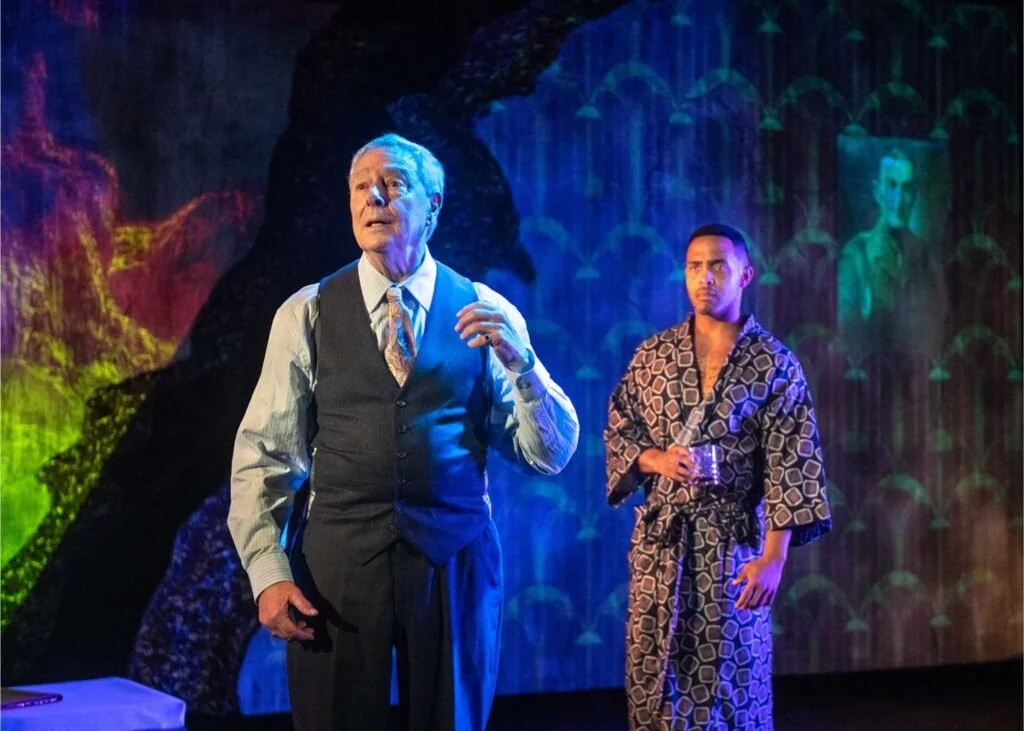
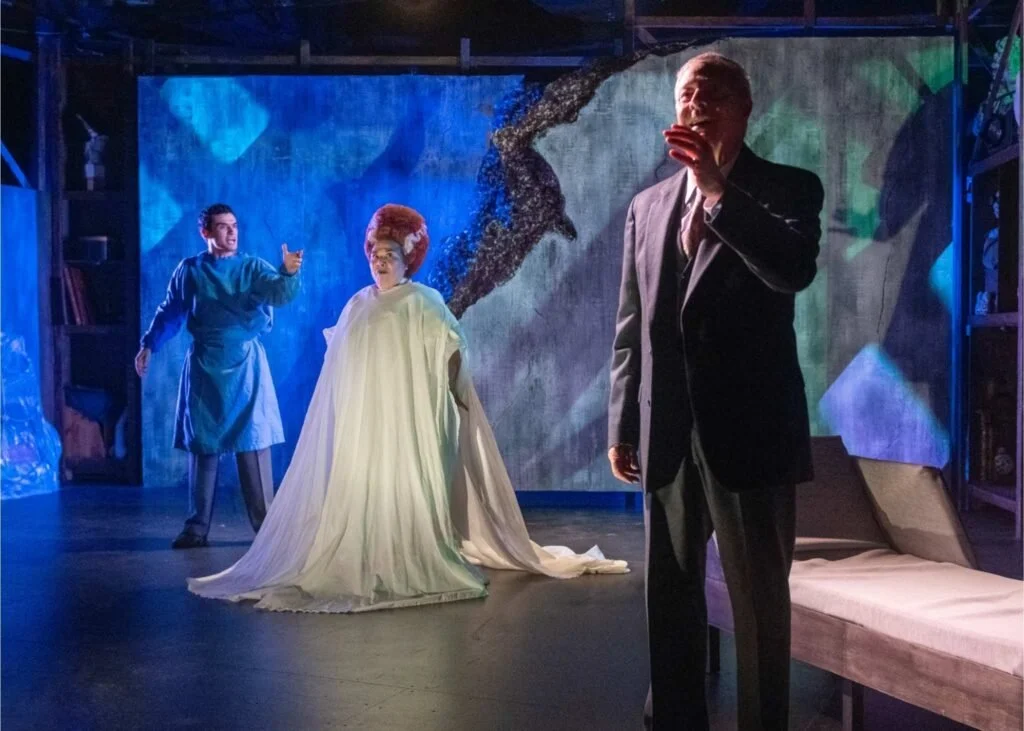
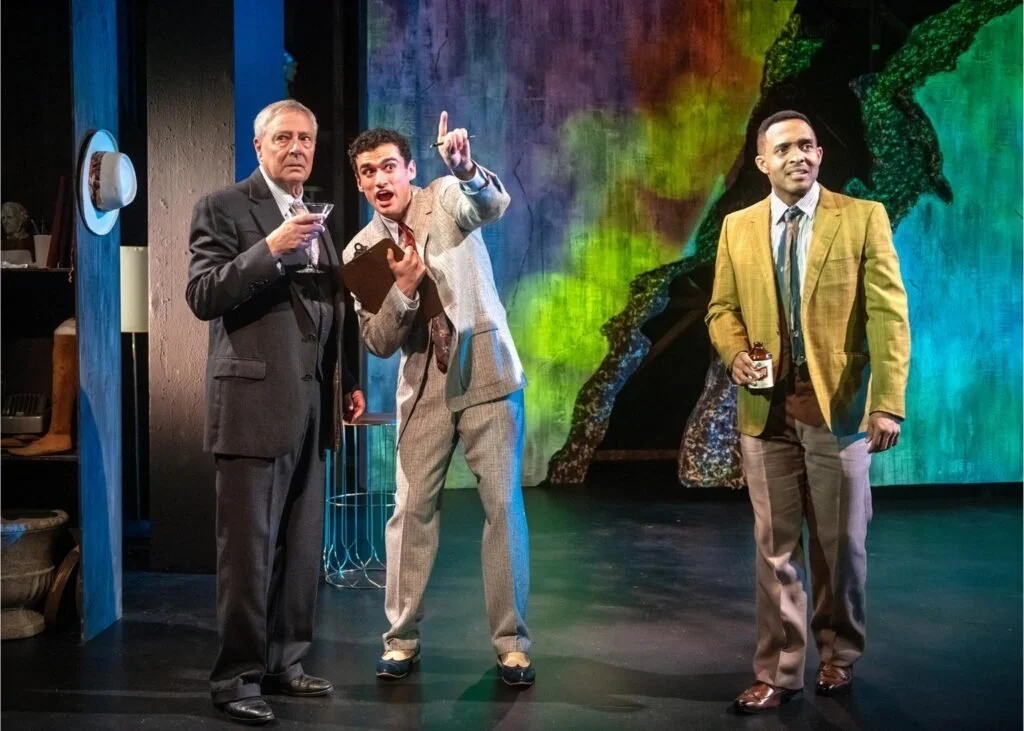
“Gods & Monsters,” a skillful and magisterially performed new play, depicts the life of famed movie director James Whale, who created Frankenstein, Bride of Frankenstein, and Show Boat—all classics.
Tom Mullen has adapted Christopher Bram’s 1995 novel about Whale into a biographical drama full of heart. Mullen’s play amplifies the Oscar-winning movie, also called Gods and Monsters. The play is sensual and intriguing, striking a chord between 50s McCarthyism and our present political crisis.
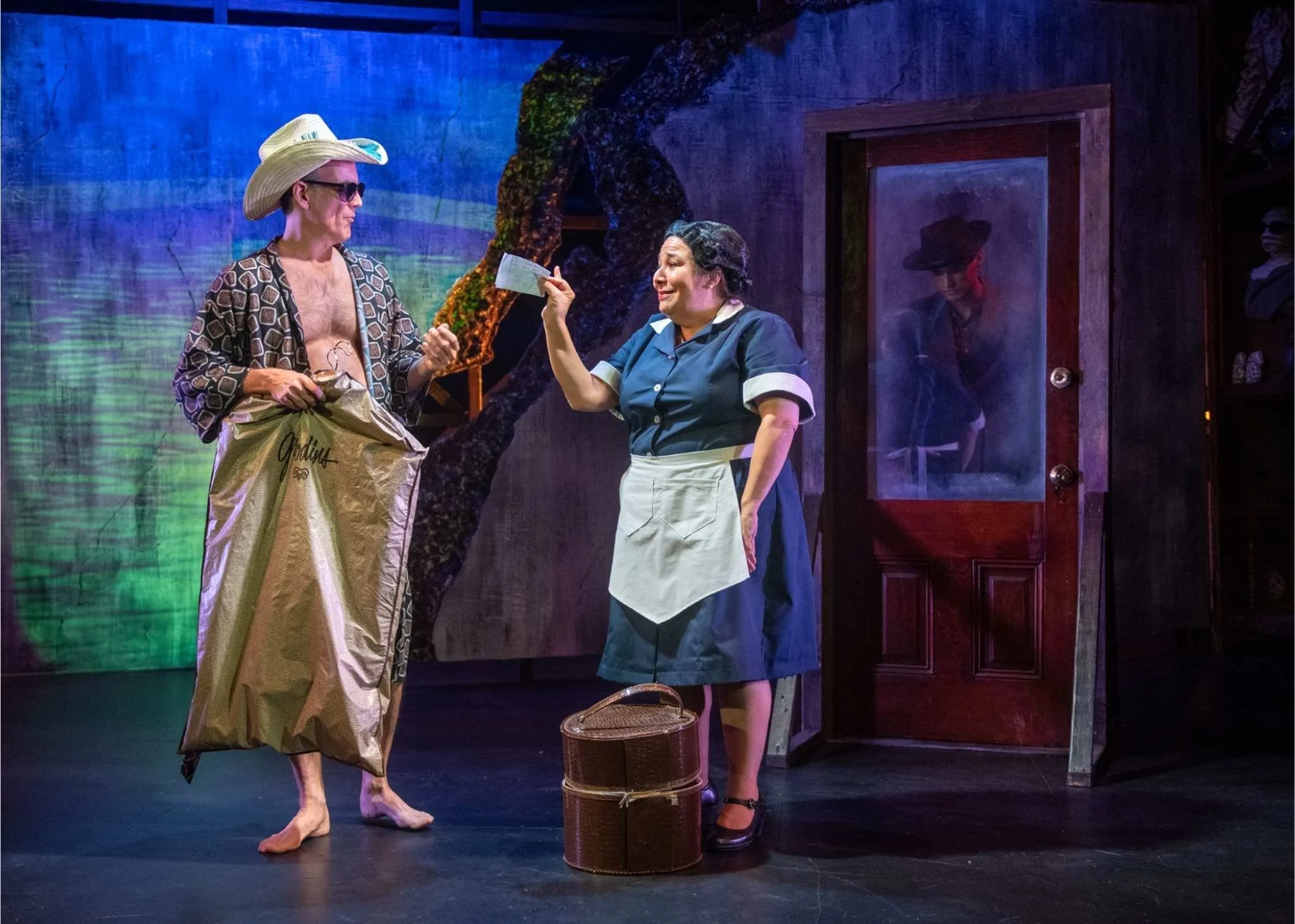
With Maya Linke’s dynamic stage design, Lana Palmer’s outstanding video effects, and five superb performances, “Gods & Monsters” transports us to old Hollywood—a gay Sunset Boulevard.
The play vividly depicts 50s political and sexual oppression, happening again today. When Maria (endearing Francine Torres) and Clayton (pitch-perfect Jason M. Blackwell) reveal the oppression of Mexican Americans and African Americans, we feel a shudder of recognition.
Maria and Clayton’s scenes expose the continuing racism against Black and Latinx people. Playwright Mullen exposes vicious racial and gay prejudice in his gripping and timely play, brilliantly.
The show swirls around Donald Currie’s profound, touching portrait of director James Whale, who changed the face of movies. Magnificently, Currie crafts Whale as a complex, multilayered older gay Brit, afflicted with brain fever and painful memories of the trenches of WWI. At every moment, Currie crafts a character trapped by gay hatred and social rejection, a dynamic and sensitive creation.
Currie’s physical comedy, drunk at a Hollywood party, or talking to star-struck student Edmund Kay (sparkling Tyler Aguallo), feels fresh and funny. Their interchange exposes the tyranny of gay oppression.
Blackwell’s Clayton Boone, an ex-Marine turned gardener, becomes a compelling character, both contained and powerful. Boone builds Clayton slowly, from restraint to rapture. As Currie tries to draw him and get him to reveal his body, we get to see Boone blossom—vulnerable, naked, and noble. A magnificent portrayal by Blackwell.
When Whale’s former lover David (bold Ryan Lee) comforts confused Whale, the play unveils the fear that pervades their gay lives. Watching the twists and turns of gay, Black, and Mexican sufferers, we realize that the haters are the real monsters.
Still, one of the most remarkable achievements of this tragic and powerful production is the exceptional role of humor. Aguallo, Currie, and Torres display comedic genius, pushing the wittiness to new heights.
College student Edmund’s awkwardness and naivete, and housekeeper Maria’s sharpness and stubbornness heighten our intimate engagement. The high comedy of Edmund’s hilarious interview/striptease and Clayton’s marijuana-enhanced conversations deepen their confrontations.
Outstanding performances, imbued with fear and frustration, lead us to understand that vulnerability leads us to eye-to-eye humanity. We see the connections in clips from Whale’s movies, including Paul Robeson singing “Old Man River” in Show Boat.
A wonderful and tragic symphony, “Gods & Monsters” amuses and alerts us to a wider world. “Gods & Monsters” reminds us of the power of art in the face of erasure and oblivion. See “Gods & Monsters” for a great night of theater, a delightful revelation of the connections that can save us.
“Gods & Monsters” —based on the novel by Christopher Bram, written & adapted by Tom Mullen, directed by M. Graham Smith, set designed by Maya Linke, sound & projections by Lana Palmer, lighting by Justin A. Partier, and costumes by Bethany Flores Deal, at NCTC, San Francisco.
Info: nctcsf.org – to April 5, 2026.
Cast: Tyler Aguallo, Jason M. Blackwell, Donald Currie, Ryan Lee, and Francine Torres.
Production Photos
View Photo Captions
- Tyler Aguallo, Francine Torres, and Donald Currie
- Donald Currie, Tyler Aguallo, and Jason M. Blackwell
- Ryan Lee and Francine Torres
“Takes All Kinds” Celebrates US, with Wit & Wisdom–at The Marsh
By: Barry David Horwitz | Date: Mar 17
It’s time again to enjoy the gaggle of folks that Dan Hoyle has lived with and recreated from across the country. Hoyle uses his rubber-face, his whole body, and his reportorial skills to bring other Americans home to us.
Dan, the popular S.F. journo-theater artist, has been touring the country with his hit show “Takes All Kinds.” Well-known for his his expressive physical presence, he is bringing us a remarkable embodiment of Americans with a magnificent range of beliefs and political opinions.
Hoyle’s latest one-man show, “Takes All Kinds,” offers a moving and timely look at contemporary America by acting out the actual words of a wonderful tableau from his travels.
Master mimic Hoyle showcases real Americans’ feelings about our broken politics and broken culture. Hoyle masterfully conjures one colorful character after another, leaving us wishing that the show would go on longer than its modest 75 minutes. He offers a master class in character creation.
Early on, Hoyle introduces us to one of the show’s key themes: How our deeply-held political beliefs have led to a tribal ‘us’ vs. ‘them’ mentality. Hoyle intently chips away at the dehumanization of the ‘other.’ Dan has the amazing ability to embody the common humanity of a fascinating and diverse cast of characters, with the flick of a wrist or wrinkle of an eyebrow.
From his interviews across the U.S., Hoyle has chosen the most remarkable and unforgettable characters, those who exert an outsize influence in our national elections.
In Florida, he attends a school board meeting in a county where the board has been taken over by members of the Proud Boys. There, a conservative mom reveals her reflexive disgust for the Bay Area: “Where are you from? Oakland, California? Oh, I’m so sorry.
Hoyle drives home how isolated we are from other folks.
Despite the often-serious tone, there are lots of laugh-out-loud moments. A Black woman in Las Vegas laments the rise of in-your-face racism in the Trump era. After Trump’s “victory” in 2016, she describes being threatened with rape by a truck full of young, raucous white guys. She seems more disappointed than frightened: “It’s a beautiful country, it really is. Shit, I just went to a twerking class.”
In a midwestern barber shop, he plays three Latino barbers who enjoy their friendly disagreements about the 2024 election. They have to work both day and night jobs and have no time to spend with their families.
Some of his interviewees make fun of Dan to his face, lovingly: “Hey, we got a hippy from Oakland here!” Others don’t trust him until he stays on long enough to prove himself. The hidden dynamic between the Journo-Actor and his cautious, honest friends keep the show dynamic.
Dan Hoyle, Bay Area treasure, is a Master Reporter and brilliant imitator. Hoyle knows Americans and brings them home to us, so we can understand and laugh in the company of our fellow citizens.
“Takes All Kinds” is a masterpiece of empathy, reporting, and channeling of citizens we would never meet ourselves. Don’t miss this new chance to discover the U.S. with Dan again.
“Takes All Kinds: Stories of American Democracy”—written & performed by Dan Hoyle, directed by Aldo Billingslea & Michael Moran, developed with Charlie Varon, at The Marsh, San Francisco.
Info: themarsh.org – to April 25, 2026.
Cast: Dan Hoyle (playing many roles)
Production Photos
View Photo Captions
- Dan Hoyle, Master of a Thousand Faces
- Dan Hoyle—Who is he now?
- Dan Hoyle—Journo-Artist
“Antigone (This Play I Read in High School)” Transforms Tragedy—at the Public
By: Andrea Libresco & Mary Cushman | Date: Mar 13
Before the lights go down, we see a girl lying on a couch with a fierce shag haircut, wearing Doc Martens and revealing a tattoo on her thigh. We know that this will not be the “Antigone” we read in high school. The costumes, set, and dialogue are in present-day style, providing witness to the strictures imposed on women’s bodies under patriarchal authoritarian rule, then and now.
The ensemble is outstanding, from classical heroes to comical cops, and an abortion provider—all pitch perfect.
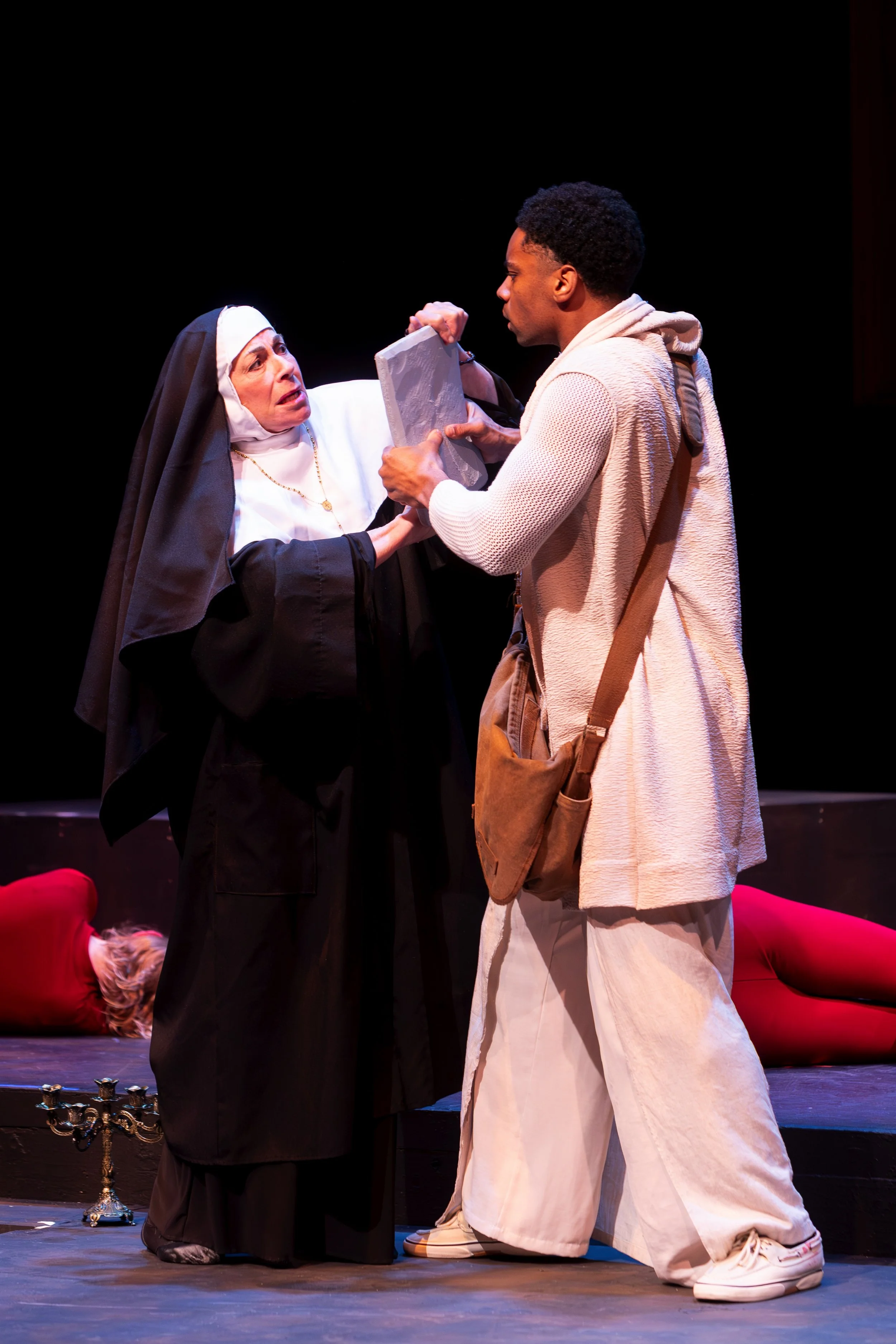
In the Greek tragedy, Antigone (gripping Susannah Perkins) defies her uncle, King Creon, by giving her brother a proper burial. In Anna Ziegler’s new version, pregnant teenager Antigone undergoes an abortion, which Creon has ruled punishable by death.
When Antigone refuses to apologize for defying the law, Ziegler reproduces age-old conflict: individual conscience vs. state authority, a woman’s body vs. the body of the state.
Playing Chorus/Narrator, Celia Keenan-Bolger tells us that a play she read in high school keeps popping up in her life. Marvelous in the role, Keenan-Bolger is amusing and self-effacing. This Chorus chats with us throughout the action, updating us about her awe at Antigone’s daring.
The action begins with Antigone sitting next to Chorus on an airplane and reading, yes, “Antigone.” Perkin is fearless, funny, and outspoken. What a contrast to King Creon, her uncle, a wonderfully nuanced Tony Shalhoub.
Shalhoub’s Creon gains our sympathy because he starts as a reluctant leader. He believes in the power of laws, which “turn feckless noise into an orchestra,” and understands that governing is hard. Creon longs for order.
The playbook of an autocrat is clear: lay down the laws and punishments in hours-long speeches, manipulate crowds, manufacture reality, and enforce “security.” The police and guards provide frequent comic touches to lighten the tragic plot, including accents and a recurring bit with a slowly falling sheaf of legal papers.
But the guards still carry out the leader’s law. After all, Creon reasons, “If I can’t control my own niece, I can’t be trusted with a city.”
In a climactic post-abortion scene, the newly empowered Antigone confronts her agitated uncle with her bodily autonomy. Antigone slowly removes her clothing while describing details—from a small facial scar to her bloody undershorts. She refuses to apologize for her messy woman’s body that bleeds.
Creon cannot control Antigone. Nor can he control the crowd, whose cacophony steadily increases, as bits of ceiling plaster drop to the floor. The autocrat’s world is literally falling around him.
Antigone and Creon are still worthy opponents. The age-old debate has come home. Both “My body, my choice” and “Uphold the rule of law” signs appear at today’s protest marches. We must ask who makes the laws, and do they serve all citizens or only certain ones? As Antigone asserts: “If there can’t be fair laws, let there be no laws at all.”
The present-day Narrator gets the last word, reminding us that, though this thrilling play must close, Antigone is “anti-gone.” She will not be erased. Nor will the Narrator. Nor will all women.
“Antigone (This Play I Read in High School)” by Anna Ziegler, directed by Tyne Rafaeli, scenic design by David Zinn, costumes by Enver Chakartash, and lighting by Jen Schriever, at The Public Theater, New York.
Info: publictheater.org - to April 5, 2026.
Cast: Raquel Chavez, Ethan Dubin, Celia Keenan-Bolger, Katie Kreisler, Susannah Perkins, Dave Quay, Tony Shalhoub, Calvin Leon Smith, and Haley Wong.
Production Photos
View Photo Captions
- Susannah Perkins & Celia Keenan-Bolger
- Tony Shalhoub & Susannah Perkins
- Tony Shalhoub. Photos by Joan Marcus
“Primary Trust” Comically Conjures Heroic Helpers—at TheatreWorks
By: Mary Lou Herlihy | Date: Mar 11
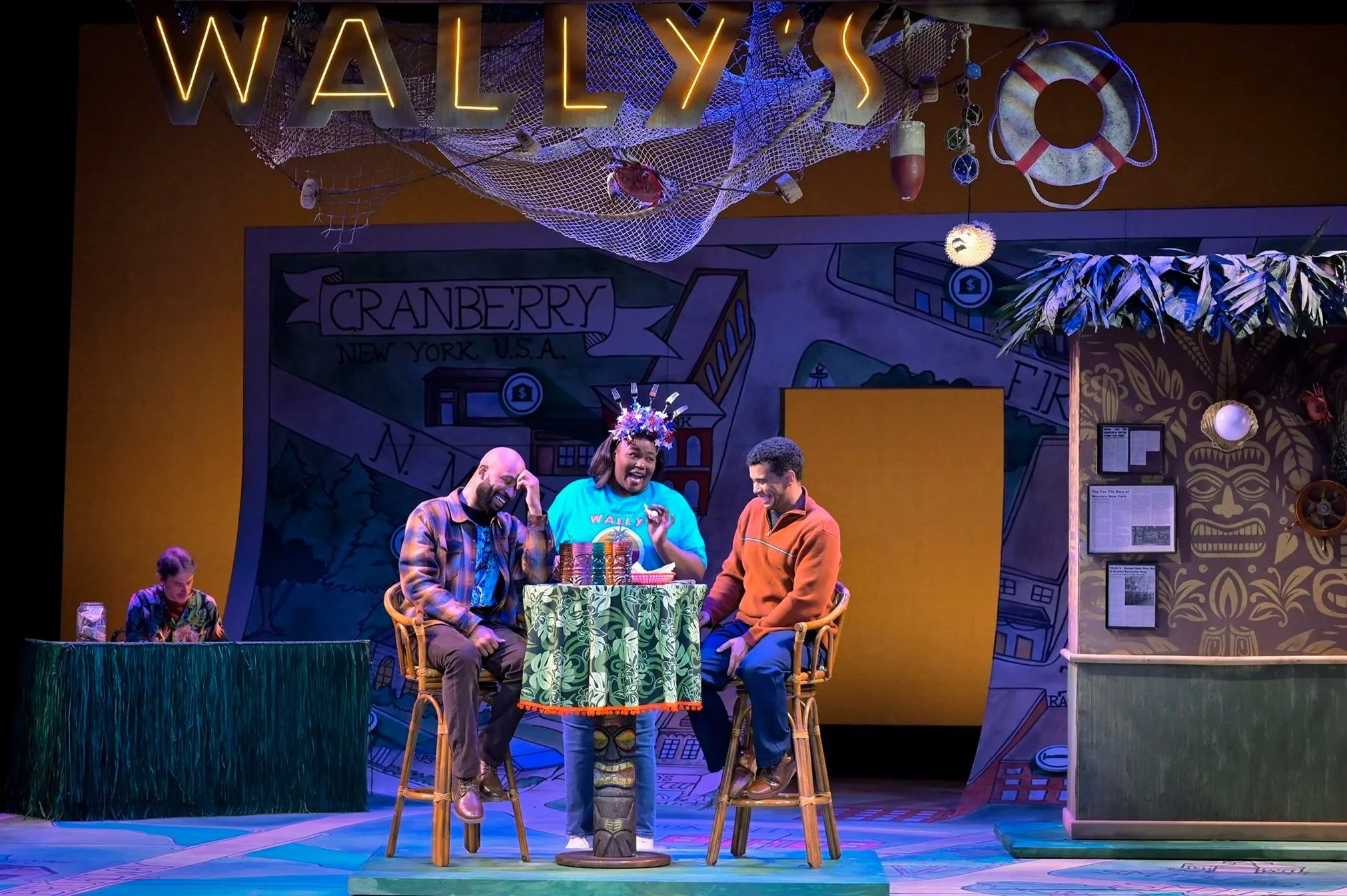
Crafty Pulitzer Prize winning playwright Eboni Booth humorously examines U.S. values that place profit over people. In the ‘mostly white’ and seemingly idyllic suburb of Cranberry, outside Rochester N.Y., life feels precarious for a young black man with no family.
With creeping gentrification and encroaching development—driven by greed— life is rough for the vulnerable. Booth tells an intriguing story about Kenny (magnetic William Thomas Hodgson), who falls through the cracks of a failed support system.
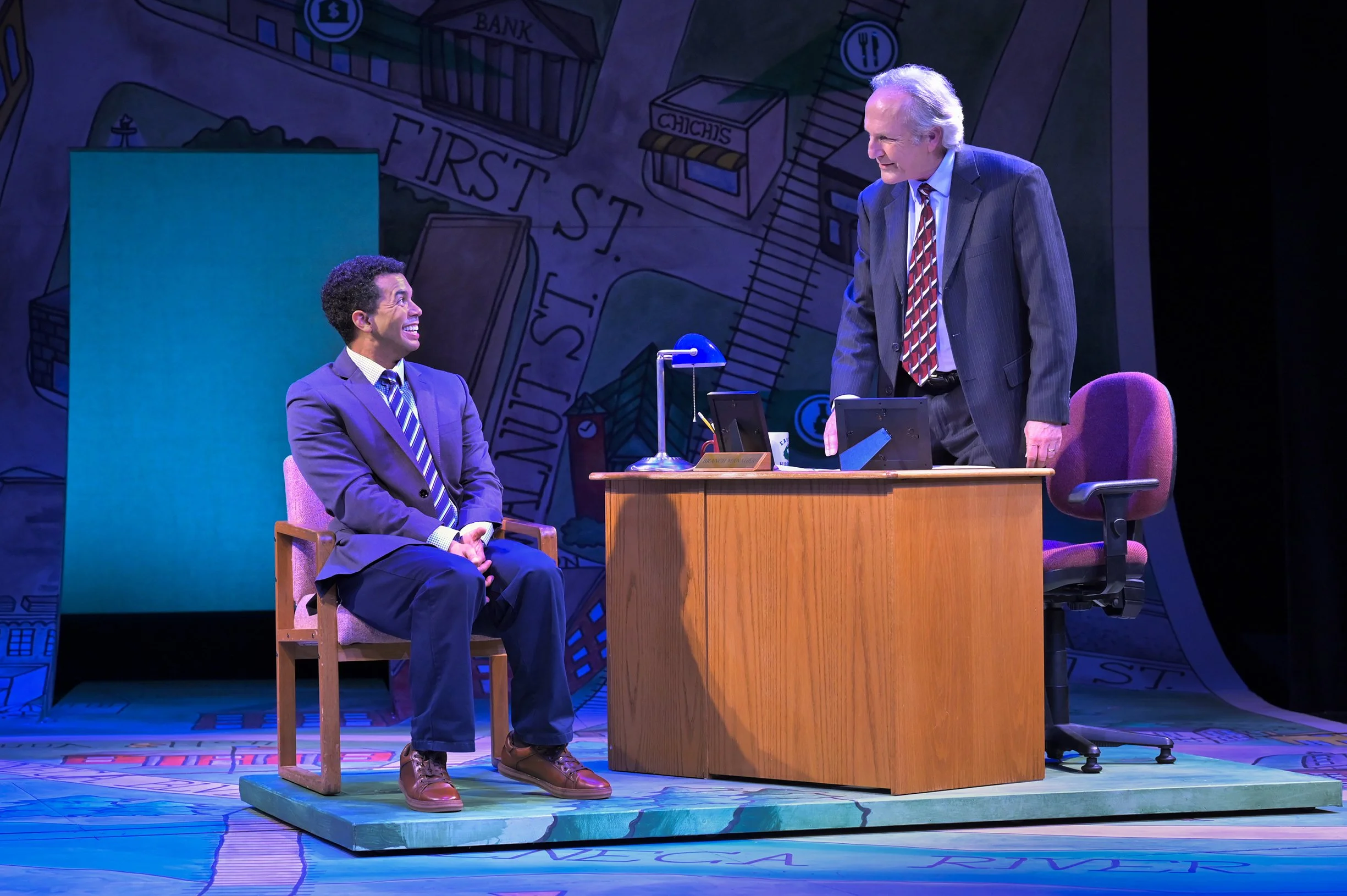
Hodgson delicately conveys Kenny’s shyness as he takes us on a ‘tour’ of Cranberry. A gigantic playful Google map spills off the stage as Kenny points out bars, banks, and the bookstore where he’s worked for the past twenty years. Only later do we learn about other places not shown on the map, the orphanage, and Kenny’s foster homes. At 18, he ‘aged out’ of foster care. Social Services found him a job at ‘Yellowed Pages’ bookstore where we find Kenny, twenty years later, unchanged.
Kenny speaks directly to us—a lot. He charmingly confesses his loneliness; but too much one-sided conversation has me craving more dramatic exchanges. When he meets with potential employer Clay (hilarious Dan Hiatt), Kenny’s palpable discomfort makes us squirm. We fear he might ‘blow it,’ but Clay’s playful manner puts everyone at ease. Reassuringly, some people care about a lonely man with no prospects.
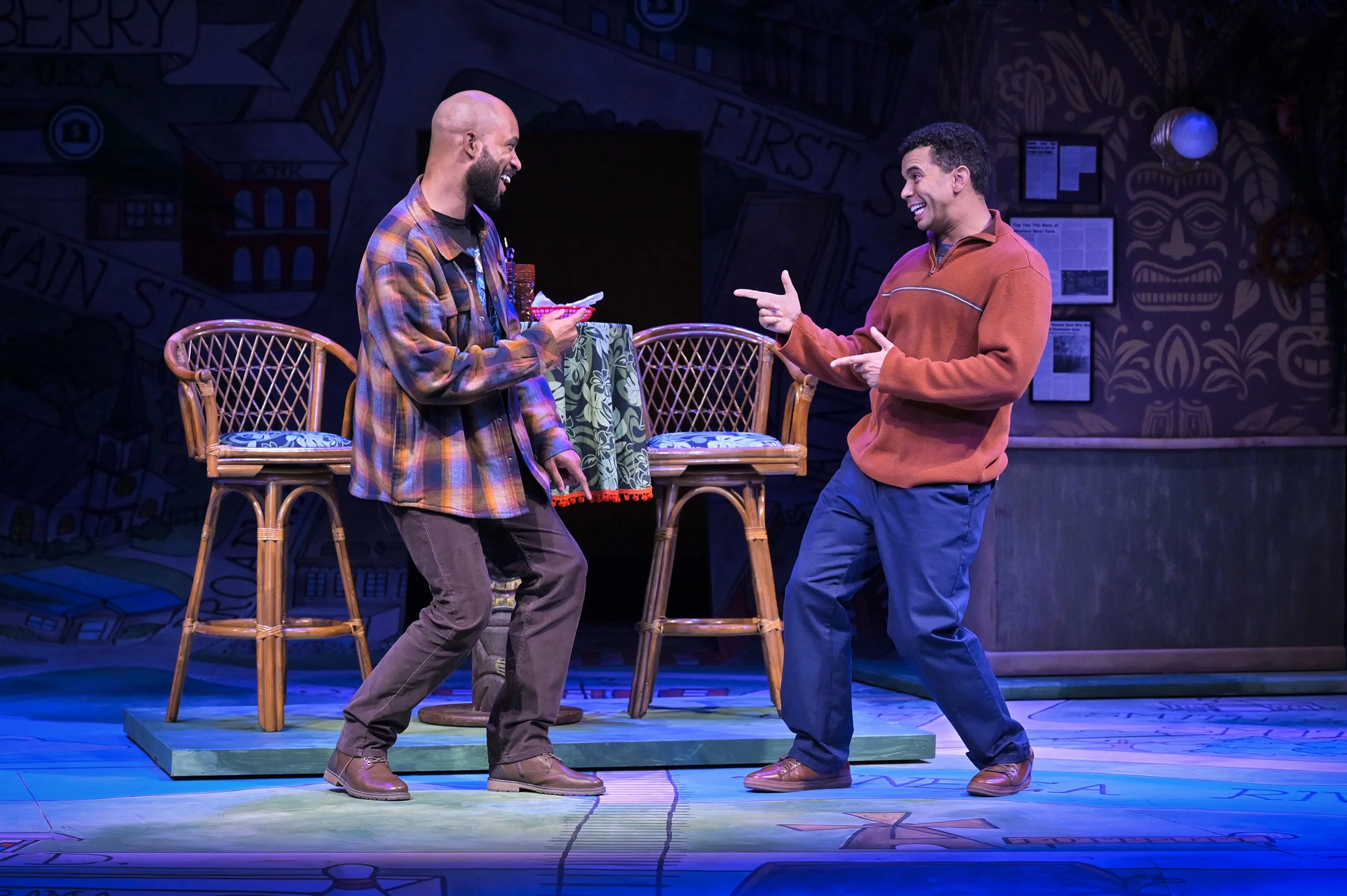
But Kenny has a lot to hide. He drinks Mai Tais every night at a Tiki Bar until he can barely walk home. He talks mostly to Bert (vibrant, upbeat Kenny Scott), who is Kenny’s drinking buddy, cheerleader, and ONLY friend. After repeated scenes of drinking, we learn a shocking secret about Bert.
Bert, portrayed with geniality and genius, appears in Kenny’s life during a time of desperate need. Nearly thirty years ago, Bert shared love and support when all seemed lost. Bert shows Kenny compassion in a world without trust. Their deep connection provides Kenny’s only lifeline.
An abrupt change presents opportunities. At Bert’s endless urging and coaching, Kenny accepts a job as a bank teller. Hilarity ensues. We hold our breath as Kenny learns what it takes to succeed.
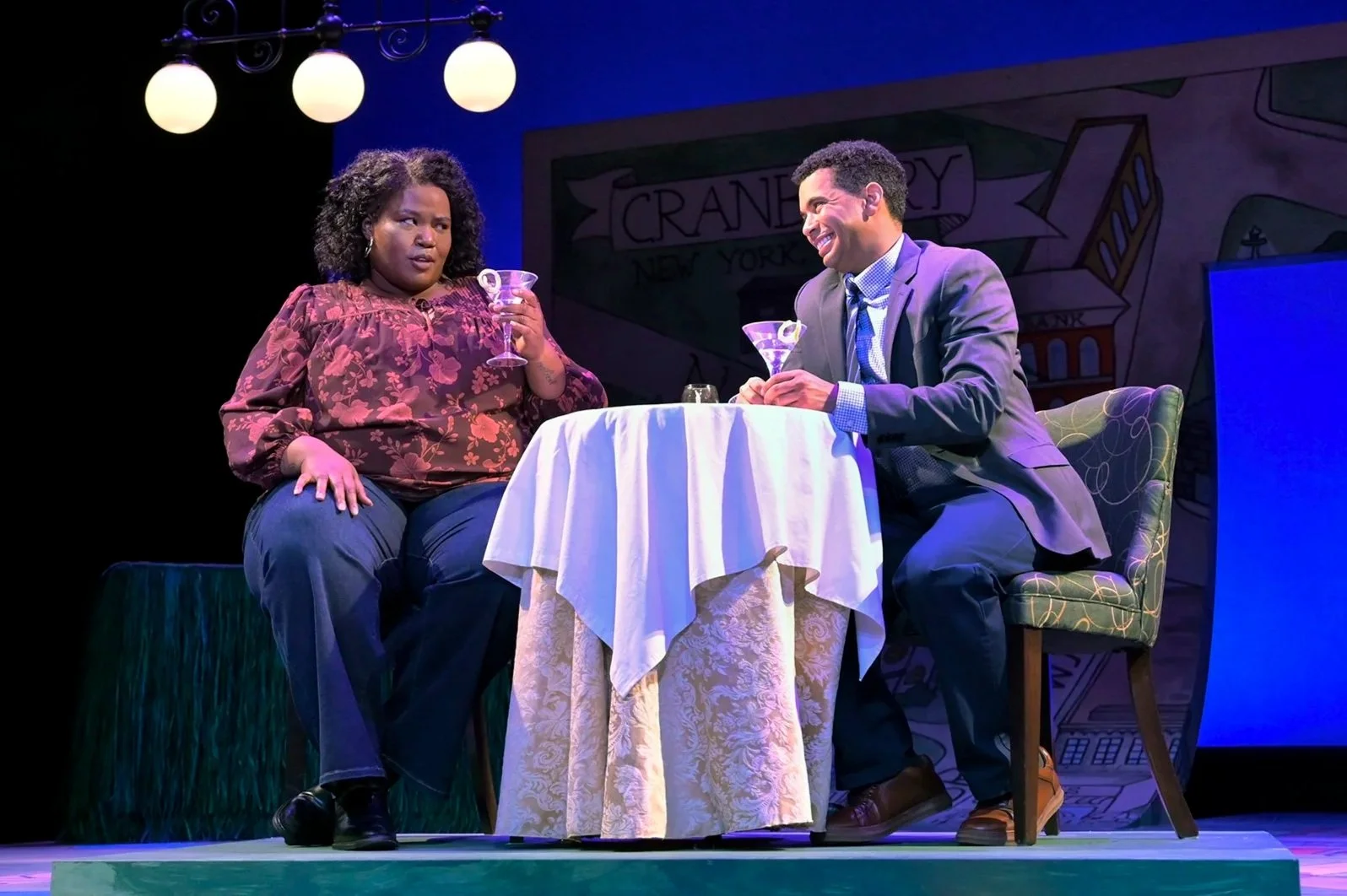
Laughs come frequently, mostly through quick and hysterical character changes of Rolanda D. Bell. Her lovely portrayal of the sensitive waitress Corinna shows compassion and acceptance of Kenny’s eccentricities. As Jonathan Erman plays melancholic music at the piano bar and the martinis flow, Kenny’s heartbreaking story comes spilling out, helter-skelter.
The show leans heavily on several repetitive devices: frequent blackouts and loud ‘DINGS’ from a service bell, indicating time shifts and the tyranny of time. Incessant and annoying, like iPhone notifications—it reminds Kenny, and us, of the constant pressure to keep up.
As Kenny learns to trust himself and others, he gains a new ‘family’ in the Primary Trust Bank. But can we trust Kenny’s future to such a fickle and profit driven institution? There’s plenty to think about in this award winning play from a gifted young playwright.
“Primary Trust” by Eboni Booth, directed by Jeffrey Lo, scenic design by Christopher Fitzer, costumes by Becky Bodurtha, lighting by Steven B. Mannshardt, sound by Gregory Robinson, at TheatreWorks Silicon Valley, Palo Alto, California. Info: theatreworks.org - to March 29, 2026. Cast: William Thomas Hodgson, Kenny Scott, Rolanda D. Bell, and Dan Hiatt.
Production Photos
View Photo Captions
- William Thomas Hodgson, Dan Hiatt
- Kenny Scott, William Thomas Hodgson
- Rolanda D. Bell, William Thomas Hodgson
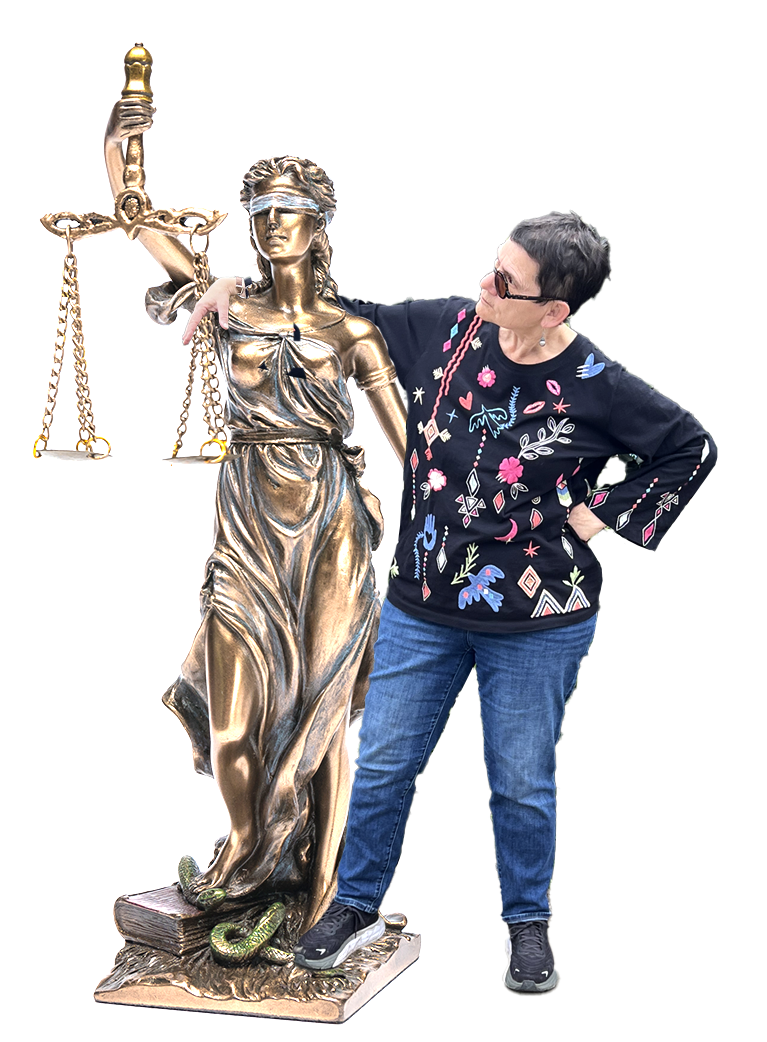
“Looking for Justice”: Trailblazing Feminist Judge Tells Shocking Tales—at The Marsh
By: Robert M. Gardner | Date: Mar 6
Amy Oppenheimer’s candid performance at the Marsh in Berkeley powerfully recounts her transformation from a wild hippie to a committed lesbian, lawyer, and judge. Her calm honesty strikes us as she recounts her decades of dawning awareness. Her show is lovingly called: “Looking for Justice (In All the Wrong Places).”
Oppenheimer, a petite woman, has a wry sense of humor and has no problem poking fun at herself. But her message is serious and deeply self-reflective. She identifies as a lesbian feminist, a realization that came to her slowly.
Oppenheimer started to realize that she enjoyed spending time with women more than she did with her boyfriends. We are privileged to listen in and learn about her evolution from a heterosexual hippie to a proud, fully committed lesbian.
She becomes a mother of two adopted biracial children and a champion for sexual justice.
A botched rape trial involving a friend becomes her motivation for a life dedicated to seeking justice. The funny, personal court trial inspires Amy to go to law school because she sees firsthand the injustice for both the survivor and the perpetrator.
The shocking case spurs her to go to school and then become an administrative judge. She transforms herself into an advocate for legal protections against sexual violence in schools and workplaces—a wonderful and unexpected journey. She plays a role in the “Take Back the Night” and “Restorative Justice” movements—telling incredible stories of the law’s resistance to change and how to jiu-jitsu the law.
When I was a college professor, I saw the positive effects on the campus with our first “Take Back the Night” events. Too often in our patriarchal society, women suffer in silence, and their perpetrator not at all. Amy shows us both sides of the law—for women and for men.
As the mother of a Black son, Amy is forced to deal firsthand with the racism that he endures daily. Her stories of defending her son in stores and schools shed new light on the life around us. In our present political crisis, we fear for the future of the many advances made by brave women like Amy. Where does she go from here?
There are opportunities after each of her shows to discuss other issues dealing with sexual violence and women’s rights. Oppenheimer shows that justice gives voices to victims. And second chances to perpetrators, too.
In closing, Oppenheimer voices a bittersweet observation: “Can we really find justice in an unjust world?” I’ve often wondered how we can ever achieve sexual equality when women and men are biologically wired so differently.
In today’s political turmoil, her work becomes more important than ever if we are going to make the workplace and schools safe and welcoming for everyone. Kudos to Amy Oppenheimer for speaking out and changing all our lives. Her show is charming, fun, and revealing.
“Looking for Justice (In All the Wrong Places)” –written & performed by Amy Oppenheimer, directed by David Ford, performance coaching by Julia McNeal, and tech by Sid Zhang, at The Marsh, Berkeley.
Info: themarsh.org - Sundays at 5:00 pm - to March 29, 2026.
Cast: Amy Oppenheimer(as herself).
Production Photos
View Photo Captions
- Justice and Amy
- Amy Oppenheimer. Photo by Scott R. Kline
“After Happy”: Climate Warriors Challenge ‘Family’ Oil Corp—at Central Works
By: Jenyth Jo | Date: Mar 5
On the morning I woke up to the U.S. bombing of Iran, stopping nuclear proliferation was the stated goal. I wondered about Iran’s oil and natural gas reserves.
Similarly, in Patricia Milton’s new play “After Happy,” younger climate commandos state they want to reduce carbon emissions from oil companies by any means necessary. In fact, other motives surrounding the future of Noble Oil emerge.
Niece Katherine (unrelenting Lauren Dunagan), fresh out of jail and on the run, arrives at 5:05 a.m. to confront her Aunt Brenda (compelling Jan Zvaifler). Katherine wants her comfortable and complacent aunt to look outside at the Hurricane Happy refugees living under blue FEMA tarps. Brenda is more interested in finding a queen for her Lake Charles’ Pirate Festival.
The intricate dance between aunt and niece goes nowhere until the charismatic Steph (passionate Rezan Asfaw) arrives in combat gear, packing heat in her backpack. Asfaw commands her scenes with brief gestures, curt expressions, and authoritative delivery.
She declares to her accomplice Katherine, “If you’re not a revolutionary, you’re a lazy scumbag.” She’s impatient and intense, but purposeful. We believe that Steph will use violence to achieve her goals.
What’s at stake? Simply the future sustainability of the planet in the face of rising greenhouse gases. But this script leaves too many holes in the cause-effect chain to urge a general audience into action.
Zvaifler’s Brenda begins to see, if dimly. Her struggle to reconcile her niece, the former carbon emissions compliance officer of their family oil company, to the current climate warrior is believable and poignant.
But Aunt Brenda spends her time planning the annual Pirate Festival, instead of admitting to the long-term consequences of her company’s fossil fuels. Brenda refuses to make the connection between emissions and superstorms.
Zvaifler succeeds in the challenging task of creating a plausible, wealthy white woman who avoids wielding her power. Eventually, she has to leave her contrived ignorance behind.
Dunagan’s Katherine sees herself as a hero and a prophet; but she reveals her true stripes as she chases the next climate action. Katherine is incapable of settling down to the difficult negotiations that would create permanent change. Is this the true attention span of Gen Z, we wonder?
Several surprising twists at the end leave audience members laughing, but some of us want more thoughtful laughter and less southern slang. There’s no climate hero in this play, just very human characters whose flaws will prevent them from achieving a noble goal.
Director: Gary Graves, Costumes by Tammy Berlin, Lighting by Gary Graves, Sound by Gregory Scharpen, at Central Works, Berkeley, California. Info: centralworks.org - to March 29, 2026. Cast: Jan Zvaifler, Lauren Dunagan, and Rezan Asfaw.
Production Photos
View Photo Captions
- Rezan Asfaw, Jan Zvailfer, and Lauren Dunagan
- Lauren Dunagan and Rezan Asfaw
“All My Sons” Explores Dark Side of Capitalism and Family—at Berkeley Rep
By: Emily S. Mendel | Date: Feb 28
No drama could meet the moment more than this transcendent, heart-wrenching 1947 Tony Award-winning play about two business partners and their intertwined families in which an innocent partner bears the brunt of the greed and cowardice of the other. By the end of the drama, no one is left unscathed by the single act of avarice and materialism that, in esteemed playwright Arthur Miller’s hands, becomes a symbol of the evils of 20th-century capitalism in America.
The outstanding actors in “All My Sons” include famous marquee names, Jimmy Smits ( NYPD Blue, The West Wing) and Wanda De Jesús, husband and wife in real life. Smits plays affable, self-educated business owner Joe Keller. With Joe’s partner and former next-door neighbor, he built a successful company that supplied airplane parts for World War Two aircraft. Joe’s wife is the troubled Kate (Wanda De Jesús).
A crucial character in “All My Sons” is Larry Keller, who never appears on stage but is at the heart of the Keller family’s action and psychodynamics. A WWII fighter pilot, Larry was lost overseas three years ago, but his mother Kate will not accept his death and move forward. We don’t understand her fierce conviction that her son is still alive. But her need becomes clear at the end of the single, very long day in which the action of this two-hour and thirty-five-minute play occurs.
With the end of the war, Joe wants to continue focusing on growing his business and leave it to his remaining son, Chris (excellent Alejandro Hernandez). Perhaps because Joe was a child of the Depression and grew up poor, he is consumed by the need for success and his desire to deliver generational wealth to his family.
But Chris has invited his brother’s former girlfriend, Ann Deever (MaYaa Boateng), to the Keller home. He’s working up the nerve to tell his parents that he is in love with Ann and they plan to get married. Into this cauldron comes Ann’s brother, George Deever (Brandon Gill), with disturbing news about his and Ann’s imprisoned father, who is Joe’s former partner. Actors MaYaa Boateng and Brandon Gill excel in their difficult roles as the sister and brother who have conflicting feelings about the Kellers and their own father.
Although not a word of “All My Sons” has been changed since it was originally written, the use of a multi-racial cast instead of an all-white cast, adds a brilliant new dimension to the taut drama. With the Puerto Rican Keller family and the Black Deevers, one can infer a layering of simmering racial tension to the already pressure-filled production.
Director David Mendizábal enhances his excellent production of “All My Sons” by keeping the drama tense, without turning it into melodrama. The entire cast of New York and Bay Area actors, including Cassidy Brown, Elissa Beth Stebbins, Regina Morones, and Brady Morales-Woolery, delivers powerful, first-class performances.
Toward the end of the play, Joe Keller, in an intense moment of conscience and guilt, admits that all soldiers matter as much as his son, that “They are all my sons.” The playwright’s message about the pain and damage caused by thinking only of oneself and one’s immediate family rather than working for society’s greater good is still tragically relevant today.
“All My Sons” by Arthur Miller, directed by David Mendizábal, set design by Anna Louizos, lighting by Russell H. Champa, costumes by Toni-Leslie James, at Berkeley Repertory Theatre, Berkeley, California.
Info: berkeleyrep.org - to March 29, 2026.
Cast: Jimmy Smits, Wanda De Jesús, Cassidy Brown, Brady Morales-Woolery, Elissa Beth Stebbins, Regina Morones, Alejandro Hernandez, Osiezhe Gboligi, MaYaa Boateng, and Brandon Gill.
Production Photos
View Photo Captions
- Wanda De Jesús and Jimmy Smits
- MaYaa Boateng and Alejandro Hernandez
- MaYaa Boateng and Brandon Gill
- Osiezhe Gboligi-John Gregory Bramah, Alejandro Hernandez, and Golden Globe & Emmy Award-winner Jimmy Smits. Photos by Kevin Berne.
“My Fair Lady” Spins & Sings Spectacularly into Our Hearts—at The Pear
By: Lauren Jiang | Date: Feb 26
Have you ever felt like you wanted to be up on stage with the actors? While watching “My Fair Lady” at The Pear, I was.
In director Sara Kannen Dean’s immersive retelling of Bernard Shaw’s “Pygmalion,” a classic rags-to-riches tale, the actors swirl into and around the audience, involving us in the action. Every audience member becomes an active part of the show.
“My Fair Lady” tells the story of a poor girl taken in by a rich man, betting he can transform her into a ‘lady.’ Sound familiar? Rom-coms like Pretty Woman, Miss Congeniality, and She’s All That follow this Cinderella trope.
What unfolds onstage is playful fun. Dean’s fresh, energetic staging and Lysander Abadia’s bright, dynamic choreography invigorate the 50s musical, making it new. The dialogue leaps to life, and the music transports us to the Edwardian era. The show’s themes are modern and relevant: a woman standing up for herself against the arrogance of powerful men who exploit women.
Following Shaw’s script, “My Fair Lady” shines light on the predicament of poor, uneducated people. High society here looks down on poor people and ridicules their inability to speak the Queen’s English. Prof. Henry Higgins transforms a girl selling flowers on the street into an image of poise and grace. But, at what cost to the young woman?
In the musical, expert linguist Henry Higgins condescends to “flower girl” Eliza Doolittle, but she ultimately remains true to herself. Her authenticity impacts every Londoner she meets—regardless of class. After learning to act like a “lady,” she must grapple with her new, posh façade.
Will Eliza stay true, or become a snob herself? The musical deploys Shaw’s comedic critique of a prideful, ignorant ruling class. The classic musical celebrates Eliza over her stubborn teacher.
As Henry Higgins, Melissa Mei Jones embodies his rational, logical, and blunt personality. I love Jones’ gender-bending role, casting a critical lens on “Why Can’t a Woman Be More Like A Man?” As Colonel Pickering, Thomas Nguyen creates a stellar portrait of Higgins’ sympathetic sidekick. Jones and Nguyen make a comradely bantering duo.
As Eliza, Corinna Laskin is engaging and magnetic. Her expressions and animated persona expand Eliza’s evolving personality. Laskin demonstrates a charming mastery of Cockney and standard British accents.
“My Fair Lady” is rounded out with talented supporting characters. Ray D’Ambrosio brings humor and charm as Eliza’s drunken, fun-loving father, Alfred P. Doolittle, a genial garbageman. D’Ambrosio’s lively numbers always get the ensemble dancing.
Sarah Thermond shines as Higgins’ hardworking housekeeper, Mrs. Pearce, a voice of humanity against her stubborn employer. Ralph Shehayed brings light as Freddy Eynsford-Hill, who adores Eliza. Debra Lambert is no-nonsense as Mrs. Higgins, the queenly mother.
The ensemble thrills, sporting many hats, including a large white flower hat and a baby bonnet. Some actors double as musicians. Their skills shine when playing instruments, along with singing, dancing, and acting!
This show delivers delight and joy, and bursts with creative twists and turns. For a whimsical outing, don’t miss it! You’ll leave with a smile on your face.
“My Fair Lady” –book & lyrics by Alan Jay Lerner, music by Frederick Loewe, direction by Sara Kannen Dean, choreography by Lysander Abadia, musical direction by Debra Lambert, set design by Louis Stone-Collonge, costumes by Trish Files, lighting by Carsten Koester, sound by Chris Beer, at The Pear Theatre, Mountain View, California.
Info: thepear.org - extended to March 14, 2026.
Cast: Emily Acosta, Ray D’Ambrosio , Lela Gannon, Kristin Hill , Corinna Laskin, Melissa Mei Jones , Thomas Nguyen, Skyler Riordan , Ralph Shehayed, Adam Strauss, Sarah Thermond, Alex Walleman , Mark Wong, Qian Zhang, and Debra Lambert.
Production Photos
View Photo Captions
- Alex Walleman, Corinna Laskin, Mark Wong, Adam Strauss
- Corinna Laskin, Melissa Mei Jones
- Ray D’Ambrosio with the Cast
“Left Field” Swears Hilarious Gay Prez into Office—at Rhino
By: Bevon Benet Brye | Date: Feb 26
In the intimate Theatre Rhinoceros, John Fisher has ignited a dazzling political celebration. His latest work, “Left Field,” takes a “what-if” joyride through the halls of power. As playwright, director, and actor, Fisher manages both a fever dream and a spirited commentary on our national crisis.
Fisher plays Delson Stammer, a foul-mouthed, unapologetic AIDS activist who swears his way from the streets of San Francisco to the West Wing. Fisher’s premise feels wonderfully absurd and oddly prophetic.
He leans into the comedy with a delightfully cheeky tone: the dialogue sparkles with cynical wit and the intellectual snark that San Francisco audiences love.
Stammer explodes like a human firework tossed into the beige machinery of Washington. The play’s brilliance lies in balancing “out of left field” humor with the righteous passion of a gay man who survived the plague years. Stammer refuses to play “nice.”
Fisher hammers home our inversion of social hierarchy, with Stammer declaring, “People living with homelessness are the saints, the nobility, the conscience of our culture…”
The four actors bring visceral intensity to the homeless, our “saints” of the sidewalk. Stammer argues that homelessness must be a moral frontline issue. That sentiment turns every interaction into a spiritual trial. Stammer weaponizes identity politics against the status quo, while his opponent Dante (impressive Raphael Buenaventura) navigates between radical activism and healthcare regulations.
The tension peaks when Stammer rejects the polite language of the establishment, snarling, “I’m not progressive. I’m a fatherfucking Communist.”
Fisher also highlights women’s issues through Emerald (multi-talented Elena Swarz), who balances motherhood against Stammer’s demands. And Stammer’s sidekick Keble (spot-on Gene Mocsy) urges him toward national fame. The cast transforms the stage into a kaleidoscopic San Francisco where the marginalized become the new nobility.
What truly elevates this production is the spectacular physicality. In a venue where every breath is audible, the actors move with a choreographed energy that makes the small stage feel as expansive as a campaign trail.
Fisher turns aisles into corridors of power. The actors crawl, dance, and collide, creating a kinetic energy that mimics the breathless pace of a high-stakes election.
However, from a Black perspective, the fire in “Left Field” occasionally cools. While the play expertly deconstructs the LGBTQ+ political experience, the lack of Black representation in a play set in the vibrant melting pot of San Francisco feels like a missed opportunity.
For a multiracial spectator, the revolution feels slightly incomplete, as the stage could more fully reflect the diversity of the community it seeks to champion.
Still, “Left Field” remains a sharp, virtuosic comedy commanding immediate attention. The talented cast earns their laughs with a wicked, satirical sparkle.
If you want to see the Oval Office upended by a leader who chooses truth over optics, Fisher’s latest is a warming fire. Come and enjoy a celebration of US.
Creative Team: John Fisher, Raphael Buenaventura, John Fisher & Aaron Simunovich, Colin Johnson, Crystal Liu & John Fisher, Crystal Liu. Info: therhino.org – to March 15, 2026. Cast: John Fisher, Gene Mocscy, Elana Swartz, and Raphael Buenaventura. Understudy: Ma’Sherrod Swinson.
Production Photos
View Photo Captions
- Elana Swartz, John Fisher, & Gene Mocscy
- John Fisher in the snow storm
“M. Butterfly” Explores Male Denial Through Artful Lens—at S.F. Playhouse
By: Mary Lou Herlihy | Date: Feb 14
In a glittering spectacle skewering toxic masculinity, “M. Butterfly” exposes arrogant men who subjugate women and drag US into endless wars. In stark contrast to the stunning artistry on stage, David Henry Hwang’s witty, groundbreaking, and confrontational play is full of elites like Trump and Musk, who believe the world is theirs to exploit.
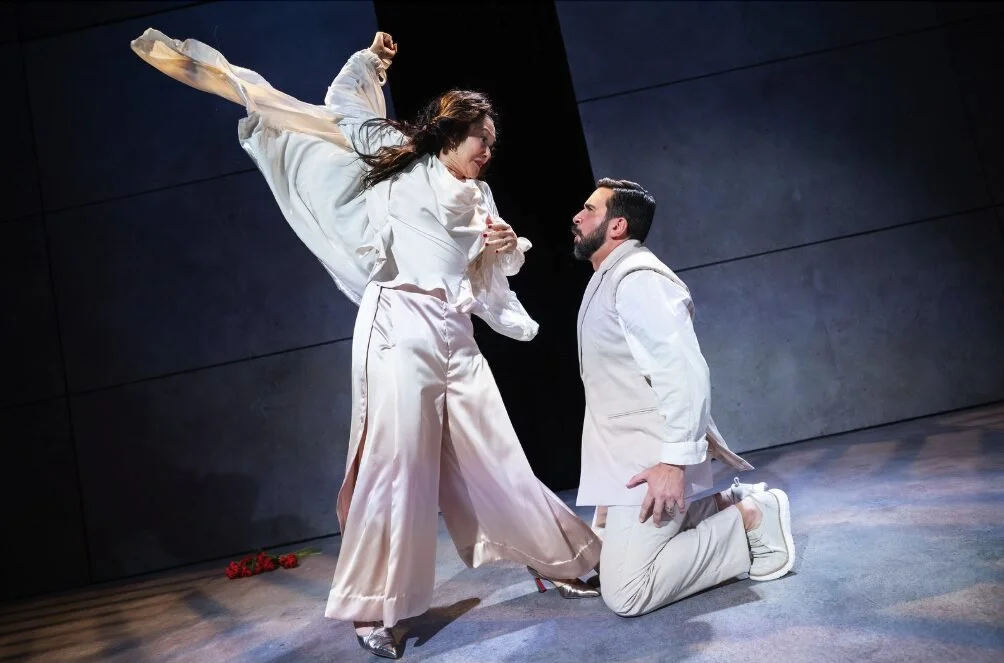
Through a clouded lens of memories, dreams, and imaginings, French diplomat Rene Gallimard (brilliant Dean Linnard) recounts his romance with Peking Opera star Song Liling (breathtaking Edric Young). Linnard unspools Gallimard’s self-delusions from a prison cell in France, as a spotlight falls on his slumped body.
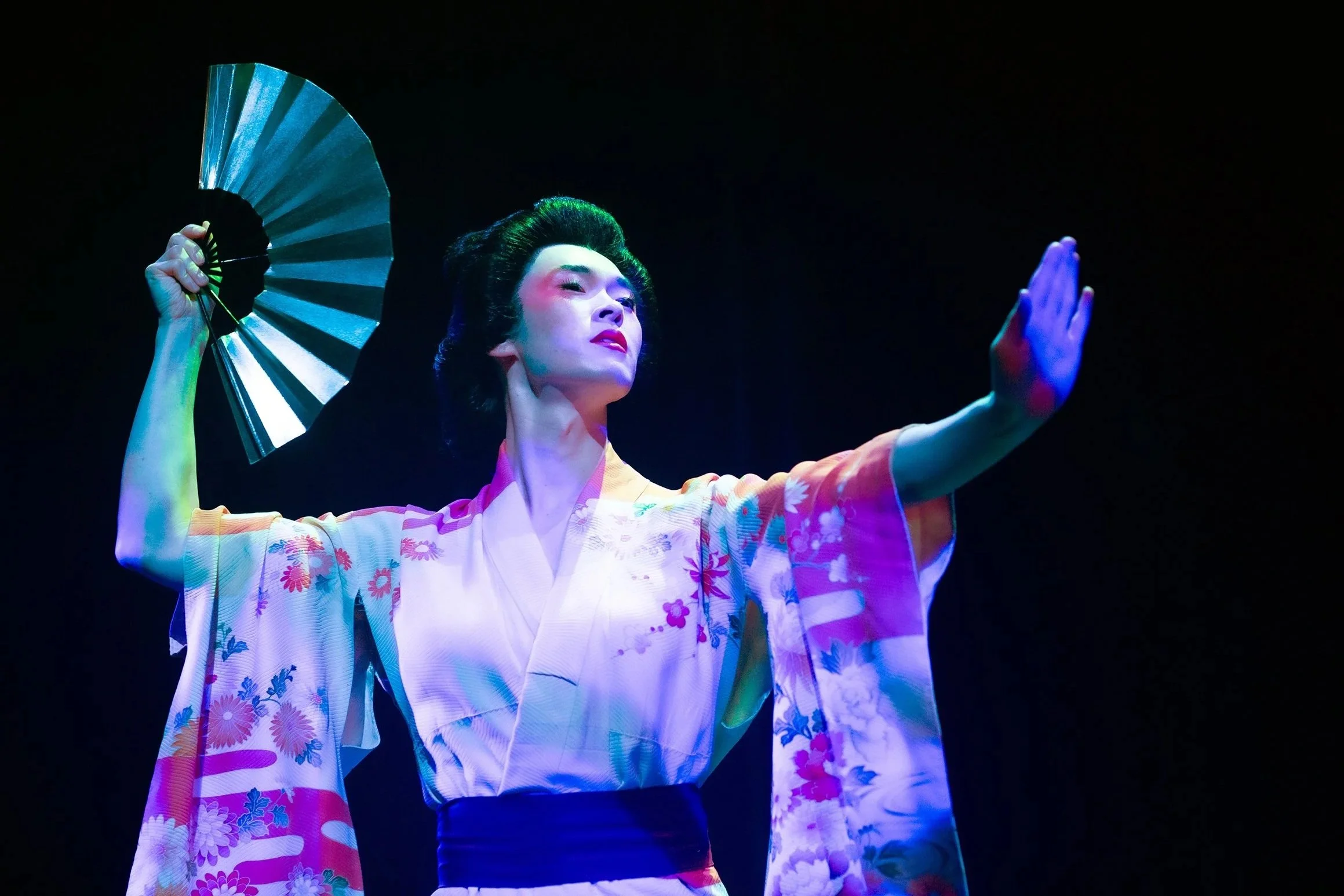
In glorious silk costumes as the delicate Song, Young transforms himself into a seductive and complex woman—another riddle to unravel. His every movement attracts and confounds.
Song becomes Rene’s obsession, appearing first in full operatic regalia, in the death scene from Puccini’s Madame Butterfly. Based on a shocking true story, the diplomat in China pursues his torturous love affair with Song for twenty years. He claims he did not know “she” was a “he.”
Hwang explores the depths to which ignorance, denial, and a desire to DOMINATE, poison relationships—both Gallimard’s inscrutable relationship with Song AND Westerners’ fragile relations with Southeast Asia. Rene’s position as a low-ranking French diplomat is caught up in trickery between France and the US, vying for control of Vietnam. As a disposal diplomat, Rene grasps for power but desperation makes him an easy pawn.
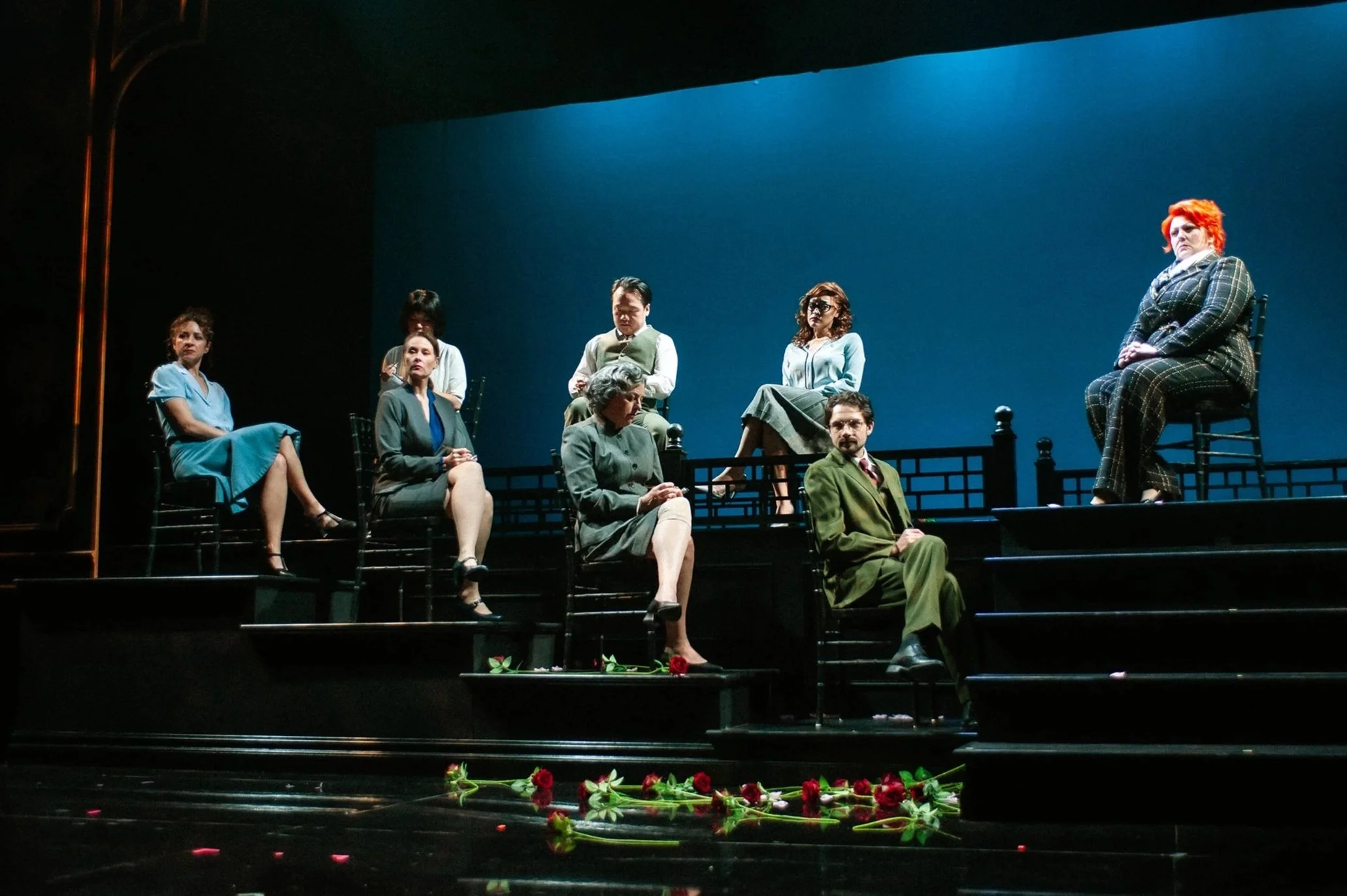
Director Bridgette Loriaux fills the stage with graceful movement and sly humor. The stunning courtroom scene, with hundreds of roses still strewn about the stage, presses the outstanding supporting cast into dramatic service. They sway, slump, and turn their backs as the two lost lovers muck through their past.
The delightful Andre Amarotico plays Gallimard’s womanizing sidekick, winning laughs and groans as he brags about bedding 300 women. Hilariously, he tries to talk shy Rene into seductions. It’s like he’s describing a trip to Epstein’s Island: “We don’t have to be respectful, we’re foreign devils.” The abhorrent ways in which he treats women, particularly Asian women, mirrors Western arrogance.
After meeting Rene, Song says to him: “It’s one of your favorite fantasies, isn’t it? The submissive Oriental woman and the cruel white man.” As Song, Young wears colorful, layered costumes until he reveals his true self.
Magnificent gold and black lacquer arches provide rich operatic apertures through which to focus the delusional ignorance of Western Men. In a perceptive dig, Song asserts, “Education has always been undervalued in the West.”
The extraordinary supporting cast shines. Amanda Pulcini and Elena Wright bring humor and humanity to their roles. As M. Toulon, the French ambassador, Stacy Ross perfectly embodies the Oriental/Occidental dichotomy of the play. She is simultaneously yin and yang, male and female, shadow and sun—and hilarious.
In SF Playhouse’s production of the 1988 Tony Award-winning play, pacing slows at times but Hwang’s insightful critique of Western arrogance cuts deeply. All these consummate actors deliver a dreamy, erotic, and profound evening of theater that lingers long after the rousing ovations.
“M. Butterfly” by David Henry Hwang, directed & choreographed by Bridgette Loriaux, scenic design by Randy Wong-Westbrooke, costumes by Keiko Carreiro, lighting by Michael Oesch, sound by James Ard, at San Francisco Playhouse, San Francisco.
Info: sfplayhouse.org – to March 14, 2026.
Cast: Andre Amarotico, Anthony Doan, Dean Linnard, Catherin Luedtke, Amanda Le Nguyen, Amanda Pulcini, Stacy Ross, Adria Swan, Storm White, Elena Wright, and Edric Young.
Production Photos
View Photo Captions
- Edric Young
- Amanda Pulcini, Aleisha Lew, Elena Wright, Anthony Doan, Stacy Ross, Adria Swan, Andre Amarotico and Catherine Luedtke
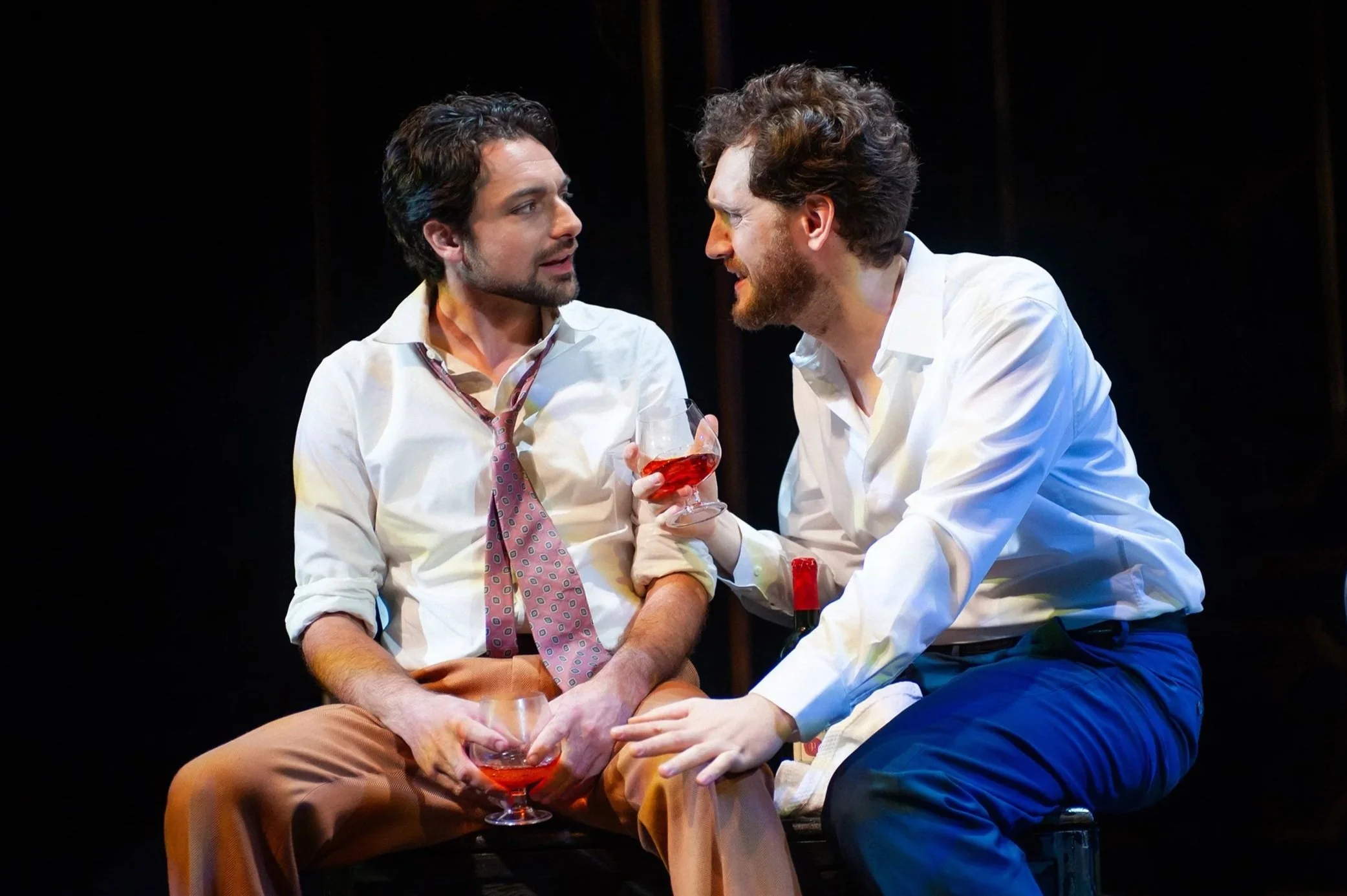
- Andre Amarotico and Dean Linnard
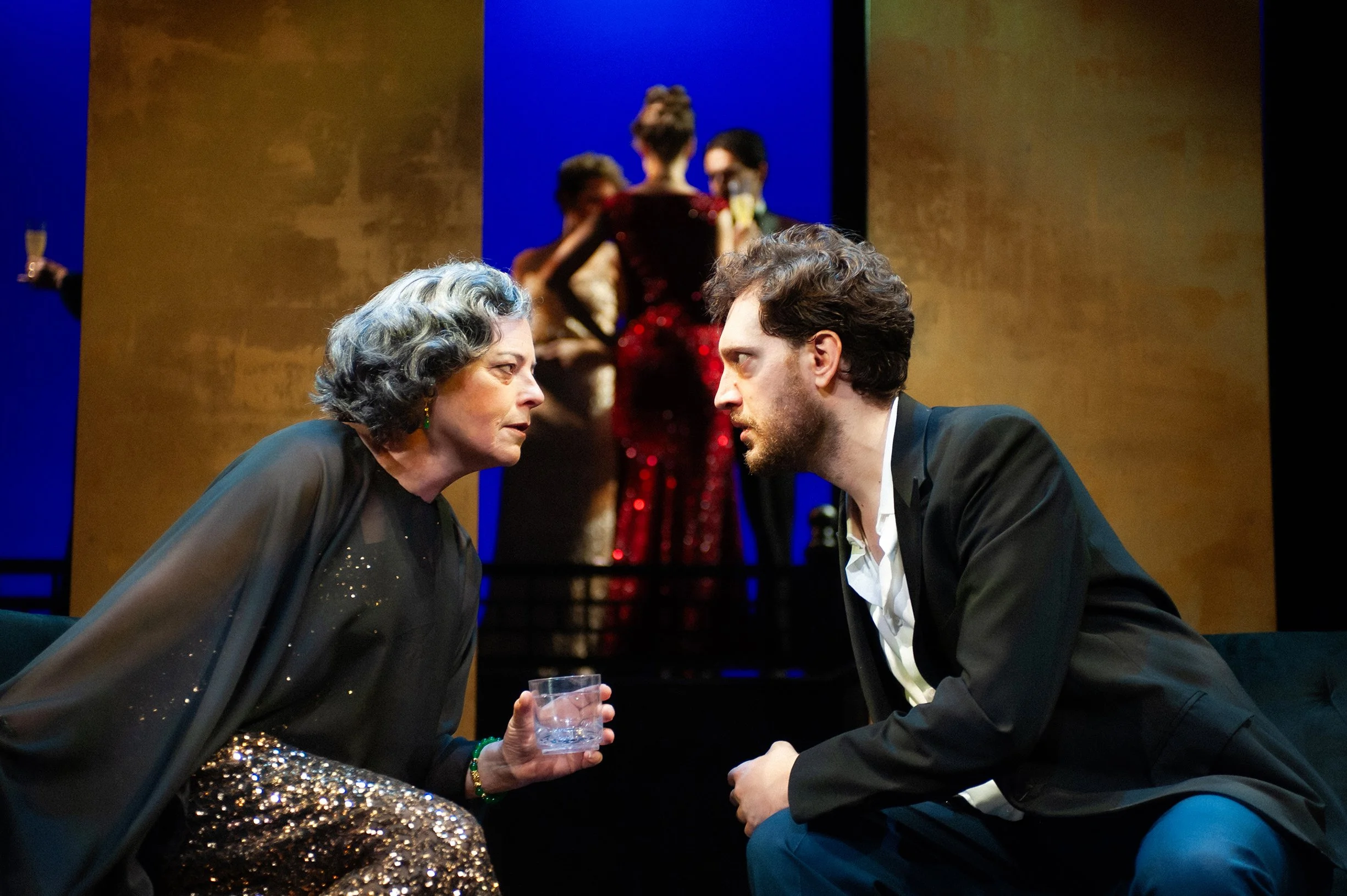
- Stacy Ross and Dean Linnard
“Improbable Fiction” Saves the Best for Last—at Masquers
By: Zack Rogow | Date: Feb 10
I don’t want to be the spoiler, but I’ll just say that Act I of “Improbable Fiction” is as different from Act II as Kansas is from Oz. And yet …the two parts of Alan Ayckbourn’s comedy are connected, just as the people around Uncle Henry and Aunt Em’s farm in The Wizard of Oz metamorphose into the characters in the Emerald City.
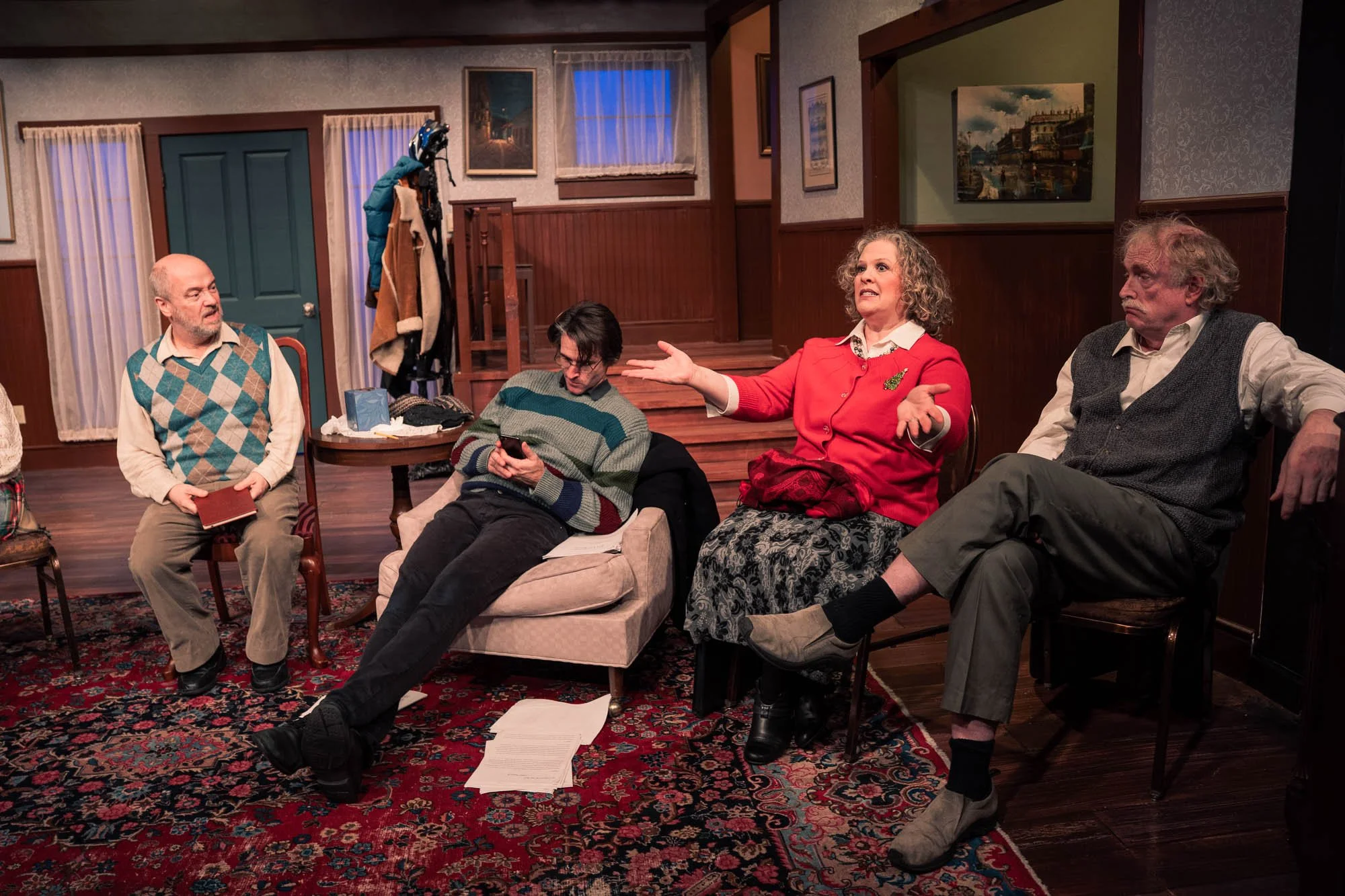
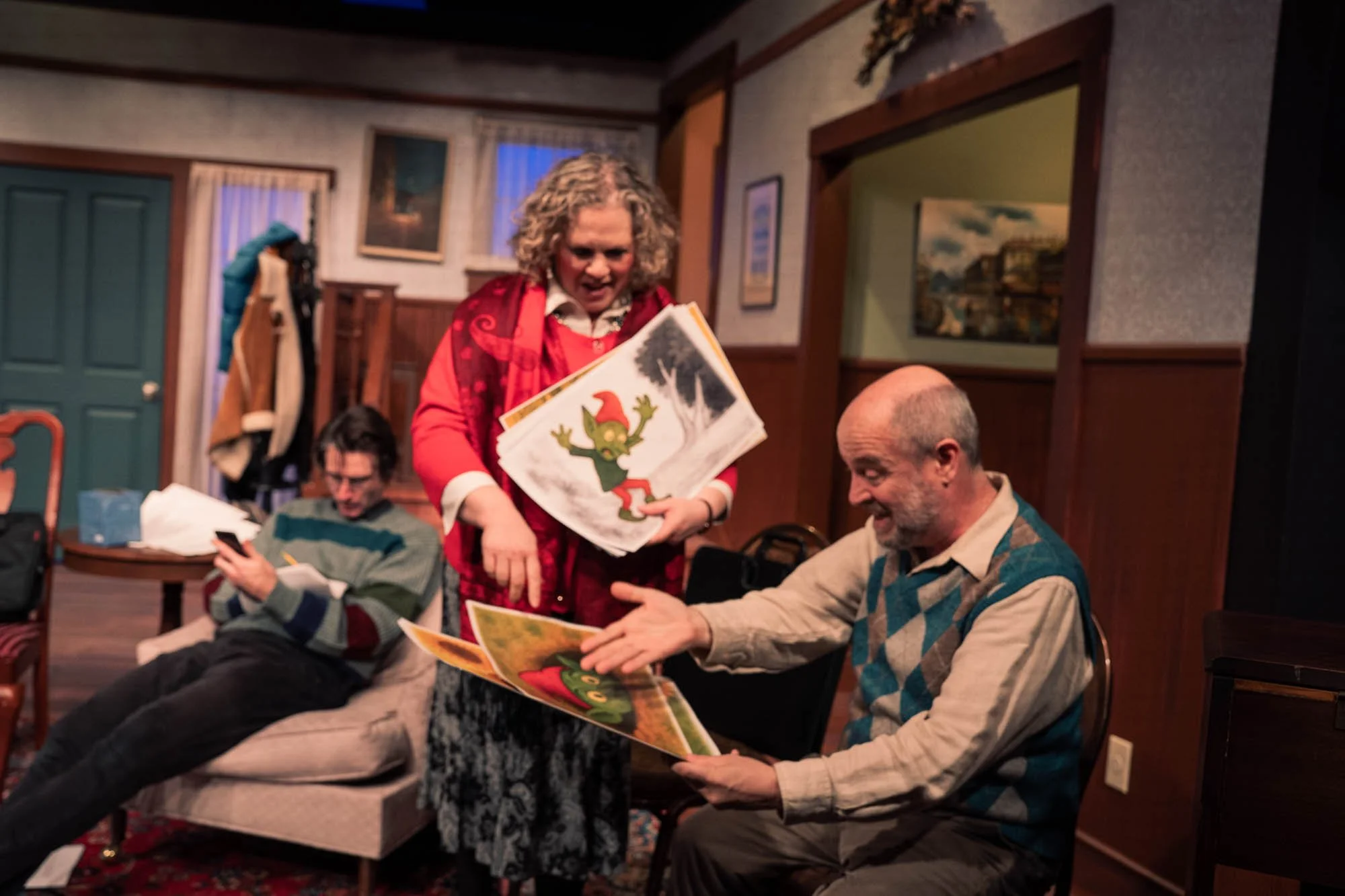
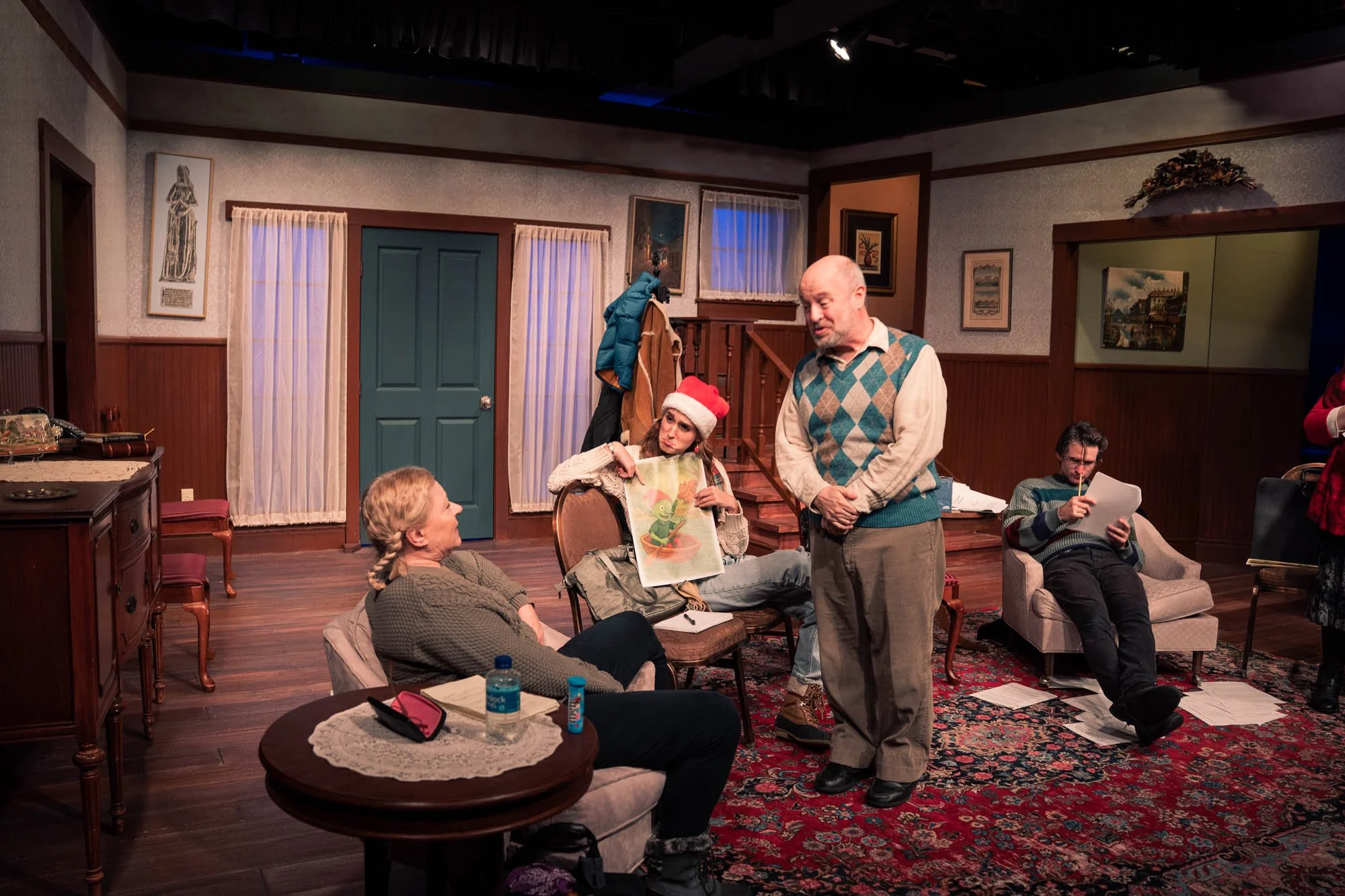
Ayckbourn’s “Improbable Fiction” begins with a realistic setting in a cozy British living room where Arnold (C. Conrad Cody) plays the perennial host for a writers’ group. The writers disdain each other’s work, despite Arnold’s best efforts to offer encouragement and keep the peace. In this collection of wannabe authors, each member writes in a different genre: sci-fi, mystery, children’s picture books, historical romance, musicals, and even instruction manuals.
The writers’ facial expressions and body language express what they really think of each other’s work—great fun! Jess (Lori Mrochinski) cannot hide her grimaces from the extremely earnest Grace (Alicia von Kugelgen).
Grace fancies herself an author-illustrator of children’s books, but she only does the drawings. Jess rolls her eyes at Grace, but Jess cannot even start her own novel, saying: “Just by writing, I’ll ruin it.”
To bring this contentious group together, the host Arnold proposes that, despite their writing in such disparate genres, they could collaborate on a collective work. Even though everyone pooh-poohs this ridiculous suggestion, that’s when the fun really begins.
Suddenly, Act II brings in lightning-fast costume changes. Cheers for the costume designer Ava Byrd and to the backstage crew who make those rapid and multiple transformations possible. The lighting, props, and outfits play a big role in the humor of “Improbable Fictions,” all excellently well done at Masquers.
Does playwright Alan Ayckbourn’s gamble to make Act II so different from the first half of the play pay off? There were many chuckles and giggles in this comedy, but not many belly laughs. Ayckbourn relies for the play’s humor on the silliness of bad genre writing, mocking overblown descriptions in historical romance novels, and the predictable action of a melodramatic detective story.
The playwright gets a lot of mileage out of the malapropisms of the sci-fi writer, who keeps using the wrong multisyllabic word. Those jokes making fun of failed authors feel like a flimsy premise, though, for a full-length play. To my mind, the best comedy is, oddly enough, serious. It shows us something deep about human nature or our society, and belly laughs come partly from that recognition.
“Improbable Fiction” at Masquers Playhouse lacks substance, but it has an excellent and highly versatile cast, and it’s an enjoyable romp.
“Improbable Fiction” by Alan Ayckbourn, directed by Angela Mason, scenic design by John Hull, Angela Mason & Michael Clark, costumes by Ava Bird, lighting & sound by Michael O’Brien, by Masquers Playhouse, at Point Richmond, California. Info: masquers.org - to March 1, 2026. Cast: C. Conrad Cady, Atessa McAleenan-Morrell, Lori Mrochinski, Alicia von Kugelgen, Anna Kosiarek, Tyler Null, and Simon Patton.
Production Photos
View Photo Captions
- Tyler Null, Alicia von Kugelgen, and C. Conrad Cady
- Lori Mrochinski, Anna Kosiarek, C. Conrad Cady, and Tyler Null
“The Mountaintop” Inspires US to Pick up MLK’s Baton—at OTP
By: Mary Lou Herlihy | Date: Feb 10
“The Mountaintop” works its magic to help us RE-THINK our roles in the never-ending march toward Freedom.
In statues and schools everywhere, images of Martin Luther King Jr. remind us of his achievements, his greatness. But playwright Katori Hall takes an artist’s chisel to MLK’s frozen figure. She reshapes him into a beautifully recognizable and infinitely human being.
There’s no substitute for genius—and “genius” is written all over this play and this Oakland Theater Company production, starring William Thomas Hodgson and Sam Jackson. “The Mountaintop” takes us, with astonishing depth and humor, into a thrilling evocation of Martin Luther King’s last day on earth—and along the way, it gives a tempestuous insight into the U.S. today.
As Dr. King, Hodgson delivers a masterful interpretation of the hero on his last night alive, April 3, 1968, at age 39. It’s thrilling to see Hodgson unfold the layers of young Martin. He does a superb job, bringing us into intimate, thoughtful, ever-changing contact. Here’s an MLK we never knew.
Sam Jackson, his admirable antagonist, shines as Camae, the motel maid who comes in from the storm. A forceful foil, she’s funny and flirtatious. We are gob-smacked when she reveals her hidden role in his life—her contradictions blossom into full-blown revelation. Jackson delivers surprising spiritual mysteries.
As their leader/follower roles evolve, the tables turn, and more secrets emerge. MLK shares that “We’re all scared. Scared of each other. Scared of ourselves…. Fear makes us human.” When King shares deep remorse over the police killing of a sixteen-year-old boy during the Memphis Sanitation workers’ strike, thoughts of Renee Good and Alex Pretti are top of mind. Hall’s play sounds a CALL TO ACTION.
Camae literally STEPS INTO MLK’s SHOES, and we gasp at her audacity as she delivers her own speech! He challenges her, asking, “What would you do?” Camae’s urges Martin to deliver her surprisingly pointed message, ending with “Fuck the White Man!” Like us, MLK is impressed. He remarks, “You speak well….for a woman.”
Lightning strikes more than once in this room full of electricity. When Camae pulls a flask, a hidden stash of cigarettes, and a handful of popcorn out of her deep-pocketed apron, we wonder what else she is hiding. Her role is transformative and otherworldly.
The stunning marble set and giant tombstone assert Martin’s permanence, but the flowers and feathers introduce mutability. Enormous projections fill the theater with richly layered content. “The Mountaintop,” bursts with passion, pathos, and delightful surprises, tiptoeing toward revelation.
As we continue to protest against brutal immigration enforcement while our democracy hangs in the balance, we are called upon to pick up Martin’s baton.
In his own words: “The time is ALWAYS RIGHT to do what is right.”
“The Mountaintop” by Katori Hall, directed by James Mercer II & Michael Socrates Moran, set designed by Sam Fehr, lighting by Ashley Munday, costumes by Mylo Cardona, sound by Ray Archie & Adam Montanaro, projections by Adam Montanaro, at Oakland Theater Project, Oakland, California. Info : oaklandtheaterproject.org – to February 15, 2026. Cast: William Thomas Hodgson and Sam Jackson.
Production Photos
View Photo Captions
- William Thomas Hodgson and Sam Jackson
- William Thomas Hodgson and Sam Jackson
- “The Mountaintop” is a SFBATCC Go See! production!
“Improbable Fiction” Saves the Best for Last—at Masquers
By: Zack Rogow | Date: 2/10/26
As the final act of the evening, “Improbable Fiction” delivers a whirlwind of laughter and philosophical questions that leave the audience pondering what truths lie within the weave of fiction and reality. The clever dialogues and vibrant performances keep the energy high and the laughter rolling.
Creative Team: Zack Rogow, Info: A comedic exploration of human incapacity to discern what is real, Cast: Not specified in review.
“The Hello Girls” Gives WWI History with Side-Eye—at Ross Valley
By: Isa S. Chu | Date: Feb 6
From the opening number of “The Hello Girls,” this modern musical announces itself with confidence and urgency: “A world where freedom is under assault, a world drifting toward tyranny… we’re talking about the year, 1918 – of course,” setting the tone for a production that feels both historical and relevant.
In World War I, these “Girls,” real-life women who enlisted in the U.S. Army Signal Corps, served on the front lines, routing calls under fire and risking their lives. Despite that service, they only received veteran status after 60 years of advocacy. This injustice stays firmly in view without letting it overshadow the joy of watching these women take up space.
At the heart of the story, a phone supervisor Grace Banker watches talented women cycle in and out of the workforce, pulled away by marriage and motherhood. Monica Rose Slater plays Banker with grounded authority and warmth, allowing her leadership to feel earned and deeply human.
Alongside her, Suzanne Prevort—played with spark and sass by Grace Margaret Craig—rejects the narrow roles assigned to women. Together, they enlist, not as fighters with rifles, but as operators whose speed and precision determine life or death.
Others answer the call for different reasons. Louise Le Breton (earnest Jacqueline Lee) fakes her age to join the fight. She is eager to return to France to battle “ze ghermans.” Later, a poignant scene between Louise and a German POW reminds her (and us) that beneath uniforms and political banners, humanity persists.
Bertha Hunt, radiant in Abigail Wissink’s performance, rejects the idea of waiting passively at home while her husband fights overseas. Helen Hill, played with animated naivete by Malia Abayon, embraces enlistment as an escape from rural Idaho.
In the number “We Aren’t in the Army Yet,” the Army scoops up men with ease, while women catalog the scrutiny they face: “she will see how selective the service can be.”
Though multilingual, adaptable, and highly skilled, respect still doesn’t come freely once they reach Paris. Their commanding officer, Lieutenant Riser (stoic Nelson Brown) embarrassed to command a battalion of women, underestimates them at every turn.
The women must excel to step out from beneath condescension and do the jobs they already know how to do, underscoring a familiar truth.
Clever choreography helps to tell the story without overrunning the stage, and musically, the show delights. Cast members double as musicians (guitar, cello, accordion, flute, snare drum, and glockenspiel) layering texture atop keys, bass, and drums.
Upbeat, comedic songs and energizing harmonies carry a heavy topic with lightness, making the evening truly enjoyable. The number “There Are Lives on the Line,” lands its double meaning connecting the literal phone lines the women patch through with the lives soldiers place on the line for their country.
“The Hello Girls” reminds us—with joy, humor, and heart—who did the work, who bore the cost, and how long justice can take to arrive. Go spend an evening with a show that’s smart and satisfying.
“The Hello Girls” by Peter C. Mills, directed by Maeve Smith, musical direction by Christopher Hewitt, set design by Ron Krempetz, choreography by Jonathen Blue, at Ross Valley Players, Ross, California.
Info: rossvalleyplayers.com – to March 1, 2026
Cast: Malia Abayon, Nelson Brown, Grace Margaret Craig, Jacqueline Lee, Mikey Lister, Dean Marchant, Landers Markwick, Monica Rose Slater, Joseph Walters, and Abigail Wissink.
Production Photos
View Photo Captions
- Full Cast
- Landers Markwick, Michael Lister, and Dean Marchant
- Monica Rose Slater, Abigail Wissink, Malia Abayon, Grace Margaret Craig, and Jacqueline Lee
- Malia Abayon, Jacqueline Lee, Nelson Brown, and Grace Margaret Craig
“The Cherry Orchard” Shows Clash of Old & New in 1900 Russia—at Marin
By: Jenyth Jo | Date: Feb 5
Would you cut down an ancient cherry orchard and destroy the family estate to build vacation homes for high-tech capitalists? Not in my backyard, say the principal players in Chekhov’s 1904 masterpiece. The orchard belongs to matriarch Liubóv ( splendid Liz Sklar), who escaped to Paris, where she squandered the family fortune. She cannot even pay the interest on the property she wants to save for her daughters. We pity her grief and her family as the bank auction looms. As Liubóv, Sklar succeeds in the challenging task of making the flighty matriarch a sympathetic character. Aside from shaking her glamorous head and tinkling her diamond chandelier earrings, she has no plan to save her estate. Neither does her brother, Anthony Fusco’s loquacious Gáyev. He is just another out-of-touch aristocrat who would rather talk than work. Asleep on a too-small velvet Chippendale sofa, rising capitalist Lopákhin (Lance Gardner) anticipates either rescuing or making money from the family he once served as a serf. Now, he’s a driven land developer with murky motives. Aristocratic Liubóv and peasant Lopákhin clash brilliantly as her ignorance meets his ambition. Sklar provides emotional moments when we think she will capitulate, but she continually yearns for the past. Nina Ball’s stunning set transforms from a nostalgic Victorian nursery to a backlit orchard. When front-lit, the painted walls become transparent, revealing ivory curtains with fringed Empire swags. Ball’s curtains resemble a cherry orchard in bloom, part of a brilliant and shocking “final curtain.” The compelling perennial student Trofimov (delightful Joseph O’Malley) has his own socialist vision, far “above love,” an escape that daughter Ánya (Anna Takayo) cannot resist. Instead of marrying a rich man as her mother hopes, she follows Trofimov’s romantic, revolutionary teaching. From the frantic maid Dunyásha (Molly Ranson) to the noisy Yepikhódov (Jomar Tagatac), entertaining characters infuse the melancholy with comedy, reflecting today’s “influencers.” As Carlotta, the clever German governess, Leontyne Mbele-Mbong captivates with sleight-of-hand tricks, her luminous voice, and spectacular costumes. Danny Scheie and Joel Morel deliver witty lines with dexterity. They invite us to join them in thumbing their noses at the idle rich while they cling to Kardashian “elegance.” Gardner’s Lopákhin wants to be part of this crumbling family. But he’s a raw entrepreneur who only knows how to make a “deal.” He could save the estate by outbidding another developer. He could marry Várya (sensitive Rosie Hallett), but what will he do once he has the house keys? Can you trust a venture capitalist? We sympathize with Várya’s valiant efforts to manage the property, as she faces abandonment and homelessness. Who will take care of her? The entire ensemble maintains a beautiful balance. Howard Swain plays the old butler Firs, who embodies the family’s faded glory with his hunched back and silent exits. Firs admits, “I never had a life, and now there’s nothing left.” The workers are abandoned. The elite and the business class conveniently forget about working folk like Firs, but Chekhov reminds us of their sacrifices, too. Director Carey Perloff gives us a brilliant picture of past and future worlds.
“The Cherry Orchard” by Anton Chekhov, translated by Paul Schmidt, directed by Carey Perloff, scenic design by Nina Ball, lighting by Kate Boyd, costumes by Lydia Tanji, sound by James Ard, at Marin Theatre, Mill Valley, California. Info: marintheatre.org – to February 22, 2025. Cast: Liz Sklar, Anna Takayo, Rosie Hallett, Anthony Fusco, Lance Gardner, Joseph O’Malley, Danny Scheie, Leontyne Mbele-Mbong, Jomar Tagatac, Molly Ranson, Howard Swain, Joel Morel, and Enzo Potente.
Production Photos
View Photo Captions
- The cast of Marin Theatre’s “The Cherry Orchard”
- Anna Takayo and Rosie Hallett
- Jomar Tagatac, Leontyne Mbele-Mbong, Molly Ranson, and Joel Morel
- Howard Swain
“Ulysses”: A Thrilling Meditation on Humanity—at The Public
By: David Moore | Date: Feb 5
At The Public Theater, I saw something impossible: Elevator Repair Service has adapted James Joyce’s novel Ulysses in a gripping and exciting play in under three hours. Onstage, the supposedly unfathomable novel suddenly becomes visceral fun. The brilliant ensemble, led by Vin Knight and Maggie Hoffman as Leopold and Molly Bloom, transports us to a special and not-so-special Thursday in Dublin in 1904.
The set looks stark and ominous: on a dark stage, seven metal chairs behind desks become daring evocations of Joyce’s overflowing Dublin life. The actors transform simplicity into a vibrant, living world, speaking with modern rhythms.
Scenic Designer “Dots” does everything with almost nothing. Props are introduced strategically: first, a ceramic shaving bowl, then the dirty “snot green” handkerchief. As the play progresses, props define the scenes: fig cookies, a cane, blankets, and pillows, lavish plates of cabbage, and tankards of beer. The objects evoke Joyce’s unforgettable Dublin: a printing press, a beach, a Turkish bath, a funeral, and a noisy restaurant.
The actors guide us through Joyce’s poetic prose, experiencing it with us the words unroll on a large screen. As the Narrator, Scott Shepherd steps out to introduce episodes and illuminate the story with seductive wit and warmth.
The actors move fluidly between multiple roles: Dee Beasnael shifts from Armstrong to Milly Bloom to Martin Cunningham; Kate Benson slips from Haines to Simon Dedalus to The Citizen. Thanks to Enver Chakartash’s clever costumes and the skillful actors, each scene rises and flows effortlessly forward.
ERS’s most delightful device appears when they skip an episode from the novel: the projected text races forward with the sound of a fast-forwarding tape cassette. And the actors are thrown back like roller coaster passengers. In one hilarious moment, Vin Knight’s Leopold Bloom rapidly puffs his cigar, smoking in fast-forward. We laughed out loud at the glorious actors expressing themselves with calculated irreverence.
Ben Williams’ brilliant sound design provides scaffolding for our imaginations. As Stephen Dedalus gazes at the ocean, we are transported by the sounds of waves and boots on crunching seashells. The printing press crackles with mechanical clacking. The restaurant buzzes with conversation and clinking plates. We are inside Dublin’s heart.
But “Ulysses” is also about loss. Leopold and Molly are grieving their son, who died before age eleven. They stopped having sex since his death. A paradox looms: “Nothing happens except for everything.” It’s one day in a man’s life: he eats lunch, takes a bath, smokes a cigar. Alongside these small moments inescapable grief and erotic desire press closer.
The play refuses to shy away from frank sexuality. It’s all there—Leopold’s voyeurism and his masturbation. Maggie Hoffman’s startlingly intimate performance of Molly’s final monologue celebrates the body’s pleasures and humiliations unflinchingly. Hoffman draws us into a magnificent meditation on humanity itself.
Elevator Repair Service cracks the code of Ulysses with their unique formula. The ensemble provides sheer theatrical magic to unlock Joyce’s wonders. Their dazzling stagecraft encourages us to participate rather than merely consume. The impossible becomes the unforgettable. In the words of Molly Bloom: “… and yes I said yes I will Yes.
Scenic design by Dots, costumes by Enver Chakartash, lighting by Marika Kent, sound by Ben Williams, projections by Matthew Deinhart, and props by Patricia Marjorie. Info: publictheater.org - to March 1, 2026 Cast: Dee Beasnael, Kate Benson, Maggie Hoffman, Vin Knight, Scott Shepherd, Christopher-Rashee Stevenson, and Stephanie Weeks.
Production Photos
View Photo Captions
- Christopher-Rashee Stevenson, Stephanie Weeks, Scott Shepherd, Vin Knight, Dee Beasnael, and Kate Benson
- Vin Knight, Kate Benson, and Scott Shepherd
- Scott Shepherd, Stephanie Weeks, and Christopher-Rashee Stevenson
- Maggie Hoffman
“How Shakespeare Saved My Life” Turns Trauma into Urban Poetry—at Berkeley Rep
By: Jenyth Jo | Date: Jan 31
In his fabulous one-man show, Jacob Ming-Trent transforms himself into an urban storyteller, like Shakespeare before him. Confronting the cruelties of racism and authority, he channels Isabella’s words from Measure for Measure, asking: “To whom should I complain?”
In Ming-Trent’s autobiographical journey of survival and transformation, he too confronts ruthless power. Ming-Trent summons homegrown heroes whose “complaints” ring true—Tupac, Biggie, Basquiat, MLK, and Malcolm X. Jacob mutates from “fat boy” to Shakespearean actor to tell his story in style.
An imposing and acclaimed TV and film actor, Jacob enlists us as his “congregation” in deep, musical tones. When his mom tosses him into the mean New York streets, he uses The Bard to outface dangers. And we chant “Play On!” for him when revelation looms.
His isolation and loneliness as a youth on the streets resonate with suffering. But we cheer when he succeeds.
In a sunny yellow suit, framed in tightly focused lighting, surprising sliding walls, and a single church pew, the actor draws us in. Inspired director Tony Taccone conjures lighting, projections, and hip-hop to propel the action. As we travel through his lonely childhood, homeless teenage years, and spotty education, he asks us: “How far will you go for love?”
To a teacher who doesn’t understand what it’s like to be hungry, the homeless 16-year-old declares: “Physics is a luxury.”
He exposes an ignorant English teacher who claims that Shakespeare does not belong in her class. When she threatens him with detention, he brilliantly uses Portia’s “quality of mercy” speech from Merchant of Venice to win her over.
He turns the gang in the park into modern Shakespeare heroes, showcasing his vast talent for mimicry. Ming-Trent raps all three, keeping each distinct and clear—a street symphony.
Ming-Trent’s vulnerability—and his life-long ambition to become a Shakespearean actor—touch our hearts. Yes, he’s won awards on stage and screen, but this show reveals the obstacles. The dangers of street life, a drug addicted father, and a mother who tells him he’s “nothing special” depict a dangerous path. His idols—Tupac, Biggie Smalls, and Basquiat—all died in their 20s, victims of hate and drugs. But Jacob has a goal.
When he buys a gun, he asks, “Where do you find unconditional love?” The gun rap forces us to confront the violence that young Black men face. He survives a drive-by shooting, but his riveting confrontation with police makes us fear he’ll choose “suicide by cop.”
We love the savvy therapist who reminds Ming-Trent that James Baldwin asserted that he has “ the right to be here,” words that liberate him.
Lots of people helped save his life. He shows us how to step up and demand freedom for all. His story inspires the bravery and hope we need to fight despair. Ming-Trent eagerly climbs to “the brightest heaven of invention.”
In an America that is denying rights and safety to its own people, Ming-Trent champions joy and love. His message rings true.
“How Shakespeare Saved My Life” written & performed by Jacob Ming-Trent, directed by Tony Taccone, scenic design by Takeshi Kata, costumes by Danielle Preston, lighting by Alan C. Edward, sound design & music by Jake Rodriguez, projections by Alexander V. Nichols, choreography by Tiffany Rachelle Stewart, at Berkeley Repertory Theatre, Berkeley, California.
Info: berkeleyrep.org - to March 1, 2026.
Cast: Jacob Ming-Trent(in many roles)
Production Photos
View Photo Captions
- Jacob Ming-Trent
- Jacob Ming-Trent
“Fully Committed”: Hilarious Comedy Exposes NY Elite—at Altarena
By: Rachel Norby | Date: Jan 29
“Fully Committed,” a one-person show depicting a day in the life of a reservation-taker for one of New York’s highest profile restaurants, depicts a delightful dive into character, entitlement, and respect. Samuel Barksdale does an exceptional job of conjuring Sam Callahan, an overworked and under-appreciated worker-bee in the basement of an posh Manhattan restaurant.
Barksdale’s talent is on full display as he slips easily into and out of rich and spoiled characters on the phone, seeking elusive reservations. He jumps headfirst into each personality, “fully committed” to each hilarious portrayal. Barksdale leaves no doubt about the motives and desires of each entitled caller, whether it’s Bryce from Gwyneth Paltrow’s office insisting on special light bulbs or Mrs. CarolAnn Rosenstein-Fishburn demanding her special table.
Barksdale plays each caller, letting us know what privileges they assert and just how cringe-worthy they are. We find out what makes each one tick what drives them—evoking big laughs and hearty fun at the clueless callers’ expense.
His effortless portrayal of each deluded caller helps us to understand that Becky Mode’s brilliant play is really all about privilege and power.
The play opens with Sam Callahan, a gay reservation-taker and aspiring actor taking a reservation from Mrs. Vandevere, a VVVVIP who insists she is very flexible on timing and will accept a reservation anytime between 7:30 and 8:00 p.m. The absurd demands continue, with each potential patron more entitled than the last, each expecting entry into this exclusive eatery.
Each exerts another form of power and privilege to get what they want. They are proud of their names and status, considering poor Sam as a puddle in their path—an annoying obstacle that must be dealt with before gaining their rightful place in the firmament.
But as the hectic demands spiral, we begin to see that the difference between a sense of entitlement to luxury and to respect has been blurred for these affluent narcissists. They expect mere workers to cater to their every whim, no matter how ridiculous. The urgency and sense of injustice with which they bully poor Sam would be better used battling actual injustices.
Nevertheless, they use their energies and resources to browbeat this reservation-taker into accommodating their trivial demands. Elitism rules but we laugh out loud at its demands.
But Sam does not remain a victim. He’s an aspiring actor and wants to go home for Christmas. Despite being pulled in all directions, and simultaneously pressured to do the impossible, he realizes that he too has power. He just must learn to exert his newfound power cleverly.
Sam, too, can command respect as a worker and a person. This change in attitude, from being a victim of his circumstances, to realizing he is entitled to respect changes everything. It enables him to enjoy the life he has and have more of the life he wants.
Bravo to witty director Kimberly Ridgeway! Bravo to spot-on Samuel Barksdale!
“Fully Committed” is a hoot! Worth a second trip to savor Sam’s revolt against crumbling authority.
“Fully Committed” by Becky Mode, directed by Kimberly Ridgeway, set design by Tom Curtin, lighting by Stephanie Anne Johnson, sound by Alex Fakayode, costume by Katina Psihos, at Altarena Playhouse, Alameda California. Info: altarena.org - to February 22, 2026. Cast: Samuel Barksdale
Production Photos
View Photo Captions
- Samuel Barksdale charms.
- Samuel Barksdale triumphs.
- “Fully Committed” is a SFBATCC Go See! production!
“What the Constitution Means to Me” Bursts with Feminist Inspiration—at Hillbarn
By: Aaron Draper & Heather Fischer | Date: Jan 28
Kim Donovan delivers an extraordinary performance as the playwright Heidi Schreck. Donovan is so convincing that we feel she is the writer herself, confiding in us. Her portrayal is intense and emotionally rich, like a concert pianist drawing both sorrow and joy from a single piece of music. The writing is powerful, the stories gut-wrenching and often funny, and Donovan’s performance truly elevates Hillbarn Theatre’s “What the Constitution Means to Me.”
Donovan moves effortlessly across time, from Heidi’s eager teenage self—brimming with idealism—to her adult self, confronting painful stories of violence, inherited trauma, and resilience. As the quicksilver Heidi, Donovan is magnetic, deeply human, and impossible to look away from.
In “What the Constitution Means to Me,” Heidi Schreck expertly blends personal history, humor, and civic education. Although it was written nearly a decade ago, the Pulitzer-nominated play feels especially urgent today, as constitutional protections are under daily threat.
The plot is simple. Fifteen-year-old Heidi is competing in a debate contest at the local American Legion Hall. She is competing to earn money for college tuition, eager to show her smarts. She stands at the Legion podium and behind her are hundreds of photos of photos of white, male Legion heroes. They are represented by one live Legion member played wittily by Vincent Randazzo.
Heidi is ready to confront them all. Schreck’s stories of domestic abuse echo across generations. She points out that women have long been excluded from constitutional protections.
Much of the play centers on the Fourteenth Amendment, particularly its promises of citizenship and due process. Schreck illuminates her points by using her own tragic family histories, including the story of Theresa, her great-great-grandmother. Theresa was purchased from Germany and later died in a mental hospital of �smelancholia� at the age of 36!
Real audio recordings of Supreme Court justices arguing cases are woven throughout the play, highlighting how much constitutional meaning rests on subjective interpretation. One especially powerful moment features Ruth Bader Ginsburg responding to the question of when will she feel there are enough women on the Supreme Court: “When there are nine.”
As both the Legionnaire and the actor Mike, Randazzo balances Donovan’s emotional intensity. As Mike, an actor grappling with identity and coming out, he adds warmth and vulnerability.
Later, high school debater Miriam Shem-Tov joins Donovan for a live constitutional debate. Shem-Tov is poised, confident, and compelling, holding her own with impressive maturity.
The production elements—sound design, interactive moments, and pacing—create a polished and thoughtful ambiance. We are deeply moved, as the show invites us to reflect on our own roles in this fragile democracy.
We left the theater energized and grateful for the reminder that participation in democracy is not abstract—it comes from all of us. “Constitution” is one of the best pieces of theater we’ve seen in years—it’s only running for two weeks, so come on along.
“What the Constitution Means to Me” by Heidi Schreck, directed by Susannah Martin, scenic design by Jenn Forder, costumes by Madeline Berger, lighting by Cameron Pense, sound by Jeff Mockus, at Hillbarn Theatre, Foster City, California.
Info: hillbarntheatre.org – to February 8, 2026.
Cast: Kimberly Donovan, Vincent Randazzo, Avery Hartman, and Miriam Shem-Tov.
Production Photos
View Photo Captions
- Vincent Randazzo & Kim Donovan
- Kim Donovan & Miriam Shem-Tov
- SFBATCC Go See!
“A Streetcar Named Desire” Travels a New Route—at ACT
By: Bruce Kaplan | Date: Jan 27
When a creative team endeavors to reinvent a classic, many minefields pop up as they ponder changes to time and place, staging, and characters. And when that classic is so intimately associated with its locale and characters, like Tennessee Williams’ “A Streetcar Named Desire” is identified with post-WWII New Orleans, those minefields get risky.
Lucy Owen and Nick Westrate’s “Streetcar Project” asks if Blanche DuBois’ descent into madness can be told effectively on an empty stage with only four actors in a 1,000-seat theater. By stripping the production of its visual guideposts—the crowded French Quarter apartment, all set pieces and props—the result elevates Williams’ heart-shattering dialogue, and the actors performing it, to carry the story.
But by stripping the Southern dialect from the characters, the production may do a disservice to Williams’s characters, especially Blanche. As a born-and-bred descendant of white Southern privilege, a refugee from an earlier time who doggedly clings to her heritage, wouldn’t Blanche also cling to her genteel manner of speaking?
Lucy Owen portrays Blanche as more grounded than the traditional drawling, victimized Southern woman. Owen’s Blanche strides the wide stage with strength and grace. Her Blanche is more “actor” than “acted upon.” In 1947, Southern women had very few good choices to go it alone. Blanche loses Belle Reve, the family estate, to lawyers and confusion. When her lies and incompetence are unmasked, she finally surrenders to the darkness she’s been repressing for so long.
The rest of the cast of four also navigate their roles with intensity and determination. As Stella, Heather Lind lays bare her need for her older sister’s acceptance, despite how their paths have diverged. Her prolonged scream of “Blanchhhhhe!” as her sister makes her final exit hauntingly mirrors Stanley’s earlier “Stellaaaa!” in its neediness.
Brad Koed captures Stanley’s rough explosiveness in the symbolic language the production uses to represent many physical actions, including drinking and talking on the phone. Stanley’s rape of Blanche is depicted primarily with striking lighting, with the characters lit from below, casting oversized shadows that emphasize the power dynamic between Stanley and Blanche.
James Russell portrays Mitch with believable pathos and longing, a sad and sympathetic character. Russell also gets big laughs as upstairs neighbor Eunice—an unexpectedly light touch at the start of the show.
The sparseness of the staging overall makes light and sound central to telling the story. Scenic design by Director Westrate meets the challenge with lighting and sound that convey outsized importance in understanding the action without props.
ACT’s Toni Rembe Theater is the first actual theater in which this production has been performed. In such a large performance space, the experiment works well to highlight Williams’s razor-sharp dialogue; but the loss of so much visual context from the lack of a set or props makes it harder for this “Streetcar” to draw the audience deeply into the lives of its characters.
For veteran “Streetcar” admirers, this is a curious but worthy experiment in storytelling; for first timers, a more classic interpretation is probably a better introduction to the full impact of this monumental play.
“A Streetcar Named Desire” by Tennessee Williams, created by Lucy Owen & Nick Westrate, directed by Nick Westrate, by The Streetcar Project, at ACT, San Francisco.
Info: act-sf.org – to February 1, 2026.
Cast: Lucy Owen, Heather Lind, Brad Koed, and James Russell.
Production Photos
View Photo Captions
- Lucy Owen & Brad Koed. Photos: Kevin Berne
- Brad Koed & James Russell
“The Piano & Me” Thrills with Immigrant Heroism—at TheatreWorks
By: Mary Lou Herlihy | Date: Jan 25
As we read with horror about our American immigrant neighbors being terrorized, detained, and “DISAPPEARED,” powerful stories like Hershey Felder’s remind us that we are on a knife’s edge.
Since 2000, Hershey Felder has researched and performed musical portraits of great composers. Coming full circle, Felder unpacks his own immigrant journey.
In “The Piano & Me,” Felder, the consummate storyteller and pianist, charts his early life, performing and describing treasured musical milestones. Guiding us through the Yiddish cabbage-scented kitchens of his Montreal childhood, Felder touchingly portrays the people who shaped him.
From the Montreal ghetto to transformative years at Juilliard in New York, Felder discovers his family’s shadowed past in Nazi Germany.
Felder’s doting grandfather recognizes the boy’s talents early and suddenly, a piano appears. At six, Felder falls in love with Bach’s “Well-Tempered Clavier.” “The notes were like a painting,” Felder says, “and playing them came easily.” He astounds his first piano teacher by playing the score from memory. He retains music after hearing it on the radio. Mesmerized by Mozart’s “Turkish March,” Felder races to the piano to get the notes under his fingers.
By degrees, Felder’s story connects to eastern Europe and his family’s narrow escape from the Nazis—and some are lost. Recalling his childhood, Felder digs through an ancient suitcase and finds a letter from 1943, addressed to his beloved grandfather: “NO NEWS about your daughter.” When Felder asks about the letter and the packed suitcase, he’s told that “you must always be ready to flee if they come for us.” People of color know this fear!
The piano provides distraction and solace from a childhood cut short by his mother’s illness. After her passing at a tragically young age, Felder learns that the music of Bartok comforts his mother’s bereft parents. The haunting Hungarian folk music brings back lost stories of countless “DISAPPEARED” relatives from Budapest.
Talent and ambition take Felder to McGill University, then the halls of Juilliard, where his renowned piano instructor Jerome Lowenthal “unscrewed all he had learned and helped him screw it back together.” Lowenthal introduces Felder to Gershwin’s “Rhapsody in Blue,” sparking a flame in the budding artist. Gershwin’s music resonates powerfully with immigrants in America.
When Steven Spielberg’s Shoah Foundation hires the young Felder to interview Holocaust survivors, his time in Germany proves transformative. Felder interviews an elderly man who relates his story as a young boy in Auschwitz: the Nazis made him whistle “Rhapsody in Blue” in the death camp to save his own life! This wheelchair bound survivor also shares a ghastly tale about meeting the “Angel of Death,” the monstrous Nazi Dr. Mengele.
The survivor’s powerful story inspires Felder to create his signature one man show, “George Gershwin Alone”—the beginning of Felder’s original artistic vision.
The brilliance and generosity of Felder’s own immigrant story, “The Piano & Me,” contains both dire warnings and messages of hope.
Thank you, bless you, Hershey Supreme!
“The Piano & Me: A new play with music”—book by Hershey Felder, with music by Bach, Mozart, Beethoven, Chopin, Bartok, Liszt, Rachmaninoff, Gershwin, and Williams, Sound Design by Erik Carstensen, Lighting Design by Erik S. Barry, Video/Projection Design by Stephano DeCarli— at TheatreWorks Silicon Valley, Mountain View, California. Info: theatreworks.org – to February 8, 2026. Cast: Hershey Felder
Production Photos
View Photo Captions
- Hershey Felder. Photo by David Lepori
- Hershey Felder. Photo by David Lepori
- Hershey Felder. Photo by David Lepori
- Hershey Felder. Photo by David Lepori
- “The Piano & Me” is a SFBATCC Go See! production!
The DaVinci Code Probes Murder & Deceit—at Palo Alto Players
By: Lauren Jiang | Date: Jan 21
Most Christians believe that Jesus was the son of God. But what if Jesus had a wife and descendants? That’s the moral dilemma offered to the audience by “The Da Vinci Code,” a thought-provoking mystery now at Palo Alto Players. “The Da Vinci Code” implores us to reframe Jesus and consider how a rewritten history would shatter the Western world. Adapters Rachel Wagstaff and Duncan Abel encourage us to investigate our own faith to contemplate new possibilities. After all, humans shape history according to our own agendas. The play urges philosophical questions, as it entertains us with the suspense of a twisting mystery. Christian Vaughn-Munck and Alli Gamlen anchor the show with grounded performances. Vaughn-Munck plays Robert Langdon, a Harvard professor of religious symbology, and Gamlen plays Sophie Neveau, a French National Police cryptographer. Together, they take us on a wild ride across Europe to investigate her grandfather’s (intriguing Stephen Sammonds) mysterious death. In this dialogue-rich play, the actors shine with confidence and charm, cutting through dense symbology jargon. With Robert and Sophie’s combined skills, they tackle an impossible case. And the French police are on their trail, accusing Langdon as a suspect! Twenty years after Dan Brown’s best-selling novel and hit movie, the story invokes today’s rampant conspiracy theories. Director Jennifer Copaken adds beautiful contemporary dance, shining a new light on the complex tale. She manipulates shapes to create symbols that constantly shift in meaning. Her fresh staging has us pondering new answers. The Catholic extremist, real-life Opus Dei secret society, looms over them, as does an undercover fraternal group called Priory of Sion. The show is an escape room on stage, with clues hidden under blue light, in rhymes, and a cryptex puzzle box. As Robert, Christian Vaughn-Munck’s earnestness and fervor sparkle as he confidently displays his expertise. He’s a passionate professor who has stumbled upon a world of secrets and mysteries. As headstrong and smart Sophie, Gamlen brings genuine heart to the role. She cries as she recounts the story behind her estrangement from her grandfather, and she relives a disturbing event that scarred her for life. Brandon Dean makes his stellar theatrical debut as Silas, a covert member of Opus Dei. Dean imbues his performance with passion and intensity. He first seems to be a Church spy, as he performs villainous acts to support his beliefs—much like MAGA today. As Sir Leigh Teabing, David Boyll displays superb craftsmanship. From a sickly old man to an eccentric intellectual, Boyll epitomizes an idiosyncratic style. He shines as Langdon’s guide and friend. Dancers Hannah Oviatt and Arjun Sheth convey crucial events through movement. As the characters speak, the dancers re-enact the scene, imaginatively. A black-hooded chorus intones important clues to solve the murder, using multiple art forms to create a hypnotic work. For any lover of the mysteries and secrets that surround us, “The Da Vinci Code” excites our senses. It’s a smart “whodunit?” and I recommend this Palo Alto Players’ show to all fans of crime and conspiracy.
Creative Team: ‘The Da Vinci Code’ – based on the novel by Dan Brown, adapted by Rachel Wagstaff & Duncan Abel, directed by Jennifer Copaken, scenic designer Patrick Klein, costumes by Andy Lechuga, lighting by Edward Hunter, projections by Tasi Alabastro, sound by Gregorio Perez. Info: paplayers.org - to February 1, 2026. Cast: Sarah Benjamin, David Boyll, Keith Brown, Monica Cappuccini, Alli Gamlen, Setareh Greenwood, George Alexander K., Dane Lentz, Brandon Dean, Stephen Sammonds, Christian Vaughn-Munck, Hannah Oviatt, and Arjun Sheth.
Production Photos
View Photo Captions
- Christian Vaughn-Munck and Alli Gamlen
- Monica Cappuccini and Brandon Dean
- David Boyll, Christian Vaughn-Munck, and Alli Gamlen
- Movement Ensemble with Brandon Dean
What Is To Be Done? Fights Depression & Fascism, Brilliantly—at Club Fugazi
By: Robert M. Gardner | Date: Jan 16
Josh Kornbluth’s hilarious new show, “What Is To Be Done? Fighting Fascism and Depression,” is running for three nights at the beloved Club Fugazi in North Beach. Eager full houses testify that Josh’s latest show has the makings of another hit for this veteran comedy performer.
Josh Kornbluth is a genius: his latest show displays the full breadth of his keen insights and biting wit. His delivery has such honesty that he gets us to invest in his history—growing up in a New York, Communist, Jewish family. He was teased by his classmates for his differences. His background makes him a keen observer of political life and he offers brilliant, funny observations on our current disastrous descent into fascism.
After his childhood as a “Red-Diaper Baby,” he suffered from depression, an affliction that severely troubled him until, with the help of his therapist, he found Prozac. Josh describes the “glimmer” that he felt when, after six weeks, the drug kicked in. Unfortunately, the Prozac came with side effects, so he tries to wean himself from it—with humorous results.
Josh turns to his doctor for a drug without the side effects. The doctor suggests another SSRI drug and Josh confides that he does not quite know what those initials stand for. On cue, the audience responded: “Selective Serotonin Reuptake Inhibitors.” We all laugh as we realize that we just revealed our personal knowledge of SSRIs.
Josh excels at connecting with his audience. An accomplished comedian with over 30 years on the stage, he knows all the tricks to engage and entertain. We laugh, we cry—and he shows us how to connect our personal afflictions with the wider political scene, which could be the real cause of our troubles. And he turns his scrutiny to our present onrushing dictatorship.
With newfound happiness in his battle against depression, Josh wonders why he was still so unhappy. As he views the world, he reflects how quickly the U.S. is descending into dictatorship. And he realizes that the source of his depression could be political!
Josh takes us from discussing personal issues to dealing with national and global disorder. Of course, we know that a lot of us are depressed about our country’s descent into oligarchy. When Josh makes it into comedy, he helps us validate and examine our daily fears.
Josh points out that Democracy is an expression of Love. We feel for Others–that is the essence of democracy. When we say, “We the people,” we really mean: “We Love the People.” Our future rests in our solidarity and our resolve to put those loving feelings into action.
Josh’s words give us hope that we have a future, but only if we act and resist the political outrages that are growing day by day.
Josh Kornbluth has us laughing all the way to the next protest, the next necessary march. March On! Love All the People. Josh provides an antidote to misery and a gateway to FUN. Hurry to see him at Club Fugazi on Wednesdays, January 14, 21, and 28. Josh changes lives.
Creative team: Josh Kornbluth (improvised work-in-progress), tech by Blake Radiant at Club Fugazi, San Francisco. Info: clubfugazisf.com – to January 28, 2026. Cast: Josh Kornbluth
Production Photos
View Photo Captions
- Josh Kornbluth tells secrets
- Josh Kornbluth contemplates fascism.
“Takes All Kinds” Celebrates US, with Wit & Wisdom–at The Marsh
By: Barry David Horwitz | Date: Jan 7
It’s time again to enjoy the gaggle of folks that Dan Hoyle has lived with and recreated from across the country. Hoyle uses his rubber-face, his whole body, and his reportorial skills to bring other Americans home to us.
Dan, the popular S.F. journo-theater artist, has been touring the country with his hit show “Takes All Kinds.” Well-known for his expressive physical presence, he is bringing us a remarkable embodiment of Americans with a magnificent range of beliefs and political opinions.
Hoyle’s latest one-man show, “Takes All Kinds,” offers a moving and timely look at contemporary America by acting out the actual words of a wonderful tableau from his travels.
Master mimic Hoyle showcases real Americans’ feelings about our broken politics and broken culture. Hoyle masterfully conjures one colorful character after another, leaving us wishing that the show would go on longer than its modest 75 minutes. He offers a master class in character creation.
Early on, Hoyle introduces us to one of the show’s key themes: How our deeply-held political beliefs have led to a tribal ‘us’ vs. ‘them’ mentality. Hoyle intently chips away at the dehumanization of the ‘other.’ Dan has the amazing ability to embody the common humanity of a fascinating and diverse cast of characters, with the flick of a wrist or wrinkle of an eyebrow.
From his interviews across the U.S., Hoyle has chosen the most remarkable and unforgettable characters, those who exert an outsize influence in our national elections.
In Florida, he attends a school board meeting in a county where the board has been taken over by members of the Proud Boys. There, a conservative mom reveals her reflexive disgust for the Bay Area: “Where are you from? Oakland, California? Oh, I’m so sorry.”
Hoyle drives home how isolated we are from other folks.
Despite the often-serious tone, there are lots of laugh-out-loud moments. A Black woman in Las Vegas laments the rise of in-your-face racism in the Trump era. After Trump’s “victory” in 2016, she describes being threatened with rape by a truck full of young, raucous white guys. She seems more disappointed than frightened: “It’s a beautiful country, it really is. Shit, I just went to a twerking class.”
In a midwestern barber shop, he plays three Latino barbers who enjoy their friendly disagreements about the 2024 election. They have to work both day and night jobs and have no time to spend with their families.
Some of his interviewees make fun of Dan to his face, lovingly: “Hey, we got a hippy from Oakland here!” Others don’t trust him until he stays on long enough to prove himself. The hidden dynamic between the Journo-Actor and his cautious, honest friends keep the show dynamic.
Dan Hoyle, Bay Area treasure, is a Master Reporter and brilliant imitator. Hoyle knows Americans and brings them home to us, so we can understand and laugh in the company of our fellow citizens.
“Takes All Kinds” is a masterpiece of empathy, reporting, and channeling of citizens we would never meet ourselves. Don’t miss this new chance to discover the U.S. with Dan again.
“Takes All Kinds: Stories of American Democracy”—written & performed by Dan Hoyle, directed by Aldo Billingslea & Michael Moran, developed with Charlie Varon, at The Marsh, San Francisco. Info: themarsh.org – to April 25, 2026. Cast: Dan Hoyle (playing many roles)
Production Photos
View Photo Captions
- Dan Hoyle, Master of a Thousand Faces
- Dan Hoyle—Who is he now?
- Dan Hoyle—Journo-Artist
“A Christmas Carol” Offers Love, Diversity, Change—at Center REP
By: Theresa Ingalls | Date: Dec 16
Dickens’ “A Christmas Carol,” a time-honored chestnut, is refreshed in Center REP’s re-imagined production. The adaptation by Harrison David Rivers tells the story from Tiny Tim’s perspective, and his wish is granted through Ebenezer Scrooge’s redemption.
The excellent cast enhances and supports the story, setting the mood with lively dances and carols. AXIS Dance Company adds masterful movement by diverse performers, so fluid they form a magnificent highlight of the show. Truly Christmastime!
Nina Ball’s scenic design transports us to Victorian London, complete with moving, weathered, multi-sized doors, windows, and walls. Ball’s magnificent, detailed set is enhanced by somber lighting and timely projections.
Director Jared Mezzocchi’s “Carol” packs a punch with Michael Ray Wisely’s solid turn as Scrooge. We feel Scrooge’s alienation, wonder, and revulsion as he journeys with the Ghosts of Christmas Past, Present, and Future—winning his hard-won redemption. He is a truly changed man.
Skyler Sullivan shines in three roles: Sullivan is inspired as Fred Hollywell, obviously devoted to his Uncle Scrooge even as he chastises poor Fred. Sullivan also presents an exuberant, loving, and kind Fezziwig; too bad Scrooge refuses to take his lessons to heart! And Sullivan’s Ghost of Christmas Present is outrageously unrestrained and irresistible fun.
Sarah Dunnavent offers a delightful, spirited performance as Mrs. Cratchit, clearly showing she’s a loving wife and mother and a believably harsh critic of Scrooge. Dunnavent’s Mrs. Fezziwig sparkles with plenty of dancing, laughter, and love.
Jomar Tagatac convinces us of Jacob Marley’s irreversible and regretful damnation. And Tagatac’s Bob Cratchit shows us the clerk’s deep devotion to his family, especially Tiny Tim.
Bravo for imaginative staging led by Director Mezzocchi, elaborate costumes by Brooke Kesler, and electric visuals by Camilla Tassi. They make a great foundation for Dickens’ enduring story of injustice, forgiveness, and redemption.
In the spectacular scene where the Ghost of Jacob Marley first appears, we see tethered ghosts holding back Marley by his chains. These wraiths exude the despair of all mankind from beyond the grave with unrelenting writhing and wailing.
Despite all that’s great, I found a couple of nits to pick: the guidance of the Ghost of Christmas Future weakens Scrooge’s discovery of what may happen to him. In fact, the future is Scrooge’s own discovery, and he must find redemption for himself. Also, the omission of the children represented under the Ghost’s robes robs Scrooge of the realization that evil exists in the everyday.
Nit-picky, but the show’s weaving in and out of the 19th century and today comes as a surprise. The mixture of Dickens’ dialogue and modern language can be jarring.
Although dazzling and funny, disco music and dance by the Ghost of Christmas Present may be too much for some. And Scrooge wears his shoes in and out of bed!
But those are minor notes that you can judge for yourself. It’s Christmastime!—just in time to see Center REP’s excellent staging of Dickens’ enduring classic!
“A Christmas Carol” by Charles Dickens, adapted by Harrison David Rivers, in collaboration with Sally Lobel, directed by Jared Mezzocchi, in association with AXIS Dance Company, music director Kenji Harada, choreographer Nadia Adam, scenic designer Nina Ball, costumes by Brooke Kesler, projections by Camilla Tassi, lighting by Kurt Landisman, sound by James Ard, at Center REP, Lesher Center, Walnut Creek, California. Info: centerrep.org – to December 21, 2025. Cast: Annika Bergman, Elizabeth Cowperthwaite, Alan Coyne, Sarah Dunnavant, Carla Gallardo, Danny J. Gomez, JanpiStar, Catherine Luedtke, Jed Parsario, Salim Razawi, Skyler Sullivan, Jomar Tagatac, and Michael Ray Wisely. Youth Cast: Maeve Coyne, Annie Dooling, Ray Khalili, Dominic Moran, Keenan Moran, Layla Rachidi, Aislinn Robbins, Giovanna Romagnolo, McKenna Rose, Brayden Sinkay, Hyacinth Taylor, Bea Toben, Gus Toben, and Brady Wraight.
Production Photos
View Photo Captions
- Michael Ray Wisely (Scrooge) & Brandon K. Sinkay (Tim)
- Michael Ray Wisely (Scrooge) & Jomar Tagatac (Bob Cratchit). Photos by Kevin Berne
- The Ensemble of Center REP’s ‘A Christmas Carol.’
“Georgiana & Kitty: Christmas at Pemberley” Combines Romance & Revolution—at TheatreWorks
By: Joanne Engelhardt | Date: Dec 14
At its core, this TheatreWorks Silicon Valley production celebrates love—familial, romantic, artistic—and asks how women carve space for themselves in a world eager to hold them back. “Georgiana and Kitty” ties together threads from all three of Gunderson and Melcon’s Pemberley plays. Although a few narrative lapses keep the evening from fully taking flight, the warmth of the ensemble and the polished set design make the journey to Pemberley a festive one. We especially love Act One’s spectacularly tall Christmas tree. Thanks to scenic designer Andrea Bechert, Georgiana’s Act Two home radiates Romantic period authenticity with tall ceilings in shades of turquoise, period furniture, and a gold chandelier hanging from the ceiling. Together with Director Giovanna Sardelli’s artistic direction, the lush production is brimful of evident affection. Although the handsome and lively staging is delightful, the story itself offers more charm than dramatic momentum. The large ensemble flows on and off the stage energetically, nearly all related to the Darcy, Bennet, or Bingley families. Emotions run high and heartfelt. Still, TheatreWorks newcomers may find themselves having to work to track who’s who across sisters, in-laws, and cousins. The six-year jump between acts works if audiences follow it. Pregnancies shift, a beard disappears, and everyone else seems amazingly ageless. Nima Rakhshanifar gives Henry a winning transformation from shy companion to confident suitor. Finally, He can declare his love for Emily Ota’s gentle, luminous Georgiana. In the intervening years, Georgiana and her spirited sister Kitty grow tired of hiding female artistry behind closed doors. Kushi Beauchamp’s confident, charming Kitty and Georgiana launch the “Society for Women Musicians,” a bright nod toward the coming women’s rights movement. William Thomas Hodgson brings easy warmth as Kitty’s husband, Thomas, greeting every scene with a smile that hints at family secrets. The production lands several comedic gems. For one, there’s the magnetic attraction between Henry and Georgiana on a crowded sofa. The minimal seating forces Lydia (Jenny Nguyen Nelson) to wheeze, squirm, and crawl away! It’s a comic highlight. Another delight: the Regency glove-on, glove-off handshake ballet, executed with crisp, split-second precision. Costume designer Cathleen Edwards parades a feast of Regency silhouettes across the stage. While some gowns feel more modest than expected for the wealthy Pemberley set, the variety adds texture and humor, especially among the poorer Bennet clan. “Georgiana and Kitty: Christmas at Pemberley” offers a gentle reminder that progress often begins in living rooms. New ideas emerge through courage, creativity, and the insistence that every voice deserves to be heard. TheatreWorks’ final trip to Pemberley blends festive charm with a hopeful feminist spark, inviting us to celebrate not just the season, but the possibility of a more equitable world.
“Georgiana and Kitty: Christmas at Pemberley” by Lauren Gunderson & Margot Melcon, directed by Giovanna Sardelli, scenic design by Andrea Bechert, costumes by Cathleen Edwards, hair & wigs by Roxie Johnson, sound by James Ard, lighting by Spense Matubang, by TheatreWorks Silicon Valley, at Lucie Stern Theater, Palo Alto, California.
Info: theatreworks.org-to December 28, 2025.
Cast: Emily Ota, Kushi Beauchamp , Amanda Pulcini, Jenny Nguyen Nelson , Monique Hafen Adams, Maria Marquis , Nima Rakhshanifar, William Thomas Hodgson , and Jordan Lane Shappell.
Production Photos
View Photo Captions
- Jordan Lane Shappell and Amanda Pulcini.
- William Thomas Hodgson and Kushi Beauchamp.
- Nima Rakhshanifar, Jenny Nguyen Nelson, and Emily Ota.
“Scrooge! The Musical” Conjures Spirits to Charm Everyone—at Sonoma Arts
By: Jenyth Jo | Date: Dec 9
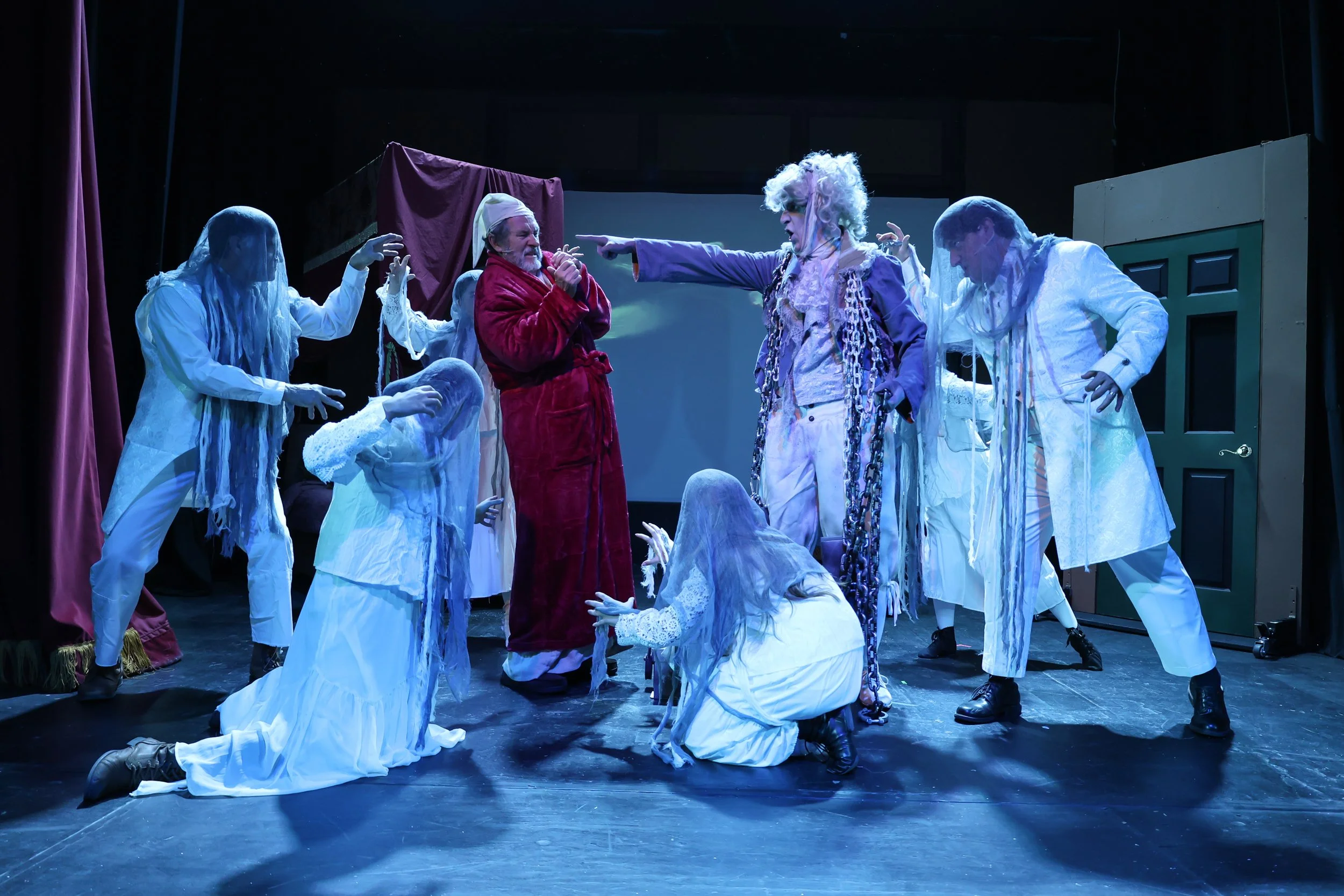
Some Scroogey people who don’t like musicals may stay away from Sonoma Arts’ “Scrooge! The Musical.” What a huge mistake that would be. The singing and dancing make this family-friendly show much more fun than the traditional “A Christmas Carol.”
Multi-talented director Larry Williams also plays Scrooge, who utters blasphemous lines like “My savior is money,” and “I hate Christmas.” Scrooge’s songs reveal his misguided priorities: “Everywhere you go / Everyone is a thief.” As he sings, “I hate people,” folks to my left and right share a smile and a smirk, as we unite against the Man.
When the wonderful David Shirk, as Jacob Marley, enters and tells Scrooge “Mankind is our business / but we seldom attend to them,” Scrooge begins to bend. Shirks’ lovely baritone ranges from ghastly to pleasing. Marley brings grim stories of his ghoulish life in Hell, as he drags the chains and weights of every stingy deal he’s ever made.
In Scrooge’s nightgown and robe, Williams is divine. Ranting “Bah Humbug!” and accusing destitute people in debtors’ prisons and workhouses of stealing his tax money, he could be Elon Musk or any oligarch who rejects taxes for the general welfare. Williams’ Scrooge becomes truly detestable.
Yet Williams’ exuberant acting and compelling singing inspire empathy later. Through the visitations of the Spirits, Scrooge is transformed from skinflint to philanthropist and we are filled with joy.
As director, Williams’ projections of rooms and street windows add interest. Set designer Gary Gonser’s spinning canopy bed, and a few subtle and funny entrances turn this community theater musical to magic. Phantom dancers, choreographed by Bridget Cadoni, appear and recede. We hear snippets of Autumn Terradista’s incredible voice. Keep an eye on this young one.
When the ensemble becomes a Victorian chorus, the magic envelops us. Cat Smith’s Ghost of Christmas Present sings beautifully, and the ensemble’s “December the 25th” and “I Like Life” show Scrooge a better way to live.
By the time the Ghost of Christmas Yet to Come appears, the entire house is clapping wildly for this hopeful vision. The ensemble sings “Thank you very much” exuberantly as debtors learn their cruel creditor is dead.
Strong choreography and singing elevate our feelings. Funny how the death of a hated person brings such cathartic joy. We know “That’s the nicest thing anyone’s ever done for me” will inhabit our dreams for many days. I don’t mind the ear-worm.
“Take your goose and stuff it in that huge turkey,” says redeemed Scrooge. He’s bought the largest turkey in town as a splendid gift for Bob Cratchit’s family. When he saves the charming Tiny Tim, played by Kathryn Arisman, she sings a lovely reprise of “Happiness.”
Is “Happiness the folly of fools?” Nope. This Scrooge finally decides to drink the milk of human kindness and love others while he can. Sonoma Arts’ un-Scrooge makes the season jolly again.
Book, music, and lyrics by Leslie Bricusse, adapted from A Christmas Carol by Charles Dickens and the 1970 movie Scrooge, directed by Larry Williams, choreographed by Bridget Codoni, music directed by Sherrill Peterson, and costumes by Barbara McFadden. Info: sonomaartslive.org - to December 21, 2025. Cast: Kathryn Arisman, LC Arisman, Brooklyn Boatright, Sara Curtis, Owen Hardisty, Andrew Herold, Julia Holsworth, Thaddeus Louviere, Nicole Love, Addie Lowe, Barbara McFadden, Juliette Peterson, John Sellen, David Shirk, Cat Smith, Autumn Terradista, and Larry Williams.
Production Photos
View Photo Captions
“Before I Forget”: King of ‘Shroom Cure’ Conjures AI Hilarity—at The Marsh
By: Barry David Horwitz | Date: Dec 4
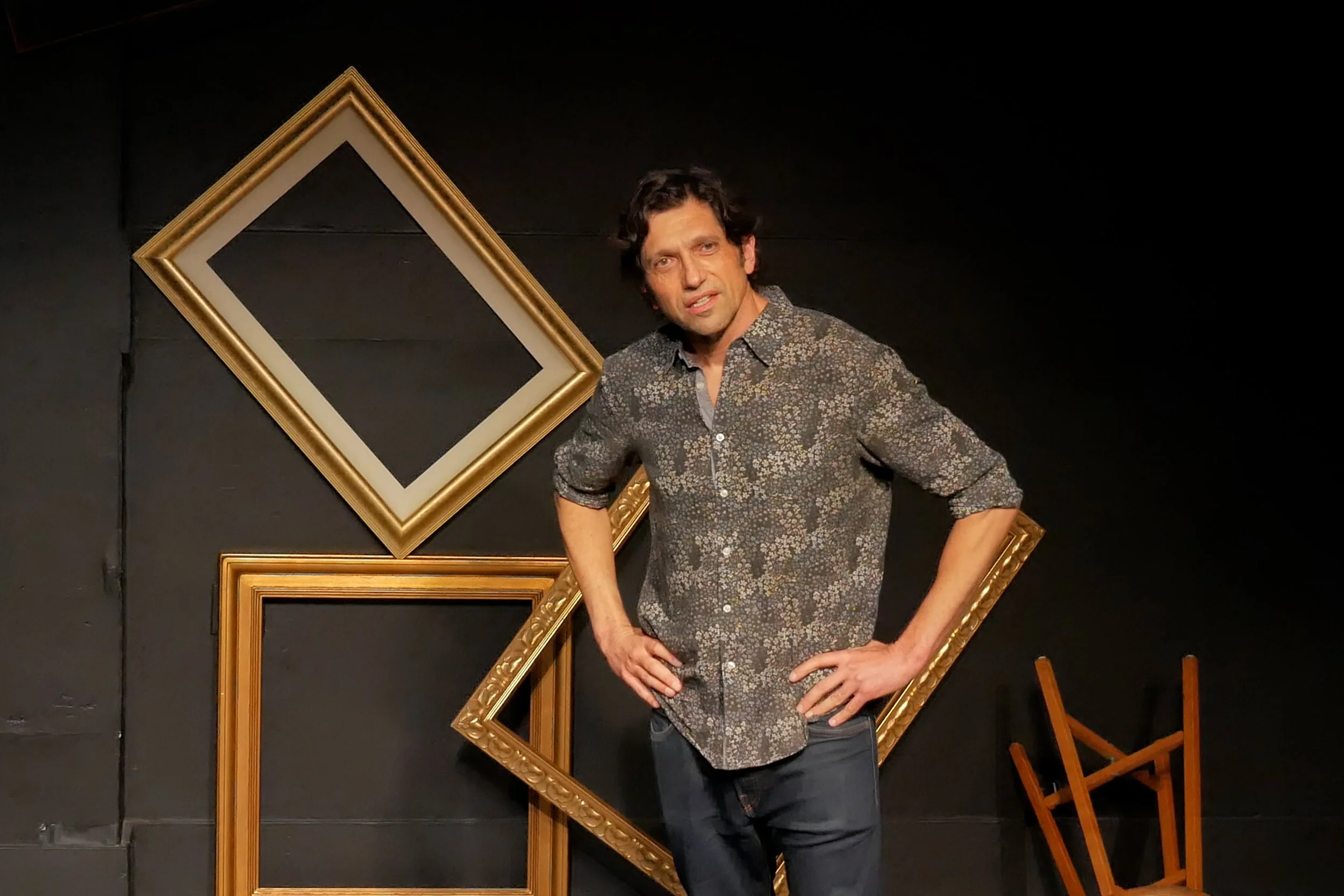
Let’s face it—Adam Strauss is an art form of his own. No one else has been brave enough to face his obsessive-compulsive disorder on stage and tell us about his many hilarious struggles over the years.
Now, in a brilliant set, he takes us to his latest cures, his ongoing love connections, and a new, high-tech solution that blows our minds. A few years back, I watched in wonder—more than once—his famed “The Mushroom Cure,” where he recounts his hilarious experiments with shrooms, attempting to cure his lifelong OCD. That show bravely exposed his insecurity, self-doubt, and crashing love affairs with idealized women. A great success, the show ran for years, establishing Adam as a comedic force.
And he even joined Michael Pollen in research on micro-dosing of mushrooms to find new ways to cure OCD, a debilitating condition.
Now, he takes us on a New York journey, into clubs and parties, and a girlfriend he follows all the way to Greece. He takes the divine Anna’s warning seriously when she says, “Do you want to die alone, like a horse?” The San Francisco audience roars at this quintessential message. Somehow, “the horse” embodies Adam’s fears and insights.
Anna’s brilliance matches Adam’s wit and arms him against self-destructive urges. They are on a beautiful Greek island, and her father is carving tombstones in the garden. And the woman of his dreams opens his eyes to himself—a burning comic moment!
Adam’s one-man show is packed with self-revelation and intriguing characters. The stage is full of wonderful people, funny, smart people, wrapped up in one talented talker.
Even the Greek God competitor for Anna’s love appears as Adam takes us from Greece, back to New York, and to California, trying to solve the riddle of Anna and Adam. We feel like traveling with him, waiting for the next rush of enlightenment.
I am always on the edge of my seat at an Adam Strauss monologue. He puts us on the cusp of experience with him. His flashes of insight become our own. Adam can, by proxy, see and solve our neuroses, too.
Adam is the most reassuring guide—he challenges us, and then he takes us on a ride calculated to cure all ills, not just his own.
He makes me think so much that it takes weeks to write the review—it’s true. A humbling trip that surely is akin to a mushroom cure without the fungus.
Adam is the victim of his own success—he always comes up with ideas and stories that are unique to him, and that take thought and pondering to absorb. Adam takes us into interior and exterior worlds where few of us could penetrate without his solid companionship.
And I haven’t even mentioned the huge and room-rocking ending that uses a live AI therapist, which carries on a profound conversation with our hero. The therapeutic miracle is unique, guaranteed to surpass even “The Mushroom Cure.”
There’s no point in waiting—if you have not seen “Before I Forget” at The Marsh in San Francisco, do it NOW. Get there this weekend, and Adam will save us all from “dying like a horse”!.
“Before I Forget” –written & performed by Adam Strauss, directed & developed by Jonathan Libman, produced by Carl Ford, at The Marsh, San Francisco.
Info: themarsh.org- to December 13, 2025.
Cast: Adam Strauss (in many roles)
“Ada & the Engine”: Bold Young Woman IS Godmother of Tech—at The Pear
By: Lauren Jiang | Date: Dec 3
Light bulbs drop from the ceiling. The stage is scattered with old Apple computers and cables, bringing modern innovation to a historic setting. Could this perhaps be something like The Big Bang Theory?
Far from that. “Ada & the Engine” captures the hidden story of Ada Byron Lovelace, who continued her father Lord Byron’s poetic legacy. Ada, an original spirit, brought romantic inspiration and dynamism to early modern science.
As the title character, Angel Lin’s bright and sunny voice sparkles with innocent energy. Ada, a passionate, spritely young woman, loves “maths.” She is fascinated by the eccentric and intelligent Charles Babbage (David Boyll), an older man who is developing a revolutionary mathematical machine. In his portrayal of Charles, Boyll balances loyalty and wit.
Charles is developing the early form of a modern-day calculator. He finds an enthusiastic supporter in Ada, who contributes her unique insights. Their odd couple friendship highlights their personalities, sparking Gunderson’s play.
Ada’s nature goes against the traditional, sexist British views, which limit women to roles of mother and wife. Her interest in marriage pales beside her passion for the new machine. It’s a struggle women confront today, especially in STEM, as they face outdated ideas of gender roles. U.S. culture often pressures women to conform to male ideals, making it even more revolutionary to stick to their true passions.
More following Ada’s building the mathematical machine, the play designs a new future, exalting original idea about progress. Ada represents the freedom to experiment with newfound knowledge.
Ada pushes through life with inspiration, against all odds and judgments. Playwright Gunderson explores technology as a tool for creativity and expression, offering hope for change to come.
“Ada” reminds us that innovators have faced resistance from power-hungry officials since practically the beginning of time.
When Charles angrily rants about the crooked, self-interested British government that is defunding his engine, we can easily see the parallels to our current government’s defunding everything from scientific research to food aid to the arts. Looking beyond the charming Romantic costumes and British speech, Gunderson’s play hits home with us today.
As Ada’s mother, Lady Anabella Byron, Maya Capur presents a forceful, confident presence. Capu’s beautiful, resonant voice and manners transport us to England in 1800, the Romantic Era, in elegant period costume. Capur is headstrong and captivating in her command of the stage.
As Mary Summerville, Babbage’s trusted sidekick, Olga Molina plays Ada’s part-time babysitter and Charles’ confidante.
Lord Lovelace (Joshua Bao) woos brilliant Ada and marries her. Bao brings reassurance as Ada’s steadfast companion. He firmly expresses his initial concerns about Charles, but inevitably trusts Ada’s judgment.
In a heavenly fantasy, Ada meets her long-dead father, Lord Byron. Doy Charnsuphardinr captures Byron’s witty warmth in an emotional and surreal encounter.
This play combines classic British period drama with philosophical musing on technology. Familiar characters like the misunderstood scientist, the outcast teenager, and the protective mother ring true.
In Mountain View, we easily see the resonance with Silicon Valley innovation. The show hits home for women in tech and innovators everywhere.
“Ada & the Engine” by Lauren Gunderson, directed by Miller Liberatore, scenic design by Louis Stone-Collonge, hair & makeup by Melissa Mei Jones, at The Pear Theatre, Mountain View, California.
Info: thepear.org-to December 7, 2025.
Cast: Angel Lin, David Boyll, Maya Capur, Joshua Bao, Olga Molina, and Doy Charnsuphardinr.
“Into the Woods”: Fairy Tale Musical Exalts Connectivity—at SF Playhouse
By: Francine Foltz | Date: Dec 2
People who like musicals with substance tend to be Stephen Sondheim fans, and for many, the apotheosis of Sondheim’s writing is “Into the Woods,” which plays this holiday season at San Francisco Playhouse. Under the supremely able direction of Susi Damilano, a collection of fairy tales becomes a parable of transformation.
The story brings together the familiar figures of Little Red Riding Hood (perky Olivia Hellman), Cinderella (charming Jillian A. Smith), Jack of Beanstalk fame (brawny William I. Schmidt), and Jack’s long-suffering mother (melodious Eiko Moon-Yamamoto).
James Lapine’s inventive story unites them with The Baker (much-loved Phil Wong), his Wife (lovely Ruby Day), and the Witch (splendid Alison Ewing), whose curse they must try to remove. In the process, lessons are learned, and lives are lost.
Director Susi Damilano fills the stage with sensuous delights
Thanks to Heather Kenyon’s scenic design, the woods are “lovely, dark and deep.” Yet, somehow, the stage also accommodates three sub-sets and sixteen cavorting actors. Trevor March and Johann Santiago Santos play double roles: They first appear as lascivious wolves, enticing Red Riding Hood off the path in a dance both scary and exciting; then they appear as charming princes, intent on acquiring unattainable prizes.
Maureen McVerry plays Milky White, an appealing cow with Bo Peep leggings, and a mysterious narrator (Matt Kizer) poses meaningful riddles. A striking redhead in a gorgeous green gown (Alison Ewing) appears in a puff of smoke.
From her rotating tower, Rapunzel (Samantha Rich) sings a brief, beautiful aria. Jack retrieves riches from the land of giants. Cinderella reluctantly yields her slipper, while her greedy stepmother (Heather Orth) with her selfish daughters (Rachel Fobbs & Callahan Gillespie) get what they deserve.
Sondheim, soaring above it all
Sondheim’s score is performed by a band of hidden musicians. The songs range from duets to quintets to ensembles—all studded with stunning rhythms and comic rhymes. This is a fairy tale for grown-ups. Children will delight in the antics of the play: leaping princes and coloratura princesses. But after intermission, the happy ending implodes, and the residue of the characters’ thoughtless actions leaves a giant footprint.
The witch’s petulant complaint that “children don’t listen” transforms into the warning to “be careful what you say: children WILL listen.” After many characters, including innocent ones, suffer for their past actions, we cling gratefully to the survivors’ claim that “we are not alone.”
“Into the Woods” tells a timely tale about human frailty. Finally, it’s the problematic love of parents for their children and the recognition of our mutual responsibilities that bind us to one another.
For all of us, young and old, Sondheim offers the antidote to Scrooge: “You are not alone! No one is alone!” Celebrate the true holiday message with this delightful, self-made family of survivors.
“Into the Woods” by Stephen Sondheim, book by James Lapine, directed by Susi Damilano, music direction by Dave Dobrusky, choreography by Nicole Helfer, scenic design by Heather Kenyon, at SF Playhouse, San Francisco. Info: sfplayhouse.org – to January 17, 2026. Cast: Phil Wong, Ruby Day, Alison Ewing, Jillian A. Smith, Olivia Hellman, William I. Schmidt, Samantha Rich, Trevor March, Johann Santiago Santos, Heather Orth, Rachel Fobbs, Callahan Gillispie, Matt Kizer, Maureen McVerry, Eiko Moon-Yamamoto, and Ted Zoldan.
“Cabaret” Seduces Young & Old into the Holocaust—at OTP
By: Jenyth Jo | Date: Nov 28
Oakland Theater Project’s rousing “Cabaret” compels us to pay attention to 1930s German youth as they slip into Nazism.
As non-white immigrants disappear into ICE vans today, will we, like fictional American Clifford Bradshaw, stand up against racial hatred and white nationalism? Or does “Money make the world go around?”
A pulsing beat pulls us into Berlin’s Kit-Kat Club, where performers dance in Doc Martens combat boots, ribbed tights, and leather fetish wear. Everyone wants to join the party, and you might even be invited onstage.
Show tunes become hip-hop and rap rants, as music directors Ray Archie and Werd Pace cleverly remix the rhythms. An angry edge to “Mein Herr” and “Money” reminds us of young American disillusionment and bitterness today.
MC Deanalís Arocho Resto grabs our attention with a rousing version of “Willkommen.” Resto’s voice ranges from stunning to powerful to terrifying, as notes slide from shriek to command. Her comic transformation of “If You Could See Her” makes us roar with laughter.
As Sally Bowles, Sharon Shao’s exquisite voice highlights petulance in “Don’t Tell Mama.” Singing or speaking, Shao captures Sally’s girl-woman vulnerability, as she prances in sexy costumes. After “whipping” Cliff with her long-fringed purse, she transforms it into a vest and skirt. Magic.
James Mercer II’s American writer Clifford is seeking artistic inspiration in Berlin. Whether he’s sharing joyful kisses with both boys and girls or caressing Sally’s belly, Mercer invokes an appealing soft side. Cliff sings, “Don’t Go” to Sally, cementing their superficial bond. But Mercer springs to action for a fight, standing against the creeping Nazis.
In the senior love story, Fraulein Schneider (Beth Wilmurt) croons, “It Couldn’t Please Me More” on her ukulele. Herr Schultz (Joshua Pollock) lovingly sings, “Marriage” back to her. But Hitler’s rise dooms their harmony.
As Nazi spy Ernst Ludwig, Megan Trout’s extraordinary acting and dancing grip our attention. In one number, she holds a contortionist pose, like a spider about to pounce. Her violent nationalism explodes the engagement party, as she warns Frau Schneider against marrying a Jew.
Director Erika Chong Shuch’s unique choreography fills the thrust stage, as lithe dancers twirl and grind seductively. In “Two Ladies,” the ensemble forms several ménage à trois that tumble erotically. When dancers manipulate rectangular mirrors into a swastika, we get a blink of the future. As the cast departs, slipping out of their shoes, they acknowledge the Holocaust to come.
Today, thousands of books are banned, as in Nazi Germany. Thousands sit in deportation camps. 1.2 million people in U.S. prisons. Investors build for-profit prisons, but not hospitals or schools.
“Cabaret” dramatizes our parallels to the rise of Hitler’s Germany. We must make sure fascism loses this time. OTP vividly shows us one possible future.
“Cabaret” – book by Joe Masteroff, based on the play by John Van Druten, and The Berlin Stories by Christopher Isherwood, music by John Kander, lyrics by Fred Ebb, directed & choreographed by Erika Chong Shuch, music directed by Ray Archie & Werd Pace, costumes by Ashley Renee, sound by Matt Stines at Oakland Theater Project, Oakland.
Info: oaklandtheaterproject.org - to Dec. 14, 2025.
Cast: Sharon Shao, James Mercer II, Deanalís Arocho Resto, Beth Wilmurt, Joshua Pollock, Ije Success, Megan Trout, Werd Pace, Mylo Cardona, Jack Grable, Antonella Scogna, and Apollo Javier Sohrabi.
Production Photos
View Photo Captions
- Deanalís Arocho Resto
- Deanalís Arocho Resto, Sharon Shao, Ije Success, and Mylo Cardona
- Beth Wilmurt and Megan Trout
- Joshua Pollock and Beth Wilmurt
“It’s a Wonderful Life: A Live Radio Play” Provides Loving Laughs—at Spreckels
By: Mary Lou Herlihy | Date: Nov 27
My first trip up to the Spreckels Performing Arts Center did not disappoint. Easy to find, easy to park and a beautiful sprawling courtyard and campus suggest that this community supports the arts.
“It’s a Wonderful Life: A Live Radio Play” presents a world where angels intervene, good guys win, and all lives matter— a perfect start to the holiday season.
Frank Capra’s classic film It’s a Wonderful Life, essential holiday fare, reminds us that our lives matter, community is powerful, and even in times of deep darkness, we cannot grasp the big picture.
As we choose seats in the cozy Condiotti Studio Theatre, a dapper costumed character welcomes us. On a table, we see potential sound effects: push mower blades, a wash bin, and a metronome. Foley Sound Artist Gabe Adelman brings them to life in delightful ways.
“WBFR RADIO” and “ON AIR” signs put us in a 40s radio studio. Applause signs light up but we applaud whenever. When Rosie Frater brilliantly mimics an infant crying, or a drunken partygoer, we erupt in spontaneous laughter and applause.
Freddie Filmore (delightful John Craven) warms us up for Christmas Eve in New York City, in a perfectly modulated radio voice. “Five, four, three—We are LIVE.” Women in chic 40s fashions huddle and harmonize to the quirky WBFR jingle. Piano by Janis Dunson Wilson and corny radio commercials sprinkle whimsy.
Five performers play many movie roles, using voice, physical, and prop tricks. As Jake Laurents, Nic Moore plays a passionate George Bailey; his youthful zest for life enlivens early scenes. When life’s unexpected hurdles weigh on him, we brace as he berates befuddled Uncle Billy (brilliant by John Craven).
The talented ensemble benefits from Craven’s versatility as he moves between characters with ease. From haughty cigar smoking Banker Potter to a needy young child, Craven holds the team together.
Ingenious Rosie Frater plays: a flirt, a mother, a floozy, a drunk, a child. She makes us laugh uproariously as she transforms. As Mary, Allison Lovelace’s sympathetic expressions convince us of her dedication.
As Clarence, Matt Farrell shifts gears smoothly to Giuseppe Martini, an Italian immigrant. When George lifts him from poverty, we see how small gestures can be life changing.
While we came for the fun and Foley, we left with the familiar “It’s A Wonderful Life” warm feeling of community as we sang “Auld Lang Syne” together.
“It’s a Wonderful Life: A Live Radio Play” by Joe Landry, directed by Jenny Hollingsworth, set & lighting design by Eddie Hansen, costumes by Adriana Gutierrez, sound design by Jessica Johnson, and live piano by Janis Dunson Wilson at Spreckels Performing Arts Center, Rohnert Park, California. Info: spreckelsonline.com - to December 14, 2025.
Cast: John Craven, Nic Moore, Allison Lovelace, Rosie Frater, Matt Farrell, and Gabe Adelman.
Production Photos
View Photo Captions
- Gabe Adelman
- Nic Moore, John Craven, and Allison Lovelace
- Allison Lovelace and Rosie Frater
“Sunday in the Park with George” Explores Love, Life, Music—at Shotgun
By: Emily S. Mendel | Date: Nov 24
Winner of the 1985 Pulitzer Prize and nominated for 10 Tony Awards, Stephen Sondheim’s “Sunday in the Park with George” is adored by the legion of Sondheim groupies. Not really being one of them, I had never seen “Sunday in the Park with George” until Shotgun Players’ new production blew me away. I could kick myself for waiting so long to get on the Sondheim bandwagon that helped to redefine musical theater.
This two-act delight is the story of how the cutting-edge French artist Georges Seurat painted his masterpiece “A Sunday Afternoon on the Island of La Grande Jatte” (1884-1886). He used his self-developed pointillist technique (in which small, distinct dots of color are applied in patterns to form an image). This fictionalized musical portrays the artist’s urge to create and the cost of his driving need and artistic vision on his relationships with his beloved, his mother, and his peers.
In the first act, we meet George Seurat (terrific Kevin Singer), who is fixated on painting “A Sunday Afternoon on the Island of La Grande Jatte.” It’s an enormous pointillist painting of various people and their pets in the park—very different in style than the fashionable artistic works of the time. But Seurat has his own vision.
His model and mistress, Dot (wonderful Maria Sotelo), loves George, but he cannot connect with her as she wants. Rather than accept a fraction of his time and affection, she runs off to America with her boyfriend, Louis the Baker. She leaves, despite being pregnant with Seurat’s child.
Act II begins one hundred years later at the Art Institute of Chicago, home to the completed and now world-famous “A Sunday Afternoon on the Island of La Grande Jatte.” We see a descendant of Seurat (also played by Kevin Singer), who is an artist named George as well.
This modern, trendy George is involved in the contemporary art world, producing many similar, gimmicky, moving-light installations called “Chromolumes.” But the repetitive constructions leave him feeling unsatisfied and stagnant as an artist. At the end of the play, his Seurat ancestors speak to him, encouraging him to innovate and follow his heart.
The singing, lyrics, and off-site five-member band (music direction by David Möschler) are marvelous and melodic. Ably directed by Susannah Martin, the musical is neither incomprehensible nor challenging, despite the occasional comments of some Sondheim nay-sayers.
The impressive two-tier set (scenic design by Nina Ball) has a backdrop of Seurat-like painted canvases that move as needed. If anything about the staging is amiss, it is the stage size, which prevents the whole cast from effectively replicating the entire scene in the painting, with its picnickers, dogs, parasol-carrying ladies, and other assorted Parisians out on a Sunday afternoon. But they do admirably well.
Outstanding music, fantastic singing, brilliant writing, first-rate acting, and excellent direction combine to make “Sunday in the Park with George” a unique theatrical performance. Don’t miss it.
“Sunday in the Park with George” –music & lyrics by Stephen Sondheim, book by James Lapine, directed by Susannah Martin, music direction by David Möschler, scenic design by Nina Ball, costumes by Madeline Berger, lighting by Sophia Caven, by Shotgun Players, Berkeley, California.
Info: shotgunplayers.org - to January 25, 2026.
Cast: Kevin Singer, Maria Sotelo, William Brosnahan, Liz Curtis, No’Eau Kahalekulu, Kevin Rebultan, Antonia Reed, Alex Rodriguez, Jill Slyter, Matt Standley, and Lucy Swinson.
Production Photos
View Photo Captions
- Marah Sotelo and Kevin Singer
- Jill Slyter and Kevin Singer
- Lucy Swinson and William Brosnahan
- SFBATCC Go See! production
“Mother of Exiles”: A Melting Pot Imperiled—at Berkeley Rep
By: Mary Lou Herlihy | Date: Nov 24
“Mother of Exiles” by Jessica Huang reveals cruelties that our modern life delivers. Abuse of immigrants and neglect of environmental perils accumulate in her sweeping epic—until catastrophe becomes reality.
Urgent issues resonate: How will Trump’s brutal immigration actions plague future generations? How do environmental policies crafted by oil companies and climate change deniers imperil our future?
Huang explores these urgent questions by going back in time and moving forward generations into the future. Over a sweeping 165 years, we meet descendants of an immigrant farmer and an Angel Island detainee.
Projected titles announce the three distinct movements of Huang’s play:
1898 Angel Island: where we meet Eddie Loi (powerful Michele Selene Ang), a Chinese woman facing imminent deportation, even as she is about to give birth.
1999 Miami Port: where we meet Eddie’s great grandson, Braulio (Ricardo Vásquez), a Border Patrol agent, comically searching for his life’s purpose.
2063 At Sea: on a boat in the future, we meet Braulio and Claudio’s daughter Karina (Monica Orozco) fleeing from a drowned Miami. She’s a grandmother looking for land and begging for help from the “authorities” at sea.
Biblical storms, created with stunning projections and thunderous claps, suggest the passage of time, generational change, and impending climate disaster.
The most compelling story begins the play, with Eddie Loi disguised as a man. In flashbacks from stark quarters on Angel Island, she falls in love with a Hispanic farmworker named Modesto who impregnates her. Against all odds, a shining plum sprouts from a tree and life begins again.
Eddie tries to conceal her pregnancy. The hostile guard (David Mason) insists she swap her mannish Chinese garb for a dress. She gets help from a Spanish-speaking cook (passionate Camila Moreno) who takes pity. In Eddie’s harrowing childbirth scene, we feel her physical and emotional pain. We detest the missionary (Emma Kikue) who ‘reassures’ Eddie that fifty per cent of babies in her orphanage will survive!
Generations of characters make heroic choices that result in a baby’s survival—a future guaranteed. Through the three stories, we struggle to connect the dots linking Chinese, Hispanic, and other unknown ethnicities back to Eddie Loi.
Ancestors serve as guardians and guards. In corporeal and projected form, we hear and see their talking heads and figures. Bathed in lush watery blues and greens, the stark stage often feels like an underwater prison. Ancestors watch from above, waiting for their progeny to remember lessons taught but forgotten.
Braulio, Eddie Loi’s great-grandson, a Border Guard in Miami, cannot figure out what he did to summon Eddie, who appears on the catwalk above. Braulio looks for meaning in his Border Patrol job, while his feckless, cartoonish coworkers lack his imagination and courage.
In Huang’s vision, courage, compassion, and perseverance connect generation after generation. But what will happen to these forsaken environmental refugees, and are we destined to become them?
Huang’s drama and prophecy, sprinkled with oddly comedic moments, form a grand multi-generational melting pot of American exiles. I am still figuring it out—puzzled by some choices, struck by moments of poetic beauty, and pondering questions of survival.
Creative team: Jessica Huang, directed by Jaki Bradley, scenic design by Riw Rakkulchon, costumes by Haydee Zelideth, lighting by Reza Behjat, sound & original music by Jake Rodriguez. Info: berkeleyrep.org - to December 21, 2025. Cast: Michele Selene Ang, Kina Kantor, Emma Kikue, Amy Lizardo, David Mason, Camila Moreno, Monica Orozco, Ricardo Vasquez, and Wayne Dexter Wong.
Production Photos
View Photo Captions
- Ricardo Vázquez and Michele Selene Ang
- Camila Moreno and Michele Selene Ang
- (front) Monica Orozco, David Mason, and Emma Kikue (back) Ricardo Vázquez and Michele Selene Ang
“Catch Me If You Can, The Musical” Makes Lying Fun Again—at Masquers
By: Mary Lou Herlihy | Date: Nov 21
“Catch Me If You Can,” a hilarious high-energy musical made from Steven Spielberg’s film, has us cheering for a pathological liar and con man. Though he’s more crooked than Lombard Street, we root for a disarming fraud and faker. Is THIS how it feels to be a Trumper?
As Frank Abagnale Jr., Danila Burshteyn’s pitch-perfect performance hypnotizes us with irresistible razzle-dazzle. Burshteyn speaks directly to us, narrating Frank’s story. He shoots knowing glances, keeping us on HIS SIDE. We’re putty in his hands, like all the suckers he fools.
FBI Agent Carl Hanratty (hilarious Nelson Brown) is always a few paces behind Frank—a noirish nerd to Frank’s hip kid. A cleverly staged scene puts Frank and Carl on opposite sides of the stage. Frank is, of course, on the FAR-RIGHT. It’s Christmas Eve and they sing “My Favorite Time of Year,” pairing two lonely, workaholic bachelors—a lawman and a con man.
Set in a Hollywood version of the 1960s, when color televisions put glamour into our homes, a huge Hollywood-style film camera wheels around, capturing Frank Jr.’s endless trickery. Frank Sr. (charming Arup Chakrabarti) buys the biggest TV on the block to announce his success. In the song “The Pinstripes Are All They See,” Frank Sr. shares his lessons on the importance of APPEARING successful.
Enrico Banson directs a large and joyful team with aplomb while Music Director Camden Daly leads six talented musicians. Catchy songs and clever lyrics resonate beautifully in the stellar voices of Burshteyn, Brown, and Nicole Stanley, who plays Frank’s girlfriend, Brenda. The ensemble fills the stage with lovely harmonies, period props, playful costumes, and frisky choreography.
Starkly beautiful projections whisk us to seductive cities and simple household props bring them to life. One delightful scene projects soft, colorful bubbles behind Frank’s enigmatic mom, Paula (mesmerizing Shay Oglesby-Smith). She gently sways and sings, “Don’t Be a Stranger.”
Like Paula, the 60s women in “Catch Me” lust after more than just a rich husband. With a BIG WINK and plenty of sexy sizzle, a clutch of uniformed nurses turns up the heat, singing “Doctor’s Orders.” And because it’s a rom-com musical, one special nurse captures Frank’s heart.
The love scene between Frank and Brenda shows us Frank’s vulnerable side and features their blended voices in a duet. He’s willing to throw his lies away for the love of a caring woman. And he’s no longer looking at us with an ironic wink.
In a heartbreaking moment, when Frank Jr. goes to his dad for advice on love, his dad sings “Little Boy, Be a Man,” revealing the father’s calculated and unloving nature. In a fanciful twist, Frank Jr. has no idea how to end his own story.
We are waiting anxiously, too, for the end of Trump’s version of “Catch Me If You Can.” As a much-needed balm for the daily cons and horrors out of Washington, Masquers’ musical comedy fills us with hopeful laughter.
“Catch Me If You Can” –libretto by Terrence McNally, score by Marc Shaiman & Scott Wittman, directed by Enrico Banson, at Masquers Playhouse, Point Richmond, California.
Info: masquers.org - to December 7, 2025.
Cast: Danila Burshteyn, Nelson Brown, Arup Chakrabarti, Nicole Stanley, Shay Oglesby-Smith, Harrison Alter, and Alicia von Kugelgen.
Ensemble: Ron Abina, Kristy Aquino, Jonah Ben-Amotz, Sierra Bolar, Erika Coyne, Justin Daily, Michelle Freschi, Kamaria McKinney, and David Patiño.
Production Photos
View Photo Captions
“King Hedley II” Exposes the Weight of Survival—at Lower Bottom Playaz
By: Kheven Lee LaGrone | Date: Nov 20
In “King Hedley II,” August Wilson gives us characters who reach for better lives while knowing the odds are stacked against them. Living outside the white American mainstream, they lack access to good jobs, strong social networks, or financial safety nets. With nothing to soften bad luck or bad decisions, even the smallest dream can threaten to make their lives worse.
The Lower Bottom Playaz bring power and clarity to this demanding work. Under Ayodele Nzinga’s direction, the ensemble delivers committed, emotionally grounded performances. The intimate BAM House draws the audience close; watching felt like being a looky-loo leaning over the fence, eavesdropping on three hours of high-stakes, personal drama.
Set in the Hill District of Pittsburgh in 1985, the play gives us plenty to overhear. King Hedley II (Koran Streets) has just returned home after seven years in prison and is determined to rebuild his life. Streets brings fierce energy to the role, animating King with volatility, pride, and a searching vulnerability that persists throughout the evening.
As Tonya, King’s practical and perceptive wife, Niko Buchanan anchors the production with subtle intelligence. She makes careful choices for their survival until she’s pushed to her emotional limit. When Tonya discovers she is pregnant, she delivers one of the play’s most electric moments: an urgent, impassioned monologue explaining why she believes an abortion is the only responsible choice. Buchanan attacks the speech with clarity and conviction, making the character’s pain unmistakably real.
Ayodele Nzinga—doubling as director—also plays Ruby, King’s mother, who left years ago to pursue a singing career before returning to the Hill District. Nzinga embodies the role with the natural authority of a community elder. Regional Wilkins brings swagger and danger to Elmore, an aging hustler who strides onstage looking like trouble—still ready to fight, even if he may be too old for it.
If there is a challenge in Wilson’s writing, it lies in the lengthy monologues that appear throughout the play. Tonya’s speech, though powerfully delivered, occasionally risks pulling attention away from the narrative. At times, the density of Wilson’s long paragraphs feels unwieldy. Still, the cast handles the language with remarkable ease. Even when the text becomes heavy, the actors keep their delivery natural and emotionally truthful, never losing the heart of their characters.
It is no surprise that “King Hedley II” was a finalist for the 2001 Pulitzer Prize for Drama. The Lower Bottom Playaz honor the play’s stature by committing fully to its emotional weight and complex themes. Their familiarity with the world they inhabit makes every character feel lived-in and authentic.
Experiencing the production at BAM House also highlights the communal spirit that defines the Lower Bottom Playaz. Before and after the performance, audience members chatted warmly, shared reactions, and greeted friends and family. The sense of community extended beyond the stage, including the theater’s own members who contributed food and hospitality. It all added to the feeling that this story—and this production—belongs deeply to the people who gather around it.
Creative Team: August Wilson - Author, Ayodele Nzinga - Director, Cat Brooks - Assistant Director, Stephanie Johnson - Lighting Design, Ashley Munday - Lighting Assistant, Kenitra Love - Stage Manager and Board Operator. Info: lowerbottomplayaz.com - to November 30, 2025 Cast: Koran Streets, Reginald Wilkins, Niko Buchanan, Kenzeill Love, Pierre Scott, and Ayodele Nzinga
“Drapetomania”: The ‘Disease’ of Freedom Calls Us to Action—at The Marsh, Berkeley
By: Mimi Pinson | Date: Nov 15
Not many know the term that Wayne Harris chose for the title of his latest solo show: “Drapetomania,” now extended to November 22, at The Marsh, Berkeley. But leaving the theater after the 75-minute performance, the word becomes hard to forget. Harris’ performance shows us the power of liberation, traveling from Oakland to Palestine to shake off the paralysis of a so-called ‘disease’—or tool of oppression. Drapetomania was coined by a 19th-century American physician from the South, Samuel A. Cartwright, naming it a mental illness that made Black people try to escape enslavement. Cartwright insists —that a Black person who wants to be free must be insane! Although his idea is ridiculous, its history demonstrates the rigid, pernicious racial assumptions that have undergirded American healthcare and government for centuries. Drapetomania is still with us. Harris draws upon the concept of “drapetomania” throughout the play. At times, he explains it in Cartwright’s words, affecting a Southern drawl from behind a podium. But just as effectively, Harris flips the prescribing lens of Cartwright’s “discovery.” The supposed symptoms of drapetomania—being sulky and dissatisfied, with an uncontrollable urge to flee or fight against unjust conditions—are instead used to give voice to the denial of humanity to oppressed peoples. And Harris sets no limits on how far the label can go: We are afflicted with it as we live through ICE raids, police violence, and a felon president. Harris takes us on a whirlwind tour of echoing histories: The Civil Rights Movements, the occupied West Bank in 2012, and the contemporary student marching band scene (which, Harris notes, is surprisingly queer friendly) all factor into Harris’ study on drapetomania. Although disparate story-lines meander at points, Harris’ witty storytelling maintains momentum despite a not-always-obvious through-line. He finds the comedy in everyday life, wringing humor from characters like a smarmy Baptist preacher, through which Harris delivers a bombastic sermon and recounts his relationship with faith. From his own life, he lovingly depicts a former student Mara, a flag twirler from Atlanta. Even when Harris feels despondent facing America’s descent into fascism, he remains steadfast for Mara, whose transgender identity makes them a MAGA target. His stay in the Middle East also emphasizes earnest human connection, and the material was no doubt included in response to the two-year Israel–Hamas war, deemed a genocide by the United Nations. Eleven years before that eruption, Harris led a theater workshop for high schoolers in Ramallah. The students felt a connection to his material on Dr. Martin Luther King, and Harris saw them for what they were—just kids. “Drapetomania” not only asks, “What are you going to do?”—but “Who are you doing it for?” Despite regretting years spent as a “couch activist,” Harris values the act of simply bearing witness. Witnessing means another person is being seen: Maybe a Palestinian student hears their own struggle in “Letter from a Birmingham Jail.” Or maybe it’s any person called “crazy” for running toward freedom.
Drapetomania—written and performed by Wayne Harris, directed by David Ford, at The Marsh, Berkeley. Info: themarsh.org to November 22, 2025. Cast: Wayne Harris (in many roles).
Production Photos
View Photo Captions
- Wayne Harris
- Wayne Harris
“The Seat of Our Pants” Invokes Music to Decipher Eons of Chaos—at The Public
By: Mary Cushman | Date: Nov 14
I remind my preschoolers, when we’re reading a book about dinosaurs, that “there were no people back then.” Not so in “The Seat of Our Pants,” where an American family lets a dinosaur and a mammoth (both adorable) into their living room to get out of the cold and be treated as pets. This new show at the Public Theater in NYC, is a musical based on Thornton Wilder’s 1942 Pulitzer Prize-winning play “The Skin of Our Teeth.”
Both the original play and this musical adaptation by Ethan Lipton follow the Antrobus family and their melodramatic maid, Sabina, through the Ice Age, the biblical Great Flood, and the end of a massive war—all while living a traditional suburban life in (fictional) Excelsior, NJ. It sounds bizarre, and it is.
Some characters have known each other for thousands of years. As Sabina, Micaela Diamond often breaks the fourth wall, complaining early on that “I don’t understand a word of this play.” Diamond is wonderful in the role. Sabina is less a femme fatale than a desperate young fantasist who wants fame and fortune, but she can be satisfied with ice cream and a ticket to the movies.
The cast is terrific under Leigh Silverman’s direction. Ruthie Ann Miles portrays Mrs. Antrobus with quiet power; she looks unruffled even as her world goes through one existential crisis after another. Shuler Hensley is a wonderfully ordinary Mr. Antrobus, the kind of man who might make dad jokes, despite being brilliant enough to invent the alphabet and the wheel. (I did say the plot is bizarre.) The actors playing the Antrobus children, the Announcer, the Telegram Boy, and the Fortune Teller stand out—and the Ensemble is marvelous as well.
The stage design is folksy and sometimes playful, with a few rows of audience seated at the back of the stage, and a single row of musicians on either side. In Act I, the musicians wear vests that match the colorful wallpaper of the Antrobus’ house. In Act II, they switch to short red and gold vests for the Atlantic City convention celebrating “The Ancient and Honorable Order of Mammals, Subdivision Human.” The animal delegates cheerily sing, “Everyone Loves to Go to Conventions” in cheesy red and gold outfits topped by majestic animal heads. For post-war Act III, the musicians pare down to drab shirts.
An earlier song, “Stuff It Down Inside,” is beautifully sung and sounds like a lullaby, despite its tense and anxious lyrics about repressing your fears and worries to hide them from your family. The show’s finale, “We’re a Disaster,” employs choreography that starts with each cast member making individualized jerky movements, releasing their anger, tension, and fear. Gradually they switch to unison dance moves, and it seems life can go on if they face their struggles together.
This is a production that both honors Wilder’s play and adds or replaces material to make it resonate for us now—more comic in some places and more sobering in others. Sabina, in her long opening address to us, originally ends with “we made it through the depression by the skin of our teeth.” But here “the depression” is replaced by a lengthy (and speedy) list that includes the pandemic and our more recent woes.
In Act II, a pelican, one of the convention delegates, arrives late, splotched with a mysterious black substance that we recognize as oil. She is later silently carried across the stage, limp in another delegate’s arms.
In Act III, Lipton takes out a somewhat dated section about food poisoning and replaces it with a fight about union rights and inequality between the play’s stars and its supporting actors. Throughout there are references to the importance of books and the arts—key to the amazing resilience of human beings—as irrepressible and noble as they are pig-headed and destructive.
In Act I, as the glaciers are approaching and it’s freezing inside, Mrs. Antrobus receives a telegram from her husband that advises, “Just keep them [their children] warm. Burn everything except Shakespeare.” How fitting to hear those lines in a production at the Public Theater, which started its wonderful history as the New York Shakespeare Festival.
“The Seat of Our Pants” has been in the works for ten years, and we are lucky that it bursts on the scene now. In the midst of our current climate crisis, wars, and chaotic selfishness, the new musical shows that all of humanity must work together to save ourselves—and the planet—from destruction. Will we survive by “the skin of our teeth,” one more time?
“The Seat of Our Pants” –directed by Leigh Silverman, based upon the play “The Skin of Our Teeth,” by Thornton Wilder; adaptation, music, & lyrics by Ethan Lipton; choreography by Sunny Min-Sook Hitt, at The Public Theater, New York City.
Info: publictheater.org – to December 7, 2025.
Cast: Ben Beckley ( Ensemble), Ally Bonino ( Fortune Teller), Bill Buell ( Turkey/Ensemble), Damon Daunno ( Henry Antrobus), Micaela Diamond ( Sabina), Amina Faye ( Gladys Antrobus), Andy Grotelueschen ( Announcer/Ensemble), Shuler Hensley ( Mr. Antrobus), Allison Ann Kelly ( Ensemble/Musician), Michael Lepore ( Telegram Boy/Ensemble), Nat Lopez ( Ensemble), Ruthie Ann Miles ( Mrs. Antrobus), Geena Quintos ( Mammoth/Ensemble), David Ryan Smith ( Ensemble), and Ruth E. Sternberg ( Mr. Fitzpatrick).
Production Photos
View Photo Captions
- Ruthie Ann Miles, Shuler Hensley, and the company of “The Seat of Our Pants”
- Shuler Hensley and Micaela Diamond
- Amina Faye, Ruthie Ann Miles, and Damon Daunno
- Bill Buell, Andy Grotelueschen, and the company of “The Seat of Our Pants”
“The Break-Up! A Latina Queer Torch Song”: Blending Belly Laughs and Tears—at The Rhino
By: Yael Bright | Date: Nov 13
Tina D’Elia Tangoes with Heartbreak, SF Style
In a daring one-woman show, Tina D’Elia fights the uphill battle of a Bay Area lesbians who break up with their lovers. D’Elia plays a host of colorful queer roles all facing loneliness head-on together.
D’Elia’s dreamy dramedy “The Break-Up! A Latina Queer Torch Song” features trans-cendent characters attempting to recover from the emptiness of lost love.
Her queer folk deal with the grief of their break-ups in a metaphysical middle-land in the heart of San Francisco. Though deeply concerned with longing, the show is embellished with whimsicality, featuring Simpson-yellow walls, evil talking cats, and Michelin-star hedgehog chefs. While still leaning into the pain, D’Elia offers an imaginative, comic approach to life-changing losses.
Starring introspective femme Trina Marina in a purple sweatsuit, the recently broken-up-with lead joins a therapy group for heartbroken queer people. The members converse over snacks made by hardworking hedgehogs, adding a pleasing dollop of fantasy. All of them are played brilliantly by Tina D’Elia.
A Black queer elder called Justice is the ringleader and facilitator of this queer ex-lovers’ soiree. Justice experimented with his sexuality and hurt his ex-wife in the process.
Fabulous, yet lost vagabond Popo is searching for his soul. He testifies about a steamy Spanish love affair gone awry many years ago.
Soon (to-be-happy), a queer woman with a squeaky voice and zany disposition, is recovering from losing her childhood friend and lover. D’Elia illuminates each persona with a delicate understanding of each character she crafts.
Trina relives the hilly highs and lows with her butch ex, Helen Rodriguez, aka ‘HR.’ We follow their dates, debates, and delights. Their identities unfold in revealing conversations, during walks in Dolores Park, motorcycle rides over the Bay Bridge, and Rom-com marathons in HR’s Oakland apartment.
D’Elia’s great success emerges in her execution, using few props. On a bare stage in Rhino’s storefront theater, D’Elia creates a Hollywood world full of fascinating, otherworldly characters with the help of clever lighting design and a stellar soundtrack.
D’Elia shapeshifts, using movement, mimicry, and mime. She dramatizes discotheque dance numbers and young romance in a sunlit park. On the park swings, unrequited love blossoms through brilliant stage design and clear understanding of illusion. You can almost hear the swings squeaking.
Tina D’Elia’s piercing gaze and body language convey the vulnerabilities of four idiosyncratic, queer characters of varying races, ages, and genders. Each of her characters is bold, striking us as individually true, authentic, and exciting.
In Popo’s case, his RuPaul-esque flair gives his character a raw authenticity. Soon (to-be-happy) bottles up her emotions and flies off on bubbly tangents. Justice is laid-back and poised.
Each lovelorn character elaborates upon their feelings. Trina and HR reenact 80s Rom coms from a queer point of view. Modern English songs and soulful Spanish ballads flow from the play’s soundtrack.
What better place to perform such an evocative and honest show than the historic Theatre Rhinoceros, America’s longest running LGBTQ+ playhouse in San Francisco’s iconic gayborhood?
Whether you are recovering from a breakup, longing for a shoulder to cry on, or eager to see hedgehogs baking bread sticks, “The Break-Up!” offers the perfect night out in the Castro.
“The Break-Up! A Latina Queer Torch Song”–written and performed by Tina D’Elia, directed by Mary Guzmán, developed by David Ford, costumes designed by Christine U’Ren, lighting by Colin Johnson, stage manager Raye Goh, produced by John Fisher& Crystal Liu, by Theatre Rhinoceros, San Francisco.
Info: therhino.org- to November 23, 2025.
Cast: Tina D’Elia (in many roles).
Production Photos
View Photo Captions
“Mary Jane” Delivers a Mother’s Compassionate Revelation—at Magic
By: Philippa Kelly | Date: Nov 12
“Mary Jane,” by the Actors’ Reading Collective at Magic Theatre, asks some tough questions: How do we care for society’s most vulnerable when the last drops of resilience have been wrung from exhausted parents and medical staff? How do caregivers climb an ever-higher mountain when the ground is caving beneath their feet?
By activating the profound layers in Amy Herzog’s script and highlighting its glimmering moments of humor, director Amy Kossow delivers a powerful impact. I was riveted by the production, and I thoroughly recommend it. In Kossow’s hands, this orchestral marvel starts dark and gets darker, and yet we find ourselves laughing in the most surprising ways.
In her director’s note, Kossow, speaking from personal experience, talks of “the war that must be waged” to preserve and develop a fragile life. “Mary Jane” takes us into this battle, amidst the beeping and whirring of medical noises—thanks to Cliff Carruthers’ brilliantly economical sound design.
As Mary Jane, Lisa Morse makes the mother’s heartbreak very real. The life of Alex, her two-and-a-half-year-old son, is increasingly precarious. Alex’s birth at 25 weeks was too difficult for his father, and Mary Jane has been raising her son alone. With dignity, equanimity, and irresistible humor, she draws us into her daily struggle to save her child.
During Alex’s treatment, Mary Jane interacts with characters who illuminate her psyche. She finds a friend in her building supervisor (magnificent Leontyne Mbele-Mbong) who urges self-care. Mbele-Mbong later segues into a dignified hospital chaplain, recently ordained as a Buddhist nun.
Stacy Ross shows phenomenal range and specificity in her roles as a home-care nurse and a doctor struggling to get Mary Jane to face an inescapable truth.
Then there’s the new mother of another medically challenged child, with whom Mary Jane gets to play the seasoned warrior, and the Hasidic mother of a hospitalized child (both companionate mothers skillfully individualized by Danielle Levin).
Rising star Anna Takayo is both a young, naïve student and a hospital music therapist, by turns infuriating and adorably ditsy. And then there’s the goldfish, Gloria – well, I’ll leave you to discover how Gloria connects with Mary Jane.
In considering the complex questions that confront us in this play, there is a huge, shadowy question hovering in spare, oblique remarks buried in conversations. Should a life that’s so compromised be compelled to continue? Would it be merciful to allow release?
Mary Jane says, “I don’t know what to hope for.” It’s not just Alex who’s caught in the prison of his bird-like body; his mother, too, becomes wholly defined by her son’s needs. She has lost her marriage, her health, and eventually her job.
Faced with the question “At what point do you pull back?” I have no idea of my own answer.
Long after this powerful play is over, you may find yourself still wondering as well. Mary Jane’s dire situation proves to be completely engaging, frequently funny, and profoundly moving.
“Mary Jane” by Amy Herzog, directed by Amy Kossow, by The Actors’ Reading Collective, at Magic Theatre, Fort Mason, San Francisco.
Info: arcstream.org - to November 30, 2025.
Cast: Danielle Levin, Leontyne Mbele-Mbong, Lisa Morse, Stacy Ross, and Anna Takayo.
Production Photos
View Photo Captions
- Lisa Morse and Leontyne Mbele-Mbong. Photo by Joe Giammarco
- Lisa Morse and Danielle Levin. Photo by Joe Giammarco
- Lisa Morse, Stacy Ross, and Anna Takayo. Photo by Claire Kelm
The Play’s The Thing: Eps 101
By: Theatrius | Date: Nov 11
N/A
Creative Team: N/A Info: N/A Cast: N/A
“The Hills of California” Finds Its Voice in the Past—at Berkeley Rep
By: Isa S. Chu | Date: Nov 11
During the historic 1976 summer heatwave in Blackpool, England, the Webb sisters reunite at their childhood bed-and-breakfast to finally face their dying mother and their conflicted past. Through flashbacks to their 1950s girl-group days, “The Hills of California” reveals the music that binds and breaks them. As they harmonize, their tinsel-fringed costumes sparkle with the joy and innocence of youth. The nostalgic scenes capture their hope before reality and obligations dull the color of life. We feel a pang of sadness, knowing where their dreams have led. As adult Jillian, the youngest of four, Karen Killeen conveys understated strength, while Nicole Mulready shows her as a shy, dreamy young girl. Jillian stayed on in Blackpool to care for their mother, growing into a woman with quiet resilience who speaks her mind when pushed. As adult Ruby, Aimee Doherty delivers a rich, layered performance, while as Young Ruby, Chloé Kolbenheyer bursts with carefree energy. With tonal shifts and subtle glances, Doherty conveys the melancholy beneath Ruby’s humor and warmth. Ruby mythologizes her older sister, Joan (thoughtful Allison Jean White), who found some success as a performer in California—but at a price that echoes painfully through their reunion. As young Joan, Kate Fitzgerald captures the hunger and drive of a girl determined to make her mother proud. After decades away, Joan returns home to reconnect with her sisters, but she suffers under the weight of shame and secrets. White’s steady performance links the longing to be forgiven and the ache of past transgressions. Amanda Kristin Nichols does an outstanding job as Gloria, the eldest, brittle and insecure. Gloria storms into the house, furious at being summoned, snapping at everyone, including her husband and kids. As Young Gloria, Meghan Carey shines like a vibrant leader, full of promise and poise. When her optimism curdles into resentment, the drama achieves a sharp emotional edge. The show truly comes alive in the 50s flashbacks. We finally meet the girls’ mother, Veronica, played with gusto by White. Veronica is convinced that her daughters will succeed as an Andrews Sisters girl group to redeem her own disappointments. Her fierce determination teeters into desperation, driving her to make choices that haunt her daughters. Two flights of crisscrossing stairs tower over the old-fashioned, run-down parlor, creating a stunning visual metaphor. They form a stairway between past and present, hope and loss. Despite strong performances and striking design, the family story drags at times. I waited for the exhale of a resolution that never quite comes. But the songs—with their shared language of love, rivalry, and memory—linger long after the curtain falls.
“The Hills of California” by Jez Butterworth, directed by Loretta Greco, scenic design by Andrew Boyce and Se Hyun Oh, costume design by Jennifer Von Mayrhauser, choreography by Misha Shields, music direction by Daniel Rodriguez, voice & dialect coach Ashleigh Reade, at Berkeley Repertory Theatre, Berkeley, California. Info: berkeleyrep.org – to December 7, 2025. Cast: Karen Killeen , Patrice Jean-Baptiste , Lewis D. Wheeler , Aimee Doherty , Chloé Kolbenheyer , Jack Greenberg , Amanda Kristin Nichols, Mike Masters, Kyle Cameron, Allison Jean White, Meghan Carey, Nicole Mulready , and Kate Fitzgerald.
Production Photos
View Photo Captions
- Amanda Kristin Nichols, Karen Killeen, and Aimee Doherty
- Mike Masters, Nicole Mulready, Meghan Carey, and Chloé Kolbenhyer
- Allison Jean White and Meghan Carey
“Sally & Tom” Brilliantly Exposes Our Founders’ Contradictions—at Marin
By: Barry David Horwitz | Date: Nov 9
Sally Hemings was Thomas Jefferson’s slave all her life. She lived at Monticello in the slave quarters on a dirt floor. Over 30 years, she gave birth to seven of his children. Who can justify the sexual abuse of a 14-year-old girl by the 41-year-old American Minister to France? What choice did Sally Hemings really have?
In Suzan-Lori Parks’ spectacular “Sally & Tom,” American history slowly comes into focus. Parks genially invites us to pierce the hypocrisy and lies. Jefferson refused to recognize the humanity of African Americans, while preaching “liberty for all.”
“Sally & Tom” shifts from a low-budget theater troupe named “Good Company” into their new play about Hemings and TJ, called “The Pursuit of Happiness.” Playwright Luce (electrifying Emily Newsome) and her romantic partner Mike (hilarious Adam KuveNiemann) bring humanity and sensitivity to the lead roles.
Director Lance Gardner delivers high-speed pacing, and scenic designer Kate Noll creates magnificent sets. The blueprint for Monticello, with its classical columns, is flanked by two busy actors’ dressing rooms. Backstage, the actors spin their props, bodies, and lines enough to thrill any theatergoer.
In a cyclone of extraordinary stagecraft, all the actors play dual or triple roles:
As modern actor Kwame playing Sally’s brother James Hemings, Titus VanHook delivers a stunning monologue exposing the cost of slavery to human life and spirit. James dares to confront two slaveholders head-on, rebuking them passionately—a thrilling moment.
In response, Jefferson addresses the audience directly, making us complicit in his excuses. He is a rich stew of contradictions, asserting boldly: “Go ahead, hate me!”
As actor Maggie and enslaved sister Mary, Asia Nicole Jackson gives an indelible, clear-eyed exposé of what it is like to be traded like cattle. Mary asserts her human rights, leaving no doubts.
As actor Ginger, and eldest daughter Patsy, Rosie Hallett brings a delightful comic edge to her roles. Hallett slips like quicksilver from concerned modern woman to spoiled brat to evolving heiress. As Patsy, Hallett shows that subtle comedy can provoke insight and revelation.
As actor, Stage Manager, and younger daughter Polly, Nicole Apostol Bruno adds a feverish frenzy to her sharp-edged comic roles. Her Stage Manager is a classic.
As actor Geoff, eye-rolling sign-holder, and slave-owner Cooper, Michael Phillis turns on a dime, astoundingly—a great comic actor. In a surprise turn, Phillis also swings to a sweet, needy lover. Phillis’s multiple talents make each role a delight.
As actor Devon and enslaved Nathan, Kenneth Ray brings a soft touch and an endearing love to treasure. When Ray steps in, he changes the temperature of a scene.
As actor Luce playing Sally Hemings, Newsome confides in us, delivering a devastating declaration: “There’s no solution, that’s the problem, there’s no solution because we live in that world.” As Sally, Newsome’s confidence, wit, and daring inspire us.
Investors in the play want James’s harsh anti-slavery speech suppressed: power decides which version of ‘truth’ gets produced. Parks reminds us that we are still fighting these battles. Who gets to say which truths get taught?
“Sally & Tom” forces us to confront what we think we know versus what happened during and after the Revolution. Their story lived on but was hidden. This is theater that digs up what some have tried to bury.
When Luce/Sally asserts that we are living in a world of hypocrisy and lies, the pieces fall together. Suzan-Lori Parks’ play brings joy and “good trouble” to the Marin Theatre stage—a work of genius and discovery.
“Sally & Tom” by Suzan-Lori Parks, directed by Lance Gardner, scenic design by Kate Noll, costumes by Pamela Rodriguez-Montero, lighting by Spense Matubang, sound by Gregory Robinson, at Marin Theatre, Mill Valley, California.
Info: marintheatre.org – to November 23, 2025.
Cast: Emily Newsome, Adam KuveNiemann, Asia Nicole Jackson, Titus VanHook, Rosie Hallett, Nicole Apostol Bruno, Michael Phillis, and Kenneth Ray.
Production Photos
View Photo Captions
- The cast of “Sally & Tom”
- Asia Nicole Jackson and Emily Newsome
- Adam KuveNiemann and Titus VanHook with the cast of “Sally & Tom”
- Michael Phillis and Adam KuveNiemann
A Driving Beat: A Passionate Journey to Identity—at TheatreWorks
By: Mary Lou Herlihy | Date: Nov 4
Jordan Ramirez Puckett’s “A Driving Beat” takes us on a road trip from Ohio to San Diego. A single white mom and her adopted son of color search for answers to questions about his origins and identity. The believably sweet and fun-loving duo fill the stage with heartfelt humor and compassion.
Fourteen-year-old Mateo (vibrant Jon Viktor Corpuz) has not yet learned to drive, but as a Latino boy, he has learned to navigate white privilege. Jon Viktor Corpuz imbues Mateo with raw, youthful energy. Magnificent stolen moments expose the driving beat of Mateo’s hungry heart.
His mom Diane (passionate Lee Anne Payne) wears rose-colored glasses. On the road, Mateo opens his mom’s eyes to injustices she would never see. But mysteries about Diane emerge at the Sunrise Hotel when a woman reawakens long forgotten desires. Turns out that Diane also knows about being an outsider.
Diane desperately wants to understand Mateo. With loving curiosity, she coaxes out thoughts he’s barely aware of having. Hesitantly, Mateo shows her how he finds a beat using the static on the car radio. Diane watches in awe as her son weaves beautiful, soulful rhythms out of thin air…
“…watching—not living—seeing—not seen—existence in—this world—in between”
Resourceful Livia Gomes Demarchi plays multiple characters; but in a playful stroke, they are all named Reina. Throughout the production, playwright Puckett and director Jeffrey Lo use mischievous touches to keep us on the alert. Their car provides regular doses of humor. Two rolling office chairs become car seats that roll apart when Mateo is pissed. Lo brings out the best in the wonderfully talented team.
As the duo hit the road, making small talk and playing car games, Mateo bursts out of the scene, leaving his mom’s world behind. Brilliant colorful lights illuminate his energetic hip hop dance. Spanish and English rap lyrics express Mateo’s angst.
When pulled over by Border Patrol in Texas, a mother’s love cannot protect her son. Mateo’s wit hides his fear when he answers “Sí, señora” to the Agent’s question “Are you U.S. Citizens?” It’s a funny line, but Diane is horrified. So are we – the moment too closely resembles the daily horrors inflicted upon innocent American citizens.
Other racist events emerge, both on the road and in conversation. Mateo shares a hideous bullying incident back at school and Diane takes off her rose-colored glasses, opening her eyes to Mateo’s world. With contrition and guilt, she agrees to teach him to drive. In a hilarious scene, Diane squirms, repositions herself, holds her tongue, and lets Mateo take the wheel.
Lee Ann Payne’s physical mastery shines as she holds back every fiber of her being, a loving mother, giving her son time to find the words he needs to ask the question… who am I? In a delightful turn, Mateo discovers that he has many possible identities.
A surprise waiting for theatergoers! Don’t miss this beautiful production that questions family and identity in a playful, loving light.
“A Driving Beat” by Jordan Ramirez Puckett, directed by Jeffrey Lo, scenic design by Christopher Fitzer, Sound Design by Cliff Caruthers, Beat Maker Carlos Aguirre, Lighting Design Steven B. Mannshardt, Costume Design by Lisa Misako Claybaugh, a Rolling World Premiere presented by TheatreWorks Silicon Valley, Mountain View. Info: theatreworks.org – to November 23, 2025. Cast: Jon Viktor Corpuz, Lee Ann Payne, Livia Gomes Demarchi.
Production Photos
View Photo Captions
- Jon Viktor Corpuz and Lee Ann Payne
- Lee Ann Payne and Jon Viktor Corpuz
- Lee Ann Payne, Livia Gomes Demarchi, and Jon Viktor Corpuz
“The Resistible Rise of Arturo Ui” Confronts Our Complacency—at Mercury
By: Isa S. Chu | Date: Nov 4
Like vegetables blended into a hearty spaghetti sauce, Brecht’s 1941 satire of Hitler’s rise to power camouflages a terrifying truth. Brecht fled Nazi Germany and wrote this “parable play” to alert the world. The renowned revolutionary German playwright is talking about us, too.
Brecht recasts Hitler’s tyranny as a gangster story in Depression-era Chicago, where a small-time gangster seizes control of the cauliflower trade. Using both prose and poetry, Brecht has created a dense, wordy masterwork. We may lose a few lines along the way, but the message is clear: tyranny is resistible.
Tyrants thrive when businessmen, politicians, and working folk turn away from reality.
At the center of this political circus is Arturo Ui (phenomenal Kevin Bordi), a magnetic menace representing Hitler. Ui appears hunched, raspy, and feral until The Actor (Norman Hall) teaches him to “perform” for the public. Ui’s posture and gestures stiffen, and his awkward gait turns into the chilling march of Nazi soldiers.
By Act Two, in an oversized suit and long red tie, Bordi evolves into a disturbingly familiar figure.
As the capitalist Dogsborough, Eileen Morris embodies the quiet art of self-justification, showing how small compromises can spiral into catastrophe. As Ui’s gang of thugs, Matt Cadigan’s Roma, Lisa Flato’s Givola, and Be! Wilson’s Giri bristle with swagger and suspicion. They remind us of the feeble personalities in the Orange Man’s cabinet.
The ensemble, including Elias Allen, Juliana Eiras, Brian Sennello, and Zane Walters, juggles multiple roles with sharp comic timing.
Live music from the on-stage piano in Act One creates a hunky-dory façade while Ui’s dark ambition bubbles underneath. The ensemble, costumed in ICE uniforms in Act Two, along with an added word “Huge” describing a large public gathering, turns Brecht’s allegory into a striking reflection of our current political chaos.
Ui claws his way to power through bribery of the elite, extortion of small businesses, and propaganda for the masses that wins over the fearful. As he seizes the city’s cauliflower trade, we recognize the blueprint of history unfolding before us.
In a disquieting moment, the actors stand frozen in Nazi salute in the dark, as Bordi delivers a chilling reminder in the spotlight: “Although the world stood up and stopped that bastard, the bitch that bore him is in heat again.” Fascism is the threat we must fight, now.
Start with a trip to Petaluma to see a thrilling production of a great poet and prophet.
“The Resistible Rise of Arturo Ui” by Bertolt Brecht, translated by George Tabori, directed by Keith Baker, scenic design/props by Lauren Heney, sound by Jared Emerson-Johnson, lighting by Missy Weaver, costumes by Tracy Hinman, projections by Chuck Starzenski, at Mercury Theater, Petaluma, California.
Info: mercurytheater.org - to November 16, 2025.
Cast: Kevin Bordi, Matt Cadigan, Be! Wilson, Lisa Flato, Keith Baker, Eileen Morris, Watson Baker, Zane Walters, Elias Allen, John Browning, Juliana Eiras, Norman Hall, Ally Brae, Mercedes Murphy, and Brian Sennello.
Production Photos
View Photo Captions
- Matt Cadigan and Keith Baker
- Watson Baker and Eileen Morris
- Elias Allen, Be! Wilson, and Mercedes Murphy
- Lisa Flato and Kevin Bordi
- Juliana Eiras
- Keith Baker and Brian Sennello
“Stereophonic”: Music Exposes Bullies & Honors Heroes—at The Curran
By: Barry David Horwitz | Date: Nov 3
In a beautiful wood and glass studio in Sausalito, 70s rock’n’roll drama unfolds under a microscope. The women singers are exploited as they try to produce heartfelt songs, while fearful sound engineers deal with coke-addled bosses. David Adjmi’s Best Play of 2024 exposes their unforgettable struggle for dignity and independence.
In “Stereophonic,” co-produced by ACT and BroadwaySF, David Zinn’s magnificent wood-paneled studio finds two young engineers struggling against odds to make the music work. The harried pair at the huge sound console juggle the male singers’ wild demands, supplying them with cocaine from “the sack.” At first, it’s all wonderfully funny nostalgia, but soon it’s clearly abuse.
“Stereophonic” shows the nitty-gritty of creating commercial music. Adjmi tears the veil from the gaslighting that men in charge use to oppress the women and workers. Director Daniel Aukin makes every scene, movement, and riff dynamic and compelling.
The unique “play with music” mixes astounding, rapid-fire dialogue with breathtaking dramatic pauses.
When fragile Diana (superb Claire DeJean) sings Will Butler’s haunting song “Bright,” we are smitten by her voice and her bravery. She sings to escape being “forced” by her domineering husband, Peter (powerful Denver Milord). Diana finally flies free, finding her own way, a thrilling musical moment.
Both Diana and Holly inspire us by finding their humanity in the face of fame-obsessed, ruthless men. As female singer and pianist, Holly sticks with Diane as they face down assaults from deluded, drugged men.
These titanic conflicts unfold while the music contains their pain. Based partly on Fleetwood Mac’s “Rumors,” “Stereophonic” deserves its great acclaim for daring to display the cost of creativity in a narcissistic culture.
Sadistic bosses bully their “inferiors” and excuse it in the name of art. When Peter viciously lashes out at his subordinate sound guy Grover (sympathetic Jack Barrett), the fearful employee has to bear his wrath. Peter may be talented, but he’s a hellish dictator. As Grover, Barrett delivers a unique, best-of-show worker’s tirade at incredible top speed!
Grover and his sidekick Charlie (hilarious Steven Lee Johnson) deliver astounding monologues as they tremble under Peter, the Bully-in-Chief.
The show reflects today’s imbalance and inequality that splits us into warring camps. The singer/producer bosses treat their “subordinates” like shit.
Diana slowly becomes aware of Peter’s obsessive menace, marking an extraordinary history of sexual domination. Diana realizes that Peter is indeed “forcing” her to do his will in their marriage, and in their music.
Milord’s Peter has a thousand-mile stare and is driven by greed and competition. DeJean’s Diana brilliantly finds her way toward wholeness.
Egotistical Peter tries the same tricks with stoic British drummer Simon (brilliant Cornelius McMoyler), who struggles to keep his tempo. Simon captures our hearts with an astounding slow burn.
The band’s founder, Reg (electrifying Christopher Mowod), kicks his coke and booze habits just in time to deliver a hilarious monologue about Sausalito. Reg confronts his past selfishness in a stunning scene with his partner, Holly.
If you want to know what male toxicity means and how it works in the ’70s music biz, this is the play for you. And we all know the gaslighting still goes on. With Diana, Holly, and Grover lighting the way, “Stereophonic” invokes a revolutionary story for our past and future. Don’t miss it.
“Stereophonic” by David Adjmi, original music by Will Butler, directed by Daniel Aukin, scenic design by David Zinn, costumes by Enver Chakartash, lighting by Jiyoun Chang, sound by Ryan Rumery, by ACT & BroadwaySF, at The Curran Theatre, San Francisco. Info: broadwaysf.com – to November 23, 2025. Cast: Jack Barrett, Claire DeJean, Steven Lee Johnson, Emilie Kouatchou, Cornelius McMoyler, Denver Milord, and Christopher Mowod.
Production Photos
View Photo Captions
- Claire DeJean, Emilie Kouatchou, and Denver Milord
- Jack Barrett and Steven Lee Johnson
“DISRUPTION – A Musical Farce” Ignites Politics & Comedy—Now Streaming
By: John-Thomas Hanson | Date: Oct 27
On the Fourth of July, the Tony Award-winning San Francisco Mime Troupe launched its 66th season with “DISRUPTION – A Musical Farce.” Playing to a large, excited S.F. family audience in Dolores Park, the timely new work blends song, satire, and spectacle. Now you can see it online for FREE. “DISRUPTION” asks a critical question: As the U.S. veers toward tyranny, will San Francisco resist—or become Silicon Valley’s newest accessory? Visually, the production strikes a smart balance between minimalism and imaginative flair. Scenic designers Kristy Arroyo and Pietro Calogero have crafted a marvel: a 12-foot-wide stage with rotating puzzle of set pieces that transform quickly and inventively for each scene. The four-person Troupe and their spirited, live band guide us through a whirlwind comedy about tech-driven “progress,” bureaucratic absurdity, and fiery resistance. The show—FREE to audiences all summer long in parks across the Bay Area—continues SFMT’s legacy of delivering socially conscious theater that makes us laugh, sing, and squirm in all the right ways. On a windy Independence Day, the cast gracefully handled a feisty and engaged audience that clapped, booed, cheered, and laughed loudly. When the microphones dropped out and the crowd began heckling, Michael Gene Sullivan and Jed Parsario calmly and masterfully improvised a conversation that flowed seamlessly back into the script. Their delivery was so smooth and funny, you’d never guess it was not planned. When the mics returned, we all erupted in cheers, applauding their smooth handling of the hiccup. Sullivan’s script, with additional dialogue by Marie Cartier, brims with sharp political commentary and clever wordplay, tackling hot-button issues: ICE, budget cuts, corporate sponsorship, and the privatization of public services. At curtain, Sullivan shared that this year’s script was particularly challenging because political developments are shifting so fast that he was rewriting up to opening day. Multi-talented Sullivan stars in the production, transforming into multiple characters—including red-hatted cop Hector Washington, who belts operatic notes with surprising gusto. He delivers each role with sharp physicality and infectious bravado. Alicia M.P. Nelson is both hilarious and chilling as Zubari Macintosh, a tech visionary turned accidental autocrat. With her AI watch “AHA!” (Almost Human Algorithm) strapped to her wrist and a corporate smile plastered on her face, she proclaims: “The government is a business, not a service.” She wants to balance The City’s budget by slashing fire departments, public transit, and parks—and raise revenue by selling off public space to corporate sponsors. Cue Amazon / Market Street and the Donald Trump Solid Gold City Hall Dome, complete with statue. Lizzie Calogero delights as the quirky, slightly unhinged revolutionary Elizabeth, and then slips effortlessly into the hard-nosed police chief. Jed Parsario grounds the show with heart as Augie, a working-class immigrant caught in the crosshairs of ICE. Parsario also provides comic contrast as the maniacal Mayor of San Francisco. All four actors manage multiple roles with crisp clarity, making bold choices in voice, movement, and emotion. The cartoonish, exaggerated props make visual storytelling easy to follow even from a distance, and the staging is tight, fast, and efficient. Daniel Savio’s music propels the show forward with toe-tapping energy and biting irony. The songs are lively, well-scored, and full of satirical punch. Though most of the musical numbers are strong and dynamic, a few moments felt slightly off vocally compared to previous years—possibly due to wind and difficulty hearing the stage monitors. Still, the performance remains bold and impactful, leaving a lasting impression. The band deserves a special shout-out. The compact three-person crew—Guinevere Q on bass, Daniel Savio on keys, and Jason Young on drums and guitar—deliver a rich, dynamic sound. Their perfectly timed cartoon sound effects, reminiscent of classic radio dramas, add layers of humor and charm that ripple through the park. I found myself smiling, laughing, and moved by the spirit of collective resistance. During the song “Frogwater,” the entire audience clapped and sang along, swept up in the moment. Overheard on the way out: “That was so timely and relevant.” “I was crying by the end—it hit so close to home.” At curtain, Sullivan gave a heartfelt speech, reminding us that SF Mime Troupe shows are “Free to see—but not free to do.” Due to recent NEA funding cuts, this year’s season has been shortened—running only through August 3, instead of September, as in past years. The troupe had to raise around $250,000 for this year’s shortened run of “DISRUPTION.” They still need to raise more than $100,000 to help get their Christmas show, “Red Carol,” up on stage. SFMT relies on individual donations and public arts funding. They do not accept corporate sponsorship. At 80 minutes, “DISRUPTION” moves fast, feels urgent, and never lets up. It’s proof that public theater can still be radical, relevant, and seriously fun—even when it’s free. Be sure to grab your friends and catch the show while you can.
Creative Team: Michael Gene Sullivan, additional dialogue by Marie Cartier, music, lyrics, & music direction by Daniel Savio, choreography by Hugo Carbajal, sound by Taylor Gonzalez, costumes by Keiko Shimosato Carreiro, scenic design by Kristy Arroyo & Pietro Calogero, props by Lena Seagrave, stage management by Cheryle Honerlah. Info: sfmt.org - streaming till November 9, 2025, at: SFMT.ORG/VIMEO Use the promo code: POWERTOTHEPEOPLE Cast: Michael Gene Sullivan, Alicia M.P. Nelson, Lizzie Calogero, Jed Parsario, and Taylor Gonzalez (voice). Band: Guinevere Q (Bass, Voice of AHA!), Daniel Savio (Keyboards), and Jason Young (Drums, Percussion, Guitar).
Production Photos
View Photo Captions
- Alicia M. P. Nelson, Jed Parsario, & Michael Gene Sullivan
- Jed Parsario & Michael Gene Sullivan
- Alicia M. P. Nelson & Michael Gene Sullivan
- Jed Parsario, Alicia M. P. Nelson, & Michael Gene Sullivan
“Dada Teen Musical: The Play” Dupes the Cheaters—at Central Works
By: Jenyth Jo | Date: Oct 27
Playwright Maury Zeff’s high school characters explore cheating as an educational strategy. If you’re looking for a musical, you won’t find it here. Instead, Zeff channels Hugo Ball, who claimed Dada provides “an opportunity for the true perception and criticism of the times we live in.”
If you’re afraid of Dada, don’t be. Here, nonsense is rendered through a hilarious romp through “dank” teen culture, with students who believe they must master the art of the deal as well as SAT’s.
Allen Coyne’s superb nerdy presentation of the hilarious Dada-loving calculus teacher Mr. Dorfman contrasts beautifully with designer-dressed “It” girl, Annabel. Watching Zoe Chien charm and bulldoze everyone is almost as fun as watching Jacob Henrie-Naffaa’s Tyler, the trickster male lead who must be modeled after a young Donald Trump.
Tyler’s tax-evading father sets up a non-profit so his son can bribe his way out of misdeeds and mistakes. But first, Tyler needs to find his missing calculus cheat sheet. When teacher Dorfman instantly recognizes the paper, he threatens to report Tyler’s dishonesty. Sly Tyler’s multiple attempts to “fix” this problem reveal the depths of his “privilege” and Dorfman’s naiveté.
Fashionista Annabel concocts a scheme to create a Dada version of the Sound of Music, to enhance her Harvard application. But Annabel has no idea what Dada is.
Annabel needs Dorfman’s support for her theater scheme, pouting perfect lips to recruit the nervous teacher. Dorfman cannot resist the idea of a dadaist anti-musical.
Director Gary Graves effectively stages Coyne’s duels with Annabel and Tyler, providing rich comedy. All the actors provide laugh-out-loud moments.
Outsider Mariah (magnetic Chanel Tilghman) shuns the popular kids’ silly musical. Because they need Mariah’s talent, Tyler invents lies about her favorite band, The Ramones. The audience groans as she caves and joins the spoiled kids.
Tilghman’s Mariah transcends the stereotypical Goth Girl, creating a very likable musician with growing charisma. Yet she’s the outsider, who dresses in all black thrift clothes. When she accuses Tyler of “grooming her,” we cheer. Will she be the whistleblower?
Mariah opposes “the throng” of crazy teens. Tilghman’s flexible voice soars, enhancing Zeff’s lyrics and Alex Mandel’s music:
Like a Buddhist ko-an, they say
the show, it must go on.
So it seems it’s me or no one.
I guess I’m puttin’ a show on.
Irony is humorous here. Koans? Tyler and Annabel have none. They lie and cheat to complete their transactions. A mindful life full of happy emptiness and non-attachment to things is what Mariah seeks. She emerges as the true rock star.
Who is going to stand up to the cheaters around us? Who will face down the bullies?
“Dada Teen Musical” provides satisfying poetic justice for those who do not deserve the privileges they enjoy. This timely play advocates for new truths instead of old lies, giving all of us hope.
“Dada Teen Musical: The Play” by Maury Zeff, directed by Gary Graves, music by Alex Mandel, sound design by Greg Scharpen, lights by Gary Graves, costumes by Tammy Berlin, at Central Works, Berkeley. Info: centralworks.org - to November 16, 2025. Cast: Chanel Tilghman, Jacob Henrie-Naffaa, Zoe Chien, and Alan Coyne.
Production Photos
View Photo Captions
- The popular rich kid in high school manages to explode Mr. Dorfman’s (Alan Coyne) career.
- Tyler (Jacob Henrie-Naffaa) and Annabel (Zoe Chien) believe that the way to create Dadaist Art is to ‘Curve the Line.’
“Frankenstein” Reveals Women Behind the Monster—at Lunatico
By: Philippa Kelly | Date: Oct 25
Go see “Frankenstein” at La Val’s Subterranean Theatre this Halloween, entry by donation. Grab a delicious slice of pizza and a glass of wine or beer and descend into the theater to the horrors of Dante’s hell!
Mary Shelley’s Frankenstein is the brainchild of a very young woman, Mary Godwin, daughter of the famous feminist Mary Wollstonecraft (who died just days after giving birth to her). Young Mary was given a rich education by her philosopher father. She describes the winter of 1816, when she wrote Frankenstein, as the time that she “stepped from childhood into life.”
Yet Mary already had experiences far beyond the purview of childhood. In 1814, at the age of 16, she’d begun a love affair with 21-year-old poet Percy Bysshe Shelley. Two years later Shelley left his wife, Harriet, to holiday with Mary at the home of the poet Lord Byron. On a rainy week they sat by the fire, challenging each other to write a ghost story. Mary began writing Frankenstein.
By the time the year was over and the couple returned home, Mary was pregnant to Shelley, Harriet committed suicide, and Mary gave birth to and buried her child, William.
Frankenstein was published two years later, in 1818, when Mary was 21. It’s about ambition, the pursuit of knowledge, and the human spirit in its eternal struggle with death. And it’s about the isolation, the ultimate horror, that comes with trying to defeat mortality.
Tina Taylor’s adaptation, directed by Lauri Smith, marks a fresh and fascinating reboot.
Victor Frankenstein (excellent Tyler Aguallo), creator of the monster, is, as ever, central to the script. Yet he is watched, and reimagined, by the women who surround him: mother, adoptive daughter-cum daughter-in-law; and the chorus of women who lift the audience from the ice floes at the beginning of the play and return us to the ice at the end. We watch this chorus keening, sighing, the music of their voices mixing with the exquisite sound of birds. Life is ever renewed, and yet no single life can overcome death.
Lunatico’s production uses costumes and sets sparingly. Costume designer Elana Swartz creates beautiful, wraith-like sheaths that bring the spookiness of Halloween to the story of an ancient, thwarted ambition. The set, by Umut Yalcinkaya, features a number of boxes ingeniously arranged as a deathbed, an operating table, a boat out at sea, and a seat for women to sit and muse.
A clutter of objects hangs on a wall—a red-hued bag, a splattered apron. The bag becomes a carry-all for a severed head, part of Victor’s increasingly mad, solitary experimentation; the apron is used for the diabolical reconstruction, and the haunting, hollow sounds of a grandfather clock are made by a small stick striking a box. Its simplicity is inspirational.
Watch what happens inside yourself when Victor tells you: “Through exquisite science and artifice I will create life. I will define life.” And yet he’ll also tell you: “For this I have deprived myself of my health, my life… for this.”
Tina Taylor’s adaptation, directed by Lauri Smith, set design by Umut Yalcinkaya, costumes by Elena Swartz, lighting by Aella Ney, sound by Steve Egelman, at Theatre Lunatico, at La Val’s on Euclid, Berkeley. Info: theatrelunatico.wordpress.com - to November 2, 2025. Cast: Tyler Aguallo, Liam Blaney, Rachel Brown, Sarah Dunnavant, Jennifer Green, Sam Heft-Luthy, Sarah Jiang, and Shawn Oda.
Production Photos
View Photo Captions
- Rachel Brown and Tyler Aguallo
- Shawn Oda, Sarah Jiang, and Jennifer Greene
“OH HAPPY DAY!” Puts Joy in Reach, If We Free Our Minds—at The Public
By: Andrea Libresco | Date: Oct 15
There is no curtain; when we take our seats, we are in a modest backyard with a folding aluminum lawn chair, listening to the local Mississippi radio station, awaiting a barbecue.
A trio of women (extraordinarily talented Tiffany Mann, Sheléa Melody McDonald, and Latrice Pace) enter, moving through the audience in silvery, flamboyant outfits, singing “It’s a Good Day to be Happy,” involving us in call and response. Their rich gospel voices blend divinely, since they represent “The Divines,” “doulas of the afterlife.” As a Greek chorus, they guide us and estranged son Keyshawn (playwright Jordan E. Cooper) through a journey of redemption.
At the backyard cookout, prodigal son Keyshawn returns to his family, the Johnsons, who threw him out years ago. If he follows God’s instructions and reconciles with his church-going family, he can save them from an impending flood. He has a chance at happiness.
But acceptance is not foreordained; he is dealing with a flawed Church. Indeed, I wonder whether devout Christians are comfortable with the play, given that, all too often, the Church has not been a safe space for queer folk.
Many obstacles stand in Keyshawn’s way: He is queer, a drug user, and a sex worker. He is also dead, murdered just that morning. Keyshawn struggles to make amends in “the bardo,” the state between death and a potential afterlife.
God speaks to Keyshawn, first in the person of nephew Kevin (strong Donovan Louis Bazemore), ordering him to build a boat. The prodigal becomes Noah, who, lacking other materials, uses pieces of the house, tearing apart the home that was not a home to him.
God then speaks through Keyshawn’s sister, Niecy (empathetic Tamika Lawrence) whose pipes rival the Divines. And through his father, Lewis (excellent Brian D. Coats), reminding us that God is in every person.
Confession time: I can count on one hand the number of times I’ve been in a church. I am probably not the ideal audience for this play. But “OH HAPPY DAY!” tells a modern story of identity, family, and forgiveness. Cooper conjures the ability to see goodness in a rarely welcoming world.
The Divines sing: “Can you find the grace to save the place that hurt you most?” While their Christian faith exalts grace, organized religion does not have a monopoly on forgiveness.
Keyshawn reveals his childhood secrets about the family’s pastor, who set the tragic events in motion. His father Lewis, finally hearing this tale, moves emotionally from homophobe, ashamed of his son, to fiercely protective father, ready to avenge his son. Thankfully, Keyshawn’s sister Niecy helps end the cycle of violence.
Helped along by the doulas of the afterlife and their advice to “Free your mind” (original gospel songs composed by Donald Lawrence), Keyshawn is free to choose happiness. So is his family. So are we.
“OH HAPPY DAY!” by Jordan E. Cooper, original songs by Donald Lawrence, directed by Stevie Walker-Webb, scenic design by Luciana Stecconi, costumes by Qween Jean, lighting by Adam Honoré at The Public Theater, New York.
Info: publictheater.org – to November 2, 2025.
Cast: Donovan Louis Bazemore, Brian D. Coats, Jordan E. Cooper, Jayna Elise, Tamika Lawrence, Tiffany Mann, Sheléa Melody McDonald, Latrice Pace, and Cole Taylor.
Production Photos
View Photo Captions
- Donovan Louis Bazemore and Tamika Lawrence.
- Jordan E. Cooper and Tamika Lawrence.
“Hard Times” Honors 30s Despair & Generosity—at Word for Word
By: Vasudeva Rao | Date: Oct 15
“Hard Times: Appalachian Stories” reminds us that when the world contracts around us, it takes courage to express basic kindness. Word for Word’s striking adaptation of Ron Rash’s three short stories, set in the Depression era, turns fiction into movement and scarcity into redemption. Rash’s stories of North Carolina hardship become a mirror that reflects us today.
Directors Jim Cave and Amy Kussow conjure inspired performances that reveal emotion through restraint. Word for Word moves us ingeniously from humor to heartbreak. The stories track an emotional journey from humor to tenderness to tragedy.
Each of the three stories unfolds like a quiet parable.
In “The Night the New Jesus Fell to Earth,” Molly Rebekka Benson touchingly plays a down-to-earth wife who exposes the lies of her charming, manipulative con-man ex-husband Larry (humorous John Flanagan). Benson hilariously exposes Larry as a grifter who wants to play Jesus in a mock Crucifixion. The company’s “word-for-word” style delivers the comedy brilliantly.
In “Sad Man in the Sky,” Joel Mullenix gives a riveting performance as a recovering Depression stepdad who rents a helicopter to deliver a simple gift to his kids from the sky. As the sad man, carrying his life in a pillowcase, Mullenix’s fleeting expressions reveal both despair and hope, as he searches for deliverance, an extraordinary flight of tenderness.
Word for Word uses a rolling platform for the helicopter, making us believe Mullenix is airborne, while the pilot (Paul Finocchiaro) begins to understand “the sad man.” Narration and description develop a pulse in Rash’s moving story.
In the final, devastating tale called “Hard Times,” a farm family’s missing eggs ignite suspicion and pain in their poor, but proud community. As Edna and Jacob, Delia MacDougall and Ryan Tasker beautifully embody poor people’s aloofness and pride. They watch disdainfully as the totally destitute Hartley family walks the roads. When the farmer (Tasker) deals with the hungry girl (Carla Gallardo), their scene becomes tragic and real. You will hold your breath at their tragic encounter. Writer Rash asks what happens when fear replaces trust—and what’s restored when we dare to share.
The staging becomes a portrait of quiet ingenuity. Out of the simplest materials, the actors create a universe rich with texture and emotion.
Though rooted in the 1930s, these stories reach us with surprising intimacy. Ours is not the Great Depression, but we, too, live amid uncertainty and invisible hungers. Rash’s characters remind us how fear can isolate us, how generosity connects us, and how empathy, though fragile, remains the only bridge across the gulf between us.
This “Hard Times” isn’t just nostalgia; it’s a recognition of how the past keeps echoing forward. We feel its heartbeat inside the present moment. In its quiet way, Word for Word’s production shows that to share—our food, our attention, our care—is still the most enduring form of hope.
If you can catch this show at Z Below, do. It’s a small masterpiece of empathy, ingenuity, and the quiet resilience of the human spirit.
“Hard Times, Appalachian Stories” by Ron Rash, directed by Amy Kossow & Jim Cave, scenic design by Jacqueline Scott, lighting by Jim Cave, sound by Drew Yerys, costumes by Callie Floor, props by Amy Benjamin, by Word for Word& Z Space, San Francisco.
Info: zspace.org – to November 2, 2025.
Cast: Molly Rebekka Benson, Delia MacDougall, John Flanagan, Joel Mullennix, Paul Finocchiaro, Nancy Shelby, Ryan Tasker, and Carla Gallardo.
Production Photos
View Photo Captions
- John Flanagan and Molly Rebekka Benson in “The Night the New Jesus Fell to Earth.”
- Paul Finocchiaro and Joel Mullennix in “Sad Man in the Sky.”
John Leguizamo’s Queens’ Laundromat Story Packs Pain & Power
By: David Moore | Date: Sep 28
In “The Other Americans,” John Leguizamo’s dialogue pulses with the rhythms of New York life, plunging us into a home in Queens where pride, trauma, and love collide. Colombian American laundromat owner Nelson Castro, played with grit and gravitas by Leguizamo, is fighting to keep his business afloat. But Castro keeps his secrets hidden. The harder he clings, the faster the Dream slips through his fingers.
Director Ruben Santiago-Hudson steers the auction with taut pacing and an eye for intimacy. Scenes shift from the ordinary to the explosive in a heartbeat. A father-son confrontation brims with unspoken accusations, a family dinner teeters on collapse, and a backyard pool hints at tragedy. Every moment feels perilously close to implosion.
The homey set reminds me of many outer borough kitchens with sofrito on the stovetop, but the family feelings are fraught. Nelson’s son Nick, played by heartbreaking Trey Santiago-Hudson, is recovering from a vicious beating, still struggling with depression, anxiety, and PTSD. Nick is fragile and creative, dreaming of life as a choreographer. His sensitivity clashes with his father’s machismo.
Nelson sports a familiar immigrant’s brand of machismo: Work harder and never complain! But Nelson’s stubbornness runs headlong into Nick’s vulnerability and openness. When Nelson represses, Nick reveals. When Nelson hides his pain, Nick insists on naming it.
The result does not heal but promotes the clash of two Americas under one roof: the macho Colombian patriarch’s old-fashioned ideas versus the U.S. son’s embrace of therapy and self-examination.
As Nelson, Leguizamo depicts his survival through pride and perseverance. When the Castro family tries to dance away their differences to a Tito Puente CD, conflict and lies spoil the fiesta.
Nelson’s sister Norma (commanding Rosa Evangelina Arredondo) rejects her brother’s excuses. As Nick’s tía, she lives in the chaos. She is weary, incisive, and unwilling to indulge in Nelson’s self-delusion and lies. Norma sees through her brother’s excuses when the rest of the family cannot. Powerful and decisive, Norma offers a surprising escape from the Queens laundry.
Proudly, Nelson built his chain of laundromats from four to twenty. But the Castros are shackled to their business and to their abusive, exploitive father. Selling his laundromats to an unscrupulous developer might free him, but would also mean surrendering his dreams. A crucial decision looms.
For all the talk of “otherness,” the Castros never feel foreign. They don’t seem like “other Americans” at all, just Americans. Their struggles with pride, family expectations, mental trauma, and the elusive dream of “making it” are recognizable in any zip code. Love and pride dance with debt and desperation.
Leguizamo leaves us wrestling with the question: “How do families survive the ongoing weight of injustice?” In “The Other Americans,” he makes that struggle gripping, funny, and painfully real.
“The Other Americans” by John Leguizamo, directed by Ruben Santiago-Hudson, scenic design by Arnulfo Maldonado, costumes by Kara Harmon, lighting by Jen Schriever, at The Public Theater, New York.
Info: publictheater.org - to October 26, 2025.
Cast: John Leguizamo, Trey Santiago-Hudson, Rosa Evangelina Arredondo, Luna Lauren Velez, Rebecca Jimenez, Bradley James Tejada, and Sarah Nina Hayon.
Production Photos
View Photo Captions
- Trey Santiago-Hudson
- Rosa Evangelina Arredondo and John Leguizamo
- John Leguizamo
“Kim’s Convenience”: Laughter, Love, and Cathartic Cry—at ACT
By: Isa S. Chu | Date: Sep 27
Ins Choi has written and is starring in his acclaimed Korean Canadian comedy that holds up a mirror to immigrant sacrifices. We leave with tears in our eyes and gratitude in our hearts for a play that displays family love that often hides behind grudging apologies and awkward embraces.
Playwright Choi plays Appa, a Korean dad who runs the world of Kim’s Convenience Store. Joanna Yu’s set brims with small, perfectly balanced details: Canadian tourist tchotchkes, Korean flags and figurines, insam (“not ginseng”) drinks, and shelves lined with chocolate candies, ketchup-flavored potato chips, and basic toiletries.
Choi grounds the play as Appa with weary authority. He hums a Korean tune as he preps for the day, tests the price gun on his hand, embodying decades of routine work. It is a resigned meditation on his Canadian life, far removed from his career as a respected professor in Korea.
As Mom Umma, Esther Chung brings warmth, humor, and quiet strength. Her emotional Korean-language exchanges with Appa touch us, even without translation. We understand the rhythms of love, annoyance, and devotion in every word.
Ryan Jinn plays Jung, Abba’s estranged, delinquent son, who hovers over their despair. Jung’s absence weighs heavily, reminding us that reconciliation feels impossible. Jinn’s prodigal return is ushered in with a beautiful Korean duet between mother and son.
Kelly Seo plays Janet, Appa’s 30-year-old Westernized daughter. His moments with Janet crackle with tension. There are cringe-inducing dad-embarrasses-daughter moments, and father and daughter circling each other in heartbreaking fights. Seo shines as a daughter torn between gratitude and independence, determination and duty, family scenes we all remember.
Multi-talented Brandon McKnight embodies four brilliantly distinct characters, including: Janet’s childhood crush turned neighborhood cop, a smooth-talking realtor, and two accented customers. McKnight’s shifts in voice, posture, and comic timing expand the world beyond the store’s walls, offering a vivid sense of the community that surrounds the Kim family.
The play finds humor in everyday encounters. When Appa chats with an African customer, their accented back-and-forth sparks big laughs, revealing the beauty in our differences. Choi reminds us of the fun of simply being human together.
To Appa, the store is more than just a business—it’s his life’s work, his legacy: “If I sell the store, my story is over.” But Janet wants her own story as a photographer. That tension—between filial piety and personal freedom—hits home for many of us who grew up negotiating gratitude with our immigrant parents, while pushing toward our own futures.
The play also introduces harder truths. Appa teaches “steal/no steal” as a racial profiling tactic. Is it pragmatic survival or outright racism? We take in that uncomfortable ambiguity, yet we laugh.
The heart of the play lies in reconciliation. In a powerful scene, Janet has Appa in an arm hold and apprehensively dares to command, “Say, ‘I love you, Janet!’” I whisper out loud: “Ooh girl, that’s asking too much!” The resolution is heart-wrenching, and I cannot hold back tears.
I walk out of ACT carrying the rare catharsis of laughter and reconciliation I hope to find with my own family. “Kim’s Convenience” combines history and family in wonderful comedy.
“Kim’s Convenience” by Ins Choi, directed by Weyni Mengesha, set design by Joanna Yu, costumes by Ming Wong, lighting by Wen-Ling Liao, by Soulpepper Theatre Company & Adam Blanshay Productions, at ACT, San Francisco.
Info: act-sf.org - to October 19, 2025.
Cast: Ins Choi, Kelly Seo, Esther Chung, Ryan Jinn, and Brandon McKnight.
Production Photos
View Photo Captions
- Esther Chung and Ryan Jinn
- Ins Choi and Brandon McKnight
- Brandon McKnight and Kelly Seo
“The Motion” Explores What It Means to Be Human—at Shotgun Players
By: Emily S. Mendel | Date: Sep 23
Playwright Christopher Chen dares to make fun of “concerned” doctors and professors caught in a dilemma. When the scientists find themselves the subjects of psychological testing, we experience a play unlike any I have ever seen. Excellent direction, writing, and acting combine to make an exciting, unique performance.
When I entered Ashby Stage to see “The Motion” on opening night and saw a gray curtain with only four chairs and a podium in the center, I was a bit disappointed. I knew that this world premiere by Obie Award-winning playwright Christopher Chen was billed as an Oxford-style debate, but I did expect something more from the creative Bay Area author, whose plays I’ve admired and enjoyed (“Caught,” “The Headlands”). But I didn’t have to wait too long for Chen’s inventive artistic style to burst forth.
At first, the audience is watching a debate show called “Intelligence Cubed,” which is considering the motion: ‘Should animal testing be banned?’ moderated by a stern TV host, played by Erin Gould. Straight-faced Gould lavishes compliments on two “distinguished guests” who argue in favor of ending all animal testing, played by Gabrielle Maalihan and David Sinako. Gould also wryly compliments two scientists who argue in favor of testing, portrayed by Erin Mei-Ling Stuart and Soren Santos, who make their cases intelligently, too.
Once the debate gets underway, the opposing teams get angry and heated, and the laughs roll in. The debaters display that pretentious professorial “I’m right and everyone should know it” attitude. It’s a touchy subject, with strong arguments on both sides. None of the debaters is persuaded to modify their views.
However, we, in the audience, get to decide the debate by holding up a green or red card to vote for our preference. Chen and director Patrick Dooley find ways to involve us, evoking lots of laughter.
Suddenly, something unexpected occurs. Lights flash. Noises and smoke surprise us. And the debate morphs into a completely different setting. In their new, changed universe, the four debaters undergo dramatic personal transformations in how they view life and each other.
Love and amity break out. Are they now subjects in a mysterious experiment themselves? We still don’t know where the play is heading. We hold our breaths.
You will have to see “The Motion” to learn more about the imaginative psychological experiment behind this dramatic shift. Ultimately, the rubber meets the road, and the debaters must make a traumatic personal decision that tests all their highfalutin’ theories. We take a trip from scientific debate to intriguing fantasy. “The Motion” cleverly and creatively forces us to reexamine our own views on “What Makes Us Human?”
To enjoy theater, we must “willingly suspend our disbelief.” And that is certainly necessary when watching “The Motion.” There were several moments when I found myself questioning its premise. But throughout the stylish, non-stop, two-hour show, I was fully engrossed and absorbed in “The Motion.”
Playwright Christopher Chen dares to make fun of “concerned” doctors and professors caught in a dilemma. When the scientists find themselves the subjects of psychological testing, we experience a play unlike any I have ever seen. Excellent direction, writing, and acting combine to make an exciting, unique performance.
“The Motion” by Christopher Chen, directed by Patrick Dooley, scenic design by Matt Stines, costumes by Lynda Hornada, lighting by Espen Garner, by Shotgun Players, Berkeley, California.
Info: shotgunplayers.org - to October 12, 2025.
Cast: Erin Gould, Gabrielle Maalihan, Erin Mei-Ling Stuart, Soren Santos, and David Sinaiko.
Production Photos
View Photo Captions
- David Sinaiko, Gabrielle Maalihan, and Erin Gould.
- Soren Santos, Gabrielle Maalihan, David Sinaiko, and Erin Mei-Ling Stuart.
- Gabrielle Maalihan, David Sinaiko, Erin Mei-Ling Stuart, and Soren Santos.
“Sunset Baby”: Love Letters from 60s Rebels—at Lorraine Hansberry
By: Mary Lou Herlihy & Barry David Horwitz | Date: Sep 20
“Sunset Baby” lays bare the cost of fighting the good fight. What did it cost 60s Black Panther leaders to rebel against decades of oppression?
For Nina, the daughter of two Black revolutionaries (precise Courtney Gabrielle Williams), life is con games and poverty. Williams’ layered, unflinching performance shows us many Ninas: hustler, wounded daughter, and needy woman. Her world is brutal and abusive.
Nina lives in a dilapidated apartment where light and cold seep through the decaying walls. The furniture looks borrowed from a college dorm—milk crates, plastic cups, paper bowls. The door buzzer shocks like a slap to the face, reminding us that peace never settles here. A life interrupted.
What Nina treasures most are her mother’s unsent letters to her father, Kenyatta (stoic Lamont Thompson). These words on paper mean more to her than money, more than survival. The letters, a currency of love and loss, prove that her mother saw her, even if her father did not.
For Kenyatta, the letters represent redemption, memory, and legacy. The tension between them builds as Nina refuses to share her hidden treasure, in revealing, emotional father/daughter encounters.
When Damon (steely Titus VanHook), her gangster-style boyfriend, storms in like a tornado, Nina becomes detached. Damon dumps his chaos on her, his self-absorption epic and comical. He knows how to break down her defenses: “Tell me you need me,” he demands, trapping her in an embrace. She resists, but he presses the bruises—she relents.
Dad Kenyatta, once a Black revolutionary, returns as a man of lofty words. In recordings and speeches, he comes across as poetic and fearful. But we miss the contradictions of a prophet and deserter who was wrongfully imprisoned.
When the long-lost father calls her by her name, she snaps, “Do not fucking call me Nina!” Named after Nina Simone with high hopes, now she violently rejects him, resenting his abandoned hopes for her future.
Director Margo Hall’s choices deepen Nina’s journey. Her makeup scenes are mesmerizing—she takes her time, fully transforming before our eyes. At one moment, she’s building her armor; at another, she’s vulnerable, childlike. In one chilling scene, she tucks a gun into her jeans as casually as lipstick. Chillingly, Nina aims the gun at her father, demanding truth.
The three characters cannot trust. Damon ransacks the place, searching for the valuable letters. Kenyatta goes behind her back. Both men betray her as she tries to hold onto her mother’s secrets.
With pounding street beats, Nina Simone’s aching voice becomes the soundtrack for longing and hustle, beauty and survival.
The letters symbolize the history of Black liberation, pursued by historians. How will Nina keep them from profane hands? Can she escape the demands of men? Here is a beautiful woman, trapped between past and present, trying to liberate herself.
“Sunset Baby” reminds us that revolutions are fought not only in the streets but also in our homes. It’s a gripping journey into the past that still shapes our present.
Creative Team: “Sunset Baby” by Dominique Morisseau, directed by Margo Hall, scenic design by Carlos-Antonio Aceves, lighting by Michael Combs, costumes by Jenn Stephens, sound by Alex Fakayode, by Lorraine Hansberry Theatre at Magic Theatre, Fort Mason, San Francisco. Info: lhtsf.org - to September 28, 2025. Cast: Courtney Gabrielle Williams, Titus VanHook, and Lamont Thompson.
Production Photos
View Photo Captions
- Lamont Thompson and Titus VanHook
- Titus VanHook and Courtney Gabrielle Williams
- Courtney Gabrielle Williams and Lamont Thompson
“Limp Wrist on the Lever” Steers Us to Comic ‘Conversion’ Camp—at Crowded Fire
By: Vasudeva Rao | Date: Sep 19
After seeing “Limp Wrist on the Lever,” I was still thinking about the characters—the mark of theater that refuses to let us off easy. The hilarious satire leaves us with an uncomfortable realization that hurt people hurt other people.
I was surprised by Preston Choi’s dark comedy that displays oppressed teens becoming oppressors. Like Orwell’s Animal Farm, it sticks with you. Scenic Designer Jenna Lauren Caroll imaginatively uses hanging ropes, flashing lights, and a shape-shifting ghost.
Delightfully childish, three queer teens, Anita (Ashley Jaye), Charli (River Bermudez Sanders), and Zo (linda maria girón), bust out of their Christian Conversion Camp. But when their escape fails, they swiftly slip into torturing their sadistic counsellor Thomas (Kenny Scott). In broad comic style, these smart, super-politically aware kids convince themselves that gay oppression justifies any vengeful act.
Trans teen Charli emerges as a fascinating contradiction, as an earnest activist who keeps apologizing while doing terrible things. Charli spouts ‘consent protocols’ to justify torture! It’s absurd, like a Jordan Peele sketch, a parody of activists who police language while the world burns.
Sanders nails the conflict between genuine caring and moral blindness. With comic flair, they claim ‘good guy’ status while doing terrible things.
As Zo, girón is all manic energy and righteous fury, asking reasonable questions at first: ‘Are words enough? Don’t we need to take real action?’ But then I thought: ‘Wait, what am I agreeing with here?’ Brilliantly, girón builds Zo’s mad logic until we are laughing and cringing.
In the center, pragmatic Anita wants to get the hell out to save her sister at home. Anita simply wants to survive. She’s sympathetic, but changes surprisingly.
Their oppressor, conversion counsellor Thomas (brilliant Kenny Scott), subverts all our expectations. In Act Two, quicksilver Scott unveils Thomas’ shocking true character. He demonstrates that some people are dangerous. That’s harder to accept than the usual ‘love conquers hate’ morality. Watch Scott closely—his glances tell all, an actors’ actor.
The staging in Act Two loses its mind in the best way. A ghost (Landyn Endo & Annie Fraser) draped in a shredded pride flag pops up. This mysterious apparition goes through murders, making haunting into an art form. The malleable ghost embodies all the oppressed who lived as a ghost of themselves. This ghost has magician’s tricks—watch closely.
I found myself rooting for the gay kids right up until I realized what winning means. The rebels use methods that make us question their sanity. Nobody gets to stay innocent, least of all the audience.
By the time the lights come up, I feel like I’d been on an adventure, too. We walk out questioning our own moral reflexes, wondering when righteous anger crosses the line into vengeance. A wonderful mix of comedy and insights.
If rich laughter can break the cycle of injury, “Limp Wrist on the Lever” can do it. Don’t expect easy answers but ENJOY their wild attempts at escape and renewal.
Creative Team: by Preston Choi, directed by Rebecca Wolff, choreographer Raisa Donato, scenic designer Jenna Lauren Carroll, costumes by Fatima “Buffy” Yahyaa, lighting by Ray Oppenheimer, sound by Tab Mattos, by Crowded Fire Theater, at Potrero Stage, San Francisco. Info: crowdedfire.org - to October 4, 2025. Cast: Ashley Jaye, River Bermudez Sanders, linda maria girón, Kenny Scott, Landyn Endo, and Annie Fraser.
Production Photos
View Photo Captions
- Kenny Scott, Ashley Jaye, River Bermudez Sanders, and linda maria girón
- River Bermudez Sanders, Landyn Endo, and Annie Fraser
“Day the Sky Turned Orange” Uses Lively Song, Dance to Signify Healing—at Z Space
By: Sophia Holland | Date: Sep 19
Lockdown. Zoom classes. Long COVID. Gig work. Proliferating screens. Panic attacks. Recreational pharmaceuticals. And above it all, threatening orange skies over San Francisco.
Presented by SFBATCO and Z Space, the world premiere of “The Day the Sky Turned Orange” attempts a realistic portrait of interdependent social life in pandemic-era San Francisco. On the apocalyptic day of September 9, 2020, intense wildfire smoke covered the City in an ashen orange filter. Since then, we have avoided figuring out what that day means to each of us.
Staged in Z Space’s gorgeous old cannery factory building, the musical unfolds below a painted backdrop of an orange skyline and suspended swatches of cloth that suggest the fog and DANGER. But rather than focus narrowly on that single day, we are treated to broad strokes of disrupted lives during the pandemic.
The actors sing and dance with verve against the background of Sarah Phykitt’s brilliant video projections. The show is a treat for the eyes, full of color and life.
The story follows the blossoming romance between a high school teacher, Amari (Nina-Sophia Pacheco) and a therapist/delivery worker, Rayan (Roeen Nooran). The two navigate fresh love in a world full of separation and anxiety.
Amari struggles to support her brother QC (William I. Schmidt), a dancer debilitated by long COVID, while he worries about his sick mom abroad. The musical tries to weave threads of caregiving and looming disaster. Pacheco’s lovely singing voice punctuates her emotions perfectly, making the music the best part of the project.
But the overall earnest tone flattens the characters into archetypes of pandemic experience, rather than complex, struggling individuals. Despite the Zoom classes, social media feeds, the George Floyd murder, and the infamous orange sky—the musical leaves us wanting more believable heroes.
The result: two potential great moments of meaning—QC’s escape to the “End of the World Party” and the enfolding of 2020 symbols into a time capsule—but they lack lift-off. Thanks to choreographer Vince Chan, the dancers bring fiery rocket fuel to the party.
QC’s breathless collapse ends the party sequence abruptly, but the staging does little to convey the fulfillment of his desire. Similarly, the final act’s time capsule ritual feels more like a checklist of social ills than a moment of release.
Where the production does succeed is through its performers. Pacheco’s powerful vocal performance breathes life into a character that would otherwise be predictable. The dancers inject the production with liveliness, a sense of play, and much-needed comic relief.
Ultimately, the production is overloaded with stories but lacks complexity and contradiction. Without enough nuance, we are left with an unfulfilled desire to resolve the multiple traumas of our recent past.
At its best, “The Day the Sky Turned Orange” reminds us of why we attempt to process collective trauma through theater.
“The Day the Sky Turned Orange” –written by Julius Ernesto Rea, music & lyrics by Olivia Kuper Harris& David Michael Ott, directed by Rodney Earl Jackson Jr.(SFBATCO), associate directed by Nikki Meñez (Z Space), music director Matt Fukui Grandy, choreographer Vince Chen, scenic design by Carlos-Antonio Aceves, lighting by Claudio Andres Restrepo Silva, sound by Michael Creason, costumes by Nolan Miranda, dramaturge Aidaa Peerzada, video design by Sarah Phykitt. SFBATCO & Z Space, at Z Space, San Francisco.
Info: sfbatco.org - to October 5, 2025.
Cast: Sleiman Alahmadieh, Audrey Degon, Markaila Dyson, Janelle LaSalle, Roeen Nooran, Nina-Sophia Pacheco, Alexis-Nichole Pineda, Sidney Matthew Román, William I. Schmidt, Phaedra Tillery-Boughton, Sam Yoshikawa, and Rae Yuen.
Production Photos
View Photo Captions
- Nina-Sophia Pacheco and Roeen Nooran
- William I. Schmidt
- Roeen Nooran
“Seminar”: A Cynical Writing Teacher Plays with Souls—at Live Oak
By: Robert M. Gardner | Date: Sep 17
As a writer and teacher, I found “Seminar” to be both fascinating and a delight. Playwright Theresa Rebeck’s cynical, self-centered MFA writing professor runs an expensive and scary class. Her fast-paced, witty dialogue keeps us on our toes as sexual banter and insults flow freely.
Four aspiring writers seek direction from accomplished author Leonard (powerful Harrison Alder). Each student pays five thousand dollars to be tutored by the successful writer. But Leonard is a boastful world traveler who acts aloof and superior.
The harsh teacher rudely dismisses the efforts of four students who come with their own needy egos and fears, making them vulnerable to his attacks. Leonard is not a kind or generous teacher, but instead uses abuse to cow his students. Because of his stature, the students accept his insults. Leonard struggles to remember their names and barely reads their work. Lazily, he attacks a student’s story after reading just the first few lines.
Director Enrico Banson displays firm control of an intricate plot, balancing complicated relationships between characters. We are torn between liking the characters and finding them distasteful. Each student comes with their own set of problems: Kate is privileged, Martin is broke, Izzy is seductive, and Douglas is arrogant.
Sparkling Chika Okonkwo plays Kate, the resident of her family’s swank rent-controlled Manhattan apartment. The seminar takes place in her desirable Upper West Side apartment, But Kate is reluctant to reveal her low rent to the other poor writers. She wants to downplay how fortunate her family is to have a view of the river. Kate’s evasions are priceless.
But Martin (fiery David Patino) points out that her rent-control constitutes “socialism for the rich.” He put out his last $5,000 for this class and resents the whole set-up.
Sexual tension and attraction jump between students and the teacher, too. With a serious lack of ethics, Leonard uses his position to seduce the women he teaches. Dynamic Douglas (Michael Carlos), Kate’s boyfriend, questions his unethical conduct.
Douglas has written a great number of pages, and he believes his ability to write volumes makes him superior. Unfortunately, the quality of his writing is feeble, and Leonard calls him a “whore.”
In contrast, charming Izzy (delightful Kristy Aquino) and Kate see their special connection to Leonard a big boost to their careers. But Izzy suffers from writer’s block and can only write two pages. So, she relies upon her sexuality to offset her inadequacy.
Since “art imitates life,” I discovered many connections to my own life in each character. Unsure about my own writing, about revealing my own insecurities, and yet eager to become a better writer, I am drawn to their struggles. Even Leonard has a vulnerable side.
“Seminar” challenges and delights, as we follow the highs and lows of students and teacher. We live vicariously through them. “Seminar” becomes a feast for both mind and soul as we explore our own humanity.
“Seminar” by Theresa Rebeck, directed by Enrico Banson, original music by Jerica Banson, set coordination by Martin Farrell, lighting design by Carrie Mullen, intimacy director Angelina La Barre, by The Royal Underground Theatre Company, at Live Oak Theatre, Berkeley, California
Info: theroyalunderground.org-to September 28, 2025.
Cast Harrison Alter, Kristy Aquino, Michael Carlos, Chika Okonkwo, and David Patino.
Production Photos
View Photo Captions
- Chika Okonkwo, David Patino, Kristy Aquino, and Michael Carlos
- Chika Okonkwo and David Patino
- Kristy Aquino and Harrison Alter
“Indecent”: Inspiring Story of “Scandalous” Jewish Play—at Center REP
By: Emily S. Mendel | Date: Sep 16
“We have a story we want to tell you, a story about a play. A play that changed my life,” so speaks Lemml, the stage manager (lovingly played by Vincent Randazzo) as he introduces Paula Vogel’s play. “Indecent” tells the incredible story of Polish–Jewish author Sholem Asch’s controversial 1906 drama, “God of Vengeance.”
Pulitzer Prize winner Paula Vogel presents Asch’s little acting troupe’s behind-the-scenes perspective during the long history of “Vengeance.” We follow its origins in a Warsaw attic, its European successes, and its Broadway debacle.
And in telling the story of “Vengeance,” playwright Vogel turns the tale of this infamous Yiddish play into an artistic metaphor for the cause of free expression. She reveals the harms of censorship and anti-Semitism throughout modern history.
Asch’s “Vengeance” is about a “pious” father who tries to marry his innocent daughter off to a yeshiva student. But he owns the brothel in his basement, and his daughter falls in love with a “working girl” downstairs.
Although it was opposed by some Polish Jews, the story of the daughter’s liberation nevertheless received tremendous acclaim all over Europe in the 1920s. Amazingly, Lemml becomes a theater manager and has great success with “God of Vengeance”— a daring, surprise triumph.
“God of Vengeance” opened in the Yiddish theater in New York in 1923 before moving to Broadway. It became the first Broadway play to show two women kissing. But in the Broadway version, crucial scenes were cut and censored. Unfortunately, both Jews and non-Jews attacked the show. “Vengeance” outraged Americanized Jews who ‘just wanted to fit in.’
“Vengeance” closed in six weeks. The cast, the producer, and the theater were found guilty in a New York City court of participating in “an indecent, obscene and immoral” event. They were deported back to Poland, where, ten years later, the Holocaust descended. This is all true.
Excellent director Elizabeth Carter and the exceptional actors (who play many roles) elevate “Indecent” into a rare artistic and emotional experience. The dramatic scenes between the two women (outstanding Michelle Drexler and Kina Kantor) seem tender and loving, not at all “indecent, obscene and immoral” by today’s standards.
Lemml and his fellow actors demonstrate strength and commitment to the artistry and purity of “Vengeance.” They exemplify the courage of those who make a life in the theater through difficult times. Music Director Timothy Fletcher greatly supplements and enhances with period music.
The Bay Area Yiddish Theatre Ensemble, which collaborated with director Elizabeth Carter, enriches the production’s authenticity. It was fun to see the actors use their Yiddish expressions with the appropriate emphasis, pronunciation, and shrug of the shoulder.
Spoken by 11 million Jews before World War II, Yiddish is currently the first language of fewer than two million people, although it is taught in many colleges in the United States and elsewhere. If only my Yiddish-speaking grandparents were alive to enjoy today’s renaissance of Yiddish language and culture.
I highly recommend the acclaimed “Indecent” for its insight into the dangers and cruelty of censorship, and its dramatic perception, compassion, and understanding of the workings of the human heart.
“Indecent” by Paula Vogel, directed by Elizabeth Carter, score & original music by Lisa Gutkin& Aaron Halva, music director Timothy Fletcher, scenic design by Christopher Fitzer, costumes by Brooke Kesler, at Center REP, Lesher Center for the Arts, Walnut Creek, California.
Info: centerrep.org – to September 28, 2025.
Cast: Michael Champlin, Michelle Drexler, Cindy Goldfield, Kina Kantor, Adam KuveNiemann, Vincent Randazzo, and Joel Roster.
Production Photos
View Photo Captions
- Vincent Randazzo
- The cast of Paula Vogel’s “Indecent” at Center REP, Walnut Creek
- The cast of Paula Vogel’s “Indecent” at Center REP, Walnut Creek
“The Reservoir” Mixes College Boy Confusion, Grandparents’ Survival—at Berk Rep
By: Barry David Horwitz | Date: Sep 16
A boy sits in front of a giant curved photo of a beautiful lake, its colors reflected on the black mirrored stage. Stranded on his own little island, he tries to absorb the healing power of Nature. But even with humor and warmth, he cannot recover on his own.
“The Reservoir” uses magnificent staging, operatic monologues, top notch actors, and a posse of grandparents who beat all—the Golden Girls of grandparents. Each one has a pearl of wisdom and a lot of humor to share, and they are the hit of the show!
Especially Grandma Bev, played by precise Pamela Reed as a keen, savvy engineer who sees right through the lies and backsliding of her grandson Josh (lively Ben Hirschhorn). Josh has a plan to “help” his grandparents, played brilliantly by Barbara Kingsley, Michael Cullen, and Peter Van Wagner, using concoctions from a DIY book. With warmth and laughs, he feeds them spinach and imitates a river with them. He is trying to expand their brain power to avoid Alzheimer’s.
Josh is hilarious as he bumbles along, trying to help them out, but it’s obvious that he is the one who needs healing. And Grandma Bev and two grandpas are not swallowing Josh’s alcoholic lies. They know he is the one who needs the exercise, spinach, and “tough love.”
But they go along, make funny marches as the river, and try to help him cure himself. It’s a long, hard slog through rehab and self-help. He’s a struggling AA recovery case and when he drinks a pint of vanilla extract in a supermarket bathroom, we know the recovery is slipping.
He visits his mom who is on to his tricks. Brenda Withers shines as Mom and other witty portraits. Mom has given up on Josh and her reactions are priceless.
When Josh goes up to the reservoir with Grandma Bev, magical things do happen. Nature brings him back to earth, realization flows. But it’s not an easy transition. Since Josh speaks directly to us, there’s limited drama, but marvelous character studies. We get to see the people behind the labels.
One grandparent is fighting Alzheimer’s, another is doing a repeat Bar Mitzvah at 83 years old, and a third speaks out with blinding clarity about his wasteful grandson. Hirschhorn’s Josh repeats his mistakes but maybe he can learn something from these glorious grandparents. Maybe he can even treat them as people rather than as figments of his imagination. His process of re-learning is touching and funny and selfish.
At his job at the bare-bones bookstore, his sweet boss is on to him. Gentle Jeffrey Omura plays the bookstore manager frustrated by Josh’s selfishness—and several other funny roles to perfection. He brings reason and hope to his Josh’s tortured alcoholic logic.
If you want to see a study in Jewish guilt and repentance, cast in a humorous and smooth rehab story, see “Reservoir” for joy and insights. Bask in the changing light from the hills around the man-made lake and enjoy these wonderful grandparents’ nobility and humanity.
“The Reservoir” by Jake Brasch, directed by Mike Donahue, scenic design by Afsoon Pajoufar, costumes by Carolyn Mazuca, lighting by Alexander V. Nichols, sound by Jake Rodriguez, at Berkeley Repertory Theatre, Berkeley, California. Info: berkeleyrep.org – to October 12, 2025. Cast: Michael Cullen, Ben Hirschhorn, Barbara Kingsley, Pamela Reed, Jeffrey Omura, Peter Van Wagner, and Brenda Withers.
Production Photos
View Photo Captions
- Ben Hirschhorn, Pamela Reed, Michael Cullen, Peter Van Wagner, and Barbara Kingsley
- Brenda Withers and Ben Hirschhorn
- Jeffrey Omura and Ben Hirschhorn
“Cabaret”: Stellar Singing & Dancing Send Wake-Up Call—at Los Altos
By: Joanne Engelhardt | Date: Sep 11
Many regular theatergoers have likely seen a production or two of “Cabaret,” Joe Masteroff’s play with music by John Kandor and Fred Ebb. If not, there’s no better time than now to witness Los Altos Stage Company’s exceptional production of the musical at Bus Barn Theater.
One of the key reasons why this production succeeds is the captivating Brandon Savage who plays the pivotal role of the Emcee. Savage has a unique way of moving around the stage exuberantly, staring straight at the audience—making each person feel as if he’s looking directly at them.
Director/choreographer Lee Ann Payne also knows exactly which buttons to push with her cast to make each actor excel. Her choreography of the dance numbers is downright bawdy, exactly as it should be at the equally raunchy Kit Kat Klub.
“Cabaret” revolves around American writer Cliff Bradshaw (subdued Jack Brudos) who arrives in Berlin intending to write a novel. Instead, he gets sidetracked at the rowdy boarding house by the seductive Kit Kat Klub cabaret performer, Sally Bowles (delightful Melissa Momboisse), and Nazi smuggler Ernst Ludwig (menacing Brad Bender), his “friend” who sends several thugs to give Cliff a beating.
Many of “Cabaret’s” songs are likely familiar to theatergoers. Standouts are the energetic opening number, “Welkommen,” and the moving ballad “Maybe This Time.”
While Momboisse’s low volume in “Mein Herr” dampens the experience of the defiant number, her rendition of “Cabaret” conjures the Kit Kat Klub’s energy.
Gwenaveire Garlick as Fraulein Kost and Molly Thornton as Frau Schneider sing their musical numbers with such passion that the opening-night audience rewards them with extended applause.
Garlick sings the strident Nazi war anthem “Tomorrow Belongs to Me” with such bone-chilling conviction at the end of Act One, it leaves the audience wanting. In Act Two, Thornton’s “What Would You Do?” heart-wrenchingly evokes tears from the audience.
Costume Designer Y. Sharon Peng and her crew tackle the difficult job of outfitting the Kit Kat Klub performers with garter belts, corsets, and tiny lacy black underwear, providing a titillating view of the debauchery and sordidness of the club and its dancers.
Band conductor Gus Kambeitz and his seven-piece orchestra are tucked into an alcove on the right side of the stage. Kambeitz, who also plays bass, leads his orchestra with verve, adding electric energy to the overall production.
As the threats of Nazism creep around the edges of the Klub, the characters of “Cabaret” become more flamboyant, more desperate. Some sense their own impending doom, while others live in denial. The brief final scene is a devastating and sobering reminder that even the brightest lights can be swallowed by darkness.
More than a knock-out musical, “Cabaret” is a reminder of who we are and how to avoid repeating the history of 30’s Nazi Germany.
“Cabaret” –bookby Joe Masteroff, based on the play by John Van Druten and stories by Christopher Isherwood, music by John Kander, lyrics by Fred Ebb, directed by Lee Ann Payne, musical direction by Gus Kambeitz, vocal direction by Juliet Green
Stage managed by Aya Matsutomo, sound by Chris Beer, lighting by Iffy Leyva, costumes by Y. Sharon Peng, production manager Rebecca Voss, at Los Altos Stage Company, Bus Barn Theater, Los Altos, California.
Info: losaltosstage.org - to September 28, 2025.
Cast: Brandon Savage, Melissa Momboisse, Jack Brudos, Molly Thornton, Charles Evans, Gwenaveire Garlick, Brad Bender, Kyle Arrouzet, Christian Barnard, Paige Collazo, Kristin Hill, Corinna Laskin, Patty Reinhart, Lex Rosenberg, William Smyack, Qian Zhang, and Kalyn McKenzie.
Production Photos
View Photo Captions
- Brandon Savage. Photo by Justin Brown
- Melissa Momboisse. Photo by Justin Brown
“Big, Scary Animals”: A Comedy that Roars with Heartfelt Passions—at Masquers
By: Rachel Norby & Barry David Horwitz | Date: Sep 11
Once upon a time, a down-home East Texas ranching couple decided to retire in Dallas. Accidentally, they chose Cedar Springs, the Dallas “Gayborhood.” Then their gay neighbor couple invited them to dinner. Hold on for a wild ride of misunderstandings.
“Big, Scary Animals” is a heartfelt sharing of gender, racial, and cultural traumas between the two couples. The gay couple are Black and Latino to highlight their differences. Director Gabriel A. Ross sets a swift pace for the comic culture clash.
It’s the fall of 2015—what the playbill dubs “a simpler time.” Considering everything from gay marriage to George Floyd, # BLM, and the mass arrest of immigrants, things have certainly changed. But Matt Lyle’s play uses comedy to expose what’s really in people’s hearts.
The beating heart of “Big, Scary Animals” is Kim Saunders’ spot-on portrayal of Rhonda, the eager and cheery wife from East Texas. Saunders embodies the plucky, casserole-wielding mom with such ease that we never doubt Rhonda’s earnest intentions. We feel Rhonda’s determination, her profound desire to be better than her past. And her well of comedy runs deep.
Contributing to the hilarity and profundity of this play is Rhonda’s bolo-tie sporting husband Donald. Joseph Walters’ Donald, a stoic man of the land from old country Texas, has superb comic timing. Like Saunders, his performance is not relegated to the superficial. His stoicism gives way to a moving revelation about his two brothers that makes us want to weep.
In fact, “better than their past” could be the motto of this rich comedy.
At dinner, debating the difference between “mousse” and “pudding,” they find lots to disagree about. But when the fat hits the griddle, they each have a “Truth Bomb” to deliver that turns their connection topsy-turvy.
On the gay side, David Zubiria plays a funny, campy Clark, flouncing his apron and declaring he’s the “wife,” making fun of the straight couple’s stereotypes. It’s a war of false images that Clark tries to defuse, without much luck.
His husband Marcus, excellently played by Duane Lawrence, is one of two of Sophia’s fathers and delightfully dedicated to his family. Marcus is a college professor, and he is rightfully offended by the ignorant anti-gay and anti-Black remarks. Finally, he must burst out and tell Rhonda what he really thinks!
The comedy turns to dramedy as surprising events unfurl.
Comic complications pile up. Both couples have teenage kids. Clark and Marcus are raising a brilliant, extroverted niece named Sophia. Natalie Ford’s Sophia is superb. Her zany manners play excellently off the straight couple’s “troubled” son Ronnie, played by a cleverly subdued Tristan Rodriguez. The teens hit it off in a deliciously comic vein. We could use more about them.
I wish that Clark and Marcus, like Rhonda and Donald, had had fuller character arcs. Part of what makes the older couple so sympathetic are the stories they share. Their Truth Bombs shower insight and truth, after shocking events come to light.
Come for the rich comedy, stay for the surprising Truth Bombs. Comedy and truth—a great combo.
Director: Gabriel A. Ross, light & sound design by Paul Seliga, costumes by Alison Lustbader, set dressing & props by Shay Oglesby-Smith, at Masquers Playhouse, Point Richmond, California. Info: masquers.org - to September 28, 2025. Cast: Joseph Walters, Duane Lawrence, Kim Saunders, David Zubiria, Natalie Ford, and Tristan Rodriguez.
Production Photos
View Photo Captions
- Joseph Walters, David Zubiria, Duane Lawrence, and Kim Saunders
- Kim Saunders, Joseph Walters, and Tristan Rodriguez
- Kim Saunders, Joseph Walters, David Zubiria, and Duane Lawrence
“Eureka Day” Reveals Hilarious Private School Privilege—at Marin
By: Mary Lou Herlihy | Date: Sep 4
With uncanny parallels to the Covid epidemic, prophetic playwright Jonathan Spector uses a public health crisis to spotlight anti-vaxxers. Spector rejoins brilliant director Josh Costello to bring “Eureka Day” back to the Bay after winning a Tony Award.
“Eureka Day” takes us to Berkeley in 2018, when a mumps outbreak hits a private elementary school. The arrival of a letter from Berkeley’s Public Health Director ratchets the Exec Board into overdrive. The confused committee of Eureka Day School parents take polarized positions about imposing student vaccinations. Their attempt to balance freedom and safety confounds them.
In a delightful re-creation of the school library, five committee members squeeze into child-sized furniture. As tension rises, they become child-like. They grandstand, stomp, and pout, seeking an impossible “consensus.”
“This is an open room—we welcome your unique perspective,” says Don (playful Howard Swain), his limbs, hair, and mouth flapping freely. Swain’s marvelous physicality makes Don a lovable buffoon. Platitudes like “HOLDING SPACE” and “OH, ABSOLUTELY” fail to convince that he’s in charge.
To reach consensus, Don suggests holding a “Community Activated Conversation,” guaranteed THE MOST fun you’ll ever have on ZOOM! The team huddles around Don who comically grips the laptop as if trying to group hug the virtual visitors.
On the screen behind them, we see rapid fire chat messages from school parents: a churlish and opinionated group. Their rabbit hole of hysteria made me laugh uncontrollably. Spector’s ingeniously orchestrated chaos between committee and irate parents creates comedy magic!
Through the large picture windows, a thick San Francisco fog portends treacherous navigation ahead.
Fancying herself as unifier, Suzanne (powerful Lisa Anne Porter) confides that “Don is a great captain…until they hit an iceberg!” Porter’s brilliant posturing and emphatic gestures give her away as a master manipulator. Sly Suzanne relies on single mom Meiko (subtle Charisse Loriaux) as an essential ally. But Meiko separates herself, coiled and waiting to attack.
Leontyne Mbele-Mbong embodies the elegance and reason of Carina, the new kid on the block. Carina introduces logic, but as a person of color and a lesbian, she hesitates to make waves. Mbele-Mbong’s fleeting expressions reveal Carina’s truth.
Eli (imposing Teddy Spencer) asserts his privilege as a savior with money. Eli wears his insecurities on his hoodie. He’s a stay-at-home Dad, and too much of a kid himself. His affair with a Board member leads to cringe-worthy comedy.
In a powerful hospital scene, Spencer creates great empathy for Eli. For a moment, I was thrust back into the dark days of Covid with the specter of losing a loved one.
At “Eureka Day,” a shocking turn of events changes everything!
“Eureka Day,” with all its fun poking at the privileged class, brings up issues of great consequence. Our country is steering toward an iceberg with no adults at the helm. Facts and science no longer matter to our child-like leaders.
DON’T MISS this amazing play—it’s Aurora and Marin’s proudest moment, inoculating us against ignorance and pretense.
“Eureka Day” by Jonathan Spector, directed by Josh Costello, scenic design by Richard Olmstead, costumes by Maggie Whitaker, lighting by Jeff Rowlings, sound by Ray Archie, video by Teddy Hulsker, by Aurora Theatre, at Marin Theatre, Mill Valley, California.
Info: marintheatre.org - to September 21, 2025.
Cast: Lisa Anne Porter, Howard Swain, Teddy Spencer, Charisse Loriaux, Leontyne Mbele-Mbong, and Kelsey Sloan.
Production Photos
View Photo Captions
- Suzanne (Lisa Anne Porter), Don (Howard Swain), and Carina (Leontyne Mbele-Mbong) have a heated discussion.
- Suzanne (Lisa Anne Porter) and Carina (Leontyne Mbele-Mbong) discuss their kids.
- Meiko (Charisse Loriaux), Don (Howard Swain), and Eli (Teddy Spencer) are excited to kick off a new school year.
“Plaza Suite” Puts High-Society Secrets on Comic Display—at Hillbarn
By: Joanne Engelhardt | Date: Aug 30
It’s rare—precedent-setting, actually—that an inanimate object is the main attraction of a play. Yet Suite 719 in New York City’s posh Plaza Hotel is the central character of Neil Simon’s comedy “Plaza Suite.” Each act of this three-act play offers an intimate glimpse into high society that most of us will never see.
Simon’s rich comedy underscores that whether rich or poor, we all face interpersonal problems and fleeting moments of happiness.
With a small supporting cast, “Plaza Suite’s” two principal performers, Laura Jane Young and Will Springhorn Jr., artfully portray different characters in each act. These characters are so wrapped up in their frivolous lives that they seem unaware of what is happening in the Vietnam War, the anti-war protests, and the shocking assassination of 1968.
Scenic designer Eric Olson’s set epitomizes luxury. The walls are painted a dreamy cream, gold, and white, channeling the taste of wealthy Plaza Hotel patrons. An elegant upholstered mahogany couch and matching chairs point up the luxury. The upheavals of ’68, a year of rebellions, seem far away.
In the first act, Young as Karen, a suburban housewife, has booked this suite for her wedding anniversary, hoping to rekindle the romance she and her husband Sam (Springhorn) once shared. But Sam, overworked and agitated, arrives with a briefcase full of contracts and little time for Karen. Soon, his young associate Jean (pert Jessie Kirkwood) delivers more paperwork, and it’s clear an affair may be brewing. Karen longs for intimacy, while Sam is consumed with work. Their side by side worlds never touch.
The act drags a bit as the two trade barbs, but Simon’s point is clear: Wealth and privilege do not guarantee love or happiness.
Act two features an intimate tête-à-tête between two former high school sweethearts. As Jessie, Springhorn is a sleazy Hollywood producer, while Young’s Muriel gushes and flirts, torn between picking up her children or reliving old romantic sparks. They laugh at how much their lives have changed since school, seemingly unbothered by the consequences of their flirtation. Both enjoy lives of privilege and ignore any potential fallout.
Act three finds Young as Norma and Springhorn as Roy playing the anxious parents of bride-to-be Mimsy (Kirkwood), who locks herself in the bathroom moments before her wedding. Frantic, Roy even tries to climb a ledge to reach her. He reminds Mimsy of the lavish costs she demanded for this wedding—location, parties, gown—and begs her to come out. Cold feet? Perhaps. But when the groom arrives, things take a sudden turn.
Costume designer Lisa Claybaugh creates colorful outfits that pop with 60’s style. Springhorn’s first-act business suit looks spot-on, though his Act Two wig is ill-fitting, and Mimsy’s bridal gown should be full length for a Plaza wedding.
In Suite 719, the nucleus of “Plaza Suite” replies to the turbulent backdrop of the 60s. Although the Vietnam War, Civil Rights marches, and political assassinations recede, the tensions and insecurity of the War at Home steps forward with a comic and knowing smile. Enjoy the whipped cream and the cherry on top.
“Plaza Suite” written by Neil Simon, directed by Marissa Keltie, stage managed by Laura Hicks, sound by Jeff Mockus, lighting by Pamela Gray, costumes by Lisa Claybaugh, at Hillbarn Theater, Foster City, California.
Info: www.hillbarntheatre.org to Sept. 14, 2025.
Cast: Darrien Cabreana, Jessie Kirkwood, Will Livingston, Will Springhorn Jr., Mauricio Suarez, and Laura Jane Young.
Production Photos
View Photo Captions
- Will Springhorn Jr. (Sam), Laura Jane Young (Karen)
- Laura Jane Young (Muriel), Will Springhorn Jr. (Jessie)
- Laura Jane Young
“Good People” Pits Boston Poor vs. Rich in Hilarious Class Warfare—at Altarena
By: Mary Lou Herlihy | Date: Aug 27
In “Good People,” the shockingly real dialogue and spot-on accents transport us to South Boston, observing “Southies” in their natural habitat. Juicy gossip and good intentions raise the stakes in this tale of Pride versus Progress. Our sympathies are whiplashed back and forth as we try to figure out who ARE the ‘good people’ here.
In cheerful green Dollar Store vests, Stevie (pitch-perfect Samuel Barksdale) sheepishly chastises Margie (extraordinary Alicia Rydman) for her tardiness. Margie counters by pitifully offering to cut her pathetic hourly pay, revealing the depth of her desperation.
Director Russell Kaltschmidt expertly combines perfect pacing with brilliant actors to produce theater magic.
Playwright David Lindsay-Abaire’s hilarious Southie characters explode with Boston grit and grist. We laugh uproariously, and cringe, too, as we get to know a cash-strapped single Mom, her wacky landlady, her feisty friend, her befuddled young boss, and one successful Southie who escaped poverty.
Margie (with a hard G) and Mike (sensitive Daron Jennings) are “Southies,” childhood friends from way back. But Mike became an up-scale doctor. How did he escape the ’hood? And why did Margie get stuck working at the Dollar Store for $9.20/hour? “Good People” explores CHOICES made, willingly or not, with loving wit.
After being estranged for decades, Margie’s desperation leads her back to Mike. The stage is set for high stakes drama and Altarena’s “Good People” DELIVERS.
We squirm as Margie tries to fit into Dr. Mike Dillon’s world. She arrives at his suburban home in a fitted green dress to impress the ‘rich people.’ But her “Lace Curtain Irish” disguise soon crumbles. Margie’s rage and retribution are loaded and dangerous.
As Margie, Rydman draws us into her messy, edgy life. She’s barely surviving, but there’s more to this waggish and scrappy Mom. Margie’s the sole support for her disabled grown daughter Joyce—who remains unseen. The undertone of tragedy looms.
Dr. Mike, the “Southie” who escaped, subtly embodies the trappings of success. But Margie’s sudden reappearance threatens his carefully constructed life. When Margie shows up at his office, you can feel the chill under the “friendliness” in their brilliantly modulated comic encounter.
When we meet Mike’s beautiful young wife, Kate (elegant Rezan Asfaw), a sophisticated Black professor at B.U., she and Mike are arguing about marriage counseling. Margie shows up unexpectedly, and Kate assumes she’s the caterer—an embarrassing mistake. But Kate graciously welcomes Margie into their home, hoping to discover secrets from Mike’s past—a sure recipe for laughs and disaster.
Back at Bingo in the church basement, Southies dream of winning big. Landlady Dottie (hilarious Marsha van Broek) keeps us in stitches as she claims the church ladies give her dud Bingo cards! And Margie’s good buddy Jean (enthralling Nicole Naffaa) deliciously dishes about generations of Southies, lighting up her scenes.
“Good People” shines a sympathetic light on South Boston and its fiercely prideful people. With generations of Irish Catholic families, low-paying factory jobs, rampant poverty, and knee-jerk racism, “Southie” mirrors urban American neighborhoods where struggling minorities are victimized and vilified.
Altarena’s thrilling comedy is so exciting it’s worth a second visit—a rare treat!
“Good People” by David Lindsay-Abaire, directed by Russell Kaltschmidt, set design by Tom Curtin, costumes by Christine U’Ren, lighting by Stephanie Anne Johnson, sound by James Goode, props by Jenna Forder, dialect coaching by Sarah Elizabeth Williams, at Altarena Playhouse, Alameda, California.
Info: altarena.org - to September 21, 2025.
Cast: Alicia Rydman, Samuel Barksdale, Marsha van Broek, Nicole Naffaa, Daron Jennings, and Rezan Asfaw.
Production Photos
View Photo Captions
- Alicia Rydman (Margaret), Sam Barksdale (Steve)
- Daron Jennings (Mike), Rezan Asfaw (Kate), Alicia Rydman (Margaret)
- Marsha van Broek (Dottie), Alicia Rydman (Margaret), Nicole Naffaa (Jean), Sam Barksdale (Steve)
“What Is To Be Done?” Fights Depression & Fascism, Brilliantly—at The Marsh
By: Robert M. Gardner | Date: Aug 23
On Friday, August 15, at The Marsh in Berkeley, we were thrilled to attend a work-in-progress improvisation of Josh Kornbluth’s “What Is To Be Done? Fighting Fascism and Depression.” An eager full house testified that Josh’s latest show already has the makings of another hit for this veteran comedy performer.
Josh Kornbluth is a genius: his latest show displays the full breadth of his keen insights and biting wit. His delivery has such honesty that gets us to invest in his history—growing up in a New York, Communist, Jewish family. He was teased by his classmates for his differences. His background made him a keen observer of political life and he has cogent and funny observations on our current disastrous descent into fascism.
After his childhood as a “Red-Diaper Baby,” he suffered from depression, an affliction that severely troubled him until, with the help of his therapist, he found Prozac. Josh describes the “glimmer” that he felt when, after six weeks, the drug kicked in. Unfortunately, the Prozac came with side effects, so he tries to wean himself from it—with humorous results.
Josh turns to his doctor for a drug without the side effects. The doctor suggests another SSRI drug and Josh confides that he does not quite know what those initials stand for. On cue, the audience responds: “Selective Serotonin Reuptake Inhibitors.” We all laugh as we realize that we just revealed our personal knowledge of SSRIs.
Josh excels at connecting with his audience. An accomplished comedian with over 30 years on the stage, he knows all the tricks to engage and entertain. We laugh, we cry—and he shows us how to connect our personal afflictions with the wider political scene, which could be the real cause of our troubles. And he turns his scrutiny to our present onrushing dictatorship.
With newfound happiness in his battle against depression, Josh wonders why he was still so unhappy. As he views the world, he reflects how quickly the U.S. is descending into a fascist dictatorship. In a brilliant insight, he realizes that the source of depression could be political!
Josh takes us from discussing personal issues to dealing with national and global disorder. Of course, we know that a lot of us are depressed about our country’s descent into oligarchy. To hear Josh put it into words helps us validate and examine our fears.
Josh points out that Democracy is an expression of Love. We feel for Others–that is the essence of democracy. When we say, “We the people,” we really mean: “We Love the People.” Our future rests in our solidarity and our resolve to put those loving feelings into action.
Josh’s words give us hope that we have a future but only if we act and resist the political outrages that are growing day by day.
Josh Kornbluth has us laughing all the way to the next protest, the next necessary march. March On! Love All the People. Josh is the antidote to misery and the gateway to FUN.
“What Is To Be Done? Fighting Fascism and Depression”— improvised work-in-progress by Josh Kornbluth, tech by Blake Radiant, at The Marsh, Berkeley.
Info: themarsh.org - Extended to November 21, 2025.
Cast: Josh Kornbluth
Production Photos
View Photo Captions
- Josh Kornbluth tells secrets
- Josh Kornbluth contemplates fascism.
“Twelfth Night or, What You Will” Highlights Our Humanity—at The Public
By: Andrea Libresco | Date: Aug 22
As the performance begins, multiple helicopters fly over the Delacorte Theater. While not a part of the production, the reminder of the creeping police state seems appropriate in this play with an immigrant woman as hero.
The production carries us from the need to conceal oneself to the pleasure of being oneself, leaning in joyfully to the “What You Will” part of the title. Indeed, the message is emblazoned downstage in larger-than-life letters, a balm in a time of restrictions on our identities as Americans, as human beings.
Director Saheem Ali brings out the harrowing nature of being an immigrant. Viola (splendid Lupita Nyong’o) and her brother Sebastian (Junior Nyong’o, Lupita’s real-life brother!) are immigrants to Illyria.
Viola needs to be wary, in disguise, and serve others, even though she comes from a prominent family. She must re-name herself, code-switch, and adapt, as she seeks to survive and potentially thrive, a stranger in a strange land. Viola also carries the grief of missing her beloved brother from whom she has been separated, perhaps forever.
The siblings sometimes communicate in their native tongue rather than English, reminding us that, in addition to all the accommodations the newly arrived must make, they must make them in an alien tongue. Not for nothing do award-winning immigration historians name their books The Uprooted, The Transplanted, and The Anguish of Becoming American.
The status of the immigrant is not the only fraught identity in the world of Illyria and our multicultural democracy. Gender-bending is front and center in the language and plot of “Twelfth Night.”
Duke Orsino (entertaining Khris Davis) works out, expressing his over-the-top manliness, and forcing his courtiers to perform push-ups as punishment. Viola, disguised as Cesario, comically manspreads, highlighting the freedom that comes from her gender switch. The actors milk the comedy, even as they make us think about masculinity in all its contradictions.
Olivia (delightfully playful Sandra Oh) wonders, “What manner of man” Viola/Cesario might be. When Viola as Cesario is forced into fighting with Sir Andrew Aguecheek (Jesse Tyler Ferguson in his best scene), both the woman playing the man and the actual man struggle to avoid stereotypical male aggression.
When Viola finally kisses Orsino, rather than changing to conventionally feminine clothing, she keeps her men’s garb. Indeed, the costumes support gender fluidity: the men’s coats make their outfits look a lot like dresses. When all is resolved and the dance party commences, everyone except the puritanical Malvolio (sympathetic Peter Dinklage) is there; the women wear pants with skirts over them, and the men reveal themselves as drag queens.
Lest anyone think that these serious immigrant or gender identity issues overpower the comedy and joy, rest assured; the production begins and ends with music; main characters and ensemble members mine the humor in their parts, enjoying their freedom, as does the audience.
After a season away for reconstruction, The Public Theater’s new production has created “a platform for democracy.A gathering place. A celebration of what a public space can be when it’s shaped by values we all share: access, community, inclusion, and joy.”
Play on, Delacorte! Play on, Democracy!
“Twelfth Night” by William Shakespeare, directed by Saheem Ali, scenic design by Maruti Evans, costumes by Oana Botez, lighting by Bradley King, music by Michael Thurber, Shakespeare in the Park, at The Revitalized Delacorte Theater, by The Public Theater, New York. Info: publictheater.org – to September 14, 2025. Cast: Dario Alvarez( Ensemble), b ( Antonio), John Ellison Conlee( Sir Toby Belch), Khris Davis ( Orsino), Peter Dinklage ( Malvolio), Jesse Tyler Ferguson ( Andrew Aguecheek), Jaina Rose Jallow ( Ensemble), Ariyan Kassam ( Curio/Ensemble), Valentino Musumeci ( Ensemble), Junior Nyong’o ( Sebastian), Lupita Nyong’o( Viola), Chinna Palmer ( Ensemble), Sandra Oh ( Olivia), Precious Omigie ( Ensemble), Nathan M. Ramsey ( Ensemble), Daphne Rubin-Vega ( Maria), Jasmine Sharma ( Ensemble), Moses Sumney( Feste), Kapil Talwakar( Ensemble), Joe Tapper( Sea Captain/Priest), Julian Tushabe ( Ensemble), Adrian Villegas ( Ensemble), Ada Westfall ( Ensemble), and Mia Wurgaft( Ensemble).
Production Photos
View Photo Captions
- Sandra Oh (Olivia) & Lupita Nyong’o (Viola)
- Khris Davis (Orsino) & his buddies
- Peter Dinklage (Malvolio)
- Jesse Tyler Ferguson (Andrew Aguecheek), John Ellison Conlee (Sir Toby Belch), & Lupita Nyong’o (Viola)
“The Tempest” Mixes Magic, Old Feuds, & New Love—at Marin Shakes
By: Jenyth Jo | Date: Aug 21
Prospero, the dethroned Duke of Milan, is a vengeful woman with magic in her hands. She conjures up a wild storm that brings shipwrecked Milanese rulers and sailors to her isolated island. For her plot, she enlists the help of a native “monster” and a fairy sprite, both her unwilling slaves, to take revenge on Milan’s tyrants.
Thanks to Nina Ball’s stupendous, moving, and haunting camouflage stage setting, we journey into Shakespeare’s world of magic and wonder. Designed to reflect the forest and sky of Forest Meadows Amphitheatre, Ball’s beautifully crafted, shape-shifting set becomes a star of the show. She helps us imagine a ship, a cave, a meadow, and the spectacles of crashing waves and magic spells.
As the angry, colonized “monster” Caliban, Chris Steele brilliantly uses and abuses the language he learned from Prospero (Stacy Ross) and her daughter Miranda (Anna Takayo). Snorts and grunts flow through Caliban’s curses:
You taught me language, and my profit on’t
Is I know how to curse. The red plague rid you
For learning me your language!
Steele infuses just the right amount of physical comedy into Caliban, whose costume matches the brown and green setting of his “occupied” island. Only his pigeon-toed hobble and guttural sounds distinguish him from the rocks and caves he used to call his own.
Caliban, Trinculo (DeAnna Driscoll), and Stephano (Stevie DeMott) delight us with their drinking scene. We are treated to Trinculo’s hilarious, linguistic barfing that syncs with Caliban’s grunts and songs. Recognizable words and unfortunately familiar sounds of drunkenness result in a brave rebellion: Caliban revolts against his imperious master, Prospero, choosing instead to follow Trinculo’s bottle. Their drunken comedy contrasts vividly with Prospero’s secretive schemes.
In another beautifully staged scene, the lovers, Miranda and Ferdinand (Jordan Covington), pledge themselves with the Elements as witnesses. Green Earth dances next to Lion King-puppets of Fire and Air. Sounds of the sea and floral wreaths decorate their beautiful dance of hopeful love. Miranda dips Ferdinand after the ceremony, a nod to female power on Caliban’s colonized island.
As Prospero, mesmerizing Stacy Ross regains her rightful title and lands. She finally frees Ariel and Caliban, ending the cycle of the abused becoming the abuser. Prospero no longer needs to continue her revenge on her enemies. She promises to end her power trip:
…I’ll break my staff,
Bury it certain fathoms in the earth,
And deeper than did ever plummet sound
I’ll drown my book.
Enough is enough, she suggests, as she offers forgiveness all around. Life is too short to waste on hate.
Her magical staff and book fall into newly freed Caliban’s hands. In the waning light of day, he returns to darkness with a howl of victory. Nature has reclaimed the stolen gifts of power.
In this “Tempest,” the details of the minor characters’ political treachery slow down the play. Their plotting feels all too familiar, reminding us that Shakespeare’s villains are with us still. We are more interested in Ariel and Caliban’s desire for freedom and the cunning work they do to achieve it. When they are onstage, we stay engaged.
The enchantment of theater in the park lingers long after the show. A touch of poetic justice feels great in these times.
“The Tempest” by William Shakespeare, adapted & directed by M. Graham Smith, set design by Nina Ball, lighting by Jon Tracy, sound by Ray Archie, costumes by Bethany Deal Flores, at Marin Shakespeare Company, Forest Meadows Amphitheatre, San Rafael, California. Info: marinshakespeare.org – to September 14, 2025. Cast: Jordan Covington, Stevie DeMott, DeAnna Driscoll, John Eleby, Anna Ishida, Adam Mendez, Jr., Kevin Rolston, Stacy Ross, Chris Steele, Anna Takayo, Madelyn Garfinkel, A.J. Jefferson, Jahfari Maddo, and Iyanu Olukotun.
Production Photos
View Photo Captions
- Anna Ishida (Ariel), Chris Steele (Caliban), Stevie DeMott (Stephano)
- Stacy Ross (Prospero)
- Deanna Driscoll (Antonio), Anna Ishida (Ariel), John Eleby (Alonso)
“Good People” Packs a Wallop–at Altarena
By: Lynne Stevens | Date: Aug 19
Altarena’s superb cast effortlessly unrolls “Good People” putting Boston’s sharp class differences boldly on display in a comedy masterpiece. Is life made up of good choices or lucky breaks? Laughter and tears unveil the complications of Irish workers’ lives in South Boston.
We open with Margaret (dynamic Alicia Rydman) trying to distract her manager Steve (adorable Sam Barksdale) from doing what she knows is inevitable. He is firing her from a pitiful job at Dollar Tree for being late.
The drawn-out Boston “aaah” grabs us right away, marking her as a “Southie” who never escaped South Boston. Alicia Rydman’s Margaret—or Margie—is mouthy and will say anything to wiggle out of a serious conversation. She has no censor and blurts out whatever is on her mind.
With a handicapped daughter, Joyce, who cannot be left alone, her options for work are limited. Playing bingo with her friends, Margie complains that her landlady may evict her. Margie has no job and is fighting for survival.
Her spacey landlady Dottie (hilarious Marsha van Broek) is fixated on getting the rent. Dottie feigns righteousness to cover missing her commitment to watch Joyce. The Southies claim loyalty, but they are all so poor and living on the edge they cannot really help each other.
Conversation drifts to old high school acquaintances, and Margie’s tough best friend Jean (masterful Nicole Naffaa) brings up Mike Dillon (smooth Daron Jennings). Mike, now a successful doctor living comfortably in Chestnut Hill, got out of South Boston by getting an education. Jean suggests strong-arming Mike by claiming that he is Joyce’s father—a daring attack.
When Margie shows up at Mike’s medical office, their layered banter dredges up the past. In a dispute about strength of character versus lucky breaks, Mike insists that Margie’s life reflects her poor choices. But Margie boldly points out that Mike had support to escape South Boston. Between uproarious laughter, “Good People” makes us wonder about character vs. opportunity in the U.S.
Margie calls Mike “good people” and “lace-curtain Irish,” terms both endearing and belittling. She claims that Mike’s parents, who made sure he did his homework, gave him an unfair advantage.
When Margie finagles an invitation to Mike’s birthday party, she shows both desperation and resilience, hoping to find a job amongst the Chestnut Hill crowd. At the party, we find Mike wriggling out of seeing a marriage counselor with his elegant wife Kate (splendid Rezan Asfaw). Mike has always edited his background, hiding facts from his clever, probing wife.
When Margie begins to tell tales, Mike becomes so outraged that we catch a glimmer of the old “Mikey.” In the brilliant scene between successful husband, smart wife, and former girlfriend, the tension rises dramatically. “Good People” opens intriguing questions about honesty, survival, and identity,
With a simple but effective set, all the actors shine. See this brilliant production and leave with lots to debate for days to come. Eased by the brilliant comedy, we wonder about how we live now—a rare revelation. I found it hard to take sides in this beautiful ballet between haves and have-nots.
“Good People” by David Lindsay-Abaire, directed by Russell Kaltschmidt, set design by Tim Curtin, lighting design by Stephanie Anne Johnson, sound by James Goode, costumes by Christine U’Ren, dialect coach Sarah Elizabeth Williams, at Altarena Playhouse, Alameda, California.
Info: altarena.org – to September 21, 2025.
Cast: Alycia Rydman, Samuel Barksdale, Marsha van Broek, Nicole Naffaa, Daron Jennings, and Rezan Asfaw.
Production Photos
View Photo Captions
- Marsha van Broek (Dottie), Alicia Rydman (Margie), Nicole Naffaa (Jean), Sam Barksdale (Stevie)
“The Return” Investigates Repression & War—at Golden Thread
By: Lynne Stevens | Date: Aug 16
“We Repair Army Jeeps,” claims the sign outside a modest garage in a small Israeli town. But inside bigger questions roll out. Do they repair injured hearts, too?
Inside, we meet Him (cautious Nick Musleh) and Her (probing Elissa Beth Stebbins). They are not unlike lovers anywhere who become victims of forbidden love. Like Shakespeare’s “Romeo and Juliet,” “The Return” asks tragic questions wrapped in an odd love story.
Playwrights Hanna Eady and Edward Mast help us understand the complex, hopeless puzzle that Palestinians who live in Israel face. It’s hell for Palestinians and a curse for Israelis, fixing our attention on the couple struggling under dehumanizing oppression.
In a world where new things become illegal every day, Palestinians conceal their identities, fearing they will never have peace—always on guard, mistrusting their own neighbors. The news provides daily proof that the Palestinians were massacred and uprooted in 1948.
On the long stage, with each actor positioned at opposite ends, they face each other. We are watching a tennis match, as she volleys questions at him. We must turn our heads to hear his response.
Two characters, with almost no props, talk to each other—an intimate challenge for actors. Musleh and Stebbins meet the moment, letting us eavesdrop on the tense conversation, and it’s so engrossing.
“The Return,” just 70 minutes of slow, uncoiling tension, reveals a lot of history in this short time. Stebbins embodies Her with a handwringing, anxious manner. She is so eager to make amends for the past that we wish she would just stop. There is something about her we don’t trust.
She fishes around to see if he remembers her. Has he been treated fairly? Is he getting credit for the work he does? Is he paid the same as the other mechanics? Maybe her persistence in helping is only making things worse.
Musleh portrays Him as a perfect gentleman—polite, restrained, and wary. The way he wipes his greasy hands on a red rag makes us feel as though he is trying to wipe away their past. Like Winston in 1984, he seems programmed to say only what has been dictated by Big Brother. He’s mild-mannered but wound tight as a spring.
We never learn precisely what took place between Him and Her, only that it is prohibited because of who they are—an Israeli and a Palestinian.
The authors seem to be straining for a happy ending, yet with the reality of the political situation and the way the actors tentatively approach each other, it seems unlikely. As the couple reaches a fragile reconciliation, lights and sirens announce the Israeli authorities, reminding us that no good can come from constant surveillance and disrespect for human connections.
See “The Return” to understand how Tribalism lies at the root of this war. This two-hander lets us appreciate how person-to-person communication can brew an antidote to hatred.
“The Return” by Hanna Eady& Edward Mast, directed by Hanna Eady, scenic & lighting design by Kate Boyd, costumes by Michelle Mulholland, sound by James Ard, by Golden Thread Productions with Art2Action, Inc, at The Garret/ACT, San Francisco. Info: goldenthread.org – to August 24, 2025. Cast: Nick Musleh and Elissa Beth Stebbins.
Production Photos
View Photo Captions
- Nick Musleh and Elissa Beth Stebbins
- Nick Musleh and Elissa Beth Stebbins
“Some Things You Should Know About My Mom” Summons the 60s—at Exit
By: Barry David Horwitz | Date: Aug 14
Somehow, I was summoned magically to The Tenderloin Sunday night and ended up at the Fringe Festival at the invitation of Gabriel Diamond who is doing his solo show in honor of his mother—artist, poet, and performer Sandy Diamond.
Sandy Diamond’s story reawakens the times of Alan Ginsberg, Jack Kerouac, and Peter Orlovsky. Sandy mingled with the Beats, Hippies, Civil Rights and Anti-War activists back when the world was young—in New York, Berkeley, Oakland, San Francisco.
For those who don’t remember, it was the time for protesting the War in Vietnam and occupying People’s Park. We were all tear-gassed by Reagan and the Blue Meanies. Yes, the National Guard descended on Berkeley.
Sandy Diamond evolved in and a part of this angelic turmoil, while raising a son as a single Mom by choice. She was an artist and a rebel from birth, traveling to hotspots of art and poetry and music. She studied art and became a painter and later, a calligrapher, selling her wares at craft fairs. Her book of poems is titled simply “Hunchback.”
Her son Gabriel, dancer, father, filmmaker, has created a unique and moving show where he recounts his life and his mother’s. It turns out that Gabriel embodies a unique definition of a “love child”: Sandy brought him up on a diet of 100% love. There were no prohibitions, no restrictions—she let him be who he wanted to be. And he made the most of it.
Sandy learned not to be afraid of experiment, even perilous ones, after a parent counseled her not to be afraid of the boy’s falling off the monkey bars. Falling was not as bad as being stifled.
After a few film clips from Sandy’s life, Gabriel tells open, loving stories. They make us feel that we know this extraordinary petite woman, who went from art school to painting to calligraphy to performing her poems in a band. They called themselves “Quasimodo and the Bellringers,” up in Port Townsend Washington, and their music survives.
There was no end to her creativity, sliding from one art to the next. When she could no longer paint, she turned to calligraphy. Her art makes words sing again.
They are stunning and timely—art works illuminating elaborate words by Alice B. Toklas, Montaigne, Little Richard, Emily Dickinson, and more. Sandy is an inexhaustible stream of memories and inspiration—her LIFE resonates in her son’s stories and in his final, hypnotic dance in her memory.
Gabriel embodies Sandy’s genius, an amazing trajectory to witness. One comet following another.
If you long for a better time or want to make one, skedaddle over to the Taylor Street Theatre, to the Exit Fringe Festival and partake of this rare and exotic rose, nestled among the thorns of the Tenderloin.
Gabriel’s great gifts of a life well lived await. His relaxed and emotion-filled storytelling fills every audience member with camaraderie and joy. Who could ask for more?
“Some Things You Should Know About My Mom” by Gabriel Diamond, at San Francisco Fringe Festival, Taylor Street Theatre, S.F.
Info: theexit.org – Saturdays, August 16 & 23, 2025.
Added performance: at The Writer’s Grotto, Sunday, August 24, at 3:30 p.m. Info: writersgrotto.org – along with an art show of Sandy’s work. And surprises!
Cast: Gabriel Diamond
Production Photos
View Photo Captions
- Gabriel Diamond
- Poem by Emily Dickinson, Calligraphy by Sandy Diamond
“Scat-ter Brain: The Music of ADHD” Celebrates Spontaneity—at The Marsh
By: Isa S. Chu | Date: Aug 14
We’ve all had that moment when our ‘to-do’ list stares back at us, smug and untouched, while our brain has wandered off. In “Scat-ter Brain: The Music of ADHD,” Candace Johnson acknowledges our distracted moments and turns them into a music-filled, laugh-out-loud, deeply resonant evening. And she invites us to hum along.
ADHD—Attention-Deficit/Hyperactivity Disorder—afflicts many of us. Candace Johnson turns it into a discovery of herself and the music she makes.
The storytelling is deeply personal. We reflect on our own familiar inner monologue: What’s wrong with me? Why can’t I just—? For those of us who grew up without the language or understanding of ADHD, Johnson holds up a mirror to our winding journeys.
Her psychologist delivers a simple yet powerful message: “I hear you, I feel you, because I am like you.” They remind us all of the value of recognition, of being truly seen.
“Scat-ter Brain” opens at a choir rehearsal room with an upright piano. House lights rise slightly, and we have been cast as her students. She warms us up with lip trills as she plays the scales. We cannot resist participating in the joy of communal music-making.
Johnson traces her ADHD journey from a supportive and structured childhood to an adulthood where the scaffolding falls away and follow-through slips out of reach. The deft use of lighting and sound transports us smoothly from one scene to the next.
Using a grab-bag of unique voices and physical quirks, she morphs fantastically from herself at 9-years-old, performing with an elegant vibrato—mature for her age—to her supportive grandfather, who dances to her songs. She transforms into her luminous psychologist, complete with calming meditative music luring us into her office. And then becomes her own judgmental, yet supportive teenaged kids. Candace Johnson “contains multitudes.”
The piece also confronts the cultural taboo of mental health conversations in the African American community. She navigates between faith and medicine with grace and humor. Sometimes, you need both a prayer and a prescription.
Johnson’s soprano voice is light, agile, and beautiful, soaring above us brilliantly. Her improvisations add a playful unpredictability. I would gladly see her show again just to catch the moments that change from night to night.
“Scat-ter Brain” doesn’t tidy up the ADHD experience into a neat package. Johnson lets us breathe, riff, and move in unexpected ways, like our lives. She offers us a permission slip to embrace the offbeat, to honor the improvisations, and to let our brains play in their own keys.
At the climax, Johnson re-frames the narrative entirely. ADHD is not a flaw to fix. It’s a unique tempo, a syncopated rhythm that can drive creativity, spontaneity, and connection. We walk out of The Marsh in Berkeley feeling empowered to scat away, to create, and to discover our own melodies.
“Scat-ter Brain: The Music of ADHD” — written & performed by Candace Johnson, creative consulting by Stephanie Weisman, at The Marsh, Berkeley.
Info: themarsh.org – to September 13, 2025.
Cast: Candace Johnson (in many roles).
Production Photos
View Photo Captions
- Writer and Performer Candace Johnson.
- Writer and Performer Candace Johnson.
“The Return” Reveals the Cost of Forbidden Love—at Golden Thread
By: Jenyth Jo | Date: Aug 13
In “The Return,” playwrights Hanna Eady and Edward Mast sensitively portray the suffering of Palestinians in Israel, where they are under constant suspicion and surveillance. When a Palestinian car mechanic’s painful past comes back to haunt him, we learn that his constrained life is much worse than headlines reveal.
An Israeli woman named Talia (Elissa Beth Stebbins) confronts the mechanic in his garage on the Jewish Sabbath. She says she recognizes him as Avi, but he claims to be Yaakov. When we learn they knew each other years ago, we join their mesmerizing, dangerous dance toward death.
As Avi/Yaakov, Nick Musleh’s brilliant performance leaves us in tears. Musleh’s character, a Palestinian who spent 13 years in Israeli prisons, now has “special privilege” to work on Israeli Army Jeeps. Avi goes by Yaakov now. As a cautious young man, he must always consider what is forbidden and what is permitted–a terrible way to live.
Avi’s time in prison reprogrammed him to shrink into fetal position when he hears the word “Palestinian.” His screams reawaken memories of guards burning his family tattoo off his skin. This scene, and the knowledge that all his hopes for freedom have been squashed, opens the door to our understanding of Palestinian erasure.
In his new town Herzliya, Avi must report every outside contact, or risk further torture. His daily suffering affects us deeply because he just wants to live in peace.
On the other hand, we have a hard time understanding what Talia wants from Avi. Is she for him or against him? Was she the cause of his suffering? She cruelly lets him know that, because she’s an Israeli Jew, her word will always take precedence over his.
Elissa Beth Stebbins ably manages the difficult task of portraying an unlikable character. Talia suggests hidden cameras might be recording Avi in the garage. Why is he working on military vehicles? Talia refuses to understand Avi’s current dilemma.
Twitching and shaking her way through their confrontation, Talia exposes her prejudices. Her lack of awareness makes us cringe. Stebbins moves us past empathy to distaste.
In scene after Kafkaesque scene, Talia reappears at the garage, pressuring and goading Avi. Heads turn back and forth, as we follow from the sidelines of the alley-like stage. The dialogue goes fast, then slow, creating suspense. But Talia remains naïve about the inhumane Israeli laws that rule Avi.
What was their past? We slowly learn of lying and betrayal. One lies for love. The other lies for pride. At times Talia appears delusional, thinking she can save him. But her savior complex might condemn him.
A surprising and satisfying climax builds on moments of hope. They imagine a visit to Yaakov’s family village of Ein Samara, a town where a fig tree grows by a freshwater spring. Avi knows that would be an appointment with death.
Despite their deceit and betrayals, we root for Avi/Yaakov and Talia. We realize their chance of happiness is slim indeed, but their struggle for love defies authoritarian rule.
Creative Team: Hanna Eady & Edward Mast, directed by Hanna Eady, scenic & lighting design by Kate Boyd, costumes by Michelle Mulholland, sound by James Ard, by Golden Thread Productions with Art2Action, Inc. Info: goldenthread.org – to August 24, 2025. Cast: Nick Musleh and Elissa Beth Stebbins.
Production Photos
View Photo Captions
- Nick Musleh (Him). Photos: David Allen Studio
- Nick Musleh (Him) & Elissa Beth Stebbins (Her)
“Home?”: Palestinian Woman Enacts Her Amazing Story, Brilliantly—at Z Space
By: Lynne Stevens | Date: Aug 3
Hend Ayoub takes us on a gripping journey through her life, from her childhood as a Palestinian in Israel to her travel to the U.S. In her lively solo show, she confronts prejudice and misogyny as she searches for a “Home.”
Her family lives in Israel, as they have since before Israel was created in 1948. Before that, it was Palestine. Hend’s grandmother never tires of telling her how the Israelis took her land.
It’s a story we have heard many times. People of different religions have always lived side by side comfortably until an outside force declares an end. Even on television, the Israelis do not see the death and famine that we do. They are censored.
Ayoub slips flawlessly into many characters: from a tiny child, to her cigarette smoking mother, to her bent over grandmother. They all spring to life.
Five-year-old Hend is so excited to attend a Purim party with other children in her neighborhood. Her best friend Agneth will be there. Hend wears her princess tiara and twirly pink dress, eager to eat Hamantaschen with poppy seeds.
But Purim is a Jewish holiday. Hend is Palestinian, an Arab. And other children question why she is there. When they call her “a dirty Arab,” Hend gets so upset that she leaves the party without tasting any Hamantaschen.
So marks the beginning of a rude awakening to the hard truths of prejudice and discrimination she will encounter as she grows up.
Hend can’t wait to finish school and get a job in a café. But all the ads say they only hire candidates “after their military training is finished.” Since she is not Jewish that rule does not apply to her. But still, she is not hired. After a few failures, it dawns on her that it’s a sly way of saying: No Arabs Need Apply.
Her mother, Nadia, is her biggest fan. Between puffs on her ubiquitous cigarette, she encourages Hend to be whatever she wants. Nadia teaches her daughter to be an independent woman.
A visit to a career counselor reveals that Hend is perfectly suited to be an actor. Nadia ecstatically urges her on. She is so enthusiastic that she urges Hend to go to America where they are not prejudiced. The audience bursts into laughter.
Then begins the arduous search for roles in the US. No matter where she goes, she is too Arab. Her accent is wrong. At auditions, she finds the same obstacles. They want to cast her as a terrorist’s wife, without even getting one line.
Later, going through the airline check-in with the cast of a play, she is the only one singled out, her baggage gone through. She boards at the last minute, humiliated.
Ayoub’s tale is not all doom and gloom. She lifts our spirits with delightful moments of hilarity. Yet, there is no denying the serious story underneath. I highly recommend Hend Ayoub’s gripping tale—told by her many self-created roles in this wonderful solo show.
Creative Team: Hend Ayoub, directed by Carey Perloff, costumes by Lex Noseworthy, scenic design by Kiki Hood, lighting by Liz Kreter-Killian, sound by James Ard, video by Spenser Matubang, by San Francisco Playhouse and Z Space, San Francisco. Info: zspace.org & sfplayhouse.org – to August 16, 2025. Cast: Hend Ayoub(in many roles).
Production Photos
View Photo Captions
- Hend Ayoub recounts her humorous and inspiring journey. Photos: Jessica Palopoli
- Hend Ayoub
“Jurassiq Parq, A Musiqal Parody”: A Wild Joy Ride!—at Oasis
By: Jenyth Jo | Date: Jul 31
Can this incredible spectacle, extended until Sept. 13 and overflowing with talent and mischief, save the fabulous Oasis, slated to close in December? Can the Dinos save the humans? For my first-ever drag show, I wore animal print, a safari hat, and my trusty Disneyland pin-trading lanyard for Oasis Art’s laugh out loud production of “Jurassiq Parq, A Musiqal Parody.” Being underdressed for a drag show would show a complete lack of respect for San Francisco’s iconic genre. This is the show to see for superb showmanship, dazzling drag, and a condemnation of fake scientists. Yes, there’s nearly bare bosoms, beautiful buns, and bawdy jokes. For the pre-show, a sexy, dancing caveman hypnotizes all, brandishing his suggestive club. Time to forget the Orange Monster! Michael Phillis’s well-paced script follows the classic 1993 Jurassic Park movie plot, but with boldly revised 90s songs. Phillis’s witty lyrics and Rory Davis’s choreography add POP to Britney’s “I’m Not That Innocent.” As Dr. Jeffe Goldblum, Marshall Forte struts through the standing room only crowd, seducing everyone. His black shirt, skinny jeans, chunky nerd glasses, and big voice embody the campy but sexy movie character. Dr. Laura Dern (Elenor Irene Paul) cannot keep her hands off his shirt buttons. Everyone sighs at the sight of his pecs and six-pack abs. Goldblum and Dern (in khaki shorts, hiking boots, and peach tie-top) sing, dance, and leap from stage to stage. She flexes her muscles, inspects dino poop, and leads feminist songs. Paul’s voice surprises and inspires. Colonel Sanders Hammond (Vanilla Meringue) dazzles in a sequined white safari suit and full, white beard, impeccably trimmed to accent her “contoured cheeks.” Keep an eye on Hammond’s obscene antics with her walking stick. Hammond’s granddaughter, saucy Lexxx (Barbie Bloodgood) taunts her brother Timy (Kitty Litter) with an active middle finger. Yet he’s not a clueless teen. At intermission, Timy won a buck from me with dinosaur trivia, and in the second half, he belts out a song with range and passion. But these hilarious humans must take a back seat to Kypper Snacks’ designer dinosaurs. From their high-heels, fishnet stockings, and dragalicious onesies to their extraordinary dino masks, they sing and dance into our hearts. At this point, it’s clear drag is the only way to portray a dinosaur. Solos become sing-a-longs as anticipation builds with a single note or chord. Prince’s guitar lick intro to “Let’s Go Crazy” brings cheers from the standing crowd, who jump rock as the dinosaurs stomp and swing. These dinos are more interesting than humans. As Raptor Gold, Ryan Patrick Welsh uses his height and flexibility to channel Diva Dino. As Mizz DNA, petite Edie Eve keeps twirling the tassels on her pasties. Watch for May Simon Ramos as Raptor and Trixie Aballa as Dr. B.D. Wong. How fun to stay in character when you’re a dinosaur clone with a queer attitude. We need more, not less, of this art form. Let’s SAVE the dreamy Oasis! DINOS FOREVER!
“Jurassiq Parq, A Musiqal Parody” –written & directed by Michael Phillis, choreography by Rory Davis, music by Steve Bolinger, sound by Jerry Girad, costumes by Kypper Snacks, puppets by Dave Haaz-Baroque, sets/props by Evian, & lighting by Maxx Kurzinski, at Oasis Arts, San Francisco. Info: sfoasis.com – to September 13, 2025. Cast: Trixie Aballa, Barbie Bloodgloss, Cal Cadian, Evian, Edie Eve, Marshall Forte, Madeline Lambie, Helena Levin, Kitty Litter, Vanilla Meringue, Elenor Irene Paul, May Simon Ramos, Snaxx,& Ryan Patrick Welsh.
Production Photos
View Photo Captions
- Marshall Forte, Vanilla Meringue, & Elenor Irene Paul. Photos: Nicole Fraser-Herron
- Vanilla Meringue (Colonel Sanders Hammond), Trixie Aballa (Dr. BD Wong), Elenor Irene Paul (Dr. Laura Dern), & Marshall Forte (Dr. Jeffe Goldblum)
- Evian (Fegosaurus), Kitty Litter (Timy), & the cast of “Jurassiq Parq.” Photos: Nicole Fraser-Herron
- Snaxx (Triceratops) & the cast of “Jurassiq Parq”
“The Magnolia Ballet”: A Bold, Black Father-Son Love Story—at Shotgun
By: Kheven Lee LaGrone | Date: Jul 28
“The Magnolia Ballet” tells a part of American history through the eyes of a Black gay teenager finding himself inside his Southern roots. It’s a moving 21st century tale about the ‘tough love’ between a father and his son.
By incorporating his Southern origins into “Ballet,” Director AeJay Antonis Marquis successfully brings to life the story of a Black father and son’s love overcoming homophobia and racism in rural Georgia.
“Ballet” flows with singing and choreography, from jazz to blues to R&B. Marquis uses music and video to take us to the lush and sensuous Georgia marshes. Its solitude and serenity belie the memories of several generations of Black Mitchells. More memories will be made. In the opening, 17-year-old Ezekiel Mitchell VI (sympathetic Jaiden Griffen) called “Z,” reflects:
My father isn’t affectionate.
My father isn’t affectionate because his father wasn’t affectionate
And his father wasn’t affectionate because it was unsafe to be affectionate, soft, malleable . . .
It was dangerous to need to be squeezed tight.
I need to be squeezed tight.
Z longs for affection from his father, Ezekiel Mitchell V (powerful Drew Watkins), but his father offers him only ‘tough love.’
Mitchell V avoids hugging his son or even sitting too closely. It would be easy to assume that Z’s father is just being homophobic, but there’s a bigger reason. Growing up in Georgia, he knew that a Black man had to fight and be tough. He tries to teach his son to fight and be a tough Black man. But Z is a lover, not a fighter.
Handsome and moody, Mitchell V’s own toughness has a vulnerability. When he asks his son a ‘dangerous question,’ Z hesitates to answer. His father pleads, ‘Don’t start lying to me Ezekiel. We don’t lie to each other. . . You gon break my heart if you start lying to me.’ The bond of their strong relationship is at risk. The truth could be bad, but the lying would be worse.
In a spoof on Gone with the Wind, Jaiden Griffen’s Scarlett O’Hara stops the show.
We soon find out that Z’s white friend Danny Mitchell (Nicholas Rene Rodriguez) is also his secret lover. As the mercurial Danny, Rodriguez convincingly covers a wide range of emotions. As they talk about their family history, Z remembers how Danny’s ancestors helped oppress his ancestors.
When Danny’s father comes home, we see the contrast between his fathering style and Mitchell V’s fathering style. As white men, Danny and his father feel safe enough to express affection to each other. They wrestle and joke and hug. They even say, ‘I love you,’ while Z watches enviously.
But a father’s love is a father’s love. Watkins plays both the white father and the Black father brilliantly. He becomes the ‘cool’ TV dad we all wanted. But a father teaches his son what he’s been taught. Both fathers teach their sons to fear being gay. The rampant homophobia breaks out into fiery scenes pitting fathers against sons and boyfriends against each other.
Z searches his family history as he tries to find himself. It connects him even more to his father and his father’s father. ‘Everything in this moldy old shed is a reflection of me!’ he exclaims as he goes through his grandparents’ old things.
Devin A. Cunningham plays Apparition, a shapeshifting ancestor, who guides Z through his history. Cunningham wisely plays this part low-key, to inform, not distract from, the action. He shape shifts convincingly, playing several spirit characters as he riffs through decades of American history with comic flair.
But in ‘Ballet,’ the family history rambles. It overshadows the heart-warming journey of a Black father-son love.
“The Magnolia Ballet” by Terry Guest, directed by Aejay Antonis Marquis, scenic design by Imani Wilson, costumes by Corrida Godbold, sound by Jules Indelicato, and lighting by Michael D. Combs, at Shotgun Players, Berkeley.
Info: shotgunplayers.org – to August 10, 2025.
Cast: Jaiden Griffin, Drew Watkins, Nicholas Rene Rodruiguez, and Devin A. Cunningham.
Production Photos
View Photo Captions
- Jaiden Griffin, Drew Watkins, Devin A. Cunningham.
- Nicholas Rene Rodriguez and Jaiden Griffen
- Jaiden Griffin, Devon A. Cunningham, Drew Watkins
- Drew Watkins and Jaiden Griffin
“Night Driver”: Hong Kong Princess Navigates S.F. Queer Scene—at The Marsh
By: Zack Rogow | Date: Jul 28
Pearl Ong has certainly lived a larger-than-life story. She went from Hong Kong princess to joining the lesbian liberation scene in San Francisco in the 70s, driving a taxi during late-night hours.
In “Night Driver,” Ong unfolds her privileged past with quick humor and an easy rapport. With delicious details, she tells us how, growing up in Hong Kong, she went with her mother to sumptuous banquets and fittings of silk dresses at a seamstress. When the family’s finances go bust, they move to California. Ong quips that instead of becoming nouveau riche, they become nouveau poor.
Thrown into a Los Angeles high school in the late 60s, Ong discovers a world of drugs and parties, much wilder than her parents’ prim-and-proper life. She drops out of college to become a late-night cab driver in San Francisco, immersing herself in the glitzy lesbian bar scene of the disco era.
Ong shines as she drops ironic one-liners with great delivery. We eat up her asides as she makes fun of her aspiration to be a cool all-night party reveler.
Ong also zeroes in with sharp details to create vivid scenes. She recalls the dim sum parlors of her youth, and “the clink of teacups against their saucers.” Ong also delivers stories seamlessly with powerful punch lines. She tells us how she physically confronts a fare-beater who tried to disappear into an apartment building.
As a performer, Ong glides smoothly from one scene to the next. She even takes us into a flashback-within-a-flashback without our losing the thread of the story, because she inhabits each scene so fully. When she boots an obnoxious rider right onto the Embarcadero Freeway, her boss delivers a scolding!
“Night Driver” overflows with juicy, nostalgic details about San Francisco lesbian bars. We are right there with her spot-on disco music clips and sharp portrayals of bartenders and patrons snorting lines.
Ultimately, “Night Driver” is neither a coming-out tale, nor an all-night cabby saga. The show covers Ong’s involvement in the drug scene and her “dropping out” in rebellion against her parents’ conformity.
Pearl Ong asks herself tough questions: Is it worth rebelling for its own sake? Can rebellion lead to a fulfilling life?
While Ong is skilled at one-liners, the play needs more in the way of conflict and pathos. The turning point feels almost like a casual summing up, rather than a life-changing moment.
When she invents dialogues with others, Ong goes half-way toward creating other personalities. She sketches her mom, who plays a huge role, in superficial details. We would love to hear more about Ong’s nearest and dearest, to get more insight into her journey.
Pearl Ong is so gifted, both as writer and performer. “Night Driver” is a hugely promising debut in full-length theater that Ong can build on for future productions.
“Night Driver”—written & performed by Pearl Ong, directed by David Ford, at The Marsh, San Francisco. Info: TheMarsh.org – Saturdays Only – 5:00 PM – to August 23, 2025. Cast: Pearl Ong (as herself)
Production Photos
View Photo Captions
- Pearl Ong, Writer-Performer
- Pearl Ong, Writer-Performer
“Les Blancs” Delivers the Truth about Colonialism—at OTP
By: Kristian Stovall | Date: Jul 20
“Les Blancs” is a story that doesn’t let you look away. It holds up a mirror to the impact of colonization—on spirit, family, and identity. Lorraine Hansberry’s 1970 study of imperialism asks: What do you do when your own kin have had their hearts and minds taken over by imperialists?
Oakland Theater Project has delivered a bold, unflinching, and necessary picture of what it’s like to be trapped in a colonized country, ruled by an imperial power.
“Les Blancs” pulls no punches. Director James Mercer II brings the story of an African village to life, with the all Black woman cast sitting on crates, wearing masks, facing the audience, arena-style. In the village, in the hut, we are there with them. The set design is both symbolic and practical—movable pieces like wicker trunks draped in kente cloths allow the space to shift fluidly.
Stark projections depicting bone-in-nose caricatures give way to living, breathing bodies onstage. The impact is chilling, reminding us that the descendants are still here—living among us, not as relics of the past, but as neighbors, friends, and family, enduring the legacy of those images.
Mercer has made bold casting choices: Women of color play roles meant for men, Black and white. The gender and racial swap challenges our expectations, adding humor and complexity. Seeing a Black woman play a white male character sharpens Hansbery’s satire.
The American journalist Charlie Morris (versatile Champagne Hughes) exposes the fragile ego of white liberals. “See, you do hate all white men” lands differently when delivered by a Black woman. Hearing those lines from a woman of color highlights the farce of the white man who believes himself above accountability.
The acting is phenomenal. Each actor’s performance is grounded and emotionally charged. Monique Crawford does a fantastic job portraying Major Rice, a British colonial officer. Jeunée Simon gives an authentic heartfelt performance as Tshembe, an African prince who lives in London with his European wife and child. Simon’s performance is filled with grit, nuance, and emotional honesty. Tshembe just wants to live. His return home for his father’s funeral pulls him back into the heart of a crisis he prefers to leave behind.
He’s forced to confront what truly matters—the preservation of his family’s traditions, the memory of his father, and the fight for liberation in the face of colonial takeover. The internal conflict—between escape and responsibility, comfort and truth—is written in her body, her tone.
The sound design by Alex Fakayode creates a powerful ambience, carrying the emotional weight of every scene, rising with the tension, softening with transitions. But the jungle is full of what the whites call “terrorists.” We know they are not terrorists, they are the Freedom Fighters of the 60s, like Lumumba, Senghor, and Mandela. They are fighting to liberate their people from imperial overlords.
Hansberry has tried to show what colonization looks like to Black Africans who have lost their countries. The sons of the tribal Chief take different directions: one is a Priest, one is a drunkard, and the third, Tshembe, is seduced by the comforts of London. What choice will he make now?
This is a must-see show. Bravo to the entire cast and crew.
“Les Blancs” by Lorraine Hansberry, adapted by Robert Nemiroff, directed by James Mercer II, lighting by Stephanie Anne Johnson, props by Renee Mannequin, choreography by Latanya d. Tigner, sound by Alex Fakayode, costumes by Lynell Simmons,& projections by Dilpreet Kanand.
Info: oaklandtheaterproject.org – to August 3, 2025.
Cast: Rezan Asfaw, Monique Crawford, Champagne Hughes, Jacinta Kaumbulu, Aidaa Peerzada, Jeunée Simon, Brittany Sims, and Ije Success.
Production Photos
View Photo Captions
- Monique Crawford (Eric), Champagne Hughes (Charlie Morris), & Jacinta Kaumbulu (Madame Neilsen).
- Jeunée Simon (Tshembe Matoseh), Jacinta Kaumbulu (Madame Neilsen), Monique Crawford (Major George Rice).
- Jeunée Simon (Tshembe Matoseh).
“Execution of Justice” Exposes the ‘Twinkie’ Defense—at Chautauqua
By: Jenyth Jo | Date: Jul 19
When San Francisco Supervisor Dan White revealed—in a taped confession—that he deliberately shot both Mayor Moscone and Supervisor Harvey Milk in City Hall, the public expected a first-degree murder conviction. White, a former Marine, fireman, and cop, fired two bullets into the head of Moscone. He reloaded his gun, walked into Milk’s office, and shot him in the head at point-blank range.
White held deep-seated grudges against liberal Mayor Moscone and against Milk, who was the first openly gay elected official in California. Double murder was his answer.
But on May 21, 1979, a San Francisco jury delivered a “voluntary manslaughter” verdict. Riots erupted.
Emily Mann’s 1985 docu-drama about that trial remains relevant today. Mann is directing the Chautauqua Theater Company’s new production, successfully incorporating testimony from “uncalled witnesses.” These witnesses form a chorus of commentary on court testimony and theories of intent, completing her picture of the trial.
Clever use of live cameras provides enlarged images on an angled big screen. Mann pioneered video onstage in the 80s, and today the projections mimic reality TV. Historic photos memorialize Milk’s and Moscone’s triumphs. Displays of their wounds and blood remind us that in the U.S., angry young white men still take up guns, attempt assassinations, and commit murders.
Effective lighting design by Jeanette Oi-Suk Yew adds emotional impact, especially during the candlelight vigil scene. Images of the actual 30,000 marchers on Market Street testify to the solemnity.
Tony-award winner Frank Wood accurately plays Thomas F. Norton, the understated prosecutor. This assistant D.A. has an impeccable record, but his clear logic and facts fail against the defense’s theatrics.
Defense lawyer Douglas Schmidt expertly appeals to the emotions of the mothers on the jury. He does not argue against what White did, but why he did it. His emotional debate conquers rational arguments.
In a still surreal moment of the trial, Dan White’s paid expert witnesses claim that his consumption of sugary drinks and white carbs created a confused psychological state. The so-called “Twinkie” defense blurred the reality of shooting a .38 caliber pistol. Did White know he was going to kill on that fateful morning, or did the Twinkies make him do it?
As Schmidt, passionate yet nuanced David Bertoldi cajoles and pleads—as if he were begging for his own life, instead of Dan White’s. Surely this married father deserves mercy?
Or does he? Dan White, superbly played by Zach Appelman, was imprisoned for just 5 years after he killed the two public officials. His jail time was shorter than the seven-year shelf life of your average Twinkie.
After this verdict, the California legislature ended the “diminished capacity” defense. I was a teenager when the verdict was read, and I never understood how White received a lesser sentence than Patty Hearst’s 1976 bank robbery sentence of 35 years. The phrase “Twinkie Defense” became synonymous with getting away with murder.
In these times of judicial misconduct and slippery stories, the play reminds us of the importance of documenting, instead of whitewashing, history. Echoes of “I never knew that” and “what compelling acting” filled the theater after the performance. Mann’s play shows the necessity of fair and unbiased courts, especially when it comes to jury selection, and politically appointed judges.
“Execution of Justice” –written & directed by Emily Mann, scenic design by Brittany Vasta, costumes by Jen Caprio & Michelle Ridley, lighting by Jeanette Oi-Suk Yew, sound by Mark Bennett, projections by John Narun, at Chautauqua Theater Company, Chautauqua, New York. Info: chq.org – to July 25, 2025. Cast: Zach Appelman, Matt Saldivar, Frank Wood, Julien Alam, Anina Baker, David Bertoldi, Ayla Decaire, Germainne Lebrón, Bailey Lee, Olamide Oladeji, Christopher Thomas Pow, and Amarih SoVann.
Production Photos
View Photo Captions
“Les Blancs” Exposes Hypocrisy of Imperialism—at OTP
By: Robert M. Gardner | Date: Jul 18
OTP has scored a timely hit with its new production of Lorraine Hansberry’s “Les Blancs.” The cast of eight Black women, playing both male and white roles offers a powerful vision that challenges false narratives and our long-held prejudices.
Hansberry left the play unfinished, but her husband, Robert Nemiroff, adapted it after her death from cancer at age 34. Her death was also tragic because in 1959, she had broken Broadway’s racial barriers with “A Raisin in the Sun,” recognized as a great American play.
In 1970, Hansberry explored the nature of revolution, centering the action at a hospital and school in a fictional colonial country. Although European imperialism was being challenged by independence movements in the 60s, Hansberry’s points resonate with us today. In the news, we still see big countries threatening and invading smaller countries they covet.
We still live in a world of “haves” and “have-nots.” Capitalism is King. Although Hansberry’s white run church and school seem like benevolent institutions, the colonized Africans are clearly exploited and oppressed. They must resort to revolt to displace their overseers.
As Charlie Morris, a white American journalist, suave Champagne Hughes invites us to see through his charming words. Morris tries to sweet talk the Africans but his words ring hollow.
As Tshembe Matoseh, Jeunée Simon plays an African man who has returned from Europe to bury his father, powerfully reminding us what’s at stake. Matoseh is torn between his European wife and child back in London and the rival claims of his African heritage. The rising revolution is calling to him to join.
At the heart of the multi-dimensional production, Morris and Matoseh’s intense dialogue flips between the American’s convivial approach and the African’s confrontational replies. Their angry debates force us to look hard at colonialism.
The supposed “benevolence” of the imperialist conquerors is revealed as racism and greed. Matoseh becomes angry that just because Morris offers him a drink, a cigar, and friendly conversation, he should erase 300 years of subjugation.
I found it uncomfortable to realize how many of my attitudes have aligned with Morris, while at the same time needing to acknowledge the Matoseh’s truths. Part of Matoseh’s dilemma lies in the fact that he wants to carve a new life away from his birthplace; but at the same time, he feels that he should lead his countrymen out from under the mantle of colonialism.
As Major George Rice, dynamic Monique Crawford illustrates how military might maintains the status quo. Rice suspects that the newly arrived Matoseh is a revolutionary “terrorist,” not a grieving son. Justice and empathy take a back seat to military dominance.
Under the talented hands of Director James Mercer II, “Les Blancs” makes us face the prejudices that we hide or ignore. Hansberry exposes the mechanism that runs authoritarian regimes. Shades of Hitler, Putin, and now Trump show that cruelty, greed, and tyranny drive those regimes.
With Hansberry’s “Les Blanc,” OTP shows their commitment to social justice. “Les Blancs” casts a bright light on the past and accurately reflects our present crisis. Lorraine Hansberry makes African history vivid.
“Les Blancs” by Lorraine Hansberry, adapted by Robert Nemiroff, directed by James Mercer II, lighting by Stephanie Anne Johnson, props by Renee Mannequin, choreography by Latanya d. Tigner, sound by Alex Fakayode, costumes by Lynell Simmons,& projections by Dilpreet Kanand.
Info: oaklandtheatreproject.org – to August 3, 2025.
Cast: Rezan Asfaw, Monique Crawford, Champagne Hughes, Jacinta Kaumbulu, Aidaa Peerzada, Jeunée Simon, Brittany Sims, and Ije Success.
Production Photos
View Photo Captions
- Monique Crawford (Eric), Champagne Hughes (Charlie Morris) & Jacinta Kaumbulu (Madame Neilsen).
- Champagne Hughes (Charlie Morris, U.S. journalist)
- Monique Crawford (Major George Rice) & Jeunée Simon (Tshembe Matoseh).
- Brittany Sims (Abioseh Matoseh). Photo: Adam Montanaro
“Into the Breeches!”: Wartime Women Take Center Stage–at Masquers
By: Isa S. Chu | Date: Jul 15
George Brant’s 1942 ensemble comedy, re-set in Richmond, California, imagines a bold community effort to keep theater alive during WWII. Brant tells the true story of an all-female production of Shakespeare’s “King Henry” plays. It’s a love letter to small theaters and the empowerment that happens when people come together in uncertain times.
Director Marilyn Langbehn brings us the fictional Oberon Playhouse which has lost its male actors to the war. Maggie Dalton (Katharine Otis), the director’s wife, dares to take the reins, and cast women in the “Henriad” to keep their season alive.
While not everyone is on board, we see hesitant housewives, reluctant board members, and a diva actor form a beautiful community. Their theater company becomes resilient, creative, and quietly revolutionary.
As Maggie Dalton, Otis gives her character an arc worth rooting for. At first, she channels her absent husband, parroting his directing style. But she finds her own voice, nurturing her cast and trusting her instincts. Maggie stands firm, even when her confidence wavers. Her persistence binds the group together.
Dana Lewenthal’s Celeste Fielding, the comedic diva we love to hate, turns up the heat. Celeste first appears draped in a full-length fur coat. She blusters with sweeping comic gestures, demanding recognition.
Celeste also demands to be paid—and her demand helps the others find their power. With powdered cheeks and imperious lines, Celeste turns the tide.
Alana Wagner stands out as Ida Green, the company’s dedicated and talented costume designer. Her Shakespeare monologues land with quiet force—shoulders squared, voice grounded, gaze steady. Ida is determined to demonstrate the power of one woman’s assertion. Clearly and unapologetically, Ida shows she belongs.
As Grace Richards, Helen Kim delivers a tender monologue about her husband, who is Missing in Action. Grace evokes guilt and unexpected joy. She discovers that performing amid grief brings her back to life–a reminder to keep making art.
Stuart Lasker (Gregory Lynch), the gay Stage Manager, gets to play Mistress Quickly hilariously, in drag. In a world that deems him unfit to serve, he finds purpose, belonging, and dignity among women who are actively redefining their roles.
Mary Katherine Patterson charms as June Bennett, the play’s spirited ingénue, with a starry-eyed innocence straight from a film poster. June’s earnest activism grounds the play firmly in the 40s, embodying the optimism and urgency of young women stepping into new roles during wartime.
Marsha van Broek delights as Winifred Snow, combining wide-eyed purity with Groucho Marx swagger. Her transformation under Maggie’s direction is one that truly feels earned and visible.
As the doubting husband and Board President, Chris Harper plays Ellsworth Snow with a subtle warmth. Initially a conservative foil, he evolves once he sees his wife shine onstage. In a show-stopping gesture, he dons a dress “in solidarity.” Harper ushers the production to life.
Masquers Playhouse delivers a delightful evening of comedy and friendship, when a few women dare to challenge the prejudices of the past. Since we are still fighting racism, homophobia, and misogyny, it’s a timely reminder of what remains to be done.
“Into the Breeches!” by George Brant, directed by Marilyn Langbehn, at Masquers Playhouse, Point Richmond, California.
Info: masquers.org – to August 3, 2025.
Cast: Chris Harper, Helen Kim, Dana Lewenthal, Gregory Lynch, Katharine Otis, Mary Katherine Patterson, Marsha van Broek, and Alana Wagner.
Production Photos
View Photo Captions
- Katharine Otis (Maggie) & Dana Lewenthal (Celeste).
- Alana Wagner (Ida), Gregory Lynch (Stuart), & Helen Kim (Grace).
- Katharine Otis (Maggie), Mary Katherine Patterson (June), & Gregory Lynch (Stuart).
- Marsha von Broek (Winifred) & Chris Harper (Ellsworth).
“My Fair Lady” Hits Perfect Pitch of Cockney Comedy—at SF Playhouse
By: Isa S. Chu | Date: Jul 12
At SF Playhouse, “My Fair Lady” sings a new tune—full of laughter, sharp commentary, and a knowing nod to the politics of speech.
Lerner and Loewe’s beloved musical gets a buoyant, comedic revival with subtle comments on language, power, and identity. Based on Bernard Shaw’s “Pygmalion,” the show hits home for Americans who grew up watching our immigrant parents navigate the rocky terrain of “proper” English.
Speaking with an accent has always been a convenient excuse for the ruling class to diminish, exclude, and control immigrants. SF Playhouse doesn’t shy away from that tension. Director Bill English picks apart the musical comedy’s class politics, linguistic hierarchies, and inherited prejudices. He reminds us that language can be used to control what Shaw ironically calls the “undeserving poor.”
As comic flower girl Eliza Doolittle, Jillian A. Smith brings a radiant warmth and quiet determination to the Cockney-accented role. Smith plays Eliza as the beating heart of her own transformation. She’s far from the passive subject of a gentleman’s bet.
Even at her roughest, Eliza sees the possibility of something more. Smith’s Eliza summons the courage to ring the doorbell and offer to pay what little she has in hope of building a better life.
Adam Magill’s Professor Henry Higgins embodies the entitled swagger of someone who’s never been challenged, full of pompous bravado. Magill walks a fine line between insufferable and intriguing, infusing Higgins with just enough vulnerability to keep us wondering if “the Man” might, one day, learn something.
Meanwhile, Jomar Tagatac steals our hearts as Eliza’s father, garbage worker Alfred P. Doolittle, with charming chaos. His raucous “Get Me to the Church on Time” brings down the house with his impeccable comedic timing and a glorious, tipsy swagger. He embodies our complicated dance with money and class: resisting the system while secretly craving its comforts.
We also catch sly reinterpretations: Colonel Pickering (endearing Brady Morales-Woolery) wins our heart with his lingering glances at Higgins, adding a queer subtext.
As Higgins’ housekeeper Mrs. Pearce, marvelous Heather Orth rolls her eyes during “A Hymn to Him,” adding a knowing feminist commentary.
As Freddy Eynsford-Hill, Nicholas Tabora’s swooning tenor version of “On the Street Where You Live” satirizes the melodrama of a pampered rich kid. Tabora’s Freddy mistakes infatuation for love.
At the snooty Ascot races, Eliza wears a tailored pantsuit with a dramatic dress-train, signaling her growing strength. Eliza is fully in control, walking away from Higgins and the version of herself shaped by others.
While some accents slip, the musical highlights the joy of comradery. SF Playhouse’s “My Fair Lady” reclaims Bernard Shaw’s sharp social critique with sparkle and humor. We laugh, reflect, and hum along, hopeful that in a world shaped by who gets to speak and who gets heard, inequality can still be challenged.
Bill English’s ensemble forms the backbone of the show. Sublime from start to finish, the company brings texture, humor, and vitality to every scene. From the warm, rich quartet harmonies of “Wouldn’t It Be Loverly?” to the playful precision of “The Servants’ Chorus,” the ensemble elevates the musical with seamless energy and polish.
Let’s hope that more “Loverly” days are on their way.
“My Fair Lady” –book/lyrics by Alan Jay Lerner, music by Frederick Loewe, original production directed by Moss Hart, adapted from George Bernard Shaw’s “Pygmalion” and Gabriel Pascal’s motion picture Pygmalion.
Directed by Bill English, music direction by Dave Dobrusky, choreography by Nicole Helfer, scenic design by Nina Ball, costumes by Abra Berman, lighting by Michael Oesch, and sound by James Ard.
Info: sfplayhouse.org – to Sept. 13, 2025.
Cast: Jillian A. Smith, Adam Magill, Brady Morales-Woolery, Nicholas Tabora, Jomar Tagatac, Heather Orth, Jill Slyter, Chachi Delgado, Andy Collins, Jurä Davis, Julio Chavez, Jill Jacobs, Kareem Jenkins, BrieAnne Alisa Martin, and Dian Meechai.
Production Photos
View Photo Captions
- Cockney men—Julio Chavez, Kareem Jenkins, and Jurä Davis—try to keep warm.
- Eliza (Jillian A. Smith) struggles with pronunciation, much to the chagrin of Professor Higgins (Adam Magill) and Colonel Pickering (Brady Morales-Woolery).
- Eliza (Jillian A. Smith) fantasizes punishment for Professor Higgins (Adam Magill) at the hands of a firing squad (Kareem Jenkins & Chachi Delgado).
- Alfred P. Doolittle (Jomar Tagatac) hears wedding bells.
My Fair Lady: Lush Update of a Musical Masterpiece—at SF Playhouse
By: Lynne Stevens | Date: Jul 11
In Director Bill English’s smart new “My Fair Lady,” a “street urchin,” a phonetics professor, and a military man make up a cozy menage à trois. Based on Bernard Shaw’s 1912 “Pygmalion,” Lerner and Loewe’s masterpiece bursts into fresh life at S.F. Playhouse.
When Eliza Doolittle (lively Jillian A. Smith) speaks in her brash Cockney accent, she yowls like a cat, betraying her origins. Realizing that her accent is keeping her in poverty, Eliza wishes for a better life. She sings, “Wouldn’t It Be Loverly?”—as she dreams of owning her own flower shop.
Once she persuades Prof. Henry Higgins (wonderful Adam Magill) to teach her to speak properly, she works hard to pronounce difficult vowels over and over. Her long-A sounds like ieeee! Exhausted by Higgins’ strict lessons, she persists in aiming for an independent life. Smith’s Eliza is a force of Nature!
But arrogant Higgins discounts Eliza as a mere beggar, calling her “a squashed cabbage leaf.” Higgins looks down on her as a mere girl who sells flowers in the streets. Magill’s Higgins is just full of himself, a lonely mad genius.
Higgins’ buddy Colonel Pickering (subtle Brady Morales-Woolery) tries to get Higgins to lighten up. While Higgins asserts that men are superior to women, Pickering empathizes with Eliza. And while Higgins may enjoy Pickering’s company, Pickering is doing the admiring. Pickering, a closeted gay military man, looks longingly at Higgins, with a pregnant pause, in a delicious moment. Pickering makes up the third leg of their menage à trois.
The idea for re-making Eliza’s speech starts as a pompous bet between Higgins and Pickering. Director English has their interactions linger just that little bit longer. The pat on the back, the strong hug, and sustained look suggest an unspoken connection.
As designer Nina Ball’s superb, detailed set revolves, it reveals the stone walled flower market outside Convent Garden; then Higgins’s house and study, an imposing facade “on the street where you live.” It’s almost like turning the pages of a book as the stage turns. The craftsmanship is evident in every setting from the street to the winding iron staircase in Higgins’ upper room.
As her garbageman Dad, Alfred P. Doolittle, irrepressible Jomar Tagatac hits the heights of comedy, dance, and invention. Tagatec’s Doolittle has hopes that “With A Little Bit of Luck,” he can escape his demeaning job:
DOOLITTLE A man was made to help support his children Which is the right and proper thing to do A man was made to help support his children, but With a little bit of luck, with a little bit of luck They’ll go out and start supporting you.
But Eliza is having none of her funny father’s antics. She has no intention of supporting any man who refuses to pull his weight.
When Higgins sings to his loyal friend: “I’m an Ordinary Man,” we know he’s really a hypocrite. Higgins’ hesitation tells the real story:
HIGGINS: … But, ( long pause) let a woman in your life And your serenity is through
She’ll redecorate your home, from the cellar to the dome Then go on to the enthralling fun of overhauling you.
Prof. Higgins spouts clichés about women, marking his misogyny.
Eliza, cleaned up by sharp-edged housekeeper Mrs. Pearce (pitch-perfect Heather Orth), is soon ensconced in the Higgins household. As Mrs. Pearce, Heather Orth has great comic moments, and a wonderful voice, too!
As Freddy Eynsford-Hill, delightful Nicholas Tabora swoons over Eliza’s transformation. He’s so gob-smacked, he stakes out her house, singing, “On the Street Where You Live,” expressing old-fashioned, romantic ideas about women.
The progression of songs reveals Eliza’s growing confidence and her new-found role as an independent woman. In “Without You,” she cuts Higgins down to size.
The chorus is excellent and full of energy. Lerner’s witty lyrics and Loewe’s heavenly music bring delighted anticipation of each line. You won’t find a better musical interpretation of Bernard Shaw’s “Pygmalion” anywhere.
Shaw must be happy that SF Playhouse is presenting the real deal.
Book/lyrics by Alan Jay Lerner, music by Frederick Loewe, original production directed by Moss Hart, adapted from George Bernard Shaw’s “Pygmalion” and Gabriel Pascal’s motion picture Pygmalion. Directed by Bill English, music direction by Dave Dobrusky, choreography by Nicole Helfer, scenic design by Nina Ball, costumes by Abra Berman, lighting by Michael Oesch, and sound by James Ard. Info: sfplayhouse.org – to Sept. 13, 2025. Cast: Jillian A. Smith, Adam Magill, Brady Morale-Woolery, Nicholas Tabora, Jomar Tagatac, Heather Orth, Jill Slyter, Chachi Delgado, Andy Collins, Jurä Davis, Julio Chavez, Jill Jacobs, Kareem Jenkins, BrieAnne Alisa Martin, and Dian Meechai.
Production Photos
View Photo Captions
- Jamie (Chachi Delgado) dips Eliza (Jillian A. Smith)
- Eliza (Jillian A. Smith) struggles with pronunciation much to the chagrin of Professor Higgins (Adam Magill) and Colonel Pickering (Brady Morales-Woolery).
- Jomar Tagatac as Alfred P. Doolittle
- Eliza (Jillian A. Smith) meets Freddy Eynsford-Hill (Nicholas Tabora) as Colonel Pickering (Brady Morales-Woolery), Professor Higgins (Adam Magill), and Mrs. Higgins (Jill Slyter) watch.
“Dear San Francisco”: A Mind-Blowing Trip—at Club Fugazi
By: Barry David Horwitz | Date: Jun 2
You can only see “Dear San Francisco” at Club Fugazi in North Beach. Born out of Cirque du Soleil with a dash of “A Chorus Line,” the multi-cultural cast flies up to the rafters and swoops into our hearts. The beautiful young acrobats put their bodies and souls into the stories of their lives in the City.
In a witty scene, each one takes a turn in a phone booth, talking to friends far away. They remind us that San Francisco is a place to re-imagine yourself.
Whether they’re gay and coming out of the closet or exploring varieties of sex and gender, San Francisco beckons them to fly high. Here at the end of the continent there’s nowhere else to go but UP.
The 7 Fingers Troupe epitomizes the old spirit of San Francisco, rising like the phoenix on the City’s flag. The S.F. spirit rises from the devastating 1908 earthquake and is revived in the 60s by the Beat Poets at City Lights Books just around the corner. They assert the old Italian and Bohemian spirit, as they read stirring lines from Lawrence Ferlinghetti, Allen Ginsberg, Jack Kerouac, and Diane DiPrima:
Constantly risking absurdity
and death
whenever he performs
above the heads
of his audience
the poet like an acrobat
climbs on rime
to a high wire of his own making . . .
—Lawrence Ferlinghetti, “Constantly Risking Absurdity (#15)”
“Dear San Francisco,” a love letter to the City, bring us a sweet circus full of graceful wonders. These international acrobats—from San Francisco, Brazil, Colombia, China, Oakland, England, and Canada—do triple duty as singers, dancers, and gymnasts. As they fly through hoops, swing from trapezes, and form amazing human pyramids, risk flying off the intimate Club Fugazi stage right into our laps!
As Enmeng Song from Shandong, China displays the incredible ancient art of juggling Diabolos, a Chinese spinning yo-yo, he performs feats that defy gravity. Later he juggles hats so fast they look like a blur. Song and his partner in the Diabolo dance, Shegnan Pan, perform extraordinary acts with the spinning top of delicate strings. You can not take your eyes off the amazing couple.
In another incredible scene, the whole gang take turns throwing themselves through the small space of a free hanging hula hoop, squeezing themselves down to the size of an orange. It’s an unbelievable feat of leaping and flying. We’re so close that we could catch them as they fly off the stage. Keep you eyes on graceful Dominic Cruz from the East Bay as he flies through the hoop high in the air. And follow muscular Eduardo de Azevedo Grillo from Southern Brazil as he defies gravity and logic to rocket through the hanging hoop. Amazing.
Whether they’re sliding down an impossible pole and saving themselves at the last minute or forming a human pyramid with a one-person handstand on the top, they all express the essence of youth, cooperation, and joy.
It takes a hell of a lot of togetherness to work so smoothly as a team, up in the air, climbing each other’s bodies and showing us how physical fluidity and practiced beauty can commingle.
As the team writes challenging words over Colombian Gabriela Diaz’s body—”chaos, hate, hopeless”—she responds by performing acrobatic feats with the team. Then, she slowly wipes alway all the negativity of the world. And keep your eyes peeled for the lyrical dance of the umbrellas, as Shengnan Pan balances delicate white parasols on her feet, making them dance in the air.
This is the high-flying spirit of San Francisco brought to us by accomplished acrobats who give their all. They are living their hearts in San Francisco, and making ours beat faster, too. It’s a unique and thrilling experience at charming, old-fashioned Club Fugazi.
“Dear San Francisco: A High-Flying Love Story” –created & co-conceived by Shana Carroll & Gypsy Snider, directed by Shana Carroll & Gipsy Snider, produced by The 7 Fingers, at Club Fugazi, San Francisco.
Info: ClubFugaziSF.com – Ongoing
Cast: Dominic Cruz, Eduardo de Azevedo Grillo, Gabriela Diaz, Maya Kesselman, Jose Miguel Martinez Gomez, Shengnan Pan, Ellie Rossi, Zoe Schubert, and Enmeng Song.
Production Photos
View Photo Captions
- The Ensemble of “Dear San Francisco.” Photo: Kevin Berne
- Enmeng Song & Shengnan Pan juggle the Diablolos. Photo: Fishshapes
- “Dear San Francisco” at Club Fugazi. Photo: Fishshapes
- Shengnan Pan balances the parasols. Photo: Fishshapes
Pardon our Dust…
By: Theatrius | Date: Jan 1

Theatrius is in the middle of a big transformation to a cleaner, faster experience. While we unpack our virtual boxes, some past reviews and information may be temporarily unavailable—but rest assured, we’re still out reviewing shows and bringing you fresh perspectives. Check back often to see new updates, restored archives, and exciting changes as they roll out!
Creative Team: Not specified Info: Theatrius is in the middle of a big transformation to a cleaner, faster experience. Some past reviews and information may be temporarily unavailable. Cast: Not applicable